Medieval
Why Ancient Rome Banned Pants — And What It Revealed About Their Deepest Fear
By YASIR HAMID What if I told you that wearing pants could get you banished from your own city? Not fined. Not shamed. Not politely asked to change your outfit. Exiled. It sounds ridiculous today. But in Ancient Rome, this wasn’t a joke — it was law. Wearing pants wasn’t just frowned upon. It was considered so rebellious, so culturally offensive, that it could get you thrown out of the heart of the empire. To the Romans, pants weren’t merely clothing. They were a symbol of something far more dangerous: change, defiance, and the slow unraveling of everything Rome believed in. The Year Rome Declared War on Pants In the year 397 AD, under the rule of Emperor Honorius, a decree spread across the streets of Rome that left many stunned. It wasn’t about war, taxes, or even religion. It was about trousers. Wearing pants within the city of Rome became a criminal offense. And not just any offense — the kind that could result in exile. It wasn’t a minor dress code violation. It was considered a full-blown cultural betrayal. Why would an empire that once ruled most of the known world be afraid of a pair of trousers? To understand that, we have to look at what pants represented in the Roman world. Tunics, Togas, and the Uniform of Civilization Stroll through a mental image of ancient Rome. Picture sun-drenched marble streets, towering columns, and statues celebrating the ideal male form. The citizens wear light tunics or flowing togas, fabric that drapes and sways, showing off their bodies with elegance and openness. To the Romans, their clothing wasn't just about comfort. It was a badge of identity. A declaration that they were civilized. Their togas and tunics symbolized grace, power, and classical beauty. In contrast, pants were tight, awkward, and utilitarian. They clung to the legs — hiding the body — and to Roman eyes, that looked like shame. Or worse... barbarism. But it wasn’t just an aesthetic issue. It was also political. Because pants were what their enemies wore. The Enemy’s Uniform Travel beyond Rome’s warm Mediterranean climate — into the wild forests of Germania, the rocky highlands of Britannia, or the freezing steppes of the East — and you’d find something very different. The warriors in these regions didn’t wear tunics or togas. They wore pants. Thick wool trousers. Leather riding gear. Garments made for mobility, protection, and cold. These were not fashion statements. They were functional armor for tribal survival and battle. To Romans, those pants came to symbolize rebellion and threat. The men who wore them were the same ones storming Roman borders, raiding outposts, and refusing to submit to the empire’s rule. When Romans saw pants, they didn’t just see clothing. They saw opposition. So when citizens within Rome started adopting these “foreign” garments, it was more than a fashion faux pas. It was a quiet revolt. The Cold Truth That Changed Everything As Rome expanded its borders and stationed its armies in colder, more rugged terrain, something practical started to happen. Soldiers who had once marched proudly in tunics found themselves freezing to death in snow-covered forests. Togas, beautiful as they were, did little to stop frostbite. So slowly — and unofficially — Roman soldiers began wearing pants. First on patrol. Then during full campaigns. Then… every day. And when these soldiers returned to Rome, they brought those pants with them. Rome’s elite may have banned them. But the army — the backbone of Roman power — had embraced them out of necessity. Suddenly, the empire’s identity began to crack. Rome Divided — By Fabric While the senators and elites clung to their robes, determined to preserve Rome’s image of dignity and classical superiority, the soldiers and working class embraced practicality. They adapted. They changed. This created a cultural divide. The ban on pants wasn’t just a fashion rule. It was a last-ditch attempt to hold the old world together. Emperor Honorius wasn’t worried about clothing — he was terrified of what the shift symbolized. That Rome was no longer Rome. That the empire was slowly becoming… something else. The Fall of the Toga Despite the laws, the pants persisted. Even senators — secretly, on cold winter mornings — began wearing them outside the city. The thing once considered barbaric became common. Comfortable. Normal. And as Germanic tribes flooded into Rome’s collapsing borders, they didn’t just topple the buildings and loot the treasury. They brought their own customs, clothes, and culture with them. Pants weren’t just worn. They won. From Rebellion to Routine It’s fascinating to think how a piece of clothing could become a battleground for identity, fear, and control. What started as a foreign threat eventually became a daily habit. And even though the Roman Empire eventually fell, pants remained. So the next time you pull on your jeans, leggings, or sweatpants, take a moment to remember: There was a time — not so long ago — when that simple act could’ve gotten you exiled from the greatest city on Earth. Not for what you said. Not for what you did. But for what you wore. So, what do you think? Was Ancient Rome too obsessed with appearances? Or did they have a point — that clothes reflect culture, values, and even power? Let me know in the comments. And if you enjoyed this story, give it a share — because sometimes, the smallest things in history reveal the biggest truths. 💬 Want more stories like this? Follow for deep dives into forgotten history, bizarre laws, ancient myths, and the quirky moments that shaped our world — one unbelievable detail at a time.
By Yasir Hamid about a year ago in History
Giants of time: The most powerful and influential persons of each century
🌟 1st Century (1–100 CE): Jesus Christ – The Divine Revolutionary 🕊 Introduction The 1st century was a time of empires and oppression. Rome ruled most of the known world with iron fists and golden crowns. But power doesn’t always come from palaces — sometimes, it comes from a humble carpenter in a small, dusty village. That man was Jesus of Nazareth, known today as Jesus Christ. 👣 The Early Life of Jesus Jesus was born in Bethlehem (around 4–6 BCE), in Roman-occupied Judea. According to Christian belief, his birth was miraculous — to Mary, a virgin, by the will of God. Raised in Nazareth, he lived a quiet life as a carpenter until he began preaching at about age 30. He never wrote a book. He commanded no army. He never held political office. Yet, in three short years, he would change the spiritual and moral direction of the entire world. 📜 Teachings and Miracles Jesus taught love, forgiveness, compassion, and faith in one God. He urged people to care for the poor, to forgive enemies, and to live humbly. He told powerful parables — short stories with deep meanings — like: The Good Samaritan (about kindness beyond race) The Prodigal Son (about forgiveness) The Mustard Seed (about small faith growing big) He performed miracles: healing the blind, feeding thousands, calming storms, even raising the dead (according to the Bible). These acts attracted both massive crowds and dangerous enemies. ⚔️ Opposition and Crucifixion Jesus's popularity threatened the Jewish religious leaders and alarmed the Roman authorities. He was arrested, falsely accused of blasphemy and sedition, and sentenced to crucifixion — the most painful Roman execution. He died on a cross around 30–33 CE. But his followers believed he rose from the dead three days later. This event, the Resurrection, became the cornerstone of Christianity. ✝️ Birth of a Global Faith After Jesus’s death, his disciples — especially Peter and Paul — spread his teachings across the Roman Empire. They faced persecution, imprisonment, even martyrdom. Yet, their message of hope, salvation, and eternal life resonated with slaves, soldiers, and scholars alike. Christian communities emerged in Rome, Syria, Egypt, Greece, and beyond. A man who had walked barefoot on Galilean hills was now the foundation of a worldwide religion. By the end of the 1st century, Christianity had grown from a small Jewish sect to a faith that would eventually reshape Europe, the Middle East, and Africa — and later the world. 🌍 Legacy and Influence Over 2.3 billion people today follow Christianity. His teachings inspired civil rights leaders like Martin Luther King Jr. His words influenced Western morality, law, education, and charity. Countless books, artworks, music, films, and philosophies have been based on his life. 🧠 Why He Was the Most Influential of the 1st Century Jesus challenged power not with violence, but with truth. He spoke of justice without politics, love without condition, and sacrifice without recognition. In a century of Roman emperors like Nero and Tiberius, the true immortal figure was a man who wore no crown — but bore one of thorns.
By Muhammad Abbas about a year ago in History
The Vanishing Library of Baghdad—What Was Lost When the House of Wisdom Burned?
A Beacon Extinguished By the 9th century, the House of Wisdom—or Bayt al‑Hikma—had become Baghdad’s crowning jewel. Imagine a colossal domed edifice where Syriac, Persian, Sanskrit, and
By DRE Explainsabout a year ago in History
Photos of Macron’s U.K. State Visit, From a Carriage Ride to a Polite Kiss
French President Emmanuel Macron and his wife, Brigitte, commenced a three-day state visit to the United Kingdom, marked by ceremonial elegance, political symbolism, and moments of personal charm. The grand diplomatic event that was to follow began with their arrival at RAF Northolt. Greeted by the Prince and Princess of Wales, Macron's gallant gesture of gently air-kissing Princess Kate's hand drew both admiration and curiosity, as such gestures are rarely seen in royal protocol but not expressly prohibited.
By GLOBAL NEWSabout a year ago in History
Vasco da Gama: Explorer, Conqueror, or Villain?
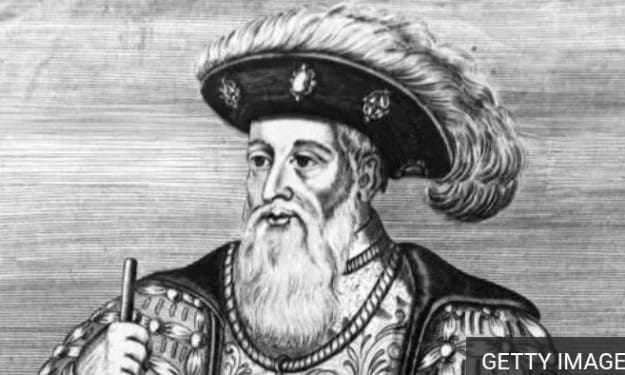
When Vasco da Gama Set Fire to a Ship Filled with Women and Children Heading to Mecca The character Kelu, raised under Portuguese rule, had only one thought in mind: to eliminate Vasco. This is the dialogue introducing the main character Chirakkal Kelu in the famous Malayalam film Urumi, even before he appears on screen. The life of the film's protagonist, Kelu, revolves solely around the mission of killing the Portuguese sailor Vasco da Gama. To achieve this goal, he faces numerous obstacles, builds a revolutionary army, and clashes with the Portuguese forces. In this battle, he loses his closest friend. But in the end, not only does he fail to achieve his goal, but he also loses his life. Chirakkal Kelu, who desires to assassinate Vasco da Gama, is a fictional character. But Prithviraj’s portrayal of this role in Urumi became a great cinematic experience and gained immense popularity in Kerala. Viewers praised the film highly. Although Vasco da Gama is celebrated in European history for discovering the sea route to India, in Malayalam films, folklore, and songs, he is portrayed as a villain. On March 25, 1497, Vasco da Gama set out from Lisbon, the capital of Portugal, for India. He had the backing of the Portuguese king for this voyage. After months of travel, he became the first European to reach India by sea. This journey earned him the title of a “hero” in European history. Even in our school textbooks, Vasco da Gama is credited for opening trade routes and playing a significant role in the spice trade. Europe’s Dream of Reaching India American historian Charles E. Nowell, in his book The Great Discoveries, writes about Vasco da Gama: > “Vasco da Gama, who established direct contact with India, was a man of strong physique and strong character. Although he was illiterate, cruel, and violent, he was also loyal and fearless.” He was given the responsibility of leading the voyage to India, a task not meant for the soft-hearted. In January 1497, King Manuel I of Portugal tasked Vasco da Gama with fulfilling “Europe's dream of reaching India.” For centuries, many European nations tried to be the first to reach India. Even a small country like Portugal was competing in this race. However, Arab and Persian traders had already reached India and established trade networks. They were importing spices, particularly from the Malabar region (present-day Kerala), through Muslim merchants. Historian John F. Richards writes in The Mughal Empire: > “Before the Portuguese arrived, Muslims and their ships dominated Gujarat, Malabar, and Arabian Sea ports.” In 1492, Columbus arrived in the Americas. Until his death, he believed that the land he had discovered was part of Asia and that India was nearby. George M. Tully writes in his book The Voyages and Adventures of Vasco da Gama: > “This is why he called the inhabitants of that land ‘Indians.’” For Europeans, India was envisioned as a wealthy land filled with gold, diamonds, precious stones, and expensive spices like pepper. Asia—especially India—was viewed as a land of immense riches and allure. William Logan writes in Malabar Manual that Vasco da Gama's fleet consisted of three ships: > São Rafael, São Gabriel, and São Miguel. Each ship was staffed with officers, sailors, and other crew members. When Vasco da Gama first came to India, his fleet was quite small. Historical sources differ on exactly how many people accompanied him. But one thing is certain: some of them were convicts. The book M. Nomed Deus: The Journal of the First Voyage of Vasco da Gama to India, 1497–1499 mentions that during the voyage, ten convicts were pardoned and sent along. The Portuguese king pardoned their crimes and sent them to assist on this mission. Some historians suggest another reason behind this decision—perhaps the king thought it better for these convicts to risk dying at sea rather than waste away in Portuguese prisons. One of the most important of these criminals was a "New Christian" named João Nunes, a recently converted Jew who could speak some Arabic and Hebrew. The same journal states: > "João Nunes was intelligent and understood the Muslims' language." Was He the First European to Set Foot in India? When Vasco da Gama’s ship reached Kerala on May 20, 1498, food was arranged on board while anchored just off the coast. It is recorded that Vasco first landed at Kappad village in the Kozhikode district of Kerala. However, according to historian and scholar M.G.S. Narayanan, Vasco first visited the Pantalayani region near the Kollam district. Small Malabar boats approached Vasco's ships and questioned his origins, asking, “Which country are you from?” It is quite possible that the first European to set foot on Indian soil was not Vasco da Gama himself, but one of his crew members—a convict. According to Vasco da Gama and the Sea Route to India: > “Before Vasco set foot on land, he sent someone who could speak Arabic and Hebrew to the shore.” Thus, the first European to reach the Malabar coast may have been João Nunes, a recent convert who spoke Arabic and Hebrew. But there is no concrete documentation to confirm this. A Disappointing First Visit to India When Vasco da Gama's translator met two Arab traders onshore, they suspected him to be an enemy. They shouted, “May the devil take you!” They then asked, “Why have you come here?” The translator replied, “We are Christians and have come in search of spices.” This exchange between the first European visitors and the Arab traders is mentioned in many historical accounts. Later, Vasco da Gama, along with a few selected men, went ashore, leaving the rest of the crew on the ships with instructions to remain alert. Historical accounts suggest that he was received with courtesy and respect. However, Vasco’s first visit to India was not as successful as he had hoped. The Hindu king of Kozhikode (called the Zamorin by the Portuguese) considered Vasco’s gifts simple and unimpressive and mocked them. The Arab Muslim traders, who dominated the spice trade, strongly opposed the arrival of the Portuguese. Historian M.G.S. Narayanan, in an interview with The Hindu, said: > “The Portuguese demanded a monopoly on the pepper trade, but the Zamorin refused because the trade was already under Muslim control.” After this, the Portuguese allied with the Kingdom of Cochin and established trading centers there. Later, they turned toward Goa, near the Vijayanagara Empire. Vasco da Gama returned to Europe in 1499 with a small quantity of spices. Nevertheless, he was given a grand welcome in Portugal. K.M. Panikkar writes in Asia and Western Dominance: > “The spices brought back from India during Vasco's first voyage were sold at a huge profit, many times more than the cost of the entire expedition.” It was then that the Portuguese realized the wealth of India. Vasco’s Second Voyage to India Vasco da Gama’s first voyage (1497–1499) established a sea route between Europe and India but failed to secure a strong trade agreement with the Zamorin of Kerala. Arab Muslim traders, long dominant in the Indian Ocean spice trade, condemned and resisted the Portuguese. Historian Sanjay Subrahmanyam writes in The Career and Legend of Vasco da Gama: > “For Vasco, the Muslim traders of Kozhikode were not only economic rivals but religious and cultural enemies.” > “Their strong position at the Zamorin’s court was a major obstacle to Portuguese ambitions.” To counter this threat, the Portuguese government planned a second expedition. This time, the goal was clear: establish Portuguese dominance in India, take revenge for earlier failures, and monopolize the spice trade. In February 1502, Vasco da Gama set out from Lisbon with 20 warships and about 1,500 soldiers. The fleet was equipped with cannons and other weapons, ready for battle. On September 11 of the same year, his fleet arrived at the coast of Kannur in Kerala. One of Vasco's crew members documented in The Journal of the First Voyage of Vasco da Gama to India: > “There we saw ships returning from Mecca. These ships were transporting spices to our country (Portugal). We captured them so that only the king of Portugal could directly trade spices from India.” > “We then captured a ship bound for Mecca, carrying 380 men, many women, and children.” > “We looted at least 12,000 ducats (gold coins) and other valuables from the ship. Then, on October 1, we set the ship and everyone on board ablaze.” The ship referred to here as the "Mecca ship" was a large vessel named Miri. According to historian K.M. Panikkar, this ship belonged to the brother of Khoja Qasim, a wealthy merchant from Kozhikode. The ship, seized by Vasco’s forces, was carrying many women, children, and elderly pilgrims bound for Hajj. It was also filled with valuable trade goods. > “Vasco ordered the ship to be burned. Women begged for mercy for their children. Portuguese soldiers watched from their ships as every soul aboard was burned alive, their screams echoing across the sea.” Gaspar Correia writes in Lendas da Índia: > “No one survived. The cries of those on the brink of death echoed across the ocean. Vasco remained unmoved, as calm as if nothing had happened.” This incident deeply disturbed even some Portuguese of the time and became a key reason why Vasco da Gama is remembered in Kerala’s history as a villain.
By Ikram Ullahabout a year ago in History
Why some see the dollar's drop as a sign America is losing its financial might
**The Dollar’s Decline: A Sign of America’s Waning Financial Might? ** In recent months, the U.S. dollar has seen a notable decline against major global currencies, sparking widespread debate among economists, investors, and policymakers. This depreciation is seen by some as a warning sign that America may be losing its long-standing financial dominance, rather than just a market fluctuation. While others see it as part of a natural economic cycle, the perception that the dollar’s weakening reflects a deeper erosion of U.S. financial influence is gaining traction.
By GLOBAL NEWSabout a year ago in History
Dow futures fall as Trump officials signal limited breathing room before tariffs ‘boomerang back’
**Dow Futures Fall as Trump Officials Warn of Tariff Repercussions** U.S. stock index futures fell early Monday morning after key Trump administration officials signaled that there may be limited time before escalating tariffs on China and other trade partners start to backfire on the American economy. Dow futures dropped more than 150 points as markets digested growing signs that trade tensions are not just here to stay—but may intensify in ways that hurt domestic industries.
By GLOBAL NEWSabout a year ago in History
Storm from the Steppe: The Mongol Invasion Chronicles
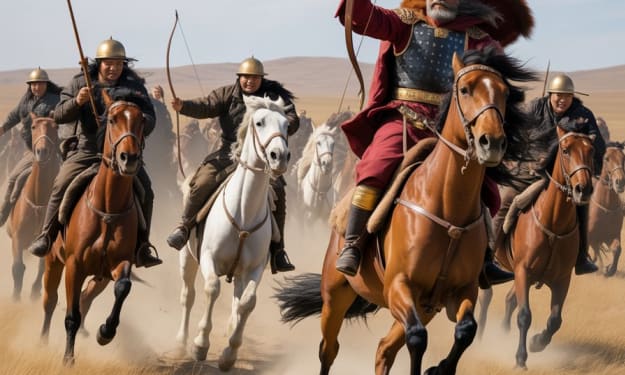
When the vast, windswept steppes of Central Asia thundered with the galloping hooves of Mongol horsemen in the 13th century, the world would never be the same again. The Mongol Empire, born from the rugged nomadic tribes under the legendary Genghis Khan, unleashed a fury so fierce it shook entire civilizations to their core. What began as a band of tribal warriors soon transformed into the largest contiguous empire in history—stretching from the Pacific Ocean to the heart of Europe. But how did these horsemen from the endless grasslands conquer cities, topple empires, and reshape the medieval world?
By Kamran Zebabout a year ago in History
The Forbidden Books: Secrets Humanity Was Never Meant to Read
The Books That Frighten the World In a world overflowing with information, certain books remain locked away—sealed behind vaults, buried in monasteries, censored by religious authorities, or veiled in mystery. These are not ordinary volumes of philosophy or history. They are texts so controversial, so enigmatic, or so powerful that reading them was once punishable by death. From medieval grimoires and occult manuals to mysterious coded manuscripts and books said to be written with the devil’s hand—these are the forbidden books of history.
By DRE Explainsabout a year ago in History
The Girl Who Burned Time
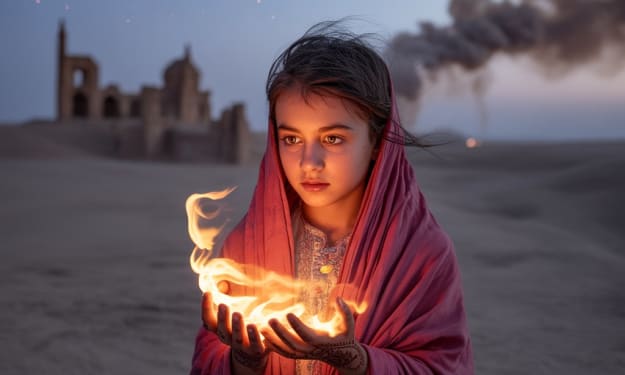
In the saffron-tinted sands of 13th-century Persia, where stories traveled faster than caravans and truths were tucked between silk scrolls and scented oil, there lived a girl named Laleh. She was born on a red moon night, when even the stars seemed to bleed. Her mother died during childbirth, and her father—Ali, the village scribe—wrapped her in old parchment instead of linen. “She came from ink,” the villagers whispered, “not flesh.” But there was more to Laleh than whispers and shadows. By the age of eight, Laleh could recall the tiniest detail of every day she had ever lived. The way the carpet frayed in the corner of her father’s writing room. The taste of fig and ash from the day the well collapsed. The exact words a traveling poet had used to describe her eyes: like dusk remembering dawn. She never forgot. And then, one morning, she touched her father’s old oil lamp—and it burst into flames. Ali had seen many things. Wars. Famines. The arrival of Mongol rumors like black wind across the steppes. But he had never seen fire bloom from memory. They experimented. When Laleh remembered her mother’s lullaby, flames rose blue and soft. When she remembered fear—like the time she almost drowned—sparks danced dangerously around her fingertips. “I think your memories are made of fire,” her father whispered. “But why?” she asked. He didn’t have the answer. But the desert did. They traveled east, toward the ruined Zoroastrian temples beyond the Dasht-e Kavir. There, among forgotten stone and the scent of burning dates, Laleh met a woman who called herself Zahira the Keeper. “I know what you are,” Zahira said. “You are a Vaqt-sor, a Time-Burner. There were once many of your kind—born once in an age, always daughters of memory.” “What do we do?” Laleh asked, her voice barely a whisper. “You don’t do anything,” Zahira said. “You undo.” Zahira taught her the language of fire and time. “Every memory holds heat,” she said. “But some are colder—distant, faded. Others are burning, painful, raw. If you pull the right string of memory with enough focus, you can change its temperature—and change time itself.” Laleh didn’t believe her. Until she tried. She remembered the day the village well collapsed, taking a young boy named Reza with it. His face still haunted her, dirt-streaked and wide-eyed. She pulled the memory close, focused her breathing, and let the heat grow. Flames coiled in her palms. And then, it was gone. Not the memory. The event. When they returned to the village a week later, the well stood tall and full. Reza was alive. No one remembered the tragedy. Except Laleh. With each act of burning time, she grew stronger—but also lonelier. People called her blessed. Then cursed. Then dangerous. Her father aged quickly, shadows gathering in his eyes. “Careful, my daughter,” he would whisper, “History has sharp teeth. If you bite it, it will bite back.” But Laleh burned on. She saved families from fires they never knew they were in. Prevented the death of a young scholar whose ideas would one day shape medicine. Erased a drought from the records by bringing back one stolen cloud. She walked the blade of fate like a dancer in a sandstorm. Then came the war. The Mongols. They poured over the mountains like a plague of thunder, burning cities, silencing scholars, toppling minarets. Laleh knew she had to act. She climbed to the ancient Zoroastrian fire temple—now little more than stone teeth jutting from the sand. There, she prepared to burn her greatest memory: the invasion itself. Zahira appeared, eyes full of warning. “You don’t understand,” she said. “This memory is not yours alone. The more people who remember an event, the more rooted it becomes in time.” “I don’t care,” Laleh said. “If I can save a thousand lives—” “You could tear the fabric of now,” Zahira warned. “You might unravel the present entirely.” Laleh looked at the flame in her palm—bright, trembling, waiting. She closed her eyes. And remembered She remembered the riders. The screaming. The smell of charred parchment and blood. The children hiding beneath their dead mothers. Her father’s lifeless eyes. The fire grew wild. Time twisted. When she opened her eyes, the world had changed. No temples. No Persia. No Mongols. She stood in a strange place—a land of glass and wires, noise and metal. A city unlike any she had imagined, with lights instead of stars and people who moved like they were always late. A man bumped into her. “Hey, watch it,” he said, then glanced at her clothes. “You in cosplay or something?” She stood silent, heart racing. The world had moved on without her. In the heart of this new world, Laleh found a library. Not of scrolls, but of screens and glowing words. She searched for history. No mention of the Mongol invasion. No record of 13th-century Persia. The names, the poems, the temples—they were gone. Not replaced. Forgotten. She had burned too deeply. And in doing so, she had erased the soul of a civilization. Now, she walks the edge of modern life—unseen, unknown. A girl with fire in her hands and centuries in her blood. She doesn’t try to change time anymore. But sometimes, when the wind is right, she lights a candle and whispers the names of people who once were. Reza. Zahira. Ali. They may not be remembered by this new world. But they are not lost. Not while she remembers. Not while she burns. Author’s Note: History is a fire—too much of it, and we’re consumed. Too little, and we freeze in ignorance. But for one girl, fire was both the gift and the price of memory.
By Atta Ullahabout a year ago in History