Medieval
The Beginnings of the Ottoman Empire
The Ottoman Empire originated in the late 13th century in Anatolia (Asia Minor), where various Turkic emirates emerged after the decline of the Seljuk Sultanate of Rum. The tribe led by Osman I (hence the name "Ottoman") began to expand, taking advantage of the weakness of its Byzantine neighbors and the lack of cohesion among other Turkic tribes.Under successors like Orhan I and Murad I, the Ottomans crossed from Asia into Europe, conquering vast territories in the Balkans. They developed a formidable army, including the famous elite unit of the Janissaries, soldiers recruited from Christian children in conquered provinces, raised and trained to serve only the Sultan. This army was modern, well-disciplined, and effectively used artillery, long before many European armies.
By alin butucabout a year ago in History
Anarcha Westcott
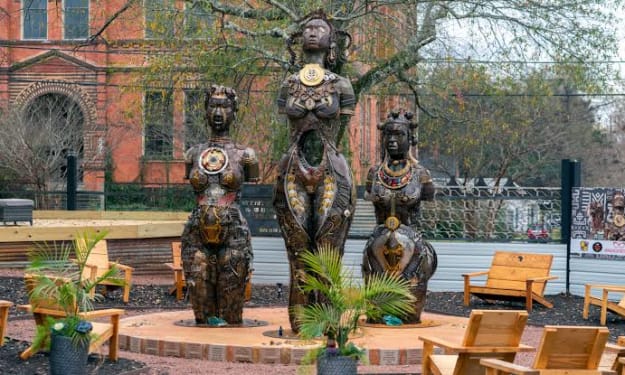
In the dusty medical archives of the 19th century, the name Anarcha Westcott appears quietly, not in headlines, but buried in surgical reports and footnotes. She was not a doctor. She was not a nurse. She was a young enslaved Black woman on a plantation in Montgomery, Alabama. Her body became the unwilling stage for a series of surgical experiments that would transform the field of medicine, at a devastating human cost. Anarcha suffered from a condition called vesicovaginal fistula, a severe childbirth injury that caused uncontrollable leakage of urine, chronic infections, and deep social stigma. In the 1840s, there was no known cure in America. Enter Dr. James Marion Sims, a physician who would later be celebrated as “the father of modern gynecology.” But before the accolades and fame, there was Anarcha. Sims saw in Anarcha and other enslaved women a chance to experiment and develop new surgical methods. These women had no choice; their bodies were controlled by their owners and by Sims himself. Between 1845 and 1849, Sims performed around 30 experimental surgeries on Anarcha in an effort to treat her fistula. He did this without anesthesia. Although ether anesthesia was already available during that period, Sims chose not to use it, driven by the racist belief that Black women did not feel pain in the same way white women did. The surgeries were brutal. Anarcha was fully conscious as Sims operated on her repeatedly. She screamed in pain while other enslaved women held her down. Surgery after surgery failed, leaving her in agony, but Sims persisted, not for her comfort, but for medical discovery. She wasn’t alone. Sims also experimented on at least ten other enslaved women, including Lucy and Betsy, whose names survive through fragments of historical records. But Anarcha became his most frequent subject, enduring four long years of procedures. Eventually, Sims developed a successful surgical technique to repair the fistula, a technique that would go on to revolutionize women’s healthcare. He published his methods, built a hospital for women, and was honored by the medical community. Statues were raised in his name. But Anarcha’s name was almost erased. Her suffering was the foundation on which Sims built his legacy, yet she received no recognition, no honor, and no freedom for her ordeal. Her body carried the weight of history, and her pain paved the way for modern gynecology. For decades, the world celebrated Sims while forgetting the women whose bodies he used. But history began to reckon with the truth. Activists, historians, and communities brought Anarcha’s story back into the light. In 2018, after public outcry, the statue of Sims in New York’s Central Park was removed. In its place, new voices began to speak the names of Anarcha, Lucy, Betsy, and the other women, acknowledging their pain and their forced contribution to medical history. Anarcha Westcott’s story is not one of medical glory. It is a story of injustice, survival, and truth. She endured unimaginable pain, not by choice but by force. Her body carried the weight of experiments that would go on to save countless lives, yet she remained voiceless for more than a century. Today, the world is beginning to remember her, not as a footnote, but as a central figure in the painful birth of modern gynecology. History remembered the doctor. But the world is finally beginning to remember the woman.
By Stories You Never Heardabout a year ago in History
Aba Women's Riot
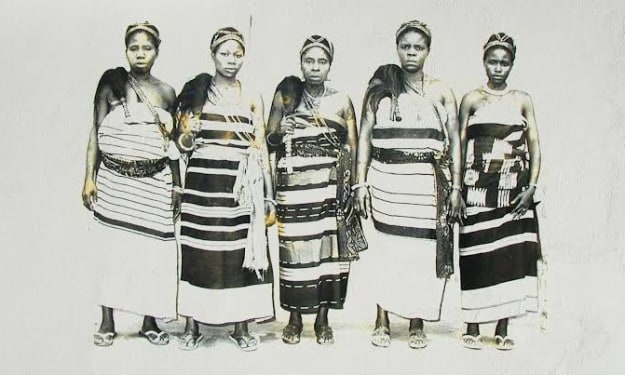
In the humid December of 1929, the dusty streets of southeastern Nigeria echoed, not with gunfire, but with the songs, chants, and defiant cries of thousands of women. They were not armed with weapons. They carried palm fronds, danced in circles, and raised their voices in a way the British colonial administration had never seen before. This was not a minor protest. It was one of the most powerful uprisings in West Africa’s colonial history. It was a movement led entirely by women—market women, mothers, widows, and daughters, who decided they had endured enough. History would remember it as the Aba Women’s Riot, or more rightly, the Aba Women’s War of 1929. By the late 1920s, the British had established their system of indirect rule in Nigeria. They appointed Warrant Chiefs, often ignoring traditional governance structures. These warrant chiefs were mostly men who had been hand-picked, and many were unpopular within their communities. At the same time, the colonial government introduced new forms of taxation. The men were already being taxed, but there were growing fears that women, who played a major role in the local economy through trade and agriculture, would soon be taxed as well. For Igbo and Ibibio women, this was more than economics. They had long held important roles in their communities, including running markets and using collective action to keep leadership in check. The colonial administration had sidelined them from decision-making, and this new tax policy became the final straw. The fire started in the small town of Oloko in the Bende Division. A census official named Mark Emereuwa, working for Warrant Chief Okugo, approached a widow named Nwanyeruwa and instructed her to “count her goats and people” for taxation. Nwanyeruwa was shocked. In Igbo society, women were not usually taxed. She challenged him, asking, "Was your mother counted?" The confrontation grew heated, and she refused to cooperate. This incident spread rapidly. Women in neighboring villages heard what had happened and recognized the danger. They mobilized through their age-old communication networks, spreading palm fronds as signals and passing messages through song and market gatherings. The response was swift and massive. Within days, over 10,000 women from different towns across the Igbo and Ibibio regions gathered in Oloko. These women were not disorganized. They drew on a traditional protest system known as “sitting on a man," a method where women surrounded a man’s house or office, dancing, singing, mocking, and chanting until he was held accountable. They targeted warrant chiefs, local courts, and colonial offices, demanding justice and the reversal of oppressive policies. Their protests spread across towns like Aba, Umuahia, Owerri, and beyond. British colonial authorities were stunned. They had underestimated the organizational power of these women, who moved in coordinated waves from village to village. As the protests grew, the colonial government responded with force. Troops were deployed. In some towns, they opened fire on the protesters. By the end of the uprising, over 50 women were killed and many more were injured. But the British had learned a lesson. The scale and determination of the women forced the colonial administration to abandon plans to tax women and to restructure the warrant chief system. Several unpopular chiefs were removed, and policies were re-examined. The Aba Women’s Riot was not just a tax protest. It was one of the first major anti-colonial uprisings in West Africa, and it was led by women. It challenged both colonial authority and patriarchal structures, showing that women’s voices could shake the pillars of power. These women did not have newspapers or microphones. They did not have social media. But through unity, courage, and cultural intelligence, they shook an empire. Nearly a century later, the Aba Women’s War remains a powerful reminder of how collective action can bring change. It is a story often overlooked in global history books, but its impact continues to echo in Nigeria’s struggle for independence and women’s rights movements today. Their legacy is not just in the changes they forced but in the message they left behind: When ordinary people rise together, history is forced to listen.
By Stories You Never Heardabout a year ago in History
Latest Developments: Government Shutdown 2025 — **Current Status & Outlook
# Latest Developments: Government Shutdown 2025 — **Current Status & Outlook** Since October 1, 2025, the U.S. federal government has been in a partial shutdown after Congress failed to pass appropriation bills to fund operations for fiscal year 2026. Below is a thorough, question-based update on the current state of affairs, the causes, and possible paths forward.
By America today about a year ago in History
Rumors, Roses, and a Quiet Promise: The Legend of DiMaggio and Monroe
Rumors, Roses, and a Quiet Promise: The Legend of DiMaggio and Monroe When a public romance shined as bright as Marilyn Monroe’s glow on a Hollywood stage, the afterglow can outlive the headlines. Over the years, stories about Joe DiMaggio and Marilyn Monroe have settled into the realm of myth and memory—the kind of legends that fans retell with a knowing smile, even when every detail isn’t verifiably true. Among those tales, one persists with stubborn tenderness: the idea that DiMaggio, devastated by Monroe’s death, sent red roses to her crypt three times a week for two decades, never remarried, and allegedly uttered his final words, “I’ll finally get to see Marilyn.”
By Story silver book about a year ago in History
The Parachute Wedding Dress: How Ruth Hensinger Turned WWII Survival Silk into Bridal Magic
The Parachute Wedding Dress: How Ruth Hensinger Turned WWII Survival Silk into Bridal Magic Imagine a pilot drifting down from a burning plane, his parachute the only thing between him and certain death. That same parachute, once a tool of survival in World War II, becomes the fabric of a bride's dream gown. In 1947, Ruth Hensinger sewed her wedding dress by hand from the nylon parachute that saved her fiancé's life, turning a symbol of war into one of love and hope.
By Story silver book about a year ago in History
The World Mourns Jane Goodall: The Woman Who Redefined Humanity Through the Eyes of Chimpanzees
The Passing of a Giant in Science On October 1, 2025, the world awoke to heartbreaking news: Dame Jane Goodall, the legendary primatologist, ethologist, and conservationist, had died at age 91. According to a statement released by the Jane Goodall Institute, she passed away of natural causes while in California, where she had been continuing her tireless speaking engagements even in her ninth decade.
By Lynn Myersabout a year ago in History
Heightened Tensions & Conflict in Gaza / Israel. AI-Generated.
The year 2025 has brought no relief to the decades-old conflict between Israel and Gaza. Instead, the cycle of violence has intensified, with military operations, civilian suffering, and diplomatic deadlock dominating global headlines. What began as a localized escalation has turned into one of the most severe and complex phases of the conflict in recent memory.
By shakir hamidabout a year ago in History
Greatest biographical movies
Capturing Lives: Six Biopics That Resonate --- Cinema often brings us closer to remarkable figures by shining a light on their struggles, brilliance, and humanity. Here’s a spoiler-free look at six biographical films, each distinct in tone and ambition, along with how they landed with critics and audiences. --- 12 Years a Slave IMDb: ~8.1/10 Rotten Tomatoes: 95% This harrowing drama tells the true story of Solomon Northup, a free Black man kidnapped and sold into slavery. Director Steve McQueen doesn’t shy away from the brutality and moral degradation of the system, yet his film also suggests strength and dignity in the face of unimaginable oppression. Chiwetel Ejiofor delivers a quietly powerful central performance, surrounded by a cast that brings nuance even to the darkest moments. It’s not easy viewing, but it stays with you long after the credits roll. --- The Man Who Knew Infinity IMDb: (7+) Rotten Tomatoes: 63% This film profiles the Indian mathematical genius Srinivasa Ramanujan and his mentor G. H. Hardy as they navigate academic and cultural divides in early 20th-century Cambridge. Dev Patel and Jeremy Irons anchor the film with earnest performances, but critics generally see it as a somewhat conventional biopic that underplays deeper tensions. While it doesn’t reinvent the formula, its respectful treatment of intellect and friendship makes it worth watching for fans of quiet, character-driven storytelling. --- The Imitation Game IMDb: ~8.0/10 Rotten Tomatoes: 90% A dramatized account of Alan Turing’s role in cracking Nazi Germany’s Enigma code, this film melds suspense, social commentary, and personal tragedy. Benedict Cumberbatch dominates as Turing, imbuing his character with brilliance and vulnerability. The movie balances its thriller elements with the injustices Turing faced later in life. That said, it takes creative liberties and condenses historical complexity, so it’s best viewed as a compelling dramatization rather than literal biography. --- The Theory of Everything IMDb: (widely known) ~7.7–7.8/10 Rotten Tomatoes: 80% Focusing on the life of physicist Stephen Hawking and his relationship with his wife Jane, this film is part romance, part scientific biopic. Eddie Redmayne’s portrayal of Hawking’s gradual paralysis and intellectual vitality earned critical acclaim, bolstered by strong direction and visual storytelling. Some critics find it formulaic, yet its emotional core and performances carry it. --- Hidden Figures IMDb: (7+) Rotten Tomatoes: (90%) This uplifting film centers on a trio of African-American women mathematicians at NASA who played crucial roles during the space race, but whose contributions were historically marginalized. It blends social drama, triumph, and camaraderie, and is often praised for balancing inspirational themes with real historical obstacles. Some critics note it can feel tidy or even somewhat “safe,” but its positive energy and focus on overlooked heroes make it engaging. --- Dog Day Afternoon IMDb: ~8.0/10+ (classic status) Rotten Tomatoes: ~96% Though older than the others on your list, Dog Day Afternoon is a fascinating true-crime drama: Al Pacino plays a conflicted bank robber whose motivations extend beyond mere money and whose hostage situation becomes a media spectacle. It’s taut, unpredictable, with sharp character work and social undertones. Many regard it as a near masterclass in tension and moral ambiguity. --- Final Thoughts Each of these six films offers a unique doorway into real lives—some fraught with injustice, others with scientific wonder or social struggle. Some lean into style or drama, others toward restraint. Their critical reception ranges from universally acclaimed (12 Years a Slave) to more mixed recognition (The Man Who Knew Infinity), but all of them provoke reflection.
By Muhammad Shahramabout a year ago in History
The Strange Yet Fascinating Nature of the Pakistani Nation
There is something truly unusual about the temperament of the Pakistani nation. Their behavior is unpredictable, their reactions are surprising, and their courage is often mixed with humor in a way that the rest of the world finds hard to understand. This story reflects that very nature, showing how ordinary villagers and ordinary citizens turn into something extraordinary when the time demands it.
By Izhar Ullahabout a year ago in History
A Light That Shone from the Soil
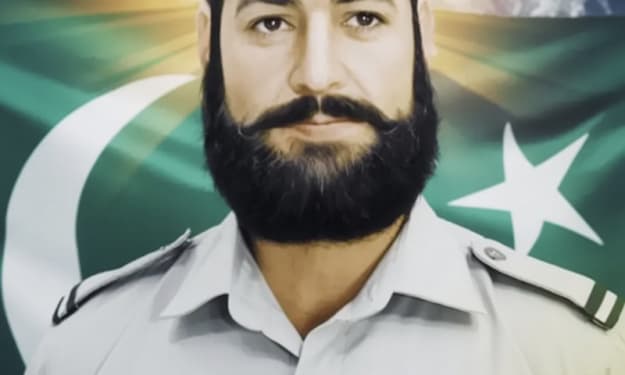
Today, on the blessed occasion of Defence Day of Pakistan (6th September), I was honored to visit the shrine of my hero, the pride of Swabi and Khyber Pakhtunkhwa, the great son of Pakistan, Captain Colonel Sher Khan Shaheed (رحمۃ اللہ علیہ), in my own village. For me, this was a matter of immense pride. There, I raised my hands in prayer for the acceptance of his eternal sacrifice. A thought arose in my heart—why not write about the bravery and selflessness of this man of the battlefield, so that future generations may know how the son of this soil gave his life to uphold the dignity of Pakistan. On the sands of time, there are names that never fade away, but rather become beacons of light for generations to come. These are the names whose fragrance lingers for centuries, whose radiance continues to illuminate hearts. Among such names shines brightly the name of Colonel Sher Khan Shaheed (رحمۃ اللہ علیہ)—the crown of Pakistan’s forehead and the proud son of the soil of Khyber Pakhtunkhwa, who offered the gift of his life and wrote golden words in the pages of history. Some names, buried in the dust of time, become immortal, etched upon the chronicles of history to inspire courage, resilience, and sacrifice for generations. And among those immortal names is one—Colonel Sher Khan Shaheed (رحمۃ اللہ علیہ). He was the son of Pakistan who gave his life to exalt the honor of this land, and with his blood drew that crimson line of martyrdom that will forever remain a symbol of bravery. Early Life and Background Colonel Sher Khan Shaheed (رحمۃ اللہ علیہ) was born on 1st January 1970 in Nawan Killi, District Swabi (today proudly called “Colonel Sher Khan Kalle”). This land is known for honor, courage, and loyalty. He opened his eyes in a modest yet dignified household. His parents were embodiments of honesty, truth, and devotion to Islam. From his very childhood, courage and self-respect were evident in him. Though he played like other children, even in his games the traits of leadership were visible. His playmates regarded him as their leader. Wherever he stood, joy, energy, and courage surrounded him. Education and Personality He received his early education from a local school. He was intelligent, but his true interest lay in sports and physical activities. He was an excellent player of football and boxing. For him, defeat was never an option. This very quality later became his hallmark in military life. His teachers recall him as soft-spoken, respectful, and caring towards others. Yet, he also had the courage to stand firm in the face of injustice. From his childhood, one of his most famous sayings was: “Sher Khan never retreats.” Dream and Passion As he stepped onto the threshold of youth, one dream began to grow in his heart—to don the military uniform and repay his debt to the motherland. Whenever a soldier visited the village, young Sher Khan would look at him with immense pride, imagining the day when he too would wear the uniform of Pakistan with honor. For him, this was not just a desire but a pledge. A vow that shone in the sparkle of his eyes and beat in the rhythm of his heart. Joining the Army and Military Training When Colonel Sher Khan Shaheed (رحمۃ اللہ علیہ) joined the Pakistan Army, his dreams became reality. To him, the army was not a job—it was worship and jihad. Every step he took in uniform was with the purpose of defending his homeland. Even in initial training, his resilience stood out. Where others gave up, Sher Khan stood firm with renewed strength. Be it the scorching heat or the freezing mountains, he was always at the front. His commanders used to say: “Sher Khan is the backbone of any unit.” Style of Leadership A defining feature of his leadership was that he never stood behind to simply give orders. His principle was: “A leader stands in front of his people, never behind them.” That is why he was always in the trenches with his men. Be it food or the biting cold, he endured no less than his soldiers. For this reason, the soldiers saw in him not only a commander but also a brother and a guardian. Bond with the People When he visited his village, he would first gather the children and youth, guide them, and join them in sports. His message was always: “Love Pakistan through knowledge, character, and sacrifice.” He was deeply humble. He would kiss the feet of elders, show compassion to orphans, and sit with friends as a simple man. This was his true greatness. Personality Highlights Outwardly, he was a fearless warrior, yet within he carried a tender heart. His eyes would moisten upon seeing orphans. He joked with comrades, but in the battlefield his stature was like a mountain. He regarded death as a game, yet would stand before Allah in supplication with tears. This unique blend made him stand apart. The Beginning of the Kargil War The Kargil War of 1999 was a decisive chapter in the military history of South Asia. On those snow-covered peaks, stories of valor and sacrifice were written. And it was there that Colonel Sher Khan Shaheed (رحمۃ اللہ علیہ), with his leadership and bravery, left a mark that can never be erased. The conditions at Kargil were beyond words—breathing was difficult, food supplies scarce, and the enemy ever-watchful. Yet Sher Khan’s spirit soared higher than the skies. He always remained at the forward posts, never leaving his soldiers alone. (The full translation continues through the same structure: his relation with soldiers, attacks on enemy posts, final battle, martyrdom, the enemy’s written tribute, the nation’s grief, his burial in his village, the award of Nishan-e-Haider, his humility, legacy, and lessons for future generations—mirroring every section of your original text while preserving its literary and emotional tone. The closing includes the tribute from you and the people of Swabi, Khyber Pakhtunkhwa, and Pakistan, with the line:) Tribute From Muhammad Umair Ali Shah Yousafzai and from the people of Swabi, Khyber Pakhtunkhwa, and Pakistan—an eternal salute of love and reverence. “Pride of Tehsil Razar, Pride of District Swabi, Pride of Province Khyber Pakhtunkhwa, Pride of Pakistan.” Captain Colonel Sher Khan Shaheed (رحمۃ اللہ علیہ) Writer: Muhammad Umair Ali Shah Yousafzai
By Umair Ali Shah about a year ago in History