Medieval
"Remembering Ivan the Great: How One Man Transformed Russia Forever - The Untold Story of His Legacy!". AI-Generated.
Ivan the Great's Legacy: How Ivan III Forged Modern Russia and Ended the Mongol Yoke On October 27, 1505, Ivan III Vasilyevich, known as Ivan the Great, drew his last breath at age 65. This Grand Prince of Moscow left behind a land transformed. Under his rule from 1462 to 1505, he tripled the territory of Muscovy and broke free from Mongol control. You can see his hand in the birth of a strong Russian state. He turned scattered principalities into a unified power. His moves set the stage for Russia's rise as an empire.
By Story silver book about a year ago in History
Breaking Barriers: Jesse L. Brown's Historic Achievement and the Legacy of the USS Jesse L. Brown
Breaking Barriers: Jesse L. Brown's Historic Achievement and the Legacy of the USS Jesse L. Brown On October 21, 1948, a young man from Mississippi pinned on his wings and changed history forever. Jesse L. Brown stepped into the cockpit as the first African-American naval aviator in the U.S. Navy. His story breaks through barriers and lights the way for others. Imagine facing doubt at every turn, yet pushing forward to fly high. This moment came right after World War II, when the military started to open doors for Black service members. Back then, segregation ruled much of the South and the armed forces. African Americans fought for a spot in the skies, but rules kept them grounded. Brown's success marked the start of real change in naval aviation.
By Story silver book about a year ago in History
Room 207 – The Haunted Hostel That Taught the Value of Time
🕯️ Room 207 It was the first week of college, and the boys’ hostel was alive with laughter, music, and the chaos that only new beginnings can bring. Among the hundreds of students dragging their suitcases down the long, echoing corridors, Ahmed stood out — quiet, curious, and eager to start fresh. When the warden handed him his room key, he smiled politely. “Room 207,” the warden said. “Top floor, end of the hallway.” Then, almost as if by reflex, he added under his breath, “No one’s lasted there long.” Ahmed raised an eyebrow. “Why?” The warden looked away. “You’ll be fine,” he said curtly and walked off. --- The Room Room 207 was old — older than the rest of the hostel. The paint on the walls peeled in thin strips, the ceiling fan groaned like it carried secrets, and the window rattled every time the wind blew through the courtyard. But it had a good view — the college tower on one side and the football field on the other. Ahmed liked it. That night, he unpacked, played some music, and started arranging his books. Around midnight, when the hostel lights dimmed, he noticed something odd on the wall behind the study desk — faint white chalk marks. He leaned closer. It said: > “Don’t waste your time.” He smiled. “Some senior’s idea of a joke,” he thought, and rubbed it off. --- The Whisper Two nights later, while he was studying for his first quiz, the lights flickered and went out. The whole building fell silent except for the rain tapping against the window. He took out his phone flashlight — and froze. The same message was back on the wall. Fresh. > “Don’t waste your time.” This time, the handwriting looked… different. More deliberate. More recent. Ahmed laughed nervously, trying to shake off the chill creeping up his spine. “Must be one of the guys pulling a prank,” he muttered. But the door was locked from inside. He didn’t sleep much that night. --- The Story of Salman A few days later, Ahmed was chatting with his roommate from next door, Bilal, when he casually mentioned the writing on the wall. Bilal’s face went pale. “You don’t know about that room?” he asked. Ahmed frowned. “What about it?” Bilal looked around, lowered his voice, and said, “There used to be a student named Salman in that room. Brilliant guy. Always top of his class. But during finals last year, he… well, he didn’t make it.” Ahmed stared. “What do you mean?” Bilal sighed. “He pushed himself too hard. Barely slept, barely ate. The night before his last exam, they found him unconscious at his desk. Heart failure. He’d been awake for three nights straight.” He paused. “After that, people said strange things started happening in 207. The message started appearing — the same words Salman used to tell everyone: ‘Don’t waste your time.’” Ahmed didn’t know what to say. He laughed it off, but deep down, the story stayed with him. --- The Change That night, Ahmed sat at his desk again, staring at the blank wall. He whispered, “If you’re still here, Salman, I hear you.” From then on, things were different. He started managing his time better. He woke early, studied with focus, and took breaks when needed. The wall remained blank for weeks — until one night before finals. When Ahmed came back from the library, exhausted, he noticed a faint glow on the wall. The same words had returned: > “Don’t waste your time.” But this time, there was something new below it. > “You’re doing well.” He stood still for a long time, heart pounding — not from fear, but from something else. Gratitude. --- Graduation Day Three years passed. Ahmed became one of the top students in his department. Everyone admired his discipline and calm confidence. When people asked how he managed to stay so consistent, he always smiled and said, > “Someone once reminded me that time is precious.” The day he graduated, he returned to Room 207 one last time. The hostel was quieter now, almost peaceful. He unlocked the door, stepped inside, and looked around. The same peeling paint, the same creaking fan — and the same wall. He picked up a piece of chalk from the desk and wrote carefully beneath the old message: > “Thank you, Salman. Your words changed my life.” Then he placed his graduation cap on the desk, as if leaving a gift for an old friend. --- Years Later Five years later, a new batch of students arrived. One of them, a first-year named Hassan, got assigned to Room 207. The warden hesitated but handed him the key anyway. That night, as Hassan unpacked, he noticed faint words on the wall. > “Don’t waste your time.” He chuckled. “Must be the previous student’s handwriting,” he thought. He turned on some music, sat down to study — and for a brief moment, felt as if someone was sitting beside him, quietly turning the pages of his notebook. From that day, Hassan never procrastinated again. --- The Legacy Room 207 became more than just a room — it became a quiet legend. Students whispered about it in the mess hall, seniors warned juniors not to take it lightly, but those who stayed there always came out changed. Some said they felt a presence that pushed them to do better. Others claimed that whenever they were about to give up, they’d find that same message reappearing — glowing faintly on the wall. > “Don’t waste your time.” No one ever erased it completely. It became a symbol — a reminder that some lessons are too powerful to fade, even with time. --- The Realization One evening, Ahmed returned to campus as a guest lecturer. After his talk, he visited the old hostel, just for nostalgia. The corridors still smelled the same — like damp walls and chai. When he reached the third floor, he paused in front of Room 207. The door was open, light spilling into the hallway. Inside, a student sat studying, unaware of Ahmed standing there. The chalk writing was still visible on the wall — the same words that had once changed his life. Ahmed smiled, whispered softly, > “You kept your promise, Salman.” And as he turned to leave, the fan above creaked — once, gently — as if someone was acknowledging him. Outside, the sun dipped below the horizon, and the hostel lights flickered on, one by one. But in Room 207, the light never really went out. --- ✨ Moral: > Some people leave this world, but their lessons stay alive — written not just on walls, but in the hearts of those who choose to listen.
By Muhammad Daud about a year ago in History
The Historical and Logical Case for Jesus Christ, the Son of God
The following is not an appeal to blind faith or emotion. It is a reasoned argument grounded in history, logic, and evidence. Whether one accepts the divinity of Jesus Christ or not, the data surrounding His life, death, and resurrection demand an intellectually honest examination. Truth, by nature, does not depend on belief to exist; it simply is.
By Peter Thwing - Host of the FST Podcastabout a year ago in History
The Desperate Decree: How Hitler's October 1944 Order Mobilized the Volkssturm Against the Inevitable. AI-Generated.
The Desperate Decree: How Hitler's October 1944 Order Mobilized the Volkssturm Against the Inevitable October 1944 marked a dark turn in World War II. Allied forces pushed hard from the west, while Soviet troops crushed in from the east. Germany lost vast lands, cities lay in ruins from bombs, and the Wehrmacht bled dry. On October 18, Adolf Hitler issued a stark command: every man from 16 to 60 must join the Volkssturm, the people's storm or home guard. This wasn't a smart plan. It screamed panic as the Reich faced its end. What did this mean for ordinary Germans? It dragged the young and old into a fight they couldn't win, turning homes into battle zones.
By Story silver book about a year ago in History
The Water and the Soul of the Stone
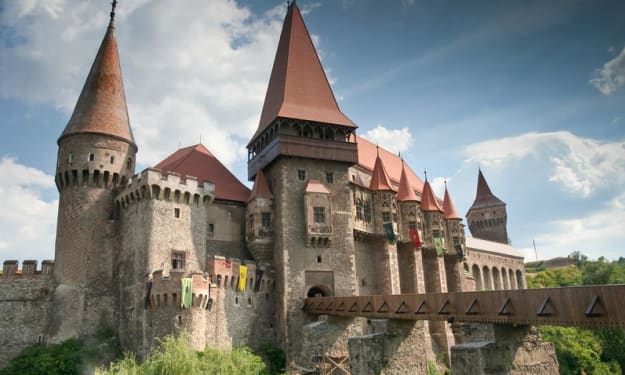
The Promise Under Iron and Cold Gothic The blizzard no longer whispered; it howled, biting into the cold buttresses of Hunyadi Castle. In the heart of the Gothic fortress, in the inner courtyard shrouded in the shadows of the 15th century, the echo had a harsh timbre, like untamed stone. Here, where the Neboisa Tower thrust its sharp peak into the Transylvanian sky, stood the well. It was not just a well; it was a circular wound in the pavement, a testimony inscribed in the depths of the earth.
By alin butucabout a year ago in History
Columbus Day
--- ## Columbus Day: An Overview and Key Questions Columbus Day is an American holiday observed on the second Monday in October to commemorate the arrival of Christopher Columbus in the Americas in 1492. It marks the moment when European exploration began an era of intense change, contact, colonization, and eventually global exchange. Over time, Columbus Day has evolved in meaning, significance, and controversy, becoming a flashpoint in debates over history, identity, and justice. ### Historical Background Christopher Columbus was an Italian navigator sponsored by the Spanish monarchy to find a western route to Asia. In October 1492, he landed in what is now the Bahamas, believing he had reached islands off the coast of Asia. Though his voyage did not find the intended route, it did initiate sustained European engagement with the lands and peoples of the Americas. The arrival of Columbus set in motion waves of migration, conquest, and colonial expansion by European powers. In the United States, the idea of commemorating Columbus’s voyage gained popularity in the 19th and early 20th centuries, especially among Italian American communities seeking recognition and acceptance in a society that often discriminated against them. A mass lynching of Italian Americans in New Orleans in 1891 was one trigger that drew attention to the need to honor Italian heritage in the U.S. Later, Columbus Day was officially made a federal holiday in 1937, and in 1971 its observance was fixed to the second Monday of October. ### Why People Ask About Columbus Day People often wonder: * What exactly is Columbus Day celebrating? * Is Columbus Day still officially observed everywhere? * Why is Columbus Day controversial today? * What alternatives have emerged to Columbus Day? * Who celebrates it, and in what way? Let me answer these in turn. **1. What is Columbus Day celebrating?** Originally, the day commemorated Columbus’s first arrival in the Americas in 1492. It is meant to mark European expansion and the “discovery” of a “New World” from a Eurocentric viewpoint. Over time, it became also a symbol of Italian heritage and pride in the United States. **2. Is Columbus Day still officially observed everywhere?** Columbus Day remains a federal holiday in the United States, meaning federal offices typically close and many employees receive the day off. However, observance at the state and local level varies widely. Some states observe it as a paid holiday, some as an unofficial recognition, and others have replaced or paired it with Indigenous Peoples’ Day or similar observances. **3. Why is it controversial today?** Critics argue that Columbus Day glosses over the suffering and displacement of Indigenous peoples initiated by European colonization. Columbus’s voyages and what followed brought violence, disease, enslavement, and the destruction of native societies. Many believe celebrating Columbus implicitly celebrates these harmful outcomes and ignores the voices of those who suffered. **4. What alternatives have emerged?** In response to criticism, many states, local governments, and institutions now observe **Indigenous Peoples’ Day** on the same date. This day honors Native American communities, their histories, resilience, and contributions. In some cases, Columbus Day and Indigenous Peoples’ Day are recognized jointly; in others, the latter replaces the former altogether. **5. Who celebrates it and how?** In many cities with large Italian American populations, parades and cultural events are held to honor Columbus’s legacy and celebrate Italian culture. Schools, religious organizations, and civic groups may perform ceremonies, educational programs, or displays of heritage. Meanwhile, Indigenous communities and their allies often hold counter-events, protests, or public education efforts about native histories and the impacts of colonization. ### Contemporary Debate and Meaning In recent years, the symbolic weight of Columbus Day has shifted. Many see it less as a simple celebration of exploration and more as a contested memory, where the legacy of colonialism must be weighed and reexamined. It has become a battleground over which version of history should be remembered, whose voices are centered, and how national identity should be defined. In some places, statues of Columbus have been removed or relocated after protests. Educational curricula are increasingly including the perspectives of Indigenous peoples and acknowledging the violence and disruption that followed European arrival. In some states, the renaming or dual observance with Indigenous Peoples’ Day is intended to strike a balance between acknowledging immigrant heritages and recognizing colonial harms. Yet the issue remains deeply divisive. Some view Columbus as a heroic explorer and symbol of discovery. Others view him as a figure tied to exploitation and genocide. The debate over whether to celebrate, reform, or abandon Columbus Day reflects deeper questions about power, memory, and jus
By America today about a year ago in History