Medieval
The Weaver of Fate
Once upon a time, in the mystical land of Eldoria, lived a skilled and enigmatic weaver named Elara. Elara was a gifted weaver who resided in the mystical land of Eldoria. Her reputation extended far and wide, not only for her exceptional talent in crafting intricate tapestries but also for her rumored ability to perceive the threads of fate itself. Her cottage stood on the outskirts of Eldoria, surrounded by the beauty of nature and the tranquility of the river.
By Kael Darkheart3 years ago in History
The Enchanted Gambit
In a hidden valley nestled between towering mountains, a quaint village named Eldoria lay in serenity. Its villagers were known for their simplicity and contentment, finding joy in their daily routines. However, one man named Magnus harbored a secret desire for power that went far beyond the tranquil life he led.
By Kael Darkheart3 years ago in History
Turkish English
Ah, England: the illustrious pioneer of Western civilization. And yes, the originator of the chip – England's culinary gift to the world. An intriguing, lesser-known tale about our beloved homeland exists beyond the confines of standard education. This peculiar narrative unveils a time when England teetered on the brink of embracing Islam, an unexpected chapter that finds its genesis with the enigmatic King John.
By Olusola Bodunrin3 years ago in History
THE ARROW THAT WROTE ANABASIS
Persian Empire is known as one of the most interesting big Empires in “Before BC” period of history. We’ve all heard about story of Babilon tower found in the Book of Genesis in the Hebrew Bible. There are many myths that are connected to this Great Empire and some of most strange war strategies and weapons that were used. Persians also used different animals in battles such are war elephants.
By Bleda Senka Stranca3 years ago in History
Israeli settlements, explained!
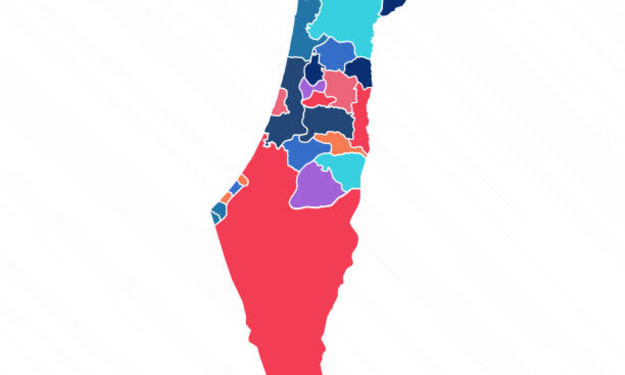
Driving through what might be one of the world's most peculiar landscapes, I find myself traversing the border between Israel and the West Bank. A glance at the map reveals a puzzle of Palestinian towns painted in green and Israeli settlements in blue. This region is often thought of as Palestine, yet what's intriguing is that almost a fifth of the three million inhabitants here are Jewish Israeli citizens. These Israelis, known as settlers, call the West Bank home while holding Israeli citizenship. As I journey along, I am witnessing the juxtaposition of two distinct nations intertwined by decades of conflict. Embarking on a quest to understand this complex panorama, I explored 15 settlements scattered across the West Bank, engaging with individuals who made the bold decision to relocate to this disputed territory. To unravel the origins of this intricate scenario, we must turn back the clock to 1948, a time when the land appeared markedly different. In those days, Great Britain held sway over this expanse. Faced with mounting tensions between Jews and Arabs, the United Nations collaborated with Britain to partition the land into separate states - Israel for Jews and Palestine for Arabs. The Jewish population embraced the proposal, heralding their independence. However, the Arab nations viewed this plan as another manifestation of European colonialism, rejecting it and subsequently engaging in war with Israel. Emerging victorious from the conflict, Israel exceeded the borders outlined by the UN. Amid peace negotiations, a ceasefire line materialized, etched in green ink and soon known as the Green Line. This demarcation was not a formal border, but rather a line separating Israel from the section now controlled by Jordan, which had seized it during the war. The land west of the Jordan River, thus acquired, earned the moniker "West Bank." The fragility of the ceasefire endured until 1967, when Israel found itself embroiled in another war with its Arab neighbors. While territorial expansion was not the objective, Israel rapidly advanced beyond the Green Line, capturing significant tracts of land, including the entirety of the West Bank. This victory posed a crucial question: should Israel incorporate the West Bank, extending Israeli citizenship and voting rights to its 1.1 million Arab inhabitants? Alternatively, should the land be returned to Jordan or given to the Palestinian people to establish their own state? This quandary ignited fervent debates within Israeli political circles. For many, the recent military triumph was perceived as a divine indication that Jews were destined to return to the land brimming with ancient Jewish heritage, the hills of ancient Judea and Samaria, encompassing the entire West Bank. While the government deliberated, Israeli civilians embarked on a bold initiative, establishing homes within the West Bank without official authorization. This grassroots movement planted the seeds of the settler movement, reshaping the dynamics of the region. However, this initiative was met with international disapproval. As settler numbers swelled, the UN issued a resolution decrying the settlements as an impediment to achieving lasting peace in the Middle East. The world witnessed the emergence of two narratives: one emphasizing Jewish civilians populating largely vacant plots of land infused with historical and spiritual significance, and the other, the predominant perspective, portraying settlers as expanding their nation through colonization. Despite global condemnation, the settler population burgeoned. Over ensuing decades, various factions within the Israeli government rallied behind the movement, channeling public resources and authorizing construction. Aiding the expansion of settlements, the Israeli housing ministry and military devised blueprints for West Bank development. Roads traversing the region facilitated movement between settlements and mainland Israel. Construction permits multiplied, and planned communities sprouted across the West Bank. From a fringe movement, settlers evolved into an integral facet of Israeli society, backed by state support. In the 1980s and 1990s, settlement activity surged, weaving these settlements around existing Palestinian towns, sparking tensions and protests. Recognizing the unsustainable nature of the situation, President Bill Clinton, Prime Minister Yitzhak Rabin, and Palestinian leader Yasser Arafat brokered the Oslo Accords in the mid-1990s. These agreements divided the West Bank into three areas: Area A granted Palestinians control over security and governance, Area B yielded Palestinian administrative power but retained Israeli security presence, and Area C remained under complete Israeli control, housing the settlements. These developments have given rise to the current state of affairs. Israelis enjoy convenient access between mainland Israel and the West Bank, traversing well-maintained roads known as "flyovers" that bypass Palestinian villages. Palestinians, on the other hand, often encounter roadblocks and checkpoints, hampering their movement. Yet, a more substantial challenge confronting Palestinians is the impact of fragmented land on their economy. The fertile agricultural land, water, and mineral resources concentrated in Area C sustain the majority of the West Bank's economy. Limited access to these resources has stifled Palestinian businesses and economic growth. An event in 2005, where Israeli Prime Minister Ariel Sharon uprooted 8,500 settlers from the Gaza Strip, reignited settler fervor. Witnessing fellow Israelis evicted from their homes galvanized the settler community, prompting further expansion efforts in the West Bank. Today, these settlers reside in established communities complete with schools, hospitals, and even a university. As thoughts turn towards resolving this intricate conflict, the idea of a two-state solution, granting Palestinians their own state within the West Bank region, emerges as a common proposal. However, the evolving settlement landscape, particularly within Area C, complicates this path. These settlements, far from being temporary encampments, have evolved into thriving communities. In conclusion, the West Bank's unique tapestry of settlements and Palestinian towns stands as a testament to the enduring complexities of the Israeli-Palestinian conflict. It is a landscape where historical narratives, religious ties, and contemporary political considerations converge, yielding a remarkable tableau that continues to shape the destiny of this region.
By Shubham Bajaj3 years ago in History
Hydrus of Medieval Bestiaries
The term "cryptid" may sound like a relatively new concept, and the word itself might make you think of something like the Loch Ness monster or Bigfoot. Modernly, the concept is essentially a creature undocumented by science, perhaps from folklore, that may or may not even exist.
By J.A. Hernandez3 years ago in History
Why Titanic didn't had enough lifeboats?
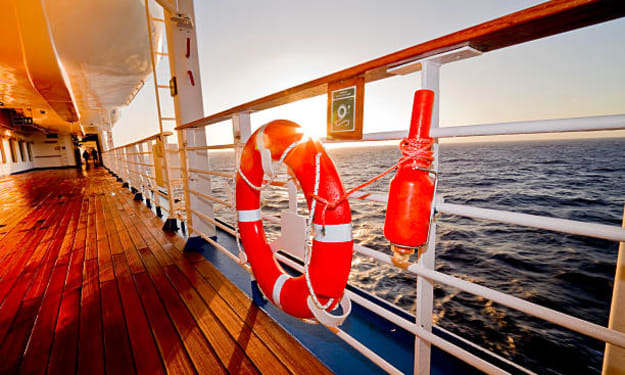
In James Cameron's 1997 blockbuster film, Titanic, there's a memorable moment where Rose, played by Kate Winslet, realizes a critical fact about the lifeboats: "It seems that there are not enough for everyone aboard." The response from Victor Garber's character, Titanic's architect Thomas Andrews, is both confident and poignant: "I have built a good ship, strong and true. She's all the lifeboat you need." Given the foreknowledge of the tragic outcome, this line takes on a bitter irony, embodying the essence of how the Titanic was designed and the fateful errors that unfolded. Interestingly, the Titanic was equipped with more lifeboats than mandated by British law. The Merchant Shipping Act of 1894 stipulated that vessels weighing over 10,000 tons should have at least 16 lifeboats capable of accommodating 990 people. Despite the Titanic's massive size, weighing over 45,000 tons at launch in 1911, it was legally required to carry only 16 lifeboats. Surprisingly, the Titanic had 20 lifeboats, with the potential to hold up to 1,178 individuals at full capacity. Tragically, this fell far short of the approximately 2,240 passengers and crew on board during the ship's ill-fated voyage. From a design perspective, the Titanic's builders believed they had crafted an unparalleled example of maritime safety. The Titanic was intentionally designed to remain afloat even after sustaining significant damage. The ship's lower section was divided into 16 compartments through bulkheads—partitions that could be sealed off using watertight doors in case of a breach. This design aimed to prevent flooding in unaffected sections, ensuring that the Titanic would remain a stable platform for passengers while lifeboats were used to evacuate to rescue vessels. This concept of relying on both bulkheads and lifeboats had been successfully demonstrated before. A few years prior, the RMS Republic had collided with another ship, causing considerable damage and flooding. However, the crew's strategic use of watertight compartments and the newly introduced Marconi Wireless Telegraph system allowed them to send distress signals, leading to a successful evacuation and saving nearly all onboard. The early success of wireless communication and careful ship design fostered optimism that disasters at sea could be minimized. A 1909 news article boldly declared that "the passenger on a well-equipped transatlantic liner is safer than anywhere else in the world." This sentiment prevailed until the ill-fated events of the Titanic altered this perception. However, despite the Titanic's robust design, a sequence of unfortunate events led to its demise. While regulations originally stated that ships should remain afloat with any two adjacent compartments flooded, the Titanic was designed to withstand even more severe damage. Engineer and Titanic researcher Sam Halpern's analysis revealed that the ship could stay afloat even with three or four adjacent compartments flooded. The key was to maintain a level ship to prevent water from spilling over the bulkheads. Tragically, the Titanic's collision with an iceberg deviated from these anticipated scenarios. The ship's side scrape along the iceberg breached multiple compartments, with Boiler Room six being a critical breach point. Flooding of the first five compartments overwhelmed the design's resilience, causing the ship to become increasingly unstable as water flowed over the bulkheads. This eventuality contradicted the Titanic's initial premise of safety through compartmentalization. The Titanic's wireless distress signals were sent out, but the closest ship, SS Californian, failed to receive them due to the radio operator's inactivity. As time passed, the Titanic's desperate messages revealed the dire situation onboard. Without a rescue ship, the only remaining option was to rely on lifeboats. When the RMS Carpathia eventually arrived, the Titanic had already succumbed to the ocean, resulting in the tragic loss of over 1,500 lives. The disaster left an indelible mark on maritime safety regulations. A stark visual comparison between RMS Olympic and her twin Titanic in 1911 and 1912 respectively, highlights the immediate change in lifeboat provisions following the tragedy. The disaster prompted the establishment of the International Convention for the Safety of Life at Sea (SOLAS) in 1914. This international treaty mandated continuous wireless telegraph communication and increased the required number of lifeboats to accommodate everyone on board. In modern times, SOLAS regulations stipulate that cruise ships must have lifeboats capable of accommodating 125% of the ship's capacity in emergencies. The Titanic catastrophe, therefore, precipitated a profound transformation in maritime safety practices and regulations. Ultimately, the Titanic disaster wasn't solely the result of a design flaw, but rather a convergence of circumstances involving early wireless communication, an unforeseen collision scenario, and an overconfidence in the ship's resilience. The iconic "She's all the lifeboat you need" line, whether fictional or not, encapsulates the misguided optimism that surrounded the Titanic's ill-fated journey. The tragedy serves as a somber reminder of the delicate balance between innovation, preparation, and the unpredictable forces of nature.
By Shubham Bajaj3 years ago in History
Why queen Elizabeth 2nd was the queen of 15 countries!?
On November 30th, 2021, history was made as Barbados proudly emerged as the world's newest republic. With a resounding declaration, the transformation was solidified: "From this day and forever, declare Barbados a parliamentary republic." This pivotal moment marked the culmination of a journey that saw Barbados unfurl its own flag, symbolizing the end of a colonial era spanning over 350 years and dissolving its ties to the British royal family. What added an intriguing layer to the event was the presence of none other than Prince Charles, who acknowledged, "It was important that I should join you to reaffirm those things which do not change." Prince Charles's words held a deeper significance, encompassing the essence of the transition. Although Barbados had stepped away from being a realm of the British Crown, it chose to maintain its membership in the Commonwealth—a conglomerate of nations primarily composed of former British colonies. A moment of transformation was unfolding, one that required a closer look at the intricate relationship between the British Empire and the Commonwealth of Nations. Travel back to 1926, the year Queen Elizabeth II entered the world stage. At that time, the British Empire exerted dominion over nearly a quarter of the global population through its sprawling colonies. This immense reach was built upon refined systems designed to control and exploit wealth and resources across the colonies. Consider the case of Barbados, where descendants of those kidnapped from Africa were exploited on sugar plantations, or delve into South Africa, where a wealth of diamonds was extracted from local mines. The early 20th century witnessed the initial ripples of change in the colossal British Empire. Countries such as Australia and Canada transformed into British dominions, relinquishing direct rule by Britain while maintaining symbolic allegiance to the Crown—a concept termed the British Commonwealth. This new form would later serve as the blueprint for the empire's evolution. As Queen Elizabeth ascended the throne in the 1950s, the world was in flux. Post-World War II, Britain's economy faltered, and independence movements surged across the empire. Struggles for sovereignty unfolded in places like India, where leaders fought for self-governance, and in Kenya, where millions resisted British rule, even enduring internment camps. Recognizing the inevitability of decolonization, the monarchy shifted its focus toward relevance. While Queen Elizabeth did not personally attend the lowering of the British flag, her family did. Prince Philip participated in ceremonies marking the independence of former colonies, including Kenya. Other royals, such as Lord Mountbatten, were also part of this symbolic transition, as seen in India. India's trajectory took an intriguing turn as it chose to become a republic and sever ties with the monarchy. In response, the British Commonwealth underwent a transformation of its own, rebranding itself as the Commonwealth of Nations. This evolution allowed countries to join as members even if they were no longer under the queen's rule. Meanwhile, newly independent nations opted to retain the queen as their ceremonial head of state, establishing a diverse mix of monarchies and republics, all presided over by the queen. In this intricate landscape, the monarchy adapted and thrived, expanding its reach through royal tours that echoed the imperial tradition. As the British empire decolonized, the monarchy remained a global entity. Fast-forward to today, where approximately a third of the world's population resides in a Commonwealth nation. This intriguing alliance extends beyond former British colonies, as countries find value in the political platform it offers, connecting them to influential diplomatic players like the UK, India, Canada, and even the Crown itself. The transition to the next head of the Commonwealth, King Charles III, carries a hint of irony. While the British empire gave birth to the Commonwealth, the future leadership of the organization is not bound by colonial origins. Anyone has the potential to lead, indicating that the Commonwealth's evolution may be guided by those very colonies it was designed to unify. The recent passing of Queen Elizabeth II triggered periods of mourning across Commonwealth nations. Her remarkable ability to unite diverse nations provided a buffer against the darker chapters of British history, such as slavery. However, the monarchy can no longer evade these discussions, as the collective reckoning with colonial legacies prompts introspection on the monarchy's role within the Commonwealth. These conversations underscore a pivotal shift in power dynamics. Former British colonies now hold considerable influence within the Commonwealth. The question that looms large is the collective vision of these nations. What aspirations and goals will guide the future of this diverse union? The journey from colonialism to republics within the Commonwealth is a complex narrative, one that reflects not just a shift in political landscapes, but also the aspirations of nations bound by shared histories.
By Shubham Bajaj3 years ago in History
The Remarkable Discovery of the Lost Tombs of the Pharaohs
In the heart of the scorching Egyptian desert, an international team of archaeologists embarked on an audacious expedition to unravel one of history's greatest mysteries: the elusive tombs of the Pharaohs that had eluded discovery for centuries. Armed with cutting-edge technology and unwavering determination, they set out on a journey that would rewrite history books and capture the world's imagination.
By mostafa ali3 years ago in History