Medieval
Whisper Of Rebellion
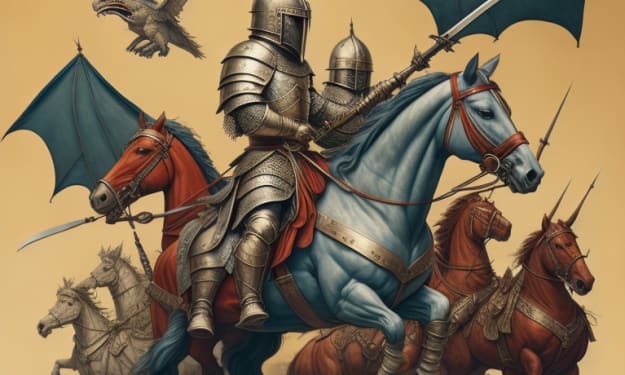
In the kingdom of Eldoria, a land renowned for its beauty and prosperity, whispers of discontent began to circulate through the bustling streets. King Aric, once a beloved ruler, had gradually turned tyrannical, imposing heavy taxes and cruel punishments on his subjects. As his grip tightened, a group of noble-hearted individuals secretly gathered to plot a coup against his oppressive regime. Among them was Lady Elara, a skilled diplomat with a heart for justice, and Captain Leonhardt, a courageous warrior who had sworn an oath to protect the people. They formed an unlikely alliance with Adeline, a brilliant strategist, and Rafael, a charismatic bard whose songs spread the message of hope. As days turned to weeks, their clandestine meetings grew in number and urgency. They devised a plan to rally the discontented citizens and overthrow King Aric's rule. Adeline meticulously mapped out the castle's layout, while Rafael's songs and stories ignited a spark of rebellion among the masses. The day of reckoning arrived, and the kingdom stood on the brink of change. The coup's orchestrators, now known as the "Liberators," executed their plan flawlessly. In the heart of the night, they infiltrated the castle, skillfully navigating its passages. Swords clashed, arrows flew, and the clash of ideals reached its crescendo. In the throne room, Lady Elara confronted King Aric, her voice unwavering as she recounted the suffering he had inflicted upon his own people. Captain Leonhardt stood by her side, his blade raised in defense of justice. The people's fervor echoed through the halls, and the tides of power began to shift. With the support of the citizens and the resilience of the Liberators, King Aric's forces were overwhelmed. As dawn broke, the tyrant's reign came to an end, and a new era of hope emerged. Lady Elara, known for her wisdom, was chosen as the kingdom's new leader, and the Liberators helped reshape Eldoria into a land where justice, compassion, and equality flourished. In the years that followed, the story of the coup became a legend, a testament to the strength of unity and the power of ordinary individuals who rose against injustice. The kingdom of Eldoria, once shrouded in darkness, now stood as a beacon of hope, reminding all that even in the face of tyranny, the spirit of rebellion could ignite a flame that would light the way to a brighter future.X
By Shedrach Ojodomo Attah3 years ago in History
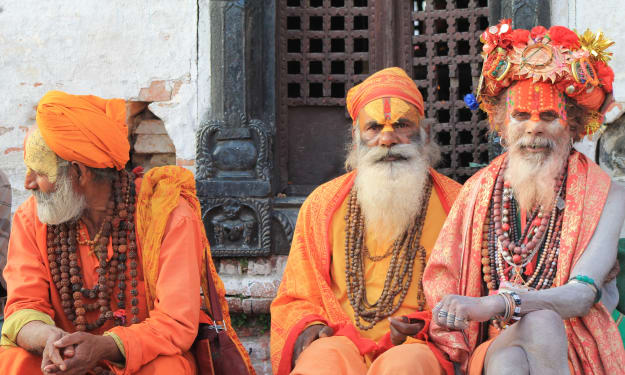
Tracing Humanity's Spiritual Journey: The Ten Oldest Religions in Existence
Throughout human history, the quest for understanding life's mysteries and connecting with the divine has given rise to a multitude of religious beliefs and practices. Delving into the past, we uncover the ten oldest religions that have shaped cultures, societies, and individual lives for thousands of years.
By Sabuj Maity3 years ago in History
Fueling the Wars: The Remarkable Journey of Alternative Energy during the World Wars"
In the bustling streets of wartime London, amidst the backdrop of Edwardian elegance, a curious sight would have captured the imagination of any onlooker: massive vehicles, including the emblematic double-decker buses, sporting enormous canvas balloons on their roofs. Far from being a flight of fancy, these were the symbols of human resourcefulness during a time of dire fuel shortages.
By Ifeoma Odumodu 3 years ago in History
Unraveling the Mysteries of Ancient Human Migration: The Philippines Revelation
The story of human evolution is a captivating journey, filled with twists, turns, and unexpected revelations. Every archaeological find adds a new dimension, reshaping our understanding of our ancestors' lives, migrations, and interactions. The Philippines, a lush archipelago of over 7,000 islands, has recently emerged as a significant chapter in this narrative, revealing secrets that challenge long-held beliefs about ancient human migration.
By Ifeoma Odumodu 3 years ago in History
The Untold History of Ghana Must Go In 1983
In the annals of West African history, the year 1983 marks a somber chapter known as the "Ghana Must Go" tragedy, a harrowing saga that unfolded against the backdrop of political intrigue, economic upheaval, and the indomitable human spirit.
By X One Media 3 years ago in History
This Place Is Full of Pirate Gold, Why Can't No One Find It?. Content Warning.
It is rumored that this location is teeming with wealth that has been stashed there for hundreds of years, yet no one has successfully claimed it from this valuable island. Since 1795, treasure hunters have been captivated by this site.
By Hakam Zuhoor3 years ago in History
The Disease That Makes You a Dancer
Today we're delving into one of history's most intriguing and strange mysteries. It takes place in Strasbourg, a picturesque town in France's Alsace region, in the year 1518. In the infantile period of medicine, in the midst of the humdrum, something extraordinary happened.
By The Purple Olympian3 years ago in History
The Apollo 13 Odyssey: A Tale of Being Adrift in Space
A NASA spacecraft with three astronauts on board was on a mission to land on the moon. The spacecraft was at a distance of 322,000 KM away from Earth and it took three days for them to reach there. However, something terrible happened that no one was prepared for. The main oxygen tank blasted due to some fault, which was supplying oxygen to the astronauts. Now, the astronauts were certain about their fate as only 15 minutes of oxygen was left in the cabin and it was impossible to reach Earth within this time. Sending humans to space is a sophisticated mission, where failure is not an option as it would mean risking years of hard work and human life. Spacecraft protects astronauts from deadly sunrays but it gives them an earthlike atmosphere, so that they can remain alive. Pressurised cabins, where oxygen tanks are installed for oxygen supply and special filters are there to take out the carbon dioxide. If something happens to the spacecraft in space, then spacecraft and its astronauts will get lost in space forever. However, in April 1970, an actual incident happened that was no less than a science fiction story. Apollo 13 was scheduled to land on a big crater on the moon called Fra Mauro. The commander of the mission was James Lovell, and Jon Swigert, Fred Haise were the two module pilot. All the three astronauts bid adieu to their families and went on the voyage. The rocket was launched on 11th April 1970 in Florida's John F. Kennedy Space Centre. It's been 55 hours since they had left the earth. Spacecraft was heading towards the moon which was at the distance of 322,000 KM from Earth. Meanwhile, when an astronaut pushed a button to check the oxygen tank level, suddenly a strong jerk was felt. This jerk was so strong that other astronauts sitting in the command module also felt it. At first, everyone thought it was another joke done by the module pilot Fred Haise. But this time even Fred was worried and anxious like the other two pilots. Before they could think more, the master alarm and electrical power failure light started to blink. It was detected that due to a short-circuit, one oxygen tank got completely destroyed. The mission commander briefed the whole situation to the Mission control at NASA. The mission control at NASA were in chaos after receiving this news. Because NASA engineers knew the consequences of a blast in oxygen tank. After a few minutes when the Mission control got the real-time data from the spacecraft, then they got a news that not only one oxygen tank got blasted but the other oxygen tank is steadily emptying. Along with that, two out of three electrical supplies have also got destroyed, which was the main instrument to drive the spacecraft. To handle all the problem at once was difficult for the Mission control and meanwhile Commander James Lovell saw gas leaking from the command module. This was the oxygen gas which was leaking from the second and last oxygen tank. Now all the three astronauts knew, they were in for a rough ride. Now all the lights were off, neither do they have water to drink. Only one power backup was left and the oxygen they were breathing in, was coming from the last and leaking tank. Apart from these problems, there was another terrifying situation due to the blast the spacecraft's direction was changed and it meant that if they didn't change their direction, they might get lost in the deep space forever. Therefore they needed to correct their direction first. The news was spread all across the globe. The television networks that were ignoring this mission were now started covering the crisis of Apollo 13. Along with the families of the astronauts, the whole world was watching this tragic news. They were running out of time and it's been one and a half hour since the blast happened. The last oxygen tank had 15 minutes of oxygen left for the command module. At this point, NASA's Mission control decided that astronauts must shift from the command module to the lunar module. Fortunately, the lunar module had a separate oxygen supply, but the problem was it was designed for only two astronauts. But there was no option that's why they had to take this step. All the three astronauts went inside the lunar module, here NASA engineers were doing real-time calculation to find out for how long it will keep them alive. From the calculation, it was found that lunar module can supply oxygen for two days. But the real question was when and how these astronauts will be brought to earth? No one had the answer to this question. To bring the Apollo 13, NASA had two options first was, bringing the whole spacecraft towards the earth by using the main engine. But as this main engine was running on the last fuel source that's why engineers feared that the engine might stop in between. The second option was to utilise the Moon's gravity to push the spacecraft towards the earth which will require less power. Although NASA Mission control
By Aditya Dey3 years ago in History