Lessons
Fire in the Crescent: The 2025 Israel-Iran Conflict and the Fractured Path to Peace
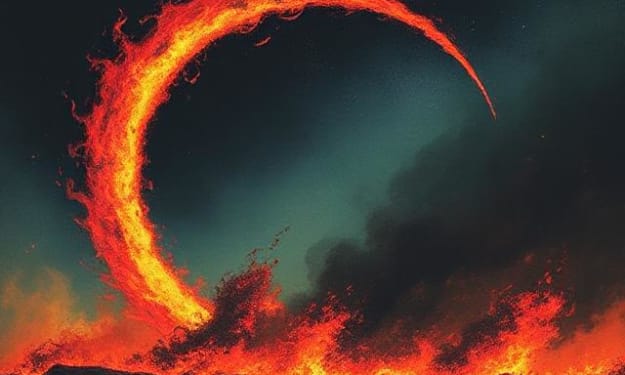
By: Lal Sher Khan The morning of June 13, 2025, dawned like any other in Tehran. But within minutes, the sky turned to fire. What began as the faint sound of jets over the city quickly turned into an orchestrated barrage. Israel, for the first time in history, launched a full-scale direct military operation against Iran, striking deep into the heart of the Islamic Republic. Dubbed "Operation Rising Lion," Israeli fighter jets, drones, and cyber units unleashed a swift, coordinated assault targeting Iran’s nuclear facilities, missile silos, and Revolutionary Guard command centers. Explosions were reported in Tehran, Natanz, Isfahan, and Qom. Dozens of high-ranking IRGC officers, including General Hossein Salami, were confirmed dead within hours. Israel had long warned the world that a nuclear-armed Iran was a red line it would never tolerate. But this wasn’t just a preemptive strike—it was the beginning of a direct war between two bitter rivals that had previously limited their hostilities to proxies, cyberattacks, and espionage. A Decade in the Making The seeds of this conflict were planted long before the first missile was fired. Tensions had been escalating throughout the 2020s. Iran had gradually accelerated its nuclear program, frequently clashing with the IAEA over inspection rights. Meanwhile, Israel had ramped up sabotage operations inside Iran—explosions at enrichment facilities, assassinations of nuclear scientists, and increasingly public threats. By early 2025, after years of shadow warfare, several red lines were crossed. Iran’s missile program had made significant leaps, and its enrichment levels reportedly surpassed 90% uranium purity—the threshold for a bomb. Israel’s cabinet, under Prime Minister Benjamin Netanyahu, faced mounting pressure from military and intelligence leaders to act decisively. The trigger, according to Israeli officials, was an imminent Iranian plan to activate underground weaponization labs, a claim Iran vehemently denied. Iran’s Retaliation: The Shadow Breaks Into Light Within 24 hours of the Israeli strikes, Iran launched over 550 missiles at Israel, targeting military bases, airports, and urban centers including Tel Aviv, Haifa, and Beersheba. Though Israel's Iron Dome and David’s Sling systems intercepted many of them, several penetrated defenses, resulting in over two dozen civilian deaths and injuring hundreds. Hezbollah, Iran’s key proxy in Lebanon, opened a second front in the north. Rockets rained down on the Galilee region, prompting mass evacuations. The Houthi rebels in Yemen fired drones toward Eilat, further complicating Israel’s multi-front defense efforts. But perhaps the most startling development came from the United States. The U.S. Intervenes: Precision and Pressure President Donald Trump, recently reelected, addressed the nation from the White House, flanked by Secretary of Defense and Vice President J.D. Vance. Declaring Iran’s nuclear infrastructure “a global threat,” Trump ordered precision U.S. airstrikes on Fordow, Natanz, and Isfahan, joining Israel in its military campaign. In a matter of days, Iran’s nuclear capabilities were severely degraded. The Fordow facility was reduced to rubble. Key centrifuge halls in Natanz were rendered inoperable. Tehran’s air defense system struggled to respond, overwhelmed by the scope of the operation. Though Tehran declared victory in propaganda broadcasts, the reality on the ground told a different story: significant infrastructure loss, hundreds of military and civilian deaths, and economic devastation. Ceasefire—or Ceasefire for Now? By June 24, with international pressure mounting and domestic unrest stirring in Iran, a fragile Qatari-brokered ceasefire was announced. Both sides claimed victory. Iran’s Supreme Leader, Ayatollah Khamenei, called it “a divine test passed with honor.” Netanyahu stated the mission had “secured Israel’s future.” The ceasefire held—for now. Yet, questions swirl around its longevity. Iran’s parliament, controlled by hardliners, has since voted to expel all IAEA inspectors and resume nuclear activities “at full pace.” Israel, while pausing military operations, has declared itself ready to strike again “at a moment’s notice.” Behind closed doors, analysts fear this is not peace, but simply a pause before another storm. Echoes on the Street: Voices from Tehran and Tel Aviv In Tehran, the mood is mixed. Some, whipped into patriotic fervor, see the war as a stand against Western and Zionist aggression. Others mourn their losses—family members, homes, entire neighborhoods destroyed. “We didn’t ask for this,” said Reza, a university student in Tehran, whose dormitory was damaged in the air raids. “We wanted jobs, freedom, a normal life. Now we’re left with rubble and silence.” In Tel Aviv, residents emerge from bomb shelters with war-weariness etched on their faces. “We knew this day might come,” said Naomi, a school teacher. “But no one is ever truly ready. I just want my kids to feel safe again.” Regional Repercussions and Global Stakes The Israel-Iran conflict has redrawn the geopolitical map. Saudi Arabia, long a quiet backer of Israeli efforts to counter Iran, opened its airspace for the Israeli air force for the first time—a major diplomatic signal. Turkey condemned Israel, but stopped short of military action. Russia and China, Iran’s economic lifelines, have called for restraint, while the **
By Lal Sher Khan about a year ago in History
“From Allies to Adversaries:
his y Introduction Once allies in a complex and unstable Middle East, Iran and Israel’s relationship has shifted dramatically over the past several decades. From covert military cooperation and oil deals during the reign of Iran’s Shah to today's deadly standoffs, cyberattacks, and proxy wars — their history is one of trust shattered, secrets unearthed, and a silent war that has shaped the very structure of the region.
By Qaisar iqbal about a year ago in History
Israeli and Palestinian Women United for Peace
The conflict between Hamas and Israel continues, claiming thousands of civilian lives. International organizations remain far from reaching an agreement. Amid this, on October 4, 2023, thousands of Palestinian and Israeli women gathered at the Dead Sea to demand peace under the slogan “Israeli and Palestinian Mothers Changing Realities.”
By Valentina Martire Velazcoabout a year ago in History
Sophie Germain
Born in Paris in 1776, Sophie Germain grew up in an era when women were excluded from academic and scientific circles. Despite being denied a formal mathematical education in her youth and facing exclusion from the male-dominated scientific hierarchy later in life, Sophie never abandoned her passion for learning and exploration. Captivated by numbers from a young age, she found in mathematics an outlet for her creativity and boundless curiosity. Incredibly, she taught herself Latin and Greek to read mathematical texts that weren’t available in French.
By Valentina Martire Velazcoabout a year ago in History
Ancient Egyptians – Are They White or Black?
For almost 200 years, blacks and whites have been unable to divide the ancient Egyptians. The question of what race the ancient Egyptians belonged to arose at the turn of the 18th and 19th centuries, when interest in racial classifications increased in the scientific community. Attempts to systematize peoples with external features have been made since time immemorial.
By Uchenna Cosmas Nwokafor about a year ago in History
The Soul of the White House Foundation. AI-Generated.
The White House is more than stone and story, it is a living breath of the Republic. Behind its neoclassical gaze and beneath the arching porticos lies a foundation not only of mortar and marble, but of ideas, unyielding, storm-tested, and ever-renewing.
By taylor lindaniabout a year ago in History