Lessons
The History and Origin of Football (Soccer)
Football, or soccer as it is called in some parts of the world, is the most popular sport globally. With billions of fans and players, it commands unparalleled attention. Its history, however, is as fascinating as the game itself—rich in culture, conflict, and evolution over millennia.
By Engr. Mansoor Ahmadabout a year ago in History
The Unsinkable Molly Brown
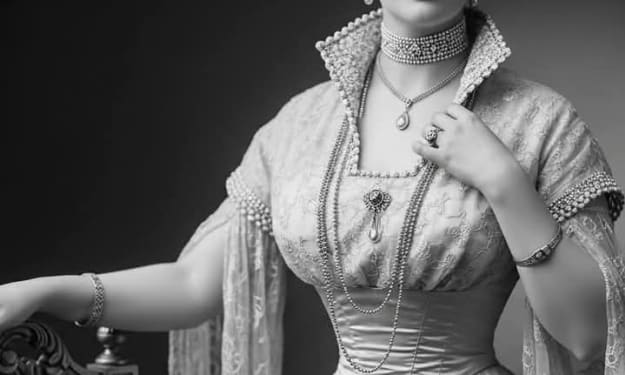
In the early hours of April 15, 1912, as the RMS Titanic slipped beneath the icy waters of the North Atlantic, a woman sat in a lifeboat, soaked, freezing, and furious. Not for herself—but for the hundreds left behind. That woman was Margaret Brown, later known to the world as "The Unsinkable Molly Brown." Her story is not just about survival; it’s about resilience, rebellion, and relentless compassion. Hollywood may have turned her into a flamboyant socialite, but the real Margaret Brown was far more extraordinary than the legend suggests. She was a philanthropist, feminist, political activist, and survivor—not just of shipwrecks, but of a world that told women to stay silent and know their place. Let’s explore the remarkable journey of a woman who was, in every sense of the word, unsinkable. --- Humble Beginnings in Hannibal Born Margaret Tobin on July 18, 1867, in Hannibal, Missouri, she was one of six children in a working-class Irish-Catholic family. Her parents were poor but proud, instilling in their children a strong work ethic and a sense of social responsibility. Hannibal, best known as the hometown of Mark Twain, was a town of riverboats, dreams, and hard labor. At the age of 18, Margaret moved west to Leadville, Colorado, to live with her older siblings and seek opportunity. There, she worked in a department store and lived modestly. But fate had grander plans. --- A Love Story—and a Fortune In Leadville, Margaret met James Joseph “J.J.” Brown, an intelligent, hard-working mining engineer. They married in 1886, a love match rather than one of convenience or class. The Browns were not wealthy at first. In fact, they lived among the working class for years. That changed dramatically in 1893, when J.J. helped develop a revolutionary method to mine gold from previously unworkable ore. The discovery led to a massive gold strike at the Little Jonny Mine, and the Browns became millionaires overnight. Though newly rich, Margaret never turned her back on the underprivileged. She used her money and influence to support orphans, miners, women’s education, and workers’ rights. She also became an early suffragist, fighting for a woman’s right to vote long before it was law. --- A Woman of the World Margaret immersed herself in culture and education. She learned multiple languages, traveled extensively across Europe, and took classes at Carnegie Institute. Her interests ranged from literature and music to politics and law. Her home in Denver became a cultural hub and a place where the elite and the downtrodden alike could find an advocate. But her marriage with J.J. eventually faltered. In 1909, the couple separated—a bold move for a woman at that time. Still, they remained close and never divorced, and Margaret retained her independence and wealth. --- The Titanic: A Journey Turned Nightmare In early 1912, while traveling in France, Margaret received news that her grandson was seriously ill. She booked the earliest passage home—on the maiden voyage of the RMS Titanic, the largest and most luxurious ship of its time. She boarded in Cherbourg, France, as a first-class passenger, enjoying the grand accommodations, social gatherings, and opulence. But luxury couldn't shield anyone from fate. On the night of April 14, 1912, the Titanic hit an iceberg. The "unsinkable" ship was doomed. Margaret was awakened by the jolt and quickly assessed the situation. Unlike many in first class who hesitated, she jumped into action. She helped other passengers—especially non-English-speaking immigrants—reach lifeboats. She spoke French and German, guiding panicked travelers who didn’t understand the crew’s commands. Eventually, she was forced into Lifeboat No. 6—but only after ensuring others were safe. --- A Voice in the Dark In the lifeboat, Margaret’s legendary will emerged. Despite being 44 years old and wearing a heavy wool coat, she took up an oar and rowed to help keep warm and maintain morale. She urged the quartermaster in charge, Robert Hichens, to return to the wreck site to look for survivors. He refused, fearing the lifeboat would be swamped. Margaret was furious and threatened to throw him overboard if he didn’t cooperate. Though they never returned to the wreck site, Margaret’s leadership and compassion kept the boat calm. After seven freezing hours, they were rescued by the RMS Carpathia. --- From Survivor to Savior Once aboard the Carpathia, Margaret didn't collapse into grief or shock. Instead, she organized relief efforts for survivors, particularly second- and third-class passengers who had lost everything. She raised money on the spot, distributed blankets, wrote letters for survivors, and formed a Survivors’ Committee. By the time they reached New York, she had already collected thousands of dollars in aid. Her own account of the tragedy, published shortly after, was clear, empathetic, and full of calls to action. Margaret Brown became a national symbol of courage. --- The Unsinkable Woman’s Second Life The Titanic made her famous, but it didn’t define her. Instead of retreating into society life, Margaret used her fame to push even harder for progressive change. She: Ran for U.S. Senate in 1914—a bold move for a woman, especially when women couldn't even vote in many states. Advocated for workers’ rights after the deadly Ludlow Massacre in Colorado. Served in France during World War I, where she organized field hospitals, aided wounded soldiers, and was awarded the French Legion of Honor for her efforts. Supported the NAACP and suffragist groups, continuing her push for justice across racial and gender lines. Her Denver home, now a museum, became a gathering spot for activists, artists, and political thinkers. --- Death of a Legend, Birth of a Myth Margaret Brown died on October 26, 1932, at the age of 65, from a brain tumor. She was buried beside her husband in the Holy Rood Cemetery in New York. But her story didn’t end there. In 1960, the Broadway musical “The Unsinkable Molly Brown” debuted, followed by a popular film in 1964 starring Debbie Reynolds. The name “Molly” was invented for entertainment, but the myth helped preserve her legacy for generations. --- Why She Still Inspires Margaret Brown wasn’t fearless because she survived a shipwreck. She was fearless because she stood up for people who had no voice—immigrants, children, miners, women. She fought against injustice, even when society told her to stay quiet and behave. Her legacy reminds us that true strength isn’t loud or showy—it’s relentless. It rows through icy waters, speaks up in lifeboats, and defies the rules of its time. More than a century later, her life still speaks to us: urging courage in the face of fear, action in the face of injustice, and compassion in the face of crisis. --- Final Thought Margaret Brown didn’t just survive the Titanic. She survived expectation, convention, and oppression—and came out swinging. Whether you call her Margaret, Molly, or just unsinkable, one thing is clear: > She was a force of nature in an age that tried to tame her—and the world is better because she didn’t let it.
By Hasbanullahabout a year ago in History
The Downfall of the Ottoman Empire: Causes and Consequences
The Ottoman Empire, once a vast and powerful dynasty spanning Europe, Asia, and Africa, existed for more than six centuries. At its height during the 16th and 17th centuries, it was one of the most formidable empires in history. However, by the early 20th century, it had disintegrated into political, economic, and military chaos, eventually collapsing after World War I. The fall of the Ottoman Empire was a gradual process, marked by both internal decay and external pressures. This article explores the key causes and consequences of the empire’s decline.
By Engr. Mansoor Ahmadabout a year ago in History
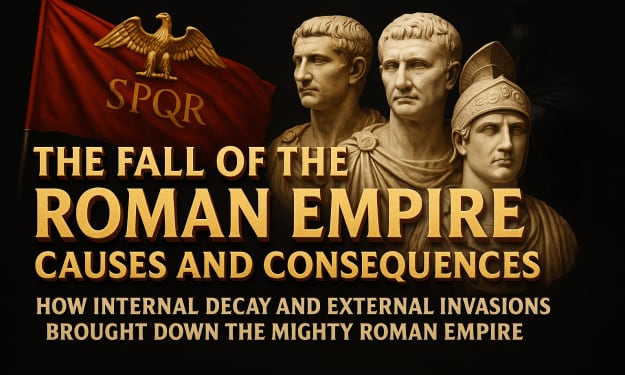
The Fall of the Roman Empire: Causes and Consequences
The Roman Empire, once the most powerful civilization in the ancient world, ultimately fell after centuries of domination across Europe, North Africa, and the Middle East. Its collapse is one of history's most significant turning points, signaling the end of classical antiquity and the beginning of the Middle Ages in Europe. Understanding the fall of the Roman Empire involves a complex combination of internal weaknesses and external pressures that eroded Rome’s ability to sustain itself. This article explores the key causes behind the downfall of the Roman Empire and the enduring consequences of its demise.
By Engr. Mansoor Ahmadabout a year ago in History
iOS 26 Apple’s Next Big Leap in Mobile Experience.
A Fresh New Design: Liquid Glass One of the most talked-about highlights of iOS 26 is its “Liquid Glass” design. This fresh visual approach brings a modern, elegant look to the entire operating system. With soft, fluid elements and subtle transparency, iOS 26 looks more dynamic and alive than ever. Apple has applied the Liquid Glass aesthetic throughout the system, including areas like the Smart Stack, Control Center, and various app controls. The goal is to make the interface feel more expressive and delightful, yet still comfortable and recognizable for existing users.
By USA daily update about a year ago in History
🌪️ “When the Rope-Pulled Fan Stopped — and the Winds of Slavery Ceased” 🌪️
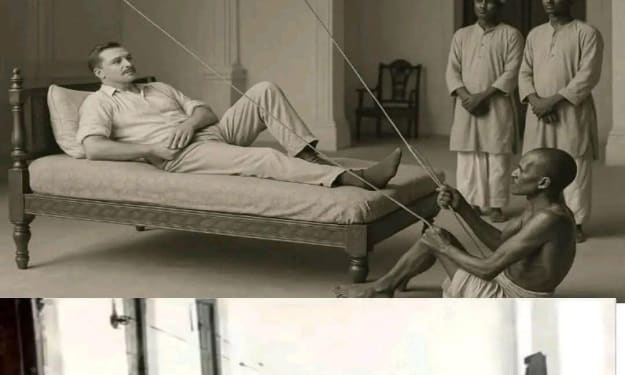
🕰️ When the British Came, the Winds of Slavery Began to Blow When the British first set foot on the rich soil of the Indian subcontinent, they didn't just seize its land, gold, and governance. They took control of the very air that flowed in the royal courts and noble mansions of Delhi, Lucknow, Lahore, and Bombay. This is not a metaphor. It is a historical reality that strikes both the mind and the heart. As British officers would kick off their shoes and settle into cushioned seats in their sprawling colonial mansions, enormous fabric fans—punkhas—would begin to sway above them, offering a cool breeze in the tropical heat. But what made these fans move was not electricity. It was human labor—the silent, invisible breath of servitude. Below the fan, lying flat on the hot floor, would be a voiceless and earless servant—a human fan operator, mute and deaf, chosen specifically for his inability to hear or speak. Why? Because the British had a chilling motto: > “We want air… not ears.” They didn’t want distractions. They didn’t want conversation. They wanted obedient bodies, not minds. These “punkha-wallahs” would pull on long ropes connected to the fans above, hour after hour, drenched in sweat, while their colonial masters enjoyed wine, music, and conversation. This wasn’t just physical slavery—it was emotional and intellectual bondage, reducing humans to mere machines before machines even existed. --- ⚙️ Technology: The Great Equalizer of Time Then came the miracle of innovation—light bulbs, motors, switches. With the wave of technological advancement, the power that once lay in the hands of cruel masters was transferred to circuits, wires, and buttons. That same punkha, once moved by a slave’s bleeding hand, was now spinning joyfully from the ceiling on the command of electricity. It seemed to laugh, whispering: > "Now, I give air… without chains, without commands!" The day electricity came, the ropes of slavery snapped. The British left. But the fans remained. And with them, a haunting reminder of the days when even air was a luxury that came at the cost of someone's dignity. --- 🎭 Interpretation: Not All Chains Are Made of Iron Slavery is not always about iron shackles or prison walls. Sometimes, a rope tied to a ceiling fan can be more symbolic than a dungeon. Think deeply: a fan swaying on the ceiling, a servant lying on the ground, pulling a rope with his feet while trying not to breathe too loud. That’s not just a system of ventilation. That’s a system of domination. And still today, in the age of artificial intelligence and remote-controlled appliances, we must ask ourselves: Are we truly free? Or are we just tied to invisible cords of modern servitude? --- 👣 A Scene Soaked in Sweat and Silence Picture it vividly: A white British man sits under a high ceiling, holding a glass of imported wine. A velvet carpet cushions his polished shoes. A female dancer sways rhythmically before him. Overhead, a large punkha swings side to side. Beneath the shadows, a servant lies on the cold floor, his body soaked in sweat, his muscles aching, his identity erased — all so that the colonizer may not feel a moment’s discomfort. This is the civilization the West called “progress.” This is the culture that some in our lands still admire and emulate — without understanding the price of the breeze that once flowed. --- 💡 The Slap of Technology Today, when we press a button and feel a cool draft, we think nothing of it. But we should. Because every whisper of air from a fan today is a reminder of freedom hard-won. When we turn on an air conditioner or control a fan with a remote, we must pause. This isn’t just comfort. This is liberation. Technology, in this case, didn’t just make life easier. It restored dignity, replacing ropes with remotes and silence with agency. --- 📝 Conclusion: A Change in System, Not Just Speed The fan is the same. The ceiling is the same. The heat, too, is unchanged. What has changed… is the system. Where once mute servants pulled at ropes like forgotten souls, now silent machines serve us, without pride, without pain. The air still flows, but no one lies on the floor to make it happen. And that, perhaps, is the greatest revolution of all — not just in technology, but in human value. So next time you enjoy the comfort of a fan, think not only of its cooling breeze — but of the generations who suffered to give you that simple joy without chains. --- > From bondage to buttons, from ropes to remotes — the journey of the fan is the story of humanity’s struggle for dignity. Never forget: even the air we breathe was once a privilege denied to the voiceless.
By Ikram Ullahabout a year ago in History
No Ice Cream for You: The Strange Legacy of America’s Blue Laws
Picture this: It’s Sunday afternoon. The sun is shining, your pocket jingles with a few nickels, and all you want in this cruel, judgmental world, is an ice cream sundae topped with a cherry and a little hope. You stroll down to the corner soda shop, the bell jingles, and you ask the man behind the counter for two scoops of chocolate bliss. He stares back like you just confessed to tax fraud and says, “Kid… you trying to do time?”
By The Iron Lighthouseabout a year ago in History
The Precambrian Eon: The Forgotten Era Where It All Began
Long before dinosaurs, trees, or even the oxygen we breathe existed, there was an era that marked the beginning of everything—the Precambrian Eon. Spanning from Earth's formation over 4.6 billion years ago to 540 million years ago, this colossal period represents a staggering 88% of our planet's history. Yet, it remains one of the least understood chapters in Earth’s story.
By denizan Lawyerabout a year ago in History
The Kashmir Smast. Secrets of the Buddhist Caves of Katlang, Mardan Pakistan.
Who Lived Here? The Kashmir Smast was once home to Buddhist monks, spiritual leaders, and scholars. The word Smast itself comes from the Sanskrit word Samasta, meaning “cave” or “temple”. It is believed that these caves were first occupied in the 4th century CE, at the height of the Gandhara civilization, which was famous for its art, learning, and devotion to Buddhism.
By USA daily update about a year ago in History