Lessons
The Man Who Survived Two Atomic Bombs – And Lived to Warn the World
The summer of 1945 brought with it some of the darkest memories in human history. On August 6th, a single bomb reduced the vibrant city of Hiroshima to ashes. Three days later, Nagasaki suffered the same fate. Millions of lives were shattered, and history was left permanently scarred. But amidst this black chapter stood one man whose story became a powerful example of human strength and survival. This is the story of Tsutomu Yamaguchi — the man who survived both atomic bombings. --- Hiroshima: The First Apocalypse In early August 1945, Yamaguchi was working in Hiroshima as an engineer for Mitsubishi Heavy Industries. He was scheduled to return home to Nagasaki on August 6 — the same day the first atomic bomb was dropped. As he prepared to leave, a blinding flash tore through the sky. Within seconds, everything changed — fire, smoke, destruction. He was just 3 kilometers from the epicenter. Burned and injured, he miraculously survived. That night, he stayed in the ruins of a city that no longer existed. --- Nagasaki: Death Returns The next morning, wounded and exhausted, he somehow boarded a train and returned to Nagasaki. On the morning of August 9, while telling his supervisors about the horror of Hiroshima — another blinding flash filled the sky. The second atomic bomb had fallen — this time on his own city. Once again, he was near the epicenter. Once again, he survived. --- A Quiet Man with a Loud Message Yamaguchi had witnessed the unimaginable — burned bodies, crying survivors, and a kind of helplessness no words could describe. For years, he remained silent. But as time passed, he realized that surviving wasn’t just luck — it was a responsibility. He began to speak out — as a messenger of peace. His message was simple: > “No one should ever experience what I experienced.” “Peace is not optional — it is our only hope.” In 2009, Yamaguchi became the only person officially recognized by Japan as a survivor of both atomic bombings. --- What Did We Learn? Tsutomu Yamaguchi’s story isn’t just a memory — it’s a warning. In a world still chasing war and weapons, he reminds us that destruction is never far away if we lose our humanity. He faced death twice — and still chose life. He never spread hate, never sought revenge — only peace. --- Conclusion Yamaguchi’s life was not just a miracle — it was a light. When the world burned, he stood like a lantern — still glowing. His story teaches us not just to survive, but to live in a way that gives others hope In a world scorched by hatred, where silence often wins over truth, Tsutomu Yamaguchi chose to speak — not in anger, but in wisdom. He could have spent the rest of his days in the shadows of trauma, quietly mourning all that he lost. But instead, he stepped into the light, bearing the scars of two nuclear disasters not as marks of pain — but as symbols of purpose. Yamaguchi’s survival was more than just a miracle of biology — it was a moral calling. He lived not just to breathe, but to remind us that humanity cannot afford to repeat its greatest mistake. His voice, soft yet steady, echoed a truth that politicians often ignore, and that history books sometimes soften: > War does not end with victory. It ends with loss — for everyone. When the world heard “nuclear bomb,” they thought of power. But Yamaguchi saw orphans, burned skin, cries in the rubble, and cities turned into silent cemeteries. He became a bridge — between destruction and reflection, between memory and meaning. To live after death is rare. But to live for others after death has touched you — that is something divine. And that is exactly what he did. Even as time passed and the world moved on, he refused to let the horror become just another historical footnote. Through his words, interviews, and presence, he lit a candle in a dark world — and that candle still burns. His story doesn’t end with survival. It begins with it. Because in the end, the true victory is not in escaping death — It’s in choosing life, and using that life to heal, to warn, and to inspire. And that is why Tsutomu Yamaguchi lives on — not just in the pages of history but in every voice that dares to say:
By Asif nawazabout a year ago in History
Whispers in the Trenches: A Soldier’s Last Letter from World War I
Whispers in the Trenches: A Soldier’s Last Letter from World War I The mud had a way of swallowing everything. Boots, bullets, names, and even time. In the grey silence of the trenches of the Somme, 1916, Private Elias Fareed crouched low, pen trembling in his frostbitten fingers, writing what he believed might be his final letter home.
By Wings of Time about a year ago in History
Echoes of Revelation
Long before skyscrapers pierced the skies of the Arabian Peninsula, before oil wells turned deserts into gold mines, Arabia was a land of vast deserts, scattered tribes, and ancient traditions. It was a place where power belonged to the strong, poetry to the eloquent, and truth was often lost in superstition. In this rugged land, where injustice roamed freely and the weak were voiceless, a light was destined to rise — a light that would echo through centuries and reach every corner of the earth.
By Adil Nawazabout a year ago in History
The Main Reason Behind the Israel-Iran Conflict
The conflict between Israel and Iran is one of the most dangerous tensions in the Middle East. It is not just about religion or politics—it’s a mix of historical distrust, security concerns, nuclear weapons, and regional influence. To understand why Israel and Iran are enemies today, we must look at real events, official statements, and international reports that clearly explain the reasons.
By Engr. Mansoor Ahmadabout a year ago in History
Operation Black Buck: The RAF’s Longest Bomb Run
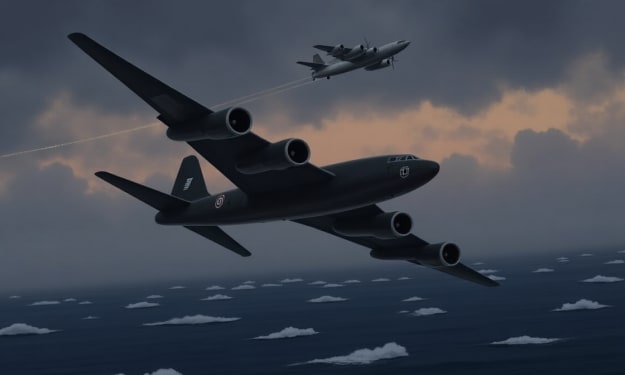
Operation Black Buck: The RAF’s Longest Bomb Run In April 1982, the world watched as a small cluster of windswept islands in the South Atlantic—the Falklands—ignited into war. Argentina had invaded. Britain responded. And in the opening days of this unlikely conflict, the Royal Air Force launched one of the most daring bombing missions in military history: Operation Black Buck.
By Wings of Time about a year ago in History
Scientists Discover 78,000 Year Old Neanderthal Footprint That Tells a Story of Survival.
In a groundbreaking discovery that offers a rare glimpse into the lives of our ancient cousins, scientists have uncovered a 78,000-year-old Neanderthal footprint preserved in mudflats in northern Spain. This single footprint, remarkably intact after tens of thousands of years, tells a profound story of survival, resilience, and humanity in a harsh Ice Age environment.
By Tariq jamilabout a year ago in History
The largest Martian rock ever found on Earth,
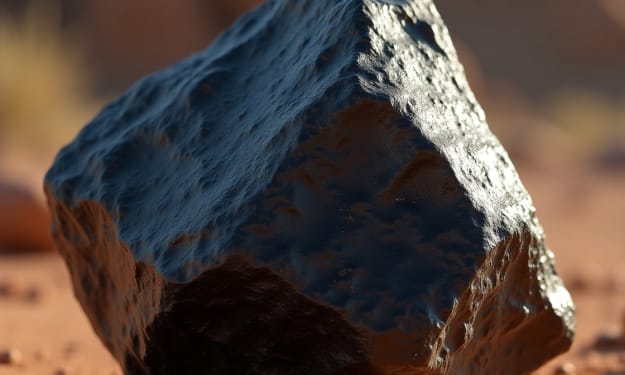
In a landmark moment for space enthusiasts and collectors alike, a rare Martian meteorite known as NWA 16788 has been sold for a staggering $5.3 million at a recent Sotheby’s auction in New York, setting a new world record for the highest price ever paid for a Martian rock. Weighing 25 kilograms, NWA 16788 is the largest Martian rock ever found on Earth and a scientific marvel in its own right. Unearthed in Nigeria’s Sahara Desert in 2023, the meteorite is now being hailed as one of the most significant extraterrestrial finds of the 21st century. A Giant Among Space Rocks NWA 16788’s sheer size alone makes it a standout. It is 70% larger than any previously discovered Martian meteorite, placing it in a category of its own. Of the estimated 400 known Martian meteorites that have made their way to Earth, none approach the mass or preservation quality of this specimen. Most Martian meteorites are fragments, broken and scattered either during their descent through Earth’s atmosphere or upon impact. In contrast, NWA 16788 is remarkably intact. Scientists believe it was ejected from the surface of Mars millions of years ago, most likely as a result of a massive asteroid or comet collision that sent debris flying into space. Its journey from Mars to Earth, and its preservation in the Sahara’s arid conditions, makes it a geological time capsule offering insights into the Red Planet’s history. A Meteorite with a Story Named according to its classification — "NWA" standing for Northwest Africa — the rock was reportedly discovered by local meteorite hunters and verified by planetary scientists soon after. Its composition was analyzed using spectroscopy and isotopic analysis, confirming its Martian origin. Key indicators include the presence of certain gas isotopes trapped inside the rock, which match atmospheric readings taken by NASA’s rovers on Mars. Sotheby’s, the renowned auction house, described the meteorite as “a once-in-a-generation discovery.” Ahead of the sale, it was displayed in a climate-controlled glass case, drawing crowds of collectors, scientists, and curious onlookers. The final bid of $5.3 million shattered previous auction records for meteorites and planetary specimens. While the buyer’s identity remains anonymous, experts suggest the meteorite may end up in a private collection or museum, where it can be further studied and displayed. Scientific and Cultural Significance Beyond its size and monetary value, NWA 16788 represents a scientific treasure trove. Martian meteorites are incredibly rare, offering one of the few direct ways for scientists to study Mars without sending missions to the planet itself. These rocks allow researchers to analyze Mars’s geologic and atmospheric history, shedding light on everything from ancient volcanic activity to the possibility of past water — and even life. Some meteorites have been found to contain microscopic bubbles of Martian atmosphere, providing data that complements the findings of rovers like Perseverance and Curiosity. In the case of NWA 16788, its large mass increases the potential for multiple scientific analyses without damaging the integrity of the rock. "Having a sample this large gives researchers room to perform deeper investigations," says Dr. Lena Khatri, a planetary geologist at the University of Chicago. "This could improve our understanding of Martian mineralogy and the planet’s evolution." A Meteorite Market on the Rise The booming interest in space collectibles has driven up prices for meteorites and other extraterrestrial materials in recent years. Lunar samples, asteroid fragments, and now Martian rocks are being bought not just by museums and universities, but also by wealthy private collectors and investors. According to Sotheby’s, interest in the Martian meteorite was global, with bids coming in from multiple continents. The auction house’s specialists say that space rocks are increasingly seen as both scientific artifacts and cultural icons, symbolizing humanity’s enduring fascination with the cosmos. Final Thoughts As telescopes and rovers continue to explore Mars, and as space agencies prepare for eventual crewed missions to the Red Planet, pieces like NWA 16788 serve as tangible links between our world and Mars. The record-breaking sale not only marks a new chapter in meteorite collecting but also underscores the growing intersection of science, commerce, and space exploration. While the image accompanying the auction was AI-generated and provided only for reference, the rock itself is very real — a silent witness to a cosmic journey that began on another planet and ended with a multimillion-dollar bid in Manhattan.
By Israr khanabout a year ago in History
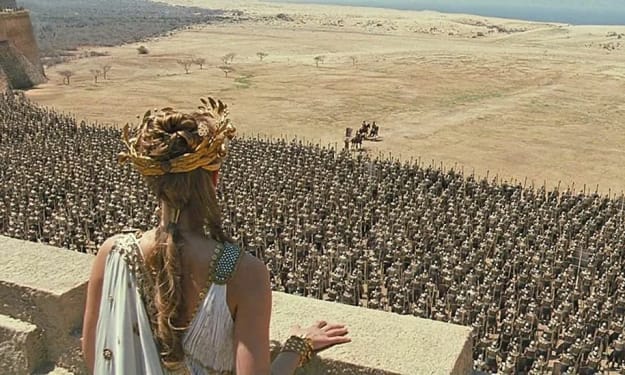
Helen of Troy
Introduction For thousands of years, the tale of Helen of Troy has echoed through the annals of history, art, and literature. Known as “the face that launched a thousand ships,” Helen’s story lies at the intersection of myth and history. She is not just a character of beauty, but a symbol of power, conflict, love, betrayal, and the high cost of human pride. But was she a real person? Did a war truly erupt over one woman? And why does her tale still captivate us today?
By Muhib Ullah about a year ago in History
The Current Situation of the USA. Challenges and Hopes in 2025.
Political Division Remains High One of the most pressing issues in the USA in 2025 is political division. The two major parties, Democrats and Republicans, continue to clash over almost every major policy — from immigration and healthcare to foreign policy and climate change. The upcoming presidential election in November 2025 has already turned the nation’s attention back to politics, with campaigns running aggressive advertisements and rallies.
By Active USA about a year ago in History
When Was World War 3 Started? The Date That Changed History.
It was January 12, 2031, when the first undeniable shot was fired — at least according to official records. That morning, an airstrike destroyed a major oil facility in the Persian Gulf, killing hundreds and crippling supplies for weeks. Governments around the world condemned it but blamed “unknown terrorists.” Yet intelligence agencies knew: it was a state-sponsored attack, planned and executed by one of the world’s largest armies.
By USA daily update about a year ago in History