Lessons
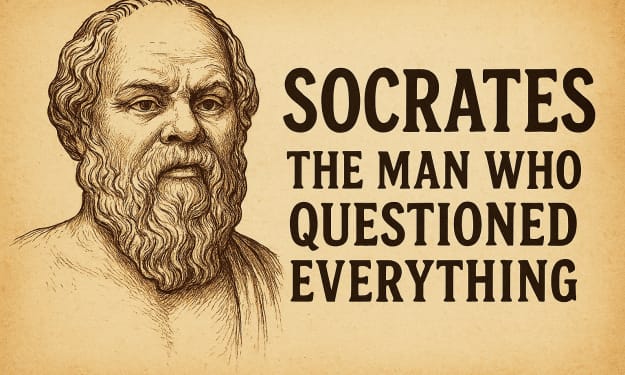
Do We Think First or Feel First? Two Philosophers Explain
Are We Driven By Reason or Emotion? Plato and David Hume Have Very Different Answers Every choice you’ve ever made, from what you eat for breakfast to who you fall in love with, comes from somewhere. But where, exactly? Is it logic, carefully weighing facts and outcomes? Or is it emotion, moving you long before you’re even aware of it?
By MB | Stories & More10 months ago in History
The Eternal Embrace Beneath the Earth
The earth has a strange way of holding memories. Some are scattered in fragments, others sealed deep beneath layers of time—waiting for the right hands to uncover them. In Taiwan, a team of archaeologists brushed away centuries of dust and silence to reveal a moment so tender, so profoundly human, that even the passage of 4,800 years could not erase its emotional power.
By Izhar Ullah10 months ago in History
The Stillness in the Clouds: Echoes of Flight 247
The storm was an ancient one, a howling beast of wind and ice that had scoured the peaks of the Andean Cordillera for centuries. It was in the temporary lull of such a storm, in a high valley that saw no human eyes, that a helicopter from a geological survey team found it. Not a wreck, not in the conventional sense. It was a tomb, sealed in glass.
By Izhar Ullah10 months ago in History
Sudan: The Empire That Became a Battlefield
Sudan is one of the largest countries in Africa, blessed with gold, oil, gas and countless minerals. It should have been one of the richest Muslim nations in the world. Instead, almost seventy years of its independence have been marked by war, famine and millions of lost lives. The tragedy is so deep that it raises a painful question: why does the world barely pay attention to Sudan, even though its suffering matches the great humanitarian disasters of our time?
By Salman Writes10 months ago in History
The Five Lost Gold Legends That Still Haunt America...
There’s something peculiar about gold. People will cross deserts for it. Kill for it. Abandon families for it. Lose their minds for it. And sometimes, die clutching maps so weather-worn, the ink looks like dried blood.
By The Iron Lighthouse10 months ago in History
The Man Who Mailed Himself to Freedom: The Astonishing Journey of Henry “Box” Brown
In the long, painful history of slavery in America, many stories of courage were buried, forgotten, or overshadowed by the brutality of the era. Yet among these countless untold stories, one stands out not only for its daring but for its pure, imaginative brilliance. It is the unforgettable tale of Henry “Box” Brown, the man who shipped himself across states in a wooden crate to claim his freedom. Henry Brown was born into slavery in Louisa County, Virginia, in 1815. Like countless enslaved people, he grew up under the control of others—his time, his labor, even his family were possessions owned by slaveholders. Still, Henry carried a spark within him: a quiet refusal to let life break his spirit. He worked in a tobacco factory in Richmond, forced to spend his days inhaling dust, sweating under harsh conditions, and surrendering his wages to his enslavers. Despite everything, Henry tried to create a life of love amidst suffering. He married an enslaved woman named Nancy, and together they had three children. However, as slavery often did, it shattered what little happiness Henry could build. One morning in 1848, Henry came home to an unthinkable tragedy—his wife and children had been sold to another owner, taken away without warning, carried far from his reach. In that moment, Henry felt something in his heart collapse. He later wrote that seeing his family dragged away was like having “the cold hand of death” laid upon him. Grief can crush a man—or it can push him to find a new path. Henry’s path became a daring, dangerous plan few would even dare to imagine. He decided to mail himself to freedom. The idea came to him as a sudden spark—a literal “deliverance” through the U.S. postal system. With the help of two abolitionists, James C. A. Smith and Samuel A. Smith (no relation), Henry planned the most extraordinary escape attempt in history. The plan was simple yet nearly impossible: Henry would climb into a wooden box, have himself sealed shut, and then shipped from Richmond, Virginia, to Philadelphia, Pennsylvania—where slavery had been abolished. A free life lay inside a box not much larger than a coffin. The box measured 3 feet long, 2 feet wide, and 2.5 feet deep. On the morning of March 29, 1849, Henry climbed inside with nothing but a container of biscuits and a small bladder of water. The box was labeled with chilling practicality: “This side up with care.” Henry could only hope that someone would read—and follow—it. But fate is rarely so kind. The box journeyed 27 hours through wagons, trains, and finally a steamboat. At times, Henry was flipped upside down, forced to endure the crushing pain of blood rushing to his head. He stayed silent even when the agony was unbearable. At one point, he could feel his eyes swelling so badly he feared they would burst from their sockets. Yet he held on. He later said, “I felt my brain was about to burst, but I knew one word—just one cry—and I would be discovered.” Henry remained still, like a dead man inside a wooden coffin traveling toward life. Finally, on March 30, the box arrived at the office of the Philadelphia abolitionist group. A small group of antislavery activists gathered around it. They tapped the box. They whispered. And then they asked, “Are you all right inside?” From within the crate came the most remarkable sound—Henry’s voice answering, “All right!” When they pried open the lid, Henry emerged like a reborn man, blinking against the light. The first thing he did was stand up, straighten himself, and recite a hymn of praise: “I waited patiently for the Lord, and He heard my prayer.” Henry Brown had arrived in freedom. His story spread like wildfire across the North. Newspapers celebrated him. Abolitionists invited him to speak. He earned the nickname “Henry Box Brown,” which he carried proudly for the rest of his life. He even turned his escape into a stage performance, reenacting the moment he emerged from the box—a symbolic act of hope for enslaved people everywhere. But Henry’s safety in America was short-lived. The Fugitive Slave Act of 1850 made even free states dangerous for escaped slaves, so Henry fled to England. There, he spent years speaking, performing, and sharing the story of his astonishing escape—using his voice as a weapon against injustice. Henry Brown eventually returned to the United States after the Civil War, living out his later years as a free man—something he fought harder for than most people could ever imagine. His journey was not merely a physical escape. It was a declaration of human dignity, a reminder that freedom is not just a right, but a yearning so powerful it can inspire a man to climb into a wooden box and trust the world to carry him toward hope. Henry “Box” Brown’s story remains one of the most daring acts of self-liberation ever recorded—a testament to courage, imagination, and the unstoppable determination of a man who refused to remain chained.
By Hasbanullah10 months ago in History
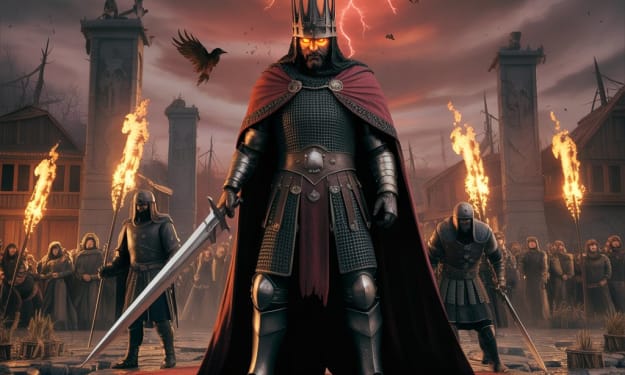
King Darvash the Destroyer. AI-Generated.
In a faraway land called Almaron, people once lived in peace. The rivers were clean, the farms were green, and the markets were full of happy voices. But everything changed the day Darvash became king. He was the son of the old king, but he did not have the heart of a leader. Instead of kindness, he carried anger. Instead of wisdom, he carried pride. And instead of justice, he chose destruction.
By shahid khan10 months ago in History
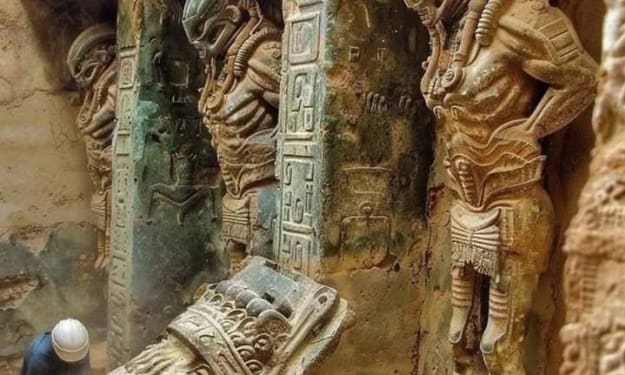
The Alien Guardians Unearthed Secrets of a Forgotten Civilization
Dust curled through the air in thin, dancing spirals as Dr. Samir Kaidan pressed deeper into the narrow chamber. The excavation site, located in a remote desert valley ignored by mainstream archaeology, had been silent for centuries—its secrets locked beneath layers of sand, stone, and time. But today, the earth seemed eager to speak.
By Izhar Ullah10 months ago in History