Lessons
Unveiling the Titanic: New Discoveries from the Ocean Depths
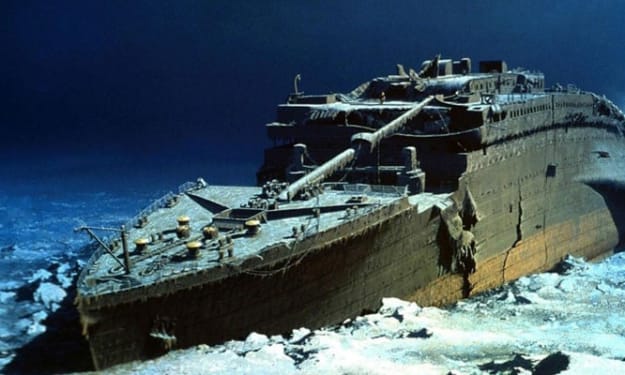
Unveiling the Titanic: New Discoveries from the Ocean Depths The RMS Titanic, one of the most infamous ships in history, has remained hidden in the darkness of the Atlantic Ocean for over a century. Now, a groundbreaking investigation is poised to bring the wreck of the Titanic into the light and reveal it as never seen before. Armed with cutting-edge tools and technology, a team of scientists is determined to unravel the long-standing mysteries of the Titanic's fateful disaster. In this article, we delve into the details of this high-tech exploration and the potential it holds to rewrite the story of the Titanic.
By Sajjad Rana Hussain3 years ago in History
The Second World War
The Nazi Germany-Soviet Union agreement allowed the Soviet Union to pursue its interests in Poland and Finland, despite ideological differences. However, doubts persisted regarding the durability of this cooperation. Nevertheless, Hitler defied expectations and ordered the invasion of Poland on September 1, 1939. This action prompted Britain and France to issue an ultimatum to Germany, demanding the withdrawal of troops or face war. When Germany rejected the ultimatum, Britain declared war on September 3. Although some German generals had warned against engaging in a large-scale European conflict, Germany employed blitzkrieg tactics, utilizing tanks and aircraft to swiftly conquer strategic areas. The Polish army was ill-prepared to counter this new style of warfare, leading to their defeat within a month. Germany occupied western Poland, while the Soviet Union invaded the eastern part as agreed upon with von Ribbentrop.
By Elysee Kung'u3 years ago in History
The Burning of the Maya Codices: Erasing Cultural Heritage
In the annals of human history, few events are as heartbreaking as the deliberate destruction of the Maya codices. These sacred texts, containing the accumulated wisdom, knowledge, and cultural heritage of the ancient Maya civilization, were systematically targeted and burned during the period of Spanish conquest in the 16th century. The devastating consequences of this deliberate act of erasure continue to reverberate through time, leaving us with a profound loss of understanding and appreciation for one of the most sophisticated ancient civilizations.
By Huzaifa Mehmood3 years ago in History
The Titanic Submarine Accident
Introduction The Titanic, one of the most iconic and tragic stories in maritime history, continues to captivate the imagination of people worldwide. Since its fateful maiden voyage in 1912, the sinking of the "unsinkable" Titanic has been extensively studied and immortalized in numerous books, documentaries, and films. However, what if the Titanic's story didn't end at the bottom of the Atlantic Ocean? In recent years, a new chapter unfolded with the development of a submarine that ventured into the deep to explore the resting place of the mighty vessel. This article delves into the fascinating tale of the Titanic submarine accident, shedding light on the advancements in underwater exploration and the emotional journey of revisiting a tragic event.
By Edward Jonah3 years ago in History
Japan and the United States: Different but Alike. Content Warning.
1 The culture of a place is an integral part of its society whether that place is a remote Indian village in Brazil or a highly industrialized city in Western Europe. The culture of Japan fascinates people in the United States because, at first glance, it seems so different. Everything that characterizes the United States – newness, racial heterogeneity, vast territory, informality, and ethic of individualism – is absent in Japan. There, one finds an ancient and homogenous society, an ethic that emphasizes the importance of groups, and a tradition of formal behavior governing every aspect of daily living, from drinking tea to saying hello. On the surface at least, U.S. and Japanese societies seem totally opposite.
By Haider Ali3 years ago in History
Unveiling the lives of the apostles:Pioneers of the early christian movement
The life histories of the apostles of Jesus are rich and varied, as recorded in the New Testament of the Bible. These twelve men played a significant role in spreading the teachings of Jesus Christ and establishing the early Christian Church. While the available information about each apostle varies in terms of depth and accuracy, the following is an overview of their lives and ministries based on biblical accounts and historical traditions.
By Edwin Kingsly3 years ago in History
Resilience in the face of adversity
Filipinos in the Philippines are renowned for their infectious smiles and their reputation as one of the happiest people in the world. Behind these beaming expressions lies a deeply rooted resilience that allows them to find joy and maintain a positive outlook, even in the face of adversity. This essay delves into the emotional aspects that contribute to the happiness of Filipinos, exploring their cultural values, strong sense of community, unwavering faith, and ability to find beauty in the simplest pleasures.
By YC Barimbao3 years ago in History
Titanic: A Journey through Time
Introduction: The Titanic, an iconic vessel that met its tragic fate in 1912, continues to captivate the world's imagination. In this extensive blog, we embark on a virtual journey through time, exploring the remarkable story of the Titanic as witnessed by five diverse visitors. Through their unique perspectives, we will delve deep into the grandeur, the tragedy, and the lasting impact of this unforgettable maritime disaster. Join us as we navigate through history and unravel the tales of those who had a brush with the "unsinkable" ship.
By Muazzam shahzad3 years ago in History
Ocean Gate Expedition. Content Warning.
In the vast expanse of the ocean, where the currents intertwine and the waves crash against the unknown, a group of explorers embarked on a daring mission. Their hearts brimming with excitement and trepidation, they set sail with a singular purpose: to journey into the depths and unlock the secrets of the mighty Titanic.
By Bit Winner3 years ago in History
Titanic Director James Cameron Accuses OceanGate of Cutting Corners
Renowned filmmaker James Cameron, best known for his directorial masterpiece "Titanic," has recently leveled scathing accusations against OceanGate, a prominent ocean exploration company. Cameron claims that OceanGate is cutting corners in its deep-sea expeditions, potentially compromising safety and the integrity of their scientific endeavors. With his extensive knowledge of underwater exploration and the disastrous sinking of the RMS Titanic, Cameron has long been an advocate for meticulous planning and adherence to safety protocols. His criticism stems from concerns that OceanGate's expeditions may not be adequately prepared to handle the immense challenges of deep-sea exploration. OceanGate, based in the United States, has gained recognition for its ambitious missions, providing scientists, researchers, and adventure enthusiasts with the opportunity to explore the ocean's depths. The company specializes in manned submersibles, which can transport passengers to depths of over 3,000 meters. Cameron, who is also an avid explorer and oceanographer, believes that OceanGate's recent successes have led them to take unnecessary risks. He argues that the company has been prioritizing rapid expansion and commercialization without paying sufficient attention to safety standards. Cameron's concerns were further fueled when reports surfaced of potential equipment failures during recent expeditions. In an open letter addressed to OceanGate's CEO and the broader scientific community, Cameron expressed his worries. He emphasized the importance of rigorous testing, properly maintained equipment, and a highly trained crew for such ventures. Cameron emphasized that the deep-sea environment is unforgiving and that any shortcomings could have severe consequences for both human lives and the integrity of scientific research. OceanGate responded swiftly to Cameron's allegations, issuing a public statement defending their commitment to safety and emphasizing their thorough pre-expedition preparations. The company's CEO acknowledged the importance of Cameron's expertise but assured the public that OceanGate adheres to stringent safety protocols. Nonetheless, Cameron's criticisms have sparked a broader discussion within the scientific community and among enthusiasts of deep-sea exploration. Some experts have come forward to support Cameron's concerns, calling for greater transparency and independent verification of safety standards within the industry. In light of the controversy, regulatory bodies have initiated investigations into OceanGate's operations. They aim to assess whether the company's expeditions meet the required safety benchmarks and whether any changes need to be made to guarantee the well-being of crew members and passengers. As the debate surrounding OceanGate's alleged shortcuts unfolds, the future of deep-sea exploration hangs in the balance. It remains to be seen whether Cameron's claims will be substantiated and if OceanGate will be compelled to make significant changes to their operational procedures. In an era where technological advancements have opened up exciting possibilities for underwater discoveries, striking the delicate balance between progress and safety becomes ever more crucial. The outcome of this controversy will undoubtedly shape the future of deep-sea exploration and set standards for responsible and secure practices within the industry.
By Hetal Hetal3 years ago in History
Martial Law and People Power Revolution
Part 1: The Imposition of Martial Law In 1972, amidst a backdrop of social unrest and political instability, President Ferdinand Marcos made the fateful decision to declare Martial Law in the Philippines. Citing threats to national security and the need for stability, Marcos presented Martial Law as a means to restore order and combat the growing influence of communist rebels. However, behind the veneer of maintaining peace lay a deeper motive: consolidating power and suppressing opposition.
By Kira Santé3 years ago in History