Lessons
Oppenheimer: A Legacy of Innovation and Impact
In the annals of history, certain names stand as beacons of brilliance, guiding humanity through the maze of progress. Among these luminaries, the name "Oppenheimer" occupies a significant place. Synonymous with scientific innovation, visionary leadership, and profound impact, the Oppenheimer legacy has left an indelible mark on the realms of science, technology, and global security.
By Vaibhav Kachhwaha3 years ago in History
The Nigerien Military Junta And The Impact On France
The West African nation of Niger is currently facing a coup, and the situation has caught the attention of the international community. The coup leaders are still in power, refusing to step down despite an ultimatum issued by a block of West African countries. These countries have demanded that Niger's military junta restore the presidency of the ousted leader, Muhammad Bazum, or face the risk of a military intervention. The deadline for compliance has been set for Sunday, but it appears that the junta has no intention of relinquishing its hold on power. In fact, they have already started issuing decrees and scrapping decade-old agreements, indicating their determination to stay in control. What makes this coup even more complex is the outpouring of anger against France, the former colonial power that once ruled Niger. Supporters of the coup have blamed France for the poor conditions in their country, and they have been vocal in their opposition to the nation. The anti-French sentiment has been on the rise, with the military junta also ramping up its rhetoric against Paris. The National Council for Safeguarding the Homeland, the ruling body established by the coup leaders, has even decided to denounce France's security and defense cooperation agreements. They have revoked five military deals signed between 1977 and 2020, further escalating tensions between the two nations. The roots of this animosity towards France can be traced back to Niger's history as a French colony until its independence in 1960. Like many other West African nations, Niger was part of French West Africa, and the legacy of colonization still reverberates in the region. Critics argue that colonization led to the exploitation of the colonies, resulting in an unequal power dynamic between France and its former colonies. This neocolonial relationship has left many of these nations economically disadvantaged, despite being rich in natural resources such as uranium, gold, and oil. Niger, in particular, is one of the world's largest suppliers of uranium, which is used to fuel French nuclear power plants. France relies on nuclear power for 70 percent of its electricity production, making Niger's uranium crucial to its energy needs. However, while France benefits economically from the uranium supply, Niger remains one of the poorest nations in the world. The uranium trade has not translated into significant improvements in the lives of the Nigerien people, leading to growing frustration and resentment towards France. The coup in Niger has provided an opportunity for the military junta to tap into this anti-French sentiment and gain public support. The protesters on the streets of the capital, Niamey, have expressed their dissatisfaction with France's role in their country's affairs, demanding that French troops stationed in Niger leave immediately. They blame France's authorities for the harm they perceive to have been done to their nation, calling for an end to neocolonial practices. While the coup leaders and their supporters may believe that severing ties with France and taking control of their country's resources will lead to a better future, the situation is far more complex. Niger's uranium supply is critical to France's energy needs, and any disruption could have significant consequences for the European nation's electricity production. It is a delicate balance between asserting sovereignty and ensuring economic stability. On the other hand, France needs to acknowledge its historical failures in West Africa and adopt a more equitable approach in its relations with its former colonies. The exploitative practices of the past have created deep wounds, and addressing these injustices is crucial to building a more balanced and respectful partnership. Finding a sustainable solution that benefits both Niger and France is essential. It requires open dialogue, empathy, and a willingness to learn from the past. The international community also has a role to play in supporting the establishment of fair trade practices and economic cooperation that empowers nations like Niger to thrive on their own terms. In conclusion, the coup in Niger and the growing anti-French sentiment highlight the complexities of post-colonial relationships. The history of colonization and its impact on economic disparities and exploitation cannot be ignored. To move forward, both Niger and France need to engage in constructive dialogue and work towards a mutually beneficial partnership that respects the sovereignty and aspirations of the Nigerien people. Only through genuine understanding and collaboration can a lasting solution be found for the challenges faced by the West African nation.
By Olusola Bodunrin3 years ago in History
The Guardian of Forgotten Stories
Frank had always been a curious and adventurous soul. He loved exploring old and abandoned places, seeking the untold stories hidden within their walls. One sunny afternoon, Frank found himself in an unfamiliar part of town. As he wandered down a narrow alley, he noticed a crumbling building with an aura of mystery surrounding it. The peeling paint and broken windows beckoned him to venture inside.
By Fredion W.3 years ago in History
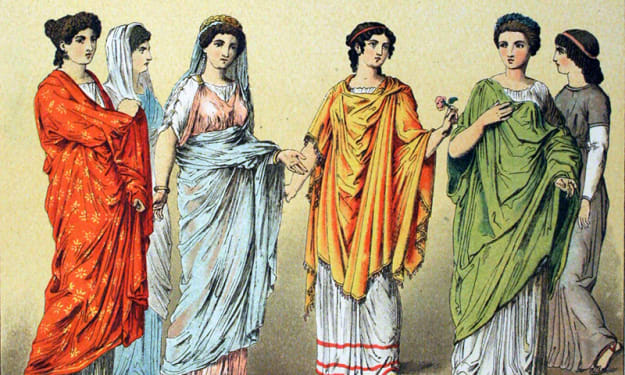
Women's Clothing in Ancient Rome
Introduction Fashion in ancient Rome was a reflection of the society and culture of that time, particularly when it came to women's clothing. Roman women were known for their elegance and sophistication, wearing garments that reflected their social status and position in the Roman social hierarchy.
By Maria Gagliardi3 years ago in History
The Crusades: A Confluence of Faith, Power, and Conflict
The Crusades stand as one of the most intriguing and consequential chapters in the annals of history, entwining religion, politics, and warfare into a complex tapestry. Spanning several centuries, these holy wars reverberated across Europe, Asia, and the Middle East, leaving an indelible mark on the cultural, political, and religious landscapes of the world. This article delves into the multifaceted saga of the Crusades, exploring the origins, motivations, key players, and lasting impact of these epochal conflicts.
By Aaron Collingwoog3 years ago in History
Millenium Age
The new millennium began on January 1, 2000, marking the start of a new era in human history full of promise and excitement. The world stood at the threshold of a transformative age, one that would be characterized by technological advancements, cultural shifts, and global changes. Looking back on the past 21 years, it is evident that the millennium age has been a time of significant transformation and evolution.
By İrem Arıcıoğlu3 years ago in History
Avocado (Persea americana)
Tree from the Lauraceae family with edible fruit, commonly known as alligator pear. Avocados are native to the Western Hemisphere and are commonly farmed in warm climates from Mexico south to the Andes. Guacamole, a popular sauce-like condiment in Mexican cuisine, is made primarily with mashed avocado. Avocados are high in thiamin, riboflavin, and vitamin A, and the flesh of some types contains up to 25 percent unsaturated oil.
By Fruits And Plants Diary - Get Insight 3 years ago in History
THE COUP IN NIGER
Title: Unrest Unveiled: The Coup in Niger Chapter 1: A Nation in Transition Niger, a landlocked West African nation, had been grappling with political and economic challenges for years. The country's struggle for stability was underscored by its delicate transition from military rule to a democratic government. The period leading up to the coup was marked by social discontent, allegations of corruption, and growing frustration among the population.
By Gbenga Matibo Ogungbade3 years ago in History
War in Ukraine
Title: Shadows of Strife: The Conflict in Ukraine Chapter 1: A Fragile Peace The conflict in Ukraine cast a long shadow over the region, with its roots tracing back to historical and political complexities. The country had been grappling with internal divisions and external pressures for years, but it was in 2014 that tensions escalated dramatically. The Ukrainian government's decision to prioritize closer ties with the European Union led to protests in Kiev's Maidan Square, eventually leading to a change in leadership.
By Gbenga Matibo Ogungbade3 years ago in History