Lessons
Impeachment saga: Edo PDP flays Shaibu, passes vote of confidence on Obaseki. Content Warning.
As the break between Lead representative Godwin Obaseki and his debuty, Philip Shaibu, proceeds, the initiative of the Edo State People groups Leftist faction (PDP), over the course of the end of the week passed a demonstration of positive support on Lead representative Obaseki, similarly as it reprimanded the agent lead representative for hauling his head to court over a hypothesized prosecution process without depleting the party's inner question goal instrument.
By Great Bright3 years ago in History
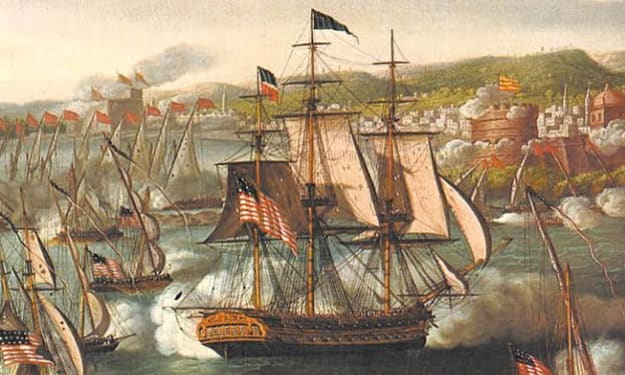
The Barbary Pirates
The Barbary Pirates, also known as the Barbary Corsairs or Ottoman Corsairs, were a group of North African pirates and privateers who operated along the Mediterranean coastline during the late 16th to the early 19th centuries. Infamous for their raids on European and American ships, the Barbary Pirates played a significant role in shaping the geopolitical landscape of their time.
By Stella omos 3 years ago in History
Mustafa Kemal Ataturk
Title: The Unyielding Legacy of Mustafa Kemal Atatürk In the annals of history, few figures have left as indelible a mark on a nation as Mustafa Kemal Atatürk did on Turkey. His story is one of resilience, vision, and unwavering determination, shaping a country's destiny and transforming its identity on the global stage.
By Khadijah Salia3 years ago in History
How America became a Superpower?
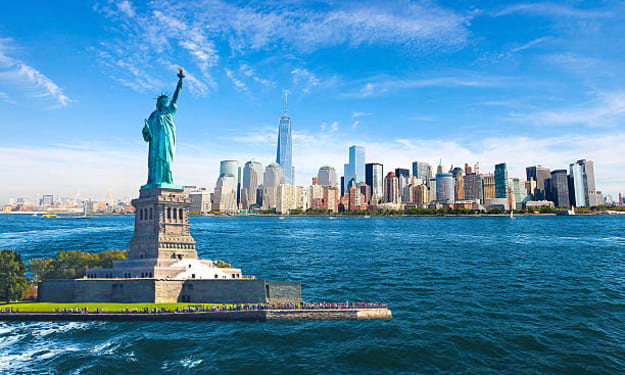
The United States, a formidable global force today, boasts an impressive military presence, boasting over 800 military bases and accounting for a significant 37% of the world's military spending. This dominance has positioned the U.S. as a leader in an intricate interconnected global system, fostering an era of unparalleled prosperity and notably low levels of conflict. However, to truly comprehend America's paramount role on the global stage and the reasons behind its pivotal status in world politics, we must journey back to the nation's origin—a time when America held no claims to being a global power. During its nascent years, the United States experienced a gradual expansion in both geographical reach and influence across North America. This expansionist fervor culminated in the nation reaching the Pacific Ocean, a period characterized by the tragic displacement and loss of life among the indigenous populations inhabiting the continent. Nevertheless, the question of whether America should extend its boundaries beyond the Pacific and Atlantic oceans sparked a substantial debate among early Americans. The aftermath of the Civil War marked a turning point, as prominent figures like post-war Secretary of State Seward championed the idea of transforming America into a global powerhouse. While Seward managed to push through the acquisition of Alaska from Russia, his efforts to purchase Greenland, Iceland, and territories in the Caribbean faced Congressional opposition. This divergence of opinions mirrored the broader sentiment among Americans, with some harboring anti-imperialist sentiments, fearing increased involvement in global politics and potential challenges integrating populations from what they perceived as "inferior" races. The late 1800s marked a transformative period as the industrial revolution spurred remarkable economic growth. This economic boom necessitated a more centralized state and bureaucratic apparatus to manage the burgeoning economy, effectively consolidating power within the federal government. This concentration of power empowered expansionist presidents, most notably William McKinley, to exert influence on the global stage with relative ease. The pivotal moment arrived in 1898 when President McKinley propelled the United States into war with Spain, centering on the island of Cuba. Despite fervent opposition, the United States emerged victorious, acquiring Puerto Rico, Guam, and the Philippines, thereby marking a significant leap in its global standing. Subsequent years saw the U.S. annexing Hawaii, Wake Island, American Samoa, and even taking control of the Panama Canal Zone and sending troops to the Dominican Republic. This period of rapid territorial expansion solidified the United States' status as a truly global power. Moreover, the U.S. began flexing its influence to safeguard its growing commercial and military interests worldwide, establishing friendly regimes in nations such as Nicaragua and playing a prominent role in international diplomacy concerning Western engagement in China. World War I underscored the nation's elevated influence, as American intervention played a decisive role in ending the conflict. President Wilson's participation in the Paris Peace Conference and his initiation of the League of Nations showcased America's most ambitious foreign policy endeavor at the time—an initiative aimed at fostering global peace and cooperation. However, the United States' internal isolationist sentiment hindered its full commitment to the League. The Great Depression and the rise of Hitler steered U.S. focus towards its own region. Yet, America's deepening entanglements on the global stage made complete isolationism an unattainable goal. The looming threat of the expanding Japanese empire, which directly endangered American interests and assets, forced the United States into World War II following the devastating Pearl Harbor attack. World War II irrevocably transformed America's global presence. As the sole major power to emerge economically unscathed, the U.S. held unique leverage in shaping the post-war world order. To prevent future conflicts, it played a pivotal role in establishing the United Nations, a forum designed to prevent wars of conquest and facilitate diplomatic resolutions. Beyond the UN, a notable gathering of delegates from 44 Allied nations convened in Bretton Woods, New Hampshire, crafting the Bretton Woods Agreement—a framework for a global financial system to avert another Great Depression and world war. This laid the groundwork for institutions such as the World Bank and the International Monetary Fund, solidifying America's commitment to addressing global challenges. However, the Soviet Union's contrasting perspective initiated a new dynamic. The Cold War sparked a global struggle, leading the United States to adopt a containment strategy against the spread of communism. This required constant exertion of influence worldwide, often manifesting in unlikely alliances with countries such as Saudi Arabia, Israel, and South Korea. The Cold War era saw the United States intervening, sometimes discreetly, in numerous disputes to thwart Soviet influence. Whether it meant supporting friendly dictators or arming rebels, the U.S. found itself deeply involved in a complex web of alliances and relationships spanning the globe.
By Shubham Bajaj3 years ago in History
The Israel-Palestine conflict: a brief, simple history
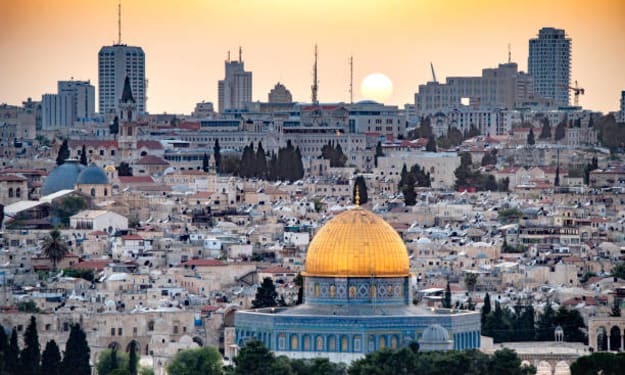
The Israel-Palestine Conflict: Unraveling the Myths and History The Israel-Palestine conflict is often shrouded in misconceptions, with some falsely believing it to be an age-old feud rooted in religious hatred. In reality, this complex issue primarily revolves around two groups vying for the same land, a struggle that emerged just over a century ago in the early 1900s. At that time, the region we now refer to as Israel-Palestine was under Ottoman rule, encompassing a diverse population of Muslims, Christians, and a small Jewish minority, coexisting relatively peacefully. Amidst these dynamics, two significant shifts were unfolding. First, the people of the region started to develop a distinct national identity, transforming from ethnic Arabs into Palestinians. Simultaneously, the Zionist movement gained traction among Jews in Europe, asserting that Judaism was not solely a religion but a nationality deserving of a homeland. After enduring centuries of persecution, many Jews saw a Jewish state as their only safeguard, with the Middle East serving as their historic homeland. The early 20th century saw a substantial influx of European Jews into the region, especially after World War One and the collapse of the Ottoman Empire. The British Mandate for Palestine was established, and tensions escalated as Jewish immigrants settled into farming communities. This influx led to mounting friction between Jews and Arabs, culminating in acts of violence perpetrated by both sides. The British, initially allowing Jewish immigration, began to limit it in response to escalating tensions. The Holocaust, a tragic event that galvanized global support for a Jewish state, further intensified the conflict. In 1947, the United Nations approved a partition plan, envisioning separate Jewish and Arab states, with Jerusalem designated as an international zone. Israel declared independence, and neighboring Arab states, viewing the plan as another form of colonialism, declared war in a bid to establish a unified Arab Palestine. Despite prevailing against the odds, Israel's territorial expansion beyond the UN-designated borders and the displacement of Palestinians created a refugee crisis. The Arab-Israeli conflict was born, with Israel controlling most of the territory, except for Gaza and the West Bank. The 1967 war led to Israel's occupation of these Palestinian territories, including Jerusalem, further deepening the divide. The subsequent years saw the establishment of the Palestinian Liberation Organization (PLO), initially aiming to eliminate Israel but later accepting the idea of a two-state solution. Violence erupted, and the Intifada, meaning "uprising" in Arabic, brought both Palestinians and Israelis to the brink. In this tumultuous era, Hamas emerged in Gaza, advocating for Israel's destruction and further complicating the situation. The Oslo Accords in the early 1990s marked a significant step towards peace, establishing the Palestinian Authority to govern certain areas. However, hard-liners on both sides sabotaged progress, and the failure of peace negotiations led to a more pessimistic outlook. The Second Intifada, marked by intensified violence, shaped a new reality. Israel's focus shifted from solving the conflict to managing it through walls and checkpoints, while Palestinians felt trapped under a growing occupation. Israel's withdrawal from Gaza in 2005 gave rise to Hamas, further fragmenting Palestinian leadership. Gaza was subjected to a stifling blockade, contributing to soaring unemployment and deteriorating living conditions. Today, settlements continue to expand in the West Bank, stifling Palestinian communities and generating tension, while periodic conflicts between Gaza-based groups and Israel result in devastating losses for Palestinians. While the majority of Israelis have grown apathetic to the ongoing conflict, the occupation remains a festering wound that cannot be ignored forever. The current status quo is unsustainable, with the occupation's instability foreshadowing a potentially darker future. The conflict's trajectory is uncertain; it may lead to a Third Intifada or a collapse of the Palestinian Authority. Nevertheless, one thing is clear: the status quo cannot persist, and the need for a resolution is more pressing than ever. In conclusion, the Israel-Palestine conflict is not an ancient feud driven by religious animosity, but rather a modern struggle rooted in a century-old clash of identities and national aspirations. The evolution of this conflict has seen numerous turning points, from the emergence of distinct national identities to failed peace negotiations and the persistent challenge of managing the occupation. As the conflict persists, the urgency for a comprehensive and lasting solution becomes increasingly evident, and the world watches with bated breath to see what the future holds for this deeply entrenched and complicated situation.
By Shubham Bajaj3 years ago in History
Tale of Akomfo Anokye (Golden Stool)
Akomfo Anokye: Weaver of Legends and Miracle-Maker In the heart of the Ashanti kingdom, where the rhythms of the drum echoed through the bustling markets and the air was filled with the scent of spices and stories, there lived a man whose name would become synonymous with legends and miracles. This man was Akomfo Anokye, a sage and a spiritual leader whose presence could command the attention of both the living and the spirit world.
By Khadijah Salia3 years ago in History
Single brave Mother🫀
Once upon a time, in a small town, there lived a strong and determined woman named Sarah. Sarah was a single mother who had been through many challenges in her life but never lost hope. She had a beautiful daughter named Emily, who was the light of her life.
By Janneh jallow3 years ago in History
Africa's Natural Resources: A Wealth of Diversity and Potential
Introduction Africa, often referred to as the "Mother Continent," is renowned for its stunning landscapes, rich cultural heritage, and abundant natural resources. With its vast reserves of minerals, metals, oil, and fertile land, the continent plays a pivotal role in global resource supply. This article delves into the diverse array of natural resources found in Africa, highlighting their significance, challenges, and the potential they hold for the continent's sustainable development. Mineral Wealth Africa boasts an extraordinary wealth of mineral resources that have shaped economies and industries worldwide. The continent is a leading global producer of minerals such as gold, diamonds, platinum, and manganese. South Africa, in particular, stands as a key player in the mining sector, with its Witwatersrand Basin hosting the world's largest known gold reserves. However, the mining industry often faces challenges, including environmental concerns, conflicts over resource ownership, and the need for equitable distribution of benefits to local communities. Oil and Gas Reserves Africa's oil and gas reserves are critical drivers of its energy sector and the global energy market. Countries such as Nigeria, Angola, and Algeria hold significant oil reserves, contributing to global oil supply. While oil revenue has the potential to bolster economies, it also brings challenges like corruption, mismanagement, and environmental degradation. Diversifying economies beyond oil dependency remains a pressing need to ensure long-term sustainable development. Agricultural Abundance The continent's fertile lands and diverse climates support a wide range of agricultural activities. From cocoa in Ghana to coffee in Ethiopia, Africa's agricultural products are vital for both local consumption and international trade. However, inadequate infrastructure, limited access to modern farming techniques, and land degradation pose hurdles to unlocking the full potential of African agriculture. Investment in agricultural innovation and sustainable practices is crucial for food security and economic growth. Renewable Energy Potential Africa's renewable energy potential is immense, thanks to abundant sunlight, wind, and hydroelectric resources. Solar energy projects, such as Morocco's Noor Ouarzazate Solar Complex, demonstrate the continent's commitment to harnessing sustainable energy sources. Access to electricity remains a challenge for many African communities, and leveraging renewable energy can bridge this gap while mitigating the environmental impact of traditional fossil fuel consumption. Biodiversity and Wildlife Africa's biodiversity is unparalleled, encompassing a wide range of ecosystems from savannas to rainforests. The continent is home to iconic wildlife species like elephants, lions, and rhinos. Safeguarding this biodiversity is vital for ecological balance and the thriving tourism industry. Conservation efforts, community engagement, and combating illegal wildlife trade are critical to ensuring the longevity of these precious resources. Challenges and Sustainable Development Despite its wealth of resources, Africa faces numerous challenges in effectively managing and benefiting from its natural assets. Poor governance, corruption, inadequate infrastructure, and lack of value addition in resource processing hinder progress. Environmental degradation, driven by unsustainable resource extraction, further exacerbates these challenges. To achieve sustainable development, African nations must focus on several key areas: 1. Transparency and Good Governance: Enhancing transparency and accountability in resource management can help curb corruption and ensure that resource revenues are reinvested for the public good. 2. Investment in Education and Innovation: Equipping the workforce with relevant skills and knowledge is crucial. Investing in education, technology, and research can drive innovation and facilitate value addition in resource processing. 3. Community Engagement: Involving local communities in resource management decisions fosters a sense of ownership and ensures that benefits are shared equitably. 4. Environmental Conservation: Implementing sustainable resource extraction practices, protecting ecosystems, and promoting eco-friendly technologies are vital for long-term environmental health. 5. Diversification: Economic diversification beyond reliance on a single resource can make economies more resilient to fluctuations in global markets. Conclusion Africa's natural resources are a source of immense potential and promise for the continent's growth and development. From minerals to renewable energy sources, these resources are drivers of economic progress and innovation. However, to fully harness their benefits, African nations must address challenges related to governance, environmental sustainability, and equitable distribution of wealth. By implementing responsible and forward-looking policies, Africa can utilize its natural resources as a catalyst for sustainable development, ensuring a prosperous future for its people and the world.
By Abbaty Sambo3 years ago in History
FORTRESS LOVE
Fortress Love Chapter 1: The Enchanted Citadel In a distant land, nestled amidst lush green meadows and towering mountains, stood the magnificent Citadel of Amoria. This fortress, with its grandiose architecture and enchanting aura, held a magical secret known to only a chosen few.
By Eye Timothy3 years ago in History
Echoes of Friendship: A Serendipitous Encounter
The sun cast a warm, golden glow over the park as a gentle breeze rustled the leaves, creating a symphony of whispers. Sarah sat on a weathered bench, her eyes fixed on the pages of a well-worn novel. She was absorbed in the story, the world around her fading into the background. Lost in the world of words, she didn't notice the figure approaching until a soft voice disrupted her reverie.
By Muhammad Abubakar3 years ago in History
Top 10 Cruel blood sports
Top 10 Cruel blood sports Even in the contemporary era, the remnants of barbarism persist within society. Blood sports, with their cruel treatment of animals, maintain a disheartening popularity. From the abhorrent act of hurling wildlife into the air to the pursuit of foxes with hounds, some individuals continue to derive perverse enjoyment from the suffering of creatures. Yet, this cycle of cruelty seldom goes without retribution. Presented below, in ascending order of abhorrence, are ten of the most heinous instances of animal cruelty, along with the fitting retribution faced by participants.
By Lindsay Franklin3 years ago in History