Lessons
rowing every day for a month. Content Warning.
Rowing every day for 30 days can have a transformative impact on your body, leading to numerous potential benefits. This consistent fitness routine helps establish discipline and habit formation. By committing to rowing daily, you build momentum and increase the likelihood of maintaining an exercise habit in the long term. Rowing is a full-body workout that engages multiple muscle groups, improving overall strength, endurance, and cardiovascular fitness over the course of 30 days. You can expect noticeable improvements in muscle tone, weight management, and cardiovascular health.
By Md Babul Hossain3 years ago in History
A world without evil
The conception of a world without wrong is a romantic notion that numerous people have contemplated throughout history. It envisions a world where all forms of dangerous conduct, intentions, and suffering check to live. While it's a charming idea, achieving such a world is largely complex and may be considered romantic.
By benhiba abdelhak3 years ago in History
The Fall of the Berlin Wall
A significant historical event, the fall of the Berlin Wall in 1989 signaled the end of the Cold War, the reunification of Germany, and the symbolic fall of the Iron Curtain. This 600-word synopsis examines the context, noteworthy incidents, significance, and long-lasting effects of this historic occasion.
By The Knowledge 3 years ago in History
Gravitational Waves!!!
Gravitational Waves: Ripples in the Fabric of Spacetime In the grand theater of the cosmos, where celestial bodies dance to the tune of gravity, there exists a phenomenon so profound that it reverberates through the very fabric of spacetime itself. This phenomenon is known as gravitational waves—ripples in the cosmic ocean—whose discovery in the 21st century transformed our understanding of the universe and offered a new way to explore the cosmos. The story of gravitational waves begins with a brilliant insight by none other than Albert Einstein. In 1915, Einstein, armed with his theory of general relativity, predicted the existence of gravitational waves. He proposed that massive objects, like planets and stars, could warp spacetime around them as they moved through the cosmos, causing ripples—gravitational waves—that would propagate outward at the speed of light. For decades, gravitational waves remained a theoretical concept, tantalizing but unproven. The search for these cosmic ripples was fraught with challenges because their effects were minuscule, requiring extraordinarily sensitive instruments to detect. It wasn't until the turn of the 21st century that the hunt for gravitational waves gained momentum. In 2015, the Laser Interferometer Gravitational-Wave Observatory (LIGO) made history by detecting gravitational waves for the first time. The waves had been generated by the collision of two massive black holes more than a billion years ago, and their detection was a testament to human ingenuity and perseverance. The discovery of gravitational waves opened a new era of astronomy—the era of "multi-messenger" astronomy. For the first time, scientists could observe the universe not only through electromagnetic waves (such as light and radio waves) but also through gravitational waves. This breakthrough allowed astronomers to explore cosmic phenomena that had been invisible to traditional telescopes. Gravitational waves have since revealed a wealth of cosmic phenomena, from the collision and merger of black holes and neutron stars to the oscillations of cosmic strings, hypothetical cosmic structures. Each detection has provided a unique glimpse into the most extreme and energetic events in the universe. One of the most groundbreaking moments in the study of gravitational waves came with the detection of the first neutron star merger in 2017. This event, observed by both LIGO and the Virgo interferometer, not only produced gravitational waves but also a burst of electromagnetic radiation, including gamma-ray bursts. It marked the first time a cosmic event had been observed through multiple messengers, confirming the profound synergy between gravitational wave and traditional astronomy. Gravitational waves have also allowed scientists to test Einstein's theory of general relativity with unprecedented precision. Every detection provides a new opportunity to explore the nature of gravity itself, to examine the properties of black holes and neutron stars, and to delve into the heart of cosmic mysteries. As we continue to detect and study gravitational waves, we stand on the precipice of transformative discoveries. The cosmos has become an orchestra, and gravitational waves are the cosmic symphony—a symphony that tells the story of the universe's most dramatic and energetic events. The story of gravitational waves is a testament to human curiosity and the indomitable spirit of exploration. It reminds us that the universe is not silent but filled with the vibrations of spacetime itself. Gravitational waves beckon us to venture further into the cosmos, to listen to the cosmic symphony, and to uncover the secrets of the universe hidden in the ripples of spacetime.
By Raymark Marcos3 years ago in History
The Enchanted Sheesh Mahal: Mirrors of Mughal Majesty
In the heart of the enchanting city of Lahore, Pakistan, nestled amidst the bustling streets and vibrant bazaars, lies a hidden gem that has witnessed centuries of history unfold – the Sheesh Mahal, or the "Palace of Mirrors." This architectural masterpiece is a testament to the opulence and artistic brilliance of the Mughal Empire, a place where history and legend intertwine to create an enchanting narrative.
By Sanaf Ahmed3 years ago in History
The Beatitudes
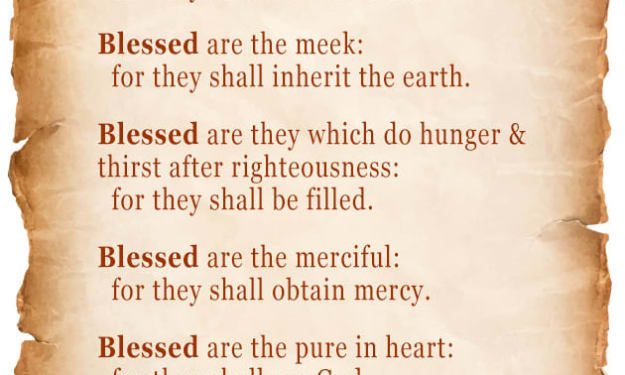
The Beatitudes: A Blueprint for a Blessed Life In the gentle shadow of the rolling hills overlooking the Sea of Galilee, a multitude had gathered. Their faces, etched with stories of hardship and hope, were illuminated by the soft light of dawn. They had come to listen to a teacher whose words promised solace and a vision of a better way—a way that would become known as the Beatitudes. The teacher was Jesus of Nazareth, a man whose message transcended time and boundaries. His words were a balm for the weary, a challenge to the proud, and a vision of a blessed life that defied conventional wisdom. It was on this serene hillside, known as the Mount of Beatitudes, that Jesus delivered a sermon that would become one of the most profound and enduring teachings in human history. As he stood before the expectant crowd, Jesus began to speak. His voice carried a warmth and authority that held the attention of all who had gathered. He spoke of blessings that defied the norms of his time and offered a glimpse into the heart of God. "Blessed are the poor in spirit, for theirs is the kingdom of heaven," Jesus proclaimed. In these words, he shattered the prevailing belief that the wealthy and powerful were the favored of God. Instead, he extolled the virtue of humility, of recognizing one's dependence on God. He invited his listeners to embrace a kingdom where the poor in spirit were cherished, where the richness of God's presence was the greatest treasure. As he continued, Jesus touched upon themes of meekness, mercy, and purity of heart. He offered a blueprint for a life characterized by righteousness and peace. He spoke of the importance of being peacemakers, of turning the other cheek, and of loving one's enemies—an approach to conflict and relationships that defied conventional wisdom. The crowd listened intently as Jesus challenged their understanding of the Law. He explained that he had not come to abolish the Law and the Prophets but to fulfill them. He called for a righteousness that surpassed that of the religious leaders of the day, one that was rooted in the heart and not merely in outward observance. With eloquence and compassion, Jesus addressed issues of anger, lust, divorce, and oaths. He urged his listeners to go beyond the surface and confront the deeper matters of the heart. He spoke of the importance of forgiveness and the power of prayer, emphasizing a relationship with God that was marked by intimacy and trust. "Ask, and it will be given to you; seek, and you will find; knock, and the door will be opened to you," Jesus declared. His words encouraged his listeners to approach God with confidence, knowing that their Heavenly Father cared deeply for them. The Sermon on the Mount also contained the Lord's Prayer, a model of prayer that would become a cornerstone of Christian devotion. In this prayer, Jesus taught his followers to address God as their loving Father and to pray for His will to be done on earth as it is in heaven. As the sun dipped below the horizon, casting long shadows on the hillside, Jesus concluded his sermon with a powerful parable. He spoke of two builders, one who built his house on a foundation of rock and another who built on sand. When the storms came, the house on the rock stood firm, while the one on the sand was washed away. It was a vivid metaphor for the importance of building one's life on the solid foundation of his teachings. The Beatitudes were a revolutionary message of love, compassion, and radical obedience to God's will. They challenged the status quo, offering an alternative way of living that transcended the external trappings of religion and emphasized the transformation of the heart. In the days, months, and years that followed, the words of the Beatitudes would continue to echo through the ages. They would inspire countless individuals to live lives characterized by love, humility, and a deep connection with God. The teachings of the Beatitudes would become a cornerstone of Christian ethics and a guiding light for those seeking to follow the path of Christ. They would remind believers that the way of Jesus is not an easy path, but it is a path that leads to abundant life and eternal blessings. As the crowd dispersed that evening, each person carried with them the profound words of Jesus, etching them into their hearts and minds. The Beatitudes had left an indelible mark on their souls, a blueprint for living a life that was truly blessed by God—a life characterized by love, humility, and a deep connection with the Creator.
By Raymark Marcos3 years ago in History
The Serpent in the Wilderness: A Symbol of Healing and Faith
The Serpent in the Wilderness: A Symbol of Healing and Faith In the ancient desert of Sinai, where the vast expanse of sand stretches to meet the azure sky, a remarkable event unfolded—an event that would become a profound symbol of healing and faith for generations to come. It was the story of the serpent in the wilderness, a narrative that transcends time and serves as a powerful reminder of the transformative power of faith and redemption. The tale begins with the journey of the Israelites, a people who had escaped the bondage of Egypt under the guidance of their leader, Moses. For years, they had wandered through the unforgiving wilderness, their faith tested by the harsh realities of their nomadic existence. As the Israelites traversed the desert, they grew weary and despondent, their patience waning under the relentless sun. They spoke against God and Moses, expressing their discontent and doubt. In response, Yahweh sent a punishment that served as both a trial and a lesson. From the depths of the desert, venomous serpents emerged, their bites delivering painful and lethal venom. The Israelites fell victim to these serpents, their bodies wracked with pain and suffering. It was a dire predicament that seemed to have no solution. Amid the despair, the Israelites cried out to Moses, recognizing the gravity of their words and actions. They confessed their sins and pleaded for deliverance. Moses, the intermediary between the people and God, interceded on their behalf, imploring Yahweh for mercy and forgiveness. In response to Moses's prayer, Yahweh instructed him to fashion a serpent of bronze and place it upon a pole. This bronze serpent was to be raised high in the midst of the camp. It would serve as a symbol of salvation and healing, a beacon of hope for the afflicted Israelites. As the bronze serpent was lifted up, a miraculous transformation occurred. Those who had been bitten by the serpents gazed upon the bronze image, and their faith became an instrument of healing. The venom coursing through their veins was neutralized, and their bodies were restored to health. It was a testament to the power of faith and the divine promise of redemption. The serpent in the wilderness, though cast from bronze, became a vessel of divine healing. It was a symbol of the people's acknowledgment of their wrongdoing and their unwavering faith in Yahweh's mercy. It served as a reminder that even in the darkest moments of despair, there is hope for redemption and transformation. The narrative of the serpent in the wilderness has enduring significance in the realm of faith and spirituality. It is a symbol of healing that transcends religious boundaries and speaks to the universal human experience of suffering and redemption. In the Christian tradition, the bronze serpent is seen as a foreshadowing of Christ's crucifixion on the cross. Just as the Israelites looked upon the bronze serpent for physical healing, Christians look to the cross for spiritual healing and salvation. The narrative underscores the idea that through faith and belief, one can find redemption and restoration. Similarly, in the realm of medicine and healing, the image of the serpent coiled around a pole has become an enduring symbol—the caduceus. It represents the healing arts and the idea that medicine has the power to alleviate suffering and restore health. It is a visual reminder of the connection between faith, healing, and the human quest for wholeness. The serpent in the wilderness also carries a profound message about the nature of suffering and redemption. It acknowledges that suffering is a part of the human experience, but it also emphasizes the potential for transformation and renewal. Just as the Israelites found healing and salvation through faith, so too can individuals find spiritual and emotional healing in times of distress. In the annals of human history, the narrative of the serpent in the wilderness stands as a testament to the enduring power of faith, healing, and redemption. It is a story that resonates across cultures and generations, offering a timeless message of hope and transformation. Whether viewed as a symbol of religious faith, a medical emblem, or a metaphor for the human journey, the bronze serpent serves as a beacon of light in the wilderness of life, guiding us toward healing, renewal, and the promise of redemption.
By Raymark Marcos3 years ago in History
Samson and Delilah: A Tale of Strength, Betrayal, and Redemption
Samson and Delilah: A Tale of Strength, Betrayal, and Redemption In the ancient land of Israel, where the sun-kissed hills met the shimmering Mediterranean Sea, there lived a man whose name would echo through the ages—Samson. He was a man of extraordinary strength, a judge chosen by Yahweh to deliver the Israelites from the oppression of their enemies, the Philistines. Yet, amidst his remarkable feats of strength and valor, the story of Samson and Delilah would become a timeless tale of betrayal, vulnerability, and redemption. Samson's story began with a divine promise. Before his birth, an angel appeared to his mother, declaring that she would conceive a son who would be dedicated to Yahweh as a Nazirite. This sacred vow meant that Samson was to abstain from certain practices, including cutting his hair, to fulfill his divine purpose. As Samson grew, his strength became legendary. He possessed the might of a hundred men, a power that he used to defend the Israelites against the Philistine oppressors. His feats of strength included tearing a lion apart with his bare hands and defeating a thousand Philistine soldiers using only the jawbone of a donkey. However, amidst his physical prowess, Samson had a weakness—the allure of forbidden love. He fell deeply in love with a Philistine woman named Delilah, a woman of breathtaking beauty and cunning intellect. Their relationship would become both a testament to Samson's vulnerability and a source of treacherous betrayal. The Philistine rulers, eager to subdue the Israelite champion, saw an opportunity in Delilah's affections. They approached her and promised her a substantial reward if she could uncover the secret of Samson's strength. Delilah, torn between her love for Samson and the allure of riches, agreed to their scheme. For days, Delilah probed Samson, questioning the source of his strength. She beseeched him, coaxed him, and tested his love for her. Samson, though wary of her motives, could not resist her entreaties. Three times he provided false answers, but each time, Delilah exposed his deception. Finally, Samson's resolve weakened. He confided in Delilah, revealing the truth of his Nazirite vow—that his strength lay in his uncut hair. With this revelation, Delilah seized her chance. She summoned the Philistine rulers, and while Samson slumbered in her arms, they sheared his hair, severing the source of his strength. Awakened by the sudden loss of his power, Samson was helpless as the Philistines captured him, gouged out his eyes, and imprisoned him in Gaza. His vulnerability was complete, his strength vanquished by the one he had loved and trusted. Yet, amidst the darkness of his captivity, a glimmer of hope remained. Samson's hair began to grow once more, a symbol of his renewed faith and resolve. In time, the Philistines, seeking to mock their captive, brought him to a great assembly in their temple. Samson, blind and humiliated, was positioned between two massive pillars, where the people could gloat over his downfall. In that moment of despair, Samson turned to Yahweh, praying for a final burst of strength. With a mighty effort, he pushed against the pillars with all his might. The temple, filled with Philistine rulers and citizens, collapsed in a cataclysmic event. Samson, along with the Philistines, perished in the rubble. The story of Samson and Delilah serves as a timeless reminder of the complexities of human nature—the interplay of strength and vulnerability, love and betrayal, faith and redemption. It is a narrative that has resonated through the ages, offering profound lessons about the consequences of misplaced trust and the enduring power of faith. For Samson, his journey was one of both triumph and tragedy. His strength, though legendary, could not shield him from the frailties of the human heart. His love for Delilah, though passionate, became his downfall. And yet, in the depths of despair, he found redemption through his renewed faith in Yahweh. Delilah, too, serves as a complex figure in the story—a woman torn between love and greed, who ultimately made choices that had far-reaching consequences. Her role in Samson's betrayal raises questions about the nature of trust and loyalty. Ultimately, the tale of Samson and Delilah endures as a story of resilience, repentance, and redemption. It reminds us that even in our moments of weakness and vulnerability, there is the potential for transformation and renewal. Samson's hair, symbolizing his faith, grew once more, leading to his final act of strength and sacrifice. The story of Samson and Delilah continues to captivate hearts and minds, offering timeless insights into the human condition and the enduring power of faith, love, and redemption—a narrative that speaks to the
By Raymark Marcos3 years ago in History
The Ten Plagues of Egypt: Divine Lessons in Exodus
The Ten Plagues of Egypt: Divine Lessons in Exodus In the annals of human history, there exist stories that resonate through the ages—tales of triumph, suffering, and transcendence. Among these, the account of the ten plagues of Egypt stands as a remarkable and enduring narrative, a pivotal chapter in the biblical Book of Exodus. It is a story of liberation, divine intervention, and the profound lessons learned on the arduous path to freedom. The tale unfolds in the land of Egypt, where the Israelites, descendants of Jacob, found themselves enslaved and oppressed. Their cries for deliverance reached the ears of the God of Abraham, Isaac, and Jacob—Yahweh. In response to their suffering, Yahweh called upon Moses, a humble shepherd, to lead his people out of bondage. Moses, armed with faith and conviction, stood before Pharaoh, the mighty ruler of Egypt, and delivered Yahweh's message: "Let my people go!" But Pharaoh, his heart hardened, refused to heed this divine command. And so began a sequence of events that would become known as the ten plagues of Egypt. The first plague, the turning of the Nile River into blood, was a symbolic act of justice. The Nile, the lifeblood of Egypt, was transformed into a river of death. The waters ran red with blood, and the fish died, rendering the river undrinkable. But Pharaoh's heart remained obstinate, and he did not release the Israelites. The second plague brought forth a swarm of frogs that infested Egypt, invading homes and even beds. They leaped into ovens and kneading bowls, a relentless plague that filled the land with discomfort and filth. Again, Pharaoh's resolve remained unbroken. The third plague unleashed swarms of lice or gnats, covering people and animals alike. This plague was different, for it seemed to defy explanation. The magicians of Egypt could not replicate it, and they declared, "This is the finger of God." Yet Pharaoh's heart remained hardened, and he did not relent. The fourth plague, a horde of flies, descended upon Egypt, except for the land of Goshen, where the Israelites resided. The distinction was made clear, as Yahweh's protection of his people became evident. Pharaoh, however, continued to resist. The fifth plague brought a deadly pestilence upon the livestock of Egypt. Horses, donkeys, camels, and cattle fell ill and perished, while the livestock of the Israelites remained unharmed. Yet still, Pharaoh's heart was unyielding. The sixth plague brought painful and festering boils upon the people and animals of Egypt. The discomfort and agony were overwhelming, but Pharaoh remained unmoved. The seventh plague, a tempest of hail and fire, rained down upon Egypt. Hailstones, mixed with fire, blazed through the sky and struck everything in their path, causing destruction and devastation. Pharaoh momentarily relented, but his heart soon hardened again, and he refused to release the Israelites. The eighth plague, swarms of locusts, devoured every green thing that had survived the hail. The land was left barren and desolate, a stark reminder of the consequences of Pharaoh's stubbornness. The ninth plague, a shroud of darkness, enveloped Egypt for three days. It was a darkness so thick and oppressive that it could be felt. Yet even as the land was plunged into obscurity, Pharaoh remained unyielding. Finally, the tenth and most devastating plague arrived—the Angel of Death passed through Egypt, striking down the firstborn of every household. It was a night of sorrow and anguish, a night that forever altered the course of history. In the midst of this despair, Pharaoh's heart finally relented. He summoned Moses and Aaron, pleading for the Israelites to leave Egypt. The long-awaited moment of liberation had arrived, and the Israelites departed with great haste, carrying with them the lessons learned in the crucible of suffering. The story of the ten plagues of Egypt is a powerful testament to the enduring human spirit and the divine forces that shape our destinies. It teaches us that even in the face of great adversity and tyranny, there is hope for redemption and freedom. It also reminds us of the importance of compassion, humility, and the recognition of the divine in our lives. The plagues were not merely acts of punishment; they were opportunities for Pharaoh and the people of Egypt to recognize the power and justice of Yahweh. In the end, the tale of the ten plagues of Egypt is a timeless narrative that continues to resonate with people of all faiths and backgrounds. It is a story of the triumph of good over evil, of liberation from oppression, and of the enduring human quest for justice and freedom—a narrative that continues to inspire and guide us on our own journeys of faith and self-discovery.
By Raymark Marcos3 years ago in History
Do you Believe in Lemuria Giants? Were giants real?
The legend of Lemuria and its supposed giants is a captivating and enigmatic chapter in the annals of mythology and pseudo-science. Often regarded as a lost continent, Lemuria has intrigued explorers, writers, and conspiracy theorists for over a century. In this article, we delve into the lore surrounding Lemuria and its alleged giant inhabitants.
By Vasco Duarte3 years ago in History