Lessons
Mansai
Once upon a time in the small coastal village of Seraphina, there lived a young girl named Mansai. Seraphina was known for its lush greenery, vibrant fishing community, and the sparkling blue sea that stretched as far as the eye could see. But for Mansai, it was a place of dreams, determination, and the relentless pursuit of a seemingly impossible goal.
By Alpha the great 3 years ago in History
The Renaissance
A crucial time in human history is marked by the Renaissance, a revolutionary intellectual and cultural movement that lasted roughly from the 14th to the 17th century. This 600-word overview examines the causes, distinguishing traits, significant figures, and enduring effects of this amazing period of rebirth and enlightenment.
By The Knowledge 3 years ago in History
Through repeated market history, we can see that market panics are occurring now as bond yields are increasing rapidly.. Content Warning.
Investors are closely examining the current state of financial markets in search of signs reminiscent of past recessions, as the recent significant sell-off in bonds has sparked concerns of an impending downturn. In recent weeks, various aspects of the US market, including stocks, bonds, and housing, have been drawing parallels to previous occurrences. Some analysts have drawn comparisons between the stock market's current performance and that leading up to the crashes of both 1987 and 2008, while others see similarities between the actions of bond vigilantes now and in the 1990s. Additionally, there are striking resemblances between today's housing market and that of the early 1980s. These recurring patterns are evident in:
By Md. Ruhullah Siddiqy 3 years ago in History
The Phantom Beneath: The Terrifying of China's Sunken Submarine
The confusion and mystery surrounding the supposed submarine disaster have fostered a climate of uncertainty and apprehension. The lack of confirmation from other nations, particularly those with significant naval intelligence such as the U.S., the U.K., and Japan, has only heightened the intrigue. These nations' silence could be interpreted in numerous ways—either they lack the required evidence to confirm the incident, or they are withholding information due to strategic considerations.
By Next Koding3 years ago in History
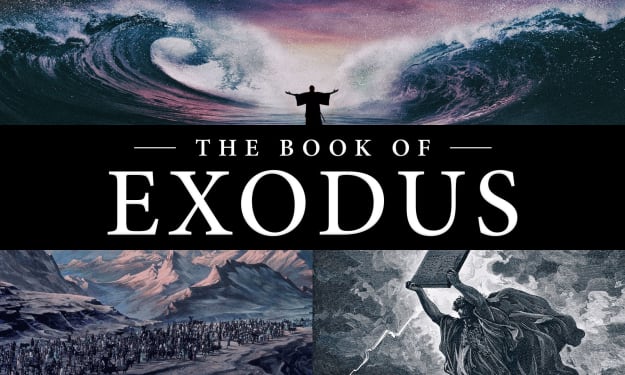
The Book of Exodus Chapter 3
Exodus 3: The Burning Bush and God's Call to Moses: In the land of Midian, where the endless sands of the desert stretched to the horizon, a humble shepherd named Moses tended to his flock under the relentless sun. It was a world far removed from the grandeur of Egypt, where Moses had once been a prince of the royal court, but it was in this quiet solitude that a momentous encounter would unfold—an encounter that would forever change the course of his life and the destiny of a nation. Exodus 3 opens with Moses leading his sheep to the far side of the desert, where the mountains met the sky. As he wandered through the wilderness, he reached a place called Horeb, often referred to as the "Mountain of God." It was here, in this desolate and sacred place, that the divine call would find him. As Moses ascended the mountain, he suddenly beheld a sight that defied explanation—a bush ablaze with fire, yet not consumed by the flames. It was a phenomenon that transcended the laws of nature and ignited a spark of wonder and curiosity in Moses' heart. He drew nearer, drawn by an unseen force, and the voice that would change his life forever called out from within the fiery bush. "Moses, Moses," the voice called, and Moses responded with reverence, "Here I am." It was a moment of profound connection, as if the very earth and heavens were attuned to the presence of the divine. In the midst of this extraordinary encounter, God revealed Himself to Moses as the God of his ancestors, the God of Abraham, Isaac, and Jacob. The God who had heard the cries of His people in Egypt and had come down to deliver them from their suffering. Moses stood in awe, for he had heard the tales of this God from the stories of his forefathers, but now, in this sacred moment, he was in the presence of the divine. The voice spoke with a solemn charge, instructing Moses to remove his sandals, for the ground on which he stood was holy. God revealed His plan to Moses—a plan that involved his return to Egypt, the land from which he had fled as a fugitive. He was to confront Pharaoh and demand the release of the Israelite slaves, leading them on a journey to the land promised to their ancestors. It was an extraordinary and daunting mission, one that filled Moses with uncertainty and doubt. Moses questioned his own worthiness and the ability to carry out such a monumental task. He asked God for His name, a name that would be a symbol of divine authority and presence. God responded with a profound declaration: "I AM WHO I AM." It was a name that transcended time and space, an affirmation of God's eternal and unchanging nature. God assured Moses that He would be with him every step of the way, providing guidance and signs to confirm His presence. Yet, Moses remained hesitant, burdened by his own insecurities. He asked for a sign to convince the Israelites and Pharaoh of the legitimacy of his mission. In response, God revealed a miraculous sign—the transformation of Moses' shepherd's staff into a serpent and back again, a sign of divine power and authority. Still, Moses was not convinced, and he voiced his concerns about his ability to speak eloquently and persuasively. God, in His infinite wisdom and patience, appointed Moses' brother, Aaron, as his spokesperson, offering the reassurance that He would be with both of them. Exodus 3 is a pivotal chapter in the story of Moses and the Israelites. It marks the moment when Moses was called by the divine, a moment that propelled him from the solitude of the wilderness to the heart of one of the most significant missions in history. It is a narrative of divine encounter, doubt, and the transformative power of faith. The burning bush, with its flames that did not consume, serves as a powerful symbol of God's presence and His call to a reluctant shepherd. It reminds us that sometimes the most profound encounters with the divine occur in the most unexpected places and moments. It teaches us that even when doubt and insecurity cloud our judgment, faith and obedience can lead to extraordinary journeys of purpose and destiny. As Moses descended from the sacred mountain, his heart heavy with the weight of his calling, he carried with him the knowledge that he was part of something far greater than himself. He was the chosen instrument of liberation for a people in bondage, and the flames of the burning bush had ignited a fire of purpose within him that would guide him on the path to freedom and redemption.
By Raymark Marcos3 years ago in History
The Book of Exodus Chapter 2
Exodus 2: The Birth and Early Life of Moses: In the land of Egypt, where the Nile River flowed like a lifeline through the arid desert, a boy named Moses was born under the watchful eyes of destiny. Exodus 2 unfolds the remarkable tale of his birth and early life, a story that would change the course of history and become a symbol of hope and liberation for generations to come. The chapter opens with the Israelites, descendants of Jacob, who had settled in Egypt generations earlier. They had grown numerous and had become a source of concern for the reigning Pharaoh, who saw their increasing numbers as a potential threat to his rule. Pharaoh's response had been harsh and oppressive, subjecting the Israelites to forced labor and cruelty. Amid this time of hardship and suffering, a Levite couple, Amram and Jochebed, brought a child into the world—a son whom they would name Moses. His birth was a momentous event, for Moses would go on to play a pivotal role in the liberation of the Israelites. Jochebed's love for her newborn son was profound, and she sought to protect him from the cruel decree of Pharaoh. In an act of extraordinary courage, she made a waterproof basket from bulrushes and placed her precious child within it. With tears in her eyes and a heart heavy with both love and fear, she set the basket adrift on the waters of the Nile. As fate would have it, the basket floated down the river and was discovered by none other than Pharaoh's daughter, a woman of compassion. Moved by the cries of the child and recognizing him as a Hebrew, she decided to adopt him as her own. This seemingly miraculous turn of events spared Moses from the decree of death that had been imposed upon the Israelite male infants. The young Moses grew up in the luxurious surroundings of Pharaoh's palace, his true heritage concealed from the Egyptian court. He received the finest education and lived a life of privilege, but his heart remained connected to his people, the Israelites. It was a connection that would shape his destiny in profound ways. One day, as Moses ventured beyond the palace walls, he witnessed an Egyptian taskmaster beating an Israelite slave. His heart burned with indignation and empathy for his oppressed kin. In a moment of fierce righteousness, he intervened and struck down the Egyptian, defending the Israelite's honor and life. The consequences of his actions were swift and unforgiving. Moses became a fugitive, forced to flee Egypt to escape Pharaoh's wrath. He found refuge in the land of Midian, where he encountered a new way of life as a shepherd. It was a stark departure from the opulence of the palace, but it was here, in the quietude of the wilderness, that Moses would undergo a profound transformation. In Midian, Moses encountered the priest Jethro and his daughters, who would become his family in this foreign land. He married one of Jethro's daughters, Zipporah, and together they had children. Moses embraced a simpler life, tending to Jethro's flock and finding solace in the vast expanse of the desert. Yet, his time in the wilderness was not merely a period of exile; it was a time of preparation. Moses was being shaped for a destiny that would see him lead the Israelites out of bondage and into freedom. His early experiences as a shepherd taught him valuable lessons in leadership, patience, and humility. Exodus 2 serves as the foundation of Moses' remarkable journey—a journey that would see him return to Egypt, confront Pharaoh, and lead his people through the wilderness to the Promised Land. It is a story of destiny, resilience, and the enduring power of compassion and justice. As we reflect on the birth and early life of Moses, we are reminded that sometimes the most unexpected circumstances can lead to the most extraordinary destinies. Moses' life is a testament to the belief that one individual, driven by compassion and a sense of justice, can make a profound impact on the course of history. His story inspires us to confront injustice, stand up for what is right, and embrace the transformative power of empathy and courage.
By Raymark Marcos3 years ago in History
The Greek Mythology; Icarus and Daedalus - The mythical inventor.
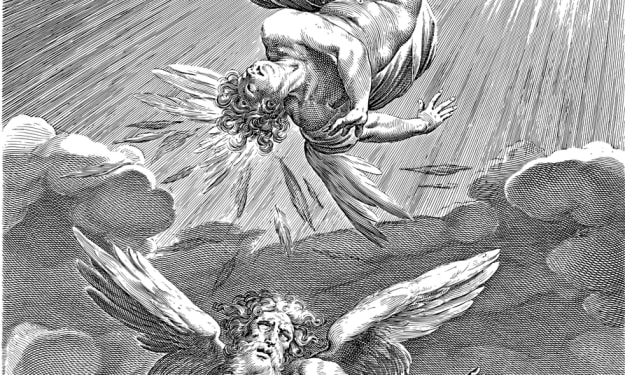
"Wings of Ambition: The Tragic Flight of Icarus and Daedalus" In the age of myth, ensconced within the labyrinthine heart of Crete, there dwelled Daedalus—a peerless craftsman, an alchemist of artistry, whose gifts knew no equal. But with genius came a beguiling curse, as the keen eye of King Minos fell upon him. In the convoluted embrace of the very maze he had conjured, Daedalus languished, his soul yearning for liberation. And in this tale of destiny intertwined, his son, Icarus, shared that fervent longing.
By The Must-Read 3 years ago in History
The Book of Exodus Chapter 1
The Book of Exodus 1: The Israelites in Egypt: In the ancient land of Egypt, where the Nile's fertile banks brought life to the arid desert, a tale of oppression and resilience unfolded. This was the time when the Israelites, descendants of Jacob, known as Israel, found themselves in the embrace of a foreign land. Exodus 1 marks the beginning of their story in Egypt, a story that would ultimately lead to their liberation. As the chapter opens, we are introduced to a land of plenty, where the descendants of Jacob and his sons have settled. It is a land where Joseph, Jacob's favored son, once rose to great prominence, second only to Pharaoh himself. But the passage of time had a way of changing the fortunes of nations and individuals alike. Generations after Joseph's time, a new Pharaoh ascended to the throne. This Pharaoh, perhaps ignorant of the debt of gratitude Egypt owed to Joseph, saw the growing number of Israelites as a potential threat. The Israelites had multiplied greatly, and their numbers had become a source of concern for the Egyptian ruler. In a world defined by power and control, fear often led to oppressive actions. Pharaoh's response to this perceived threat was harsh and inhumane. He ordered the Israelite men and women into forced labor, imposing upon them the backbreaking task of building cities, including the grand city of Pithom and Ramses. The Israelites were subjected to cruel treatment, with taskmasters overseeing their toil and making their lives bitter with hard labor. Yet, even in the face of such adversity, the Israelites did not lose hope. They continued to multiply and flourish, defying the oppressive measures imposed upon them. The chapter highlights the resilience of the Israelite women, who played a pivotal role in preserving their people. They were skilled midwives who, in an act of civil disobedience, defied Pharaoh's order to kill newborn Israelite boys. Two of these midwives, Shiphrah and Puah, recognized the innate worth of every life and could not carry out Pharaoh's decree. When questioned by Pharaoh about their disobedience, they cleverly explained that Israelite women were strong and gave birth before they could arrive, thus sparing the newborns. The courage of Shiphrah and Puah in the face of tyranny stands as a testament to the power of compassion and resistance in the darkest of times. Exodus 1 portrays the escalating tension between the Israelites and the Egyptians. Pharaoh's oppressive measures intensified as he ordered all Israelite male infants to be cast into the Nile River. It was a horrific edict, a desperate attempt to stifle the growth of the Israelite population. Amid this backdrop of suffering and injustice, a remarkable story of hope began to take shape. A baby was born to an Israelite family, a child destined to play a pivotal role in the future of his people. His mother, in an act of desperation and love, placed him in a basket made of bulrushes and set it afloat on the Nile. This baby, as fate would have it, was discovered by none other than Pharaoh's daughter, who was drawn to the child's cries. She recognized the child as one of the Hebrews but was moved by compassion. She adopted him and named him Moses, a name that would become synonymous with liberation and leadership. Exodus 1 concludes with a poignant verse that foreshadows the challenges and triumphs yet to come: "But the more they were oppressed, the more they multiplied and spread; so the Egyptians came to dread the Israelites." This verse encapsulates the indomitable spirit of the Israelites, a people who, in the face of adversity, continued to grow, thrive, and cling to the hope of a better future. The story of Exodus 1 lays the foundation for the epic narrative of the Israelites' journey to freedom, their liberation from bondage, and their eventual covenant with the Divine. It is a story that resonates with themes of oppression, resistance, compassion, and the enduring human spirit. As we reflect on this chapter, we are reminded that even in the darkest of times, there is hope. The Israelites' story is one of perseverance, courage, and the belief in a better tomorrow. It is a timeless tale that speaks to the resilience of the human spirit and the transformative power of faith and determination. In the chapters that follow, we will witness the unfolding of one of the most iconic narratives in human history—the story of the Exodus.
By Raymark Marcos3 years ago in History
The French Revolution
A turbulent time in late 18th-century France known as the French Revolution marked a turning point in world history by causing a significant upheaval in the political, social, and cultural spheres. We examine the causes, significant incidents, life-changing effects, and enduring legacy of this revolutionary era in this 600-word synopsis.
By The Knowledge 3 years ago in History
From Dusty Streets to Football's Summit
Chapter 1: A Village Called Bambali In the heart of Senegal, nestled amidst the lush greenery of the Casamance region, lies the small village of Bambali. With its red earth roads and simple thatched huts, Bambali is a place where time seems to stand still. It was here, in this picturesque but impoverished village, that a young boy named Sadio Mané began his incredible journey.
By Abdullahi Abubakar3 years ago in History