Lessons
The Role of Parents in Shaping Values in a World of Reversals
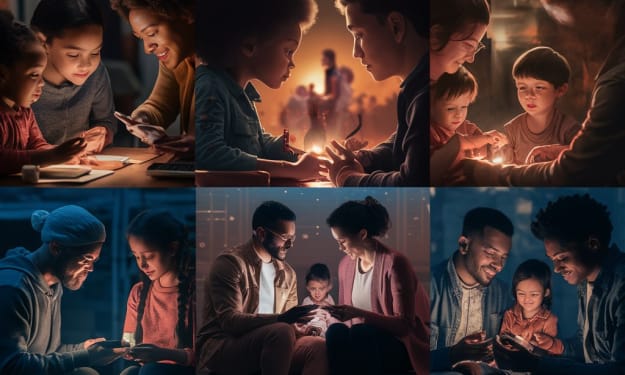
Synopsis In a world where right seems wrong and wrong appears right, the role of parents in imparting core values has never been more crucial. This story follows the journey of the Henderson family as they navigate the challenges of raising children with integrity in a society where moral compasses are constantly being tested. Through humour, trials, and heartfelt moments, this narrative underscores the indispensable role parents play in moulding the ethical framework of the next generation. The Henderson Family's New World Order The Hendersons, a quintessentially British family, found themselves in a peculiar situation one Tuesday morning. As Mr Henderson sipped his Earl Grey and read the paper, he noticed a peculiar trend—headlines celebrating the most bizarre behaviours. Mrs Henderson, juggling her morning routine, glanced at the news and sighed, "What on earth is happening to our world?" Their two children, Sophie and Oliver, aged 12 and 10 respectively, sat at the breakfast table, engrossed in their screens. "Look, Mum! This influencer just got a million likes for... stealing a traffic cone?" Sophie exclaimed. Mr and Mrs Henderson exchanged worried glances. It was clear: they had a mission to ensure their children could distinguish right from wrong in this topsy-turvy world. Navigating the Sea of Misguided Fame As the days passed, the Hendersons observed the growing influence of social media on their children's perceptions of success and morality. It wasn't just traffic cone theft; it was dangerous challenges, deceitful pranks, and a myriad of antics being glorified online. Mr Henderson decided to take action. One evening, he gathered the family for a discussion. "Sophie, Oliver, do you understand why some of these actions are wrong, despite their popularity?" he asked. The children, confused, shook their heads. Mrs Henderson chimed in, "Integrity means doing the right thing, even when no one is watching. It means being honest and kind, even when it's not the popular choice." They decided to embark on a journey to teach their children the essence of true integrity, not through lectures, but through stories and real-life examples. Lessons in Integrity: The Power of Stories The Hendersons began a nightly ritual of storytelling. Each night, they chose a tale that highlighted a moral lesson. From Aesop's fables to modern-day parables, they explored the virtues of honesty, courage, and kindness. One story that particularly resonated was that of a boy who returned a lost wallet, despite the temptation to keep it. "Why didn't he take the money, Dad?" Oliver asked. "Because, Oliver, integrity is worth more than any amount of money," Mr Henderson replied. These stories sparked conversations and reflections, helping Sophie and Oliver understand the value of integrity in a tangible, relatable way. Practical Lessons: Walking the Talk Beyond stories, the Hendersons knew they had to lead by example. They involved Sophie and Oliver in community service, teaching them the joy of helping others without expecting anything in return. One weekend, they volunteered at a local shelter. Initially hesitant, the children soon found fulfilment in their small acts of kindness. "That was fun! Can we do it again?" Sophie asked, her eyes gleaming with newfound purpose. These experiences reinforced the lessons from their nightly stories, showing the children that integrity and kindness were not just abstract concepts, but lived values. The Test of Integrity: Real-World Challenges The true test of the Hendersons' efforts came when Oliver faced a dilemma at school. He witnessed a friend cheating during a test and was torn between loyalty and honesty. Remembering his parents' teachings, he decided to speak up, despite the fear of losing his friend. "I couldn't just stay silent, Mum," he confessed. Mrs Henderson hugged him, "You did the right thing, Oliver. It takes courage to stand up for what's right." This incident was a turning point, solidifying the children's understanding of integrity as a cornerstone of their character. Celebrating Small Victories The Hendersons celebrated each small victory, reinforcing positive behaviours and discussing mistakes openly. They created a family culture where integrity was the norm, not the exception. "It's not about being perfect," Mr Henderson often reminded them, "It's about striving to do the right thing and learning from our missteps." These affirmations built a strong foundation of trust and respect within the family, encouraging Sophie and Oliver to internalise these values deeply. A World Transformed: The Ripple Effect As the Hendersons' journey continued, they noticed a ripple effect. Sophie and Oliver began influencing their peers positively. Their stories and actions inspired classmates to question the allure of misguided fame and seek genuine goodness. The Hendersons realised that by focusing on their own family's values, they were contributing to a broader societal shift. "One family at a time," Mrs Henderson mused, "that's how we change the world." Their commitment to integrity, even in the face of societal inversions, became a beacon of hope and a testament to the enduring power of parental guidance. An Enduring Legacy of Integrity Years later, as Sophie and Oliver grew into young adults, the lessons of their childhood remained etched in their hearts. They faced the world's challenges with a moral compass firmly in place, ready to navigate any storm. Mr and Mrs Henderson, reflecting on their journey, felt a deep sense of pride and fulfilment. "We did it," Mr Henderson whispered one evening, "we've given them the greatest gift—integrity." Their story serves as a reminder that in a world where values may seem inverted, the role of parents in teaching integrity is not just important but indispensable. And so, the Hendersons' legacy of integrity continues, lighting the way for future generations.
By Rafael Fiuza2 years ago in History
That Time When Humans Nearly Went Extinct
The human race experienced a population bottleneck where nearly 98% of people disappeared and things were difficult for them for more than a hundred years. Although the exact cause of this is unknown, it is likely the result of massive changes in Earth's climate. With more than 8 billion people on the planet today, it is difficult to imagine a time when there were so few humans that they nearly went extinct. This happened about 900,000 years ago when our ancient ancestors faced a crisis. Recent studies tell us there were only about 1,280 of them left, which is an incredibly small number. It's like just one village or very small town left alone on the entire planet.
By SIMON FUCHAKA LUNANI2 years ago in History
Exploring Myanmar
Myanmar's shift from seclusion to accessibility has been a swift one since 2011, with the country embracing reforms and opening up to the world. The IW River serves as a vital artery for transportation in Myanmar, linking significant historical sites. Living in a Buddhist nation along the river brings a unique perspective. The river's constantly shifting navigable channel is due to the large amounts of sediment it carries from the mountains. In a riverside village, the tradition of domesticated elephants with personal trainers is deeply rooted. Women spend long hours working barefoot in the cold water, amidst the deafening noise of pumps. Gold is transported on ramps with flowing water. The influence of British writer George Orwell can be seen in Qatar, particularly in his novel 'Burmese Days,' which highlights the British elite's elitism and arrogance. Tin Andai's business relies heavily on the river and the famous Napier fish found in Qatar. Mr. U Tin Tang, a fisherman, shares a house with his extended family of 28 people. The presence of dolphins in the river uniquely aids fishermen. Bamboo is a crucial commodity transported widely on the river, with families journeying downstream on rafts. Mandalay, the former royal capital of the Burmese Kingdom, now presents a modern facade. British troops dethroned Mandalay in 1885, and the city, with a population of 1.6 million, remains deeply influenced by Buddhism. Monasteries in Mandalay offer free education and internet access to young monks and orphans, with the Fang Dau monastic school being renowned for its dedication to providing education to those in need.
By Isaac Ekow Anyidoho2 years ago in History
why the dark ages were the wrong time to be alive
The Dark Ages were a brutal period, marked by marauding knights, scholarly killers from Oxford, staggering homicide rates, Viking savagery, and impoverished peasants driven to madness, sometimes literally dancing to their deaths. In this harsh era, even hairdressers doubled as amateur surgeons, performing grisly amputations.
By Shinzou Wo sasageyo2 years ago in History
Sir Isaac Newton
A list of the most influential people of all time wouldn't be complete without Sir Isaac Newton. Newton's laws are tied to almost everything we see in everyday life. They help us understand how cars work, how baseballs move, how anything moves. Yet there was a secret side to the 17th-century scientist, which will become clear by the end of this story.
By Horace Wasmore2 years ago in History
No I's allowed
Our expert/master apparel used to have bold colors and a rhythm that marked our own style. We could be both neat and show care. Maybe even better care because we seemed to be a happy lot back then. Women had overcome much of the bondage of the past. The 1980's! A new era...
By Shirley Belk2 years ago in History
Mr. Nelson Mandela
Nelson Mandela was born as Rolihlahla Mandela in a village in the Cape Province to a local chief and a descendant of native royalty. His upbringing was a mix of traditional Xhosa customs and Western social influences. The early 20th century in South Africa was marked by the formation of the Union of South Africa and power struggles fueled by British colonial expansion due to the discovery of gold and diamond mines. This led to conflicts with native tribes and Boer descendants, mainly Dutch, German, and French settlers who controlled wealth and political power. Mandela married Evelyn Mase during a period of increasing struggle for black rights in South Africa, with the couple having a modest wedding due to financial constraints. The rise of the anti-black National Party and the implementation of the Apartheid policy further exacerbated tensions in the country, leading to segregation and limited civil liberties for the black population. Mandela's political involvement increased before 1948, culminating in his role in the overthrow of ANC President Xuma. Embracing Communist ideologies in the 1950s, Mandela became a prominent figure in the ANC movement, opposing the Pan-Africanist Congress and expanding the ANC network.
By Isaac Ekow Anyidoho2 years ago in History
Japan
Japan resisted two Mongol invasions, with the ruler Hojo Tokimune defending the country. The role of Japanese mythology and propaganda in justifying imperial rule is evident, as well as the arrival of new people and the influence of other civilizations. Queen Himiko played a significant role in ruling Yamatai and had diplomatic relations with China, and her burial mound, the Hashihaka kofun, is located in Nara Prefecture. Women held high status and repeatedly entered the chronicles as monarchs in ancient Japan.
By Isaac Ekow Anyidoho2 years ago in History
"Contrasting Cultures: Aztecs and Mayas in Mesoamerica"
Can you pronounce the name of the Aztec capital city? Yes, it's quite difficult to say in English and above my pay grade. Okay, okay, it's Tenochtitlan. Mayan cities are hard to pronounce too. Consider Chichen Itza. They must be part of the same language, right? Well, not really. The Aztecs and the Mayas were among the most famous Mesoamerican peoples, present-day Central Americans, but they didn't speak the same language and they weren't even the same civilization. The two nations lived in different eras; the Aztecs dominated the region from the 14th to the 16th century, near the end of the Middle Ages in Europe. The Mayas came before the Aztecs; historians believe they started building city-states in the 3rd century. Their peak lasted until the 10th century.
By Nerisa Serina2 years ago in History
A Dog is Man's First Friend
The historical narrative of the partnership between humans and canines is a remarkable one and interesting to say. Dogs have been instrumental in various aspects of human life, including hunting, traveling, safeguarding, and guiding. They have seamlessly become part of our households, offering solace and companionship. Contrary to popular belief, the domestication of dogs did not originate from humans but was kickstarted by a timid and vulnerable she-wolf, marking a significant milestone in human evolution. Initially possessing warning instincts, wolves gradually transformed into dogs, serving as loyal companions and protectors. Over time, dogs have adapted to accompany, safeguard, and provide companionship to humans, ultimately evolving into a distinct species that is friendly towards humans and is part of their adventure and lonely survival.
By Isaac Ekow Anyidoho2 years ago in History