Lessons
Injustice Unmasked: The Price of Wealth Over Integrity
Synopsis: In the bustling heart of London, where the clash of historical grandeur and modern ambition creates a unique symphony, an unsettling reality lingers. We embark on a journey to unravel why society places wealth on a pedestal, often at the expense of integrity. Through tales of opulence and moral dilemmas, this story exposes the stark contrasts between financial status and ethical values, revealing the true cost of prioritising material success over moral fortitude. Chapter 1: The Illusion of Grandeur: London, with its towering skyscrapers and quaint cobbled streets, is a city of contrasts. Amidst this, we meet Jonathan, a charismatic banker whose tailored suits and luxurious lifestyle are the envy of many. However, beneath the surface, Jonathan's life is a façade. He grapples with the moral compromises made in pursuit of wealth. His story sets the stage for a deeper exploration of societal values. As we delve into Jonathan's world, the glittering surface begins to crack, revealing a man torn between ambition and integrity. The opulence that once seemed alluring now appears hollow, as Jonathan's internal struggle paints a vivid picture of the personal cost of chasing financial status. Chapter 2: The Price of Prestige: Jonathan's tale is not unique. In a society where financial success is often equated with personal worth, many find themselves at a crossroads. The pressure to maintain appearances leads individuals to make choices that conflict with their moral compass. We meet Sarah, a talented artist who sacrifices her passion for a corporate job, believing it's the only way to gain respect and security. Through her journey, we witness the emotional toll of valuing prestige over personal fulfilment. Sarah's struggles mirror those of countless others, highlighting the pervasive nature of this societal issue. Her story is a poignant reminder that the quest for external validation can erode one's sense of self, leaving behind a trail of unfulfilled dreams and compromised values. Chapter 3: The Social Fabric Unravels: As we continue our exploration, the impact of prioritising wealth becomes starkly evident. Communities once bound by shared values and mutual support now find themselves fractured. The gap between the affluent and the struggling widens, leading to resentment and disillusionment. We encounter Tom, a small business owner whose integrity and hard work are overshadowed by the allure of quick financial gains. His experiences illustrate the broader consequences of a society that values wealth above all else. The once cohesive social fabric begins to unravel, revealing the deep-seated issues at play. Tom's plight underscores the broader societal implications, as the relentless pursuit of wealth fosters divisions and erodes the foundational principles of trust and solidarity. Chapter 4: The Moral Dilemma: Jonathan's internal conflict reaches a climax when he is confronted with a decision that could define his legacy. A lucrative deal presents itself, promising immense financial gain but requiring a compromise of his principles. Meanwhile, Sarah faces a similar dilemma in her corporate career, where success seems attainable only through unethical means. These moments of crisis force both characters to reflect on what truly matters. The moral dilemmas faced by Jonathan and Sarah serve as a poignant reminder of the cost of compromising one's integrity for wealth. Their stories highlight the universal struggle between adhering to one's values and succumbing to societal pressures, painting a compelling portrait of the human condition. Chapter 5: The Turning Point: In the midst of their struggles, Jonathan and Sarah begin to question the societal norms that have shaped their decisions. They seek out voices of wisdom and integrity, finding inspiration in unexpected places. An encounter with a humble community leader opens their eyes to the possibility of living authentically. This turning point marks the beginning of their journey towards reclaiming their values. As they embrace a new path, they discover that true fulfilment lies not in financial success, but in living a life aligned with their principles. The shift in their perspectives becomes a catalyst for change, as they inspire others to reevaluate their priorities and pursue a more meaningful existence. Conclusion: Reclaiming Integrity: The story concludes with Jonathan and Sarah making courageous choices that redefine their lives. Jonathan turns down the lucrative deal, choosing instead to expose the unethical practices within his industry. Sarah leaves her corporate job to pursue her passion, finding joy and fulfilment in her art. Their decisions inspire those around them, sparking a movement towards valuing integrity over wealth. The narrative leaves readers with a powerful message: true success is measured not by financial status, but by the strength of one's character and the courage to live authentically. Their journeys serve as a testament to the enduring power of integrity, reminding us that the pursuit of genuine happiness and ethical living is the ultimate form of success.
By Rafael Fiuza2 years ago in History
The Evolution of Chess
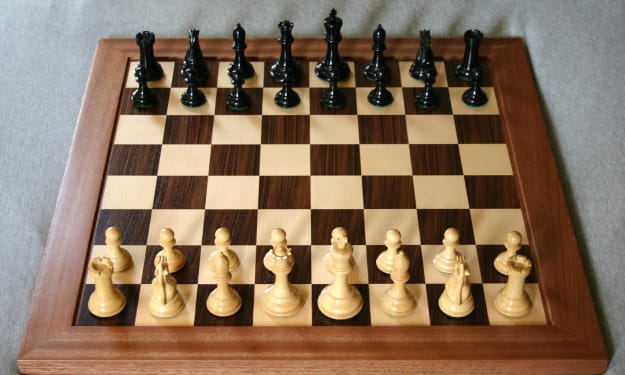
The scene is set: attacking infantry presses forward, their elephants having breached the defensive lines. The king, desperate to escape, finds himself cornered by enemy cavalry. Escape is impossible. Yet this isn’t a real battlefield– nor is it merely a game. This tableau reflects the timeless nature of chess, a game that has transcended centuries and cultures, embodying military strategy, human affairs, and intellectual prowess.
By Horace Wasmore2 years ago in History
The Mongol Invasions of the West (1240-1288)
The Mongols established the largest contiguous land Empire in the 13th century. Genghis Khan brought together seven Mongol tribes and deployed armies in various directions. Mongol forces advanced into Western Asia and Europe, encountering Latin Christendom and the Muslim World. Mongol coordination and raids in Poland were carried out by Baidar and Orda, who worked alongside Subotai and Batu for Mongol operations. Baidar and Orda divided their forces into smaller raiding parties to sow chaos and led the Vanguard to Krakov. The Mongols emerged victorious over the Polish and their allies at the Battle of Legnica. The intense fighting resulted in heavy losses for the Christian Knights, and the Mongols utilized their swift cavalry to target the disorganized Polish infantry, leading to a devastating defeat. The Mongols claimed trophies from the battle, such as cutting off the ears of the fallen and sending them to their leaders. The Mongols displayed no mercy, capturing and executing Duke Henry, and showcasing his head on a lance as a frightening demonstration of their power, which struck fear into the citizens of Legnica. The Polish forces suffered significant losses, including the Duke's headless body, which was only identifiable by the extra toe on his left foot. The Mongol invasion of Hungary and Poland resulted in the devastation and depopulation of Silesian and Moravian towns. Despite Mongol losses in Hungary and Poland, the enduring legend of the Battle of Legnica highlights the remarkable coordination and securing of the Southern flank by Mongol forces.
By Isaac Ekow Anyidoho2 years ago in History
The World Warships
Warships have undergone significant transformations over the course of 400 years, adapting to the advancements in technology. From the era of galleys to the era of aircraft carriers, warships have played vital roles in military strategies. The aircraft carrier Charles de Gaulle stands as the largest vessel in the French Navy, capable of carrying approximately 30 aircraft such as the Rafale and Hawkeye, as well as helicopters for logistical and defensive purposes. With a nuclear propulsion system, this carrier has the ability to project military force across the globe and target any location. In contrast, galleys relied on oars for propulsion and had limited navigational capabilities. Despite this, galleys boasted exceptional hydrodynamic performance due to their sleek hull design and low profile in the water. Each galley required a crew of 255 men, utilizing their body weight and wooden "palomon" structures for rowing. The evolution of warships from galleys to modern frigates marked a significant shift in firepower, with galleys being phased out in 1680 due to their lack of cannons.
By Isaac Ekow Anyidoho2 years ago in History
The Esoteric tradition
Unveiling Hidden Wisdom Esoteric traditions have drawn humanity's interest for centuries and are insightful about the mysteries behind life that are beyond ordinary reality. These traditions, shrouded in mystique, deal with internal knowledge and spiritual enlightenment. They encompass a myriad of diverse practices and concepts, all directed at an exploration of the hidden aspects of truth. Recently, these esoteric teachings have gained more interest because people have begun to seek an understanding of their potential effects on personal and collective well-being.
By Ann lisentra 2 years ago in History
The Morning Ritual of the Stoics: Ancient Practices for a Peaceful and Meaningful Life
Start Your Morning with These 7 Valuable Questions 1.What am I grateful for today? 2.What challenges might I face, and how can I handle them with wisdom and composure? 3.What are my priorities for the day? 4.How can I act in accordance with my values and principles? 5.What actions can I take to advance my goals? 6.How can I embody virtues like wisdom, courage, justice, and temperance? 7.What are the worst-case scenarios I might encounter, and how can I handle them with grace?
By Amaan khan2 years ago in History
The Role of Parents in Shaping Values in a World of Reversals
Synopsis In a world where right seems wrong and wrong appears right, the role of parents in imparting core values has never been more crucial. This story follows the journey of the Henderson family as they navigate the challenges of raising children with integrity in a society where moral compasses are constantly being tested. Through humour, trials, and heartfelt moments, this narrative underscores the indispensable role parents play in moulding the ethical framework of the next generation. The Henderson Family's New World Order The Hendersons, a quintessentially British family, found themselves in a peculiar situation one Tuesday morning. As Mr Henderson sipped his Earl Grey and read the paper, he noticed a peculiar trend—headlines celebrating the most bizarre behaviours. Mrs Henderson, juggling her morning routine, glanced at the news and sighed, "What on earth is happening to our world?" Their two children, Sophie and Oliver, aged 12 and 10 respectively, sat at the breakfast table, engrossed in their screens. "Look, Mum! This influencer just got a million likes for... stealing a traffic cone?" Sophie exclaimed. Mr and Mrs Henderson exchanged worried glances. It was clear: they had a mission to ensure their children could distinguish right from wrong in this topsy-turvy world. Navigating the Sea of Misguided Fame As the days passed, the Hendersons observed the growing influence of social media on their children's perceptions of success and morality. It wasn't just traffic cone theft; it was dangerous challenges, deceitful pranks, and a myriad of antics being glorified online. Mr Henderson decided to take action. One evening, he gathered the family for a discussion. "Sophie, Oliver, do you understand why some of these actions are wrong, despite their popularity?" he asked. The children, confused, shook their heads. Mrs Henderson chimed in, "Integrity means doing the right thing, even when no one is watching. It means being honest and kind, even when it's not the popular choice." They decided to embark on a journey to teach their children the essence of true integrity, not through lectures, but through stories and real-life examples. Lessons in Integrity: The Power of Stories The Hendersons began a nightly ritual of storytelling. Each night, they chose a tale that highlighted a moral lesson. From Aesop's fables to modern-day parables, they explored the virtues of honesty, courage, and kindness. One story that particularly resonated was that of a boy who returned a lost wallet, despite the temptation to keep it. "Why didn't he take the money, Dad?" Oliver asked. "Because, Oliver, integrity is worth more than any amount of money," Mr Henderson replied. These stories sparked conversations and reflections, helping Sophie and Oliver understand the value of integrity in a tangible, relatable way. Practical Lessons: Walking the Talk Beyond stories, the Hendersons knew they had to lead by example. They involved Sophie and Oliver in community service, teaching them the joy of helping others without expecting anything in return. One weekend, they volunteered at a local shelter. Initially hesitant, the children soon found fulfilment in their small acts of kindness. "That was fun! Can we do it again?" Sophie asked, her eyes gleaming with newfound purpose. These experiences reinforced the lessons from their nightly stories, showing the children that integrity and kindness were not just abstract concepts, but lived values. The Test of Integrity: Real-World Challenges The true test of the Hendersons' efforts came when Oliver faced a dilemma at school. He witnessed a friend cheating during a test and was torn between loyalty and honesty. Remembering his parents' teachings, he decided to speak up, despite the fear of losing his friend. "I couldn't just stay silent, Mum," he confessed. Mrs Henderson hugged him, "You did the right thing, Oliver. It takes courage to stand up for what's right." This incident was a turning point, solidifying the children's understanding of integrity as a cornerstone of their character. Celebrating Small Victories The Hendersons celebrated each small victory, reinforcing positive behaviours and discussing mistakes openly. They created a family culture where integrity was the norm, not the exception. "It's not about being perfect," Mr Henderson often reminded them, "It's about striving to do the right thing and learning from our missteps." These affirmations built a strong foundation of trust and respect within the family, encouraging Sophie and Oliver to internalise these values deeply. A World Transformed: The Ripple Effect As the Hendersons' journey continued, they noticed a ripple effect. Sophie and Oliver began influencing their peers positively. Their stories and actions inspired classmates to question the allure of misguided fame and seek genuine goodness. The Hendersons realised that by focusing on their own family's values, they were contributing to a broader societal shift. "One family at a time," Mrs Henderson mused, "that's how we change the world." Their commitment to integrity, even in the face of societal inversions, became a beacon of hope and a testament to the enduring power of parental guidance. An Enduring Legacy of Integrity Years later, as Sophie and Oliver grew into young adults, the lessons of their childhood remained etched in their hearts. They faced the world's challenges with a moral compass firmly in place, ready to navigate any storm. Mr and Mrs Henderson, reflecting on their journey, felt a deep sense of pride and fulfilment. "We did it," Mr Henderson whispered one evening, "we've given them the greatest gift—integrity." Their story serves as a reminder that in a world where values may seem inverted, the role of parents in teaching integrity is not just important but indispensable. And so, the Hendersons' legacy of integrity continues, lighting the way for future generations.
By Rafael Fiuza2 years ago in History