Lessons
The Thrill of the Turnaround: Exploring Unforgettable Moments in History
Sinopse Life is replete with instances where the tables turn in the most unexpected ways, leaving us in awe of the sheer unpredictability of fate. This story encapsulates the gripping account of an individual who, laden with the weight of a crime, braced for the inevitable judgement, only to find redemption and relief in an unforeseen acquittal. Through this narrative, we delve into the emotional whirlwind of guilt, the anticipation of punishment, and the exhilarating triumph of being exonerated. The Burden of Guilt Our protagonist, let's call him John, found himself ensnared in the throes of despair, accused of a crime he had no memory of committing. Each day was a relentless assault on his conscience, every glance from a stranger a silent accusation. John’s mind replayed the events endlessly, each iteration more distorted, feeding the gnawing beast of guilt that had taken residence in his soul. Was he guilty? Had he really done what they said? The questions tormented him, but no answers came, only the suffocating dread of impending doom. Friends and family distanced themselves, their eyes reflecting the same unspoken question that plagued him. The isolation deepened his despair, making the burden of guilt nearly unbearable. He began to doubt his own recollections, wondering if his mind was playing tricks on him or if there was a sinister truth he had yet to uncover. The Slow March to Judgement As the trial loomed, John's nights grew restless. His dreams were haunted by the spectres of prison bars and the unforgiving faces of jurors. Days were a blur of legal jargon and sterile courtroom procedures, each one stripping away a piece of his humanity. His lawyer, a stoic figure of calm, reassured him that justice would prevail, but John’s heart was a tumultuous sea of doubt. He couldn’t shake the feeling that the noose was tightening around his neck, one deliberate turn at a time. Every morning, he faced the mirror, searching for a glimmer of hope in his own reflection, but finding only the weary eyes of a man teetering on the brink of despair. The trial seemed to stretch on endlessly, each day a relentless reminder of his precarious position. John’s confidence in his lawyer’s assurances wavered, and the fear of a guilty verdict loomed larger with every passing hour. The Weight of Evidence The prosecution painted a vivid picture of John’s supposed misdeeds, each stroke designed to etch the image of a guilty man into the minds of the jurors. Witnesses came forward, their testimonies a barrage of damning evidence. John sat silently, his hands clenched into fists of frustration and fear. The defence countered, presenting alibis and casting doubt, but the balance seemed perilously tilted. John’s hope dwindled with each passing day, a flickering candle in a tempest. The relentless barrage of accusations and evidence began to wear on him, eroding the last vestiges of his resolve. Each witness seemed more convincing than the last, their words cutting deeper into his sense of self. The jurors’ expressions remained unreadable, their stoic faces a constant reminder of the power they held over his fate. Despite his lawyer’s best efforts, the case seemed to be slipping through their fingers, inching ever closer to a devastating conclusion. The Crescendo of Tension The courtroom was a cauldron of tension on the day of the verdict. The jury filed in, their faces inscrutable. John’s heart pounded in his chest, a deafening drumbeat of anxiety. The judge’s gavel fell, and the world seemed to hold its breath. Guilty or not guilty – two words that would decide his fate. John closed his eyes, bracing for the impact of judgement. He felt the weight of the world pressing down on him, a crushing burden of expectation and fear. As the foreman rose to deliver the verdict, time seemed to stand still. Every second stretched into an eternity, each heartbeat a painful reminder of the stakes. John’s mind raced through the past months, reliving every agonizing moment, every sleepless night, and every desperate plea for mercy. The air was thick with anticipation, the silence punctuated only by the occasional rustle of clothing or the faint cough from the gallery. It was a moment of pure, unadulterated tension, where the entire universe seemed to hinge on a single, fleeting decision. The Moment of Truth And then it came – “Not guilty.” The words seemed surreal, echoing in John’s ears as if from a great distance. He opened his eyes, scarcely believing what he had heard. The courtroom erupted in a mixture of gasps and murmurs. John’s lawyer clasped his shoulder, a rare smile breaking the stern facade. Relief washed over him like a cleansing tide, washing away the grime of fear and doubt that had clung to him for so long. He was free, absolved of the crimes that had haunted his every waking moment. The jury’s unanimous decision to acquit was a lifeline, pulling him from the depths of despair and into the light of a new dawn. Tears welled up in his eyes as the realization of his newfound freedom began to sink in. The weight of guilt and uncertainty that had been his constant companion for so long was lifted in an instant, replaced by an overwhelming sense of gratitude and relief. For the first time in what felt like an eternity, John allowed himself to hope. The Aftermath of Acquittal As he stepped out into the sunlight, the world seemed different. Colours were brighter, the air fresher, every breath a gift. John’s steps were lighter, the chains of guilt shattered by the verdict of innocence. He was a free man, yet the experience had irrevocably changed him. The shadow of the trial lingered, a reminder of how close he had come to losing everything. But with freedom came a newfound strength, a resolve to reclaim his life and forge a new path. He reconnected with friends and family, rebuilding relationships that had been strained to the breaking point. John found solace in the simple pleasures of life, savouring each moment with a newfound appreciation. The ordeal had left scars, both visible and invisible, but they served as a testament to his resilience and determination. He embraced the future with open arms, ready to face whatever challenges lay ahead. Reflections on Redemption John’s journey was a testament to the resilience of the human spirit. Though the ordeal had tested him to his limits, it had also revealed his inner fortitude. He reflected on the friends who had stood by him, the strangers who had believed in his innocence. Their unwavering support had been a beacon in his darkest hours. John vowed to live his life with a renewed sense of purpose, to honour the second chance he had been given. The scars of his ordeal would never fade, but they would serve as a powerful reminder of the strength within him. He took time to thank those who had supported him, expressing his deep gratitude for their unwavering faith. John’s story was shared widely, becoming a symbol of hope and resilience for others facing their own battles. His experience became a source of inspiration, a reminder that even in the face of overwhelming odds, redemption is possible. The Sweet Taste of Victory In the end, John’s story was not just one of survival, but of triumph. The victory of his acquittal was sweeter than any he had ever known, a hard-fought battle against insurmountable odds. His journey from despair to redemption was a testament to the power of hope and the indomitable human spirit. John’s experience was a vivid illustration of the unpredictable twists of fate, and the enduring truth that even in our darkest moments, there is always a glimmer of light waiting to guide us home. His story resonated with many, sparking conversations about justice, resilience, and the human capacity for endurance. John’s life, once overshadowed by guilt and fear, was now a beacon of hope and strength. He embraced his newfound freedom with a sense of responsibility, determined to make the most of the second chance he had been given. His journey was a powerful reminder that, no matter how dire the circumstances, there is always a path to redemption and victory.
By Rafael Fiuza2 years ago in History
Connection or Variety: What Do You Really Seek in a Relationship?
Synopsis: In the ever-evolving world of relationships, a perennial question looms large: do we crave deep, meaningful connections, or are we driven by the excitement of variety? This article delves into this timeless conundrum, weaving a humorous and thought-provoking narrative that examines the heart of human desires. From the early stages of infatuation to the complexities of long-term commitment, we explore the myriad ways people navigate the intricate dance of love and attraction. The Allure of New Beginnings Every relationship begins with a spark – that electrifying moment when two souls collide, creating a whirlwind of emotions and possibilities. The early days are a heady mix of discovery and excitement, where every conversation feels like a revelation, and every touch ignites a fire. This phase is intoxicating, filled with late-night talks, spontaneous adventures, and the thrill of the unknown. We find ourselves lost in the wonder of a new person, their quirks and charms becoming a delightful puzzle to solve. But as the initial rush subsides and reality sets in, a new question emerges: is this the connection we seek, or merely a prelude to the desire for something more? Are we destined to chase this feeling perpetually, or can it evolve into a deeper bond? The Comfort of Deep Connection As the honeymoon phase wanes, the allure of a deep, meaningful connection becomes apparent. This is the stage where true intimacy is forged, built on trust, understanding, and shared experiences. It's in the quiet moments of companionship, the comforting routines, and the mutual support that the beauty of a long-term relationship shines. Here, the everyday acts of kindness and consideration create a tapestry of love that is both comforting and profound. Yet, even amidst this profound connection, a lingering curiosity about the unknown can persist. The monotony of predictability might stir a longing for the excitement of the past. Is it possible to find balance, or are we forever torn between the familiar and the novel? Can we keep the spark alive while nurturing the deep roots of connection? The Temptation of Variety Variety, they say, is the spice of life. The notion of exploring new connections and experiences can be incredibly tempting, especially in a world brimming with opportunities. The excitement of meeting someone new, the rush of infatuation, and the allure of the unexpected can be irresistible. There's a certain magic in the unknown, where every interaction holds the promise of discovery and adventure. However, this pursuit often comes with its own set of challenges. The transient nature of these encounters can leave us yearning for something more substantial. Can the thrill of variety ever truly replace the depth of a lasting connection, or is it merely a fleeting distraction in the grand scheme of relationships? Are we chasing an illusion, mistaking novelty for genuine fulfillment? Navigating the Middle Ground Finding a balance between connection and variety is no easy feat. Some seek to blend the best of both worlds, maintaining a stable relationship while still indulging in occasional adventures. This approach requires open communication, trust, and a willingness to explore together. It demands a level of emotional maturity and understanding that not all couples can muster. Others may choose to prioritize one over the other, embracing the stability of deep connection or the excitement of continual exploration. This choice often reflects individual desires and the unique dynamics of each relationship. Ultimately, the path chosen reflects individual desires and the unique dynamics of each relationship. The journey to finding this equilibrium can be fraught with trials, but it is also filled with opportunities for growth and mutual discovery. The Reality of Expectations Expectations play a crucial role in shaping our relationships. The media often portrays idealized versions of love, filled with grand gestures and perpetual excitement. Social media, with its highlight reels, exacerbates this illusion. However, reality tends to be far more nuanced and complex. Understanding and managing these expectations is vital for maintaining a healthy relationship. By recognizing that no relationship is perfect and that both connection and variety have their merits and challenges, we can approach our relationships with greater empathy and realism. It's essential to communicate openly about our desires and to temper our expectations with a dose of reality. This realistic approach can pave the way for more fulfilling and resilient partnerships. The Art of Embracing Uncertainty In the end, relationships are an ever-evolving journey. Whether we seek deep connection or the thrill of variety, it's important to embrace the uncertainty that comes with love. Each relationship offers its own lessons and opportunities for growth. By remaining open to change and willing to adapt, we can navigate the complexities of love with grace and humor. Life is inherently unpredictable, and so are our relationships. After all, it's not about finding the perfect formula but rather enjoying the ride and learning from each twist and turn along the way. Embracing this uncertainty can lead to richer experiences and a more profound understanding of what we truly seek in our connections.
By Rafael Fiuza2 years ago in History
Living Like a Pharaoh
Ever imagined what it was like to live in the lap of luxury, surrounded by servants, temples, and divine duties? Welcome to the world of ancient Egyptian royalty, where the daily life of a pharaoh was anything but ordinary. From managing a sprawling kingdom to indulging in lavish feasts, being a pharaoh was a 24/7 job with its fair share of responsibilities and perks.
By Horace Wasmore2 years ago in History
The Worst Day Ever
So you have thought you had a bad day. Just look around and look up the worst of them all. After hearing the story, one can comprehend any lousy day that seemed so small as the result of the aftermath. Enjoy a read and see that one had an awful day.
By Sarah Danaher2 years ago in History
Bangladesh
In the heart of the Indian subcontinent, nestled along the lush, fertile plains and the serpentine rivers of Bengal, lies a land of profound beauty and resilience—Bangladesh. The story of its birth is not just a tale of political struggle; it is a saga of a people's undying spirit, a nation's fight for its identity, and the sacrifices of countless souls who dreamed of freedom.
By Aminu Muhammad2 years ago in History
The Pleasant Paradox: A Tale of Truth and Tact
Sinopse: In a quaint English village, an eccentric mix of residents grapple with the eternal conundrum: should one always tell the truth, or is it sometimes better to be tactfully dishonest? Follow the lives of these characters as they navigate the treacherous waters of social niceties and blunt honesty, culminating in a lesson that could change the way we all interact. The Village of Verdant Vale Verdant Vale was a picturesque village where everyone knew each other’s business, and secrets were as rare as a sunny day in January. The villagers prided themselves on their impeccable manners and an unspoken rule of polite conduct. At the heart of the village was the bustling market square, where gossip flowed as freely as the ale at the local pub. Among the eclectic mix of residents was a baker named George, whose bread was as delightful as his disposition, and an elderly woman named Mrs. Pennyworth, whose sharp tongue was matched only by her sharp wit. Their contrasting approaches to communication would soon become the centre of a village-wide debate. George's Golden Rule George believed in the power of positivity and the importance of maintaining harmony. His philosophy was simple: a kind word could brighten anyone’s day. This belief guided his interactions, even if it meant sugar-coating the truth. When Mrs. Haverford’s new hat looked more like a bird’s nest than a fashion statement, George complimented her on her “unique sense of style.” His bakery was a haven for those seeking a smile and a sweet treat, and his sunny disposition made him one of the village’s most beloved figures. However, not everyone appreciated his approach. Mrs. Pennyworth's Sharp Tongue In stark contrast, Mrs. Pennyworth had no patience for what she called “false pleasantries.” She believed in telling it like it is, no matter how uncomfortable the truth might be. Her candidness often left the villagers feeling bruised, but she considered it a necessary evil. When Mr. Thompson asked for her opinion on his newly painted cottage, she didn’t mince words: “It’s an eyesore, dear. Repaint it immediately.” Though her honesty was sometimes harsh, it stemmed from a place of wanting to see her neighbours improve and succeed. Her bluntness made her both feared and respected. The Village Debate The clash of philosophies between George and Mrs. Pennyworth came to a head during the annual Verdant Vale Spring Festival. This year, the village council decided to host a debate on the topic: “Is it better to be truthful or tactful?” The event drew an unusually large crowd, eager to see the verbal sparring match between the two. As George and Mrs. Pennyworth took their places on stage, the air was thick with anticipation. George began by extolling the virtues of kindness and the importance of fostering positive relationships, while Mrs. Pennyworth countered with the value of honesty and the dangers of living in a world of polite lies. The Arguments Unfold George’s argument centred on the idea that small lies, or “white lies,” were essential for social harmony. He cited examples of times when a gentle lie had spared someone’s feelings or averted conflict. Mrs. Pennyworth, however, argued that even the smallest lie could erode trust and that true respect could only be built on a foundation of honesty. She recounted instances where her blunt feedback had led to positive change and personal growth. The villagers listened intently, their opinions swaying back and forth like a pendulum with each compelling point made by the debaters. A Lesson in Balance As the debate raged on, a young girl named Emily stood up from the audience. She was known for her wise-beyond-her-years perspective and often served as the village’s moral compass. “Why can’t we do both?” she asked, her voice clear and confident. “Why can’t we be honest, but also kind in how we deliver the truth?” Her question hung in the air, causing a ripple of thoughtful murmurs among the crowd. Emily’s simple yet profound suggestion struck a chord, and the villagers began to see that perhaps the answer wasn’t a strict adherence to one philosophy or the other, but a balance of both. A Shift in Perspective Inspired by Emily’s words, George and Mrs. Pennyworth decided to combine their approaches. They agreed to try being both honest and kind, ensuring their feedback was constructive and delivered with empathy. George started giving more sincere compliments, ensuring they were genuine, while Mrs. Pennyworth softened her delivery, focusing on encouragement rather than criticism. The village began to thrive under this new paradigm, with relationships growing stronger and a newfound sense of mutual respect blossoming among the residents. The Pleasant Truth By embracing the dual values of honesty and kindness, Verdant Vale found a new harmony. The villagers learned that the truth didn’t have to be harsh and that kindness didn’t have to be dishonest. George and Mrs. Pennyworth’s experiment in balanced communication became a model for neighbouring villages, and soon, the entire region was abuzz with the tale of Verdant Vale’s social renaissance. The village’s newfound equilibrium proved that when it comes to relationships, the most important thing is not choosing between truth and tact but weaving them together to create a tapestry of genuine, heartfelt connections.
By Rafael Fiuza2 years ago in History
The Origin of the Proverb: Unveiling the Tale Behind "Don't Judge a Book by Its Cover"
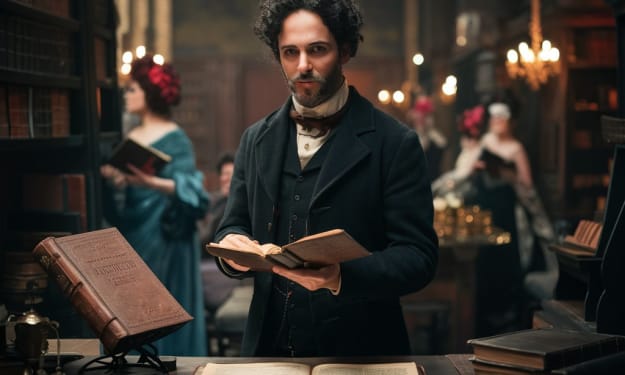
Sinopse: In the bustling heart of Victorian London, amidst the fog and cobblestone streets, a humble bookbinder named Thomas Whittaker crafted an extraordinary tale that would resonate through centuries. This is the story of how a seemingly innocuous saying, "Don't judge a book by its cover," came to life, entwined with secrets, mistaken identities, and a dash of humour. Through unexpected encounters and serendipitous events, Thomas's journey unveils a lesson in the dangers of superficial judgments, leaving an indelible mark on the English language and the way we perceive the world. The Beginning of a Journey: In the year 1845, Thomas Whittaker, a bookbinder of modest means, found himself ensnared in a peculiar predicament. One gloomy afternoon, he stumbled upon an unassuming leather-bound volume left abandoned in his shop. Its cover, worn and faded, revealed nothing of the treasure within. Little did Thomas know, this book was about to alter the course of his life, and eventually, the English language itself. The tale begins with a mix-up, a missing author, and a manuscript that would challenge the conventions of appearance and reality. Thomas's curiosity was piqued, setting him on a path that intertwined with the lives of London's elite, all while uncovering deeper truths about perception and identity. The Unveiling of Secrets: As Thomas delved into the pages of the mysterious book, he uncovered a narrative brimming with intrigue and unexpected twists. The story within told of Lady Beatrice, a noblewoman living a double life as a masked vigilante. Her true identity concealed beneath layers of disguise, Lady Beatrice navigated a world where appearances were often deceptive. Thomas found himself captivated, not only by the tale but by the craftsmanship hidden beneath the book's shabby exterior. This discovery sparked a revelation about the dangers of superficial judgments. He realised that, much like Lady Beatrice, the true essence of things often lay hidden, awaiting those patient enough to look beyond the surface. A Mistaken Identity: One fateful evening, a wealthy patron entered Thomas's shop, mistaking him for a renowned author due to the book in his hands. The patron, Lord Wetherby, insisted on hosting a grand soirée to introduce the "famed writer" to London’s elite. Unable to correct the misunderstanding without causing a scandal, Thomas reluctantly agreed. The soirée was a spectacle of opulence, where the city’s most influential figures gathered to meet the mysterious author. Thomas, amidst the grandeur, realised that his appearance had inadvertently led to a social masquerade. The lavish surroundings and the mistaken identity propelled him into a whirlwind of attention and admiration, all based on the cover of a book and the assumptions it provoked. The Masquerade: At the soirée, Thomas was thrust into a whirlwind of conversation and speculation. The guests, enthralled by his supposed literary prowess, showered him with accolades. Among them was Lady Evelyn, a sharp-witted socialite with a penchant for uncovering secrets. Sensing something amiss, she engaged Thomas in a playful yet probing dialogue. As they sparred with words, Thomas's unease grew, for Lady Evelyn's curiosity was as relentless as her charm. The evening reached its climax when Lady Evelyn, through a series of clever deductions, unveiled the truth about Thomas’s real identity. Her revelation, however, did not provoke scandal but rather a wave of amusement and appreciation for the irony of the situation. The Revelation: Lady Evelyn’s revelation, far from causing outrage, amused the gathered guests. They found the entire charade delightfully ironic and applauded Thomas for his humility and wit. Lord Wetherby, rather than being embarrassed, was fascinated by Thomas’s tale and proposed that the story of the book and its unassuming cover be shared with a wider audience. Thus, the notion that one should not judge a book by its cover began to gain traction, sparked by a series of serendipitous events and misunderstandings. The soirée's success and the whimsical nature of the evening solidified the proverb's place in the social consciousness, making it a talking point throughout London. The Legacy: News of the soirée and the proverb it inspired spread like wildfire across London. Thomas’s story was retold in parlours, inns, and even in the halls of academia. The phrase "Don't judge a book by its cover" became a metaphor for looking beyond superficial appearances, championing depth over veneer. Thomas Whittaker, once a mere bookbinder, found himself celebrated as an unwitting philosopher whose story touched hearts and minds. His modest shop became a beacon for those seeking wisdom, a testament to the idea that true value lies beneath the surface. The legacy of the proverb grew, reaching far beyond the boundaries of his humble beginnings. A Humorous Reflection: Years later, Thomas often chuckled at the absurdity of it all. From a forgotten book to a grand soirée, and from mistaken identity to an enduring proverb, his life had been a comedy of errors that somehow imparted timeless wisdom. He continued his work, always reminding his customers of the book that changed everything. His shop became a symbol of the proverb, attracting those curious about the man who inadvertently shaped a piece of linguistic history. The humour and irony of his experience provided endless amusement, reinforcing the lesson that appearances can indeed be deceiving. An Enduring Wisdom: Today, the phrase "Don't judge a book by its cover" remains a reminder to seek substance over style, to value depth over superficiality. Thomas Whittaker’s story, filled with humour, serendipity, and a touch of Victorian charm, endures as a testament to the power of looking beyond the surface. In an age of quick judgments, it invites us to pause and consider the hidden stories behind the façades we encounter. The enduring wisdom of the proverb continues to resonate, encouraging us to embrace patience and understanding in a world often too quick to judge.
By Rafael Fiuza2 years ago in History
The Genesis of Microsoft:
In the mid-1970s, the world was on the cusp of a technological revolution. A young Bill Gates, a Harvard dropout with a relentless passion for computers, and his childhood friend, Paul Allen, stood at the forefront of this transformation. Their shared dream of a future where computers were accessible to everyone ignited a journey that would change the world forever. In 1975, in a modest Albuquerque motel room, they founded Microsoft, a name that would soon become synonymous with personal computing.
By Aminu Muhammad2 years ago in History