Lessons
Echoes of Romance: A Roman Love Scene from Pompeii
The art of Pompeii continues to captivate modern audiences, providing a vivid glimpse into the lives, loves, and leisure of ancient Romans. Among the many treasures preserved by the catastrophic eruption of Mount Vesuvius in 79 CE is a stunning fresco that has been interpreted as a tender scene of love. Now housed in the British Museum, this panel depicts a woman playing a kithara, a type of lyre, with her lover seated beside her, gazing at her with adoration. Once believed to depict a music lesson, this artwork offers a timeless narrative of romance, artistry, and daily life in Pompeii. The Context of Pompeii Pompeii, a vibrant Roman city, was abruptly buried under volcanic ash in 79 CE, preserving an unparalleled record of Roman life. From grand villas adorned with intricate frescoes to humble homes with graffiti-covered walls, Pompeii’s remains offer insights into the art, culture, and emotions of its inhabitants. The fresco of the woman and her lover comes from a house in Pompeii, where it adorned the interior walls, likely serving as a decorative element that reflected the owner’s taste and social status. The Roman period, particularly the 1st century CE, was a time of flourishing art and culture. Scenes like this were popular in Roman domestic decoration, not only for their aesthetic appeal but also for their ability to convey themes of love, music, and leisure—an essential part of Roman elite identity. Depicting Love and Music This particular fresco is a masterpiece of storytelling. The central figure is a woman playing a kithara, a sophisticated stringed instrument associated with education, refinement, and artistic expression. Her posture and the way her fingers delicately touch the strings suggest a moment of musical performance, one that is private and intimate. Seated beside her is a man, presumably her lover, who gazes at her with a mixture of admiration and affection. His posture is relaxed yet attentive, highlighting the personal connection between the two. The interaction between the figures transcends words, capturing a moment of shared intimacy that resonates even today. The kithara itself is significant. In Roman culture, music was often associated with education and elite leisure. Women who played instruments, particularly in private settings, were seen as cultured and sophisticated. The inclusion of this instrument in the fresco suggests not only the woman’s artistic talent but also her social standing. Artistic Style and Technique The fresco demonstrates the skill and craftsmanship of Roman painters. Fresco painting involved applying pigment onto wet plaster, a technique that required precision and speed. The vibrant colors, delicate detailing, and realistic expressions are characteristic of Roman art during this period. The artist’s use of light and shadow adds depth to the scene, while the subtle details, such as the folds in the woman’s garments and the texture of the kithara, bring the image to life. The intimate setting, with the figures positioned closely together, enhances the emotional resonance of the piece. Symbolism and Interpretation While once thought to depict a music lesson, the fresco is now widely interpreted as a scene of romantic love. The man’s adoring gaze and the private setting suggest a deeper connection between the two figures. Music, in this context, serves as both a literal and metaphorical language of love—a medium through which emotions are expressed and relationships are deepened. In Roman art, music and love were often intertwined. Scenes of lovers enjoying music were common in domestic decoration, symbolizing harmony, passion, and the joys of life. The fresco’s theme reflects the broader Roman appreciation for leisure, beauty, and the emotional aspects of human experience. Preservation and Legacy The eruption of Mount Vesuvius, while devastating, ensured the preservation of Pompeii’s art for future generations. This fresco, like many others, provides a rare opportunity to connect with the personal lives of ancient Romans. It reminds us that despite the passage of centuries, themes like love, music, and human connection remain universal. Today, the fresco is displayed in the British Museum, where it continues to inspire and intrigue visitors. Its journey from a Roman home to a modern museum underscores the enduring appeal of Pompeii’s art and the stories it tells. Reflections on Ancient and Modern Love The scene depicted in this fresco resonates with modern viewers, offering a timeless narrative of romance and intimacy. In an age of technology and rapid communication, the simplicity of this moment—a woman playing music for her lover—reminds us of the universal power of shared experiences and personal connection. The fresco also invites us to reflect on the role of art in expressing and preserving human emotions. Whether through music, painting, or storytelling, the desire to capture love and beauty is a thread that connects us to the past. Conclusion The Roman fresco of the woman with her kithara and her adoring lover is more than just a decorative panel; it is a window into the hearts and minds of ancient Romans. Preserved by the ash of Vesuvius and brought to light centuries later, it bridges the gap between antiquity and modernity, reminding us that the human experience—love, art, and connection—is timeless. As we admire this piece in the British Museum, we are reminded not only of the richness of Roman culture but also of the shared emotions that define us all. It is a testament to the enduring legacy of Pompeii and the stories it continues to tell.
By Deji Akomolafe2 years ago in History
1,000 Days of War
Cartoon explainer: The rockets are labeled with the Russian words that Putin consistently uses to describe his goals for the Ukrainian war: denazification, demilitarization of Ukraine and protection of civilians in Eastern Ukraine. The last rocket has its true goal - "re-Sovietization."
By Lana V Lynx2 years ago in History
John Logie Baird: The Pioneer of Television
John Logie Baird: The Pioneer of Television John Logie Baird, a Scottish inventor, is best known for developing the world’s first working television system. His innovations laid the groundwork for the television technology that transformed communication and entertainment globally. This article explores his early life, groundbreaking inventions, challenges, and enduring legacy.
By Mahalakshmi2 years ago in History
The First Automotive Accident in the World: Historical Incident in Transport Modes
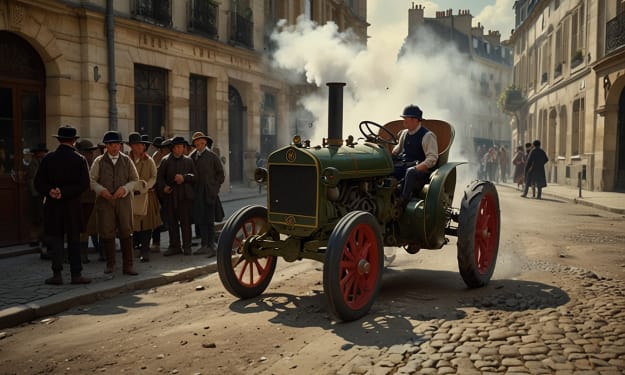
The first known car accident occurred in 1771. Modern road safety and automobile engineering as we know it today has only one particular day to its past. And that was the steam-powered tractor designed by Nicolas-Joseph Cugnot, the first automobile, crashing on the streets of Paris. It is rather difficult to imagine an automobile accident in a time when cars such as we understand them did not exist. Actually, the steam contraption, invented by Cugnot was one of the crucial moments in modern history. And the accident, though minor, became an historical event.
By Abhay kumar chauhan2 years ago in History
Antoine Laurent Lavoisier: The Father of Modern Chemistry
Antoine Laurent Lavoisier: The Father of Modern Chemistry Antoine Laurent Lavoisier (1743–1794) was a pioneering scientist whose work transformed chemistry from a qualitative discipline into a quantitative one. Known as the "Father of Modern Chemistry," his research established fundamental principles still used today. This comprehensive overview of Lavoisier’s life and contributions is divided into key sections.
By Mahalakshmi2 years ago in History
Ayatollah Ali Khamenei: Iran's Supreme Leader and His Resilient Legacy
Ayatollah Ali Khamenei has been Iran's Supreme Leader since 1989. He sits atop this country with huge influence in this country's government, military, and institutions of faith. Most of this nation's foreign and domestic policy undertaken is through the leadership adopted by Ayatollah Ali Khamenei. His longevity and influence have placed him at the heart of the country's politics.
By Abhay kumar chauhan2 years ago in History
The Most DISTURBING Experiment in History: The Stanford Prison Experiment
Imagine a group of college students volunteers for a two-week study that promises cash, camaraderie, and a chance to explore the depths of human psychology. Sounds like a breeze, right? Now fast forward six days, and the same “study” has devolved into something straight out of a dystopian nightmare—complete with yelling, psychological breakdowns, and power-hungry guards acting like they just inherited their own kingdom.
By Marveline Merab2 years ago in History
The Most Beautiful Souls in the World
Our world is often obsessed with external appearances, so it's easy to forget the power of inner beauty. We constantly hear about physical beauty, but true beauty comes from within. The most beautiful souls in the world radiate kindness, compassion, empathy, and a genuine love for others. Having a beautiful soul, however, entails what? Does it come naturally, or can it be cultivated?
By Zinnat ara Begum2 years ago in History
The Mystery of the Pingyan Giant Footprint: Fact or Fiction?
For centuries, people have been fascinated by stories of giants. Different cultures have shared legends about huge human-like beings, like the Titans in Greek myths or the Nephilim in the Bible. These stories have sparked our imagination and curiosity. But finding real evidence of giants has always been challenging and controversial. This changed for some people when a massive footprint was discovered in the remote village of Pingyan, China, sparking debates about whether it could be proof of giants.
By Muhammad Waseem 2 years ago in History
Timothy Dexter: The Luckiest IDIOT in History
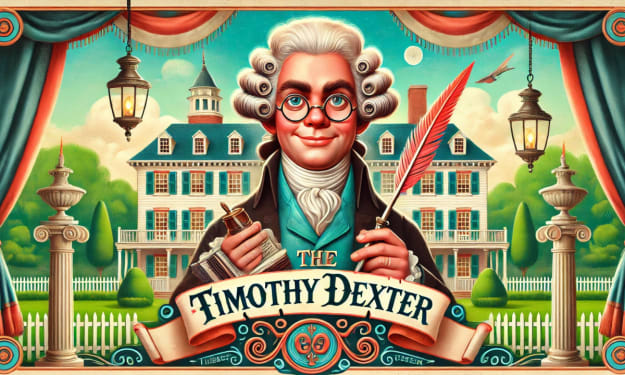
Welcome to the curious case of Timothy Dexter, the self-made millionaire whose life story reads like a farcical comedy of errors. Imagine a man so bewilderingly successful that you can't help but wonder if he had a secret pact with Lady Luck herself. From shipping coal to Newcastle (yes, really!) to selling mittens in the tropics, Dexter's baffling business ventures were as inexplicable as they were profitable. In this article, we take a closer look at the bizarre yet brilliant mind of Timothy Dexter, uncovering how his peculiar strategies turned him into a business genius against all odds.
By Marveline Merab2 years ago in History
Sir Humphry Davy: A Pioneer of Chemistry and Innovation
Sir Humphry Davy: A Pioneer of Chemistry and Innovation Sir Humphry Davy (1778–1829) was one of the most influential scientists of the early 19th century. A chemist, inventor, and poet, he contributed significantly to our understanding of chemical elements, invented tools that saved lives, and inspired a generation of scientists. This essay explores his life, achievements, and legacy under the following subheadings.
By Mahalakshmi2 years ago in History