Lessons
On Writing: Stephen King's Writing Tips To Remember
Introduction Stephen King is a household name in the literary world, with a career spanning decades and countless bestsellers. From Carrie to The Shining, King has crafted stories that captivate and terrify readers. But beyond his gripping tales, he's also an incredible mentor to aspiring writers. His book On Writing: A Memoir of the Craft is packed with insights and tips that can transform how you approach storytelling.
By Muhammad Nadeem2 years ago in History
The Enigma of London Stone
Every day, thousands of commuters shuffle along Cannon Street, making their way through the dense fog that rolls over London’s financial district. But among the hustle and bustle, few notice an oddity standing almost inconspicuously in a glass enclosure: London Stone. It’s a lump of rock, certainly not impressive at first glance, but this stone holds a mysterious past that has captivated Londoners for centuries.
By llaurren's reads2 years ago in History
Choto Katra: A Glimpse into Mughal History in Bangladesh
Choto Katra (meaning "Small Caravanserai") is a significant architectural landmark in Dhaka, Bangladesh, offering a window into the Mughal era's rich history and urban planning. Constructed in the 17th century, this structure stands as a testament to the grandeur of Mughal architecture and its influence on the region's cultural and historical fabric.
By Md Mostafizur Rahman2 years ago in History
Alexander Graham Bell: The Life and Legacy of a Visionary Inventor
Alexander Graham Bell: The Life and Legacy of a Visionary Inventor Early Life and Education Alexander Graham Bell was born on March 3, 1847, in Edinburgh, Scotland, into a family deeply invested in the study of communication and elocution. His father, Alexander Melville Bell, was a renowned speech therapist and the inventor of "Visible Speech," a system to teach the deaf how to speak. Bell's mother, Eliza Grace Symonds, was deaf, which profoundly influenced his interest in helping the hearing-impaired.
By Mahalakshmi2 years ago in History
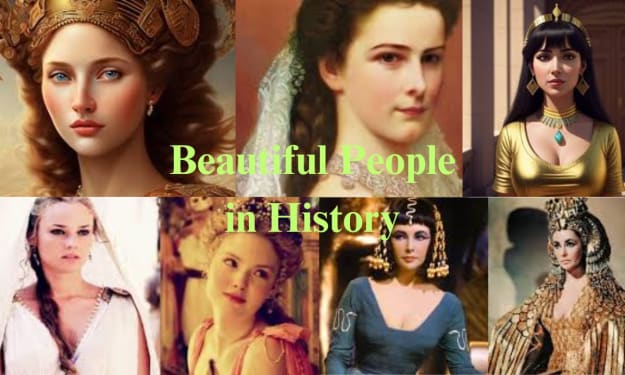
The Most Beautiful People in History
The Most Beautiful People in History: A Journey Through Timeless Beauty When we think of beauty, we often consider physical appearance, charm, and charisma. However, beauty is not just about looks — it’s about the influence, personality, and legacy that someone leaves behind. Throughout history, many individuals have captured the world’s imagination with their extraordinary beauty, elegance, and grace. In this blog, we will explore some of the most beautiful people in history whose allure transcended time and continues to inspire us today.
By Zinnat ara Begum2 years ago in History
The Impact of Social Media on Mental Health
Social media has transformed the way we communicate, share experiences, and perceive the world around us. With billions of people worldwide using platforms like Instagram, Facebook, Twitter, and TikTok, social media has become a central part of daily life. It offers countless benefits, including staying connected with friends and family, finding support communities, and gaining access to information and entertainment. However, as social media continues to permeate every aspect of our lives, concerns about its impact on mental health have grown significantly. Is social media a tool that enriches our lives, or is it a double-edged sword that can harm our mental well-being?
By dokis sris2 years ago in History
Marie Curie: A Pioneer in Science
Marie Curie: A Pioneer in Science Marie Curie, born Maria Skłodowska on November 7, 1867, in Warsaw, Poland, is one of the most renowned scientists in history. Her groundbreaking work in the field of radioactivity not only earned her two Nobel Prizes but also paved the way for advancements in science and medicine. This article explores her life and achievements, divided into key phases that highlight her journey.
By Mahalakshmi2 years ago in History
World War: A Historical Journey Through the Global Conflicts That Shaped Humanity
Throughout human history, few events have had as profound an impact on society, politics, and global dynamics as world wars. These catastrophic conflicts drew in nations from across the globe, reshaped borders, toppled empires, and left lasting scars on humanity. They were wars not just of weapons but of ideologies, ambition, and survival.
By Sanjay Sanjay2 years ago in History
The Most Overlooked Countries in the World
Regarding travel and tourism, certain countries often receive the spotlight, while others remain hidden gems, overlooked by mainstream travel guides. Sometimes, places that are less frequently visited or publicised get labelled unfairly, despite having unique landscapes, cultures, and experiences. In this article, we explore some of the most underrated countries in the world—places that may not be on the typical tourist route but possess beauty and charm worth discovering.
By Zinnat ara Begum2 years ago in History
Roger Bacon: The Visionary Philosopher and Early Advocate of the Scientific Method
Roger Bacon: The Visionary Philosopher and Early Advocate of the Scientific Method Roger Bacon (1219/20–1292) was a medieval English philosopher, scientist, and theologian whose work profoundly influenced the development of modern science. Often regarded as one of the forerunners of the scientific method, Bacon emphasized observation, experimentation, and the practical application of knowledge in a time when scholasticism and reliance on authority were the dominant intellectual paradigms. This essay delves into Bacon’s life, his major contributions, and his enduring legacy.
By Mahalakshmi2 years ago in History
Echoes of Romance: A Roman Love Scene from Pompeii
The art of Pompeii continues to captivate modern audiences, providing a vivid glimpse into the lives, loves, and leisure of ancient Romans. Among the many treasures preserved by the catastrophic eruption of Mount Vesuvius in 79 CE is a stunning fresco that has been interpreted as a tender scene of love. Now housed in the British Museum, this panel depicts a woman playing a kithara, a type of lyre, with her lover seated beside her, gazing at her with adoration. Once believed to depict a music lesson, this artwork offers a timeless narrative of romance, artistry, and daily life in Pompeii. The Context of Pompeii Pompeii, a vibrant Roman city, was abruptly buried under volcanic ash in 79 CE, preserving an unparalleled record of Roman life. From grand villas adorned with intricate frescoes to humble homes with graffiti-covered walls, Pompeii’s remains offer insights into the art, culture, and emotions of its inhabitants. The fresco of the woman and her lover comes from a house in Pompeii, where it adorned the interior walls, likely serving as a decorative element that reflected the owner’s taste and social status. The Roman period, particularly the 1st century CE, was a time of flourishing art and culture. Scenes like this were popular in Roman domestic decoration, not only for their aesthetic appeal but also for their ability to convey themes of love, music, and leisure—an essential part of Roman elite identity. Depicting Love and Music This particular fresco is a masterpiece of storytelling. The central figure is a woman playing a kithara, a sophisticated stringed instrument associated with education, refinement, and artistic expression. Her posture and the way her fingers delicately touch the strings suggest a moment of musical performance, one that is private and intimate. Seated beside her is a man, presumably her lover, who gazes at her with a mixture of admiration and affection. His posture is relaxed yet attentive, highlighting the personal connection between the two. The interaction between the figures transcends words, capturing a moment of shared intimacy that resonates even today. The kithara itself is significant. In Roman culture, music was often associated with education and elite leisure. Women who played instruments, particularly in private settings, were seen as cultured and sophisticated. The inclusion of this instrument in the fresco suggests not only the woman’s artistic talent but also her social standing. Artistic Style and Technique The fresco demonstrates the skill and craftsmanship of Roman painters. Fresco painting involved applying pigment onto wet plaster, a technique that required precision and speed. The vibrant colors, delicate detailing, and realistic expressions are characteristic of Roman art during this period. The artist’s use of light and shadow adds depth to the scene, while the subtle details, such as the folds in the woman’s garments and the texture of the kithara, bring the image to life. The intimate setting, with the figures positioned closely together, enhances the emotional resonance of the piece. Symbolism and Interpretation While once thought to depict a music lesson, the fresco is now widely interpreted as a scene of romantic love. The man’s adoring gaze and the private setting suggest a deeper connection between the two figures. Music, in this context, serves as both a literal and metaphorical language of love—a medium through which emotions are expressed and relationships are deepened. In Roman art, music and love were often intertwined. Scenes of lovers enjoying music were common in domestic decoration, symbolizing harmony, passion, and the joys of life. The fresco’s theme reflects the broader Roman appreciation for leisure, beauty, and the emotional aspects of human experience. Preservation and Legacy The eruption of Mount Vesuvius, while devastating, ensured the preservation of Pompeii’s art for future generations. This fresco, like many others, provides a rare opportunity to connect with the personal lives of ancient Romans. It reminds us that despite the passage of centuries, themes like love, music, and human connection remain universal. Today, the fresco is displayed in the British Museum, where it continues to inspire and intrigue visitors. Its journey from a Roman home to a modern museum underscores the enduring appeal of Pompeii’s art and the stories it tells. Reflections on Ancient and Modern Love The scene depicted in this fresco resonates with modern viewers, offering a timeless narrative of romance and intimacy. In an age of technology and rapid communication, the simplicity of this moment—a woman playing music for her lover—reminds us of the universal power of shared experiences and personal connection. The fresco also invites us to reflect on the role of art in expressing and preserving human emotions. Whether through music, painting, or storytelling, the desire to capture love and beauty is a thread that connects us to the past. Conclusion The Roman fresco of the woman with her kithara and her adoring lover is more than just a decorative panel; it is a window into the hearts and minds of ancient Romans. Preserved by the ash of Vesuvius and brought to light centuries later, it bridges the gap between antiquity and modernity, reminding us that the human experience—love, art, and connection—is timeless. As we admire this piece in the British Museum, we are reminded not only of the richness of Roman culture but also of the shared emotions that define us all. It is a testament to the enduring legacy of Pompeii and the stories it continues to tell.
By Deji Akomolafe2 years ago in History
1,000 Days of War
Cartoon explainer: The rockets are labeled with the Russian words that Putin consistently uses to describe his goals for the Ukrainian war: denazification, demilitarization of Ukraine and protection of civilians in Eastern Ukraine. The last rocket has its true goal - "re-Sovietization."
By Lana V Lynx2 years ago in History