Lessons
The Paris Climate Treaty
The Paris Climate Treaty, also known as the Paris Agreement, is an important global agreement aimed at fighting climate change. It was created during the United Nations Climate Change Conference (COP21) in December 2015 in Paris, France. Representatives from almost every country in the world came together to make this deal. The goal of the treaty is to protect the Earth by reducing greenhouse gas emissions and keeping global warming under control.
By Farhan Sayed2 years ago in History
The Roman Salute
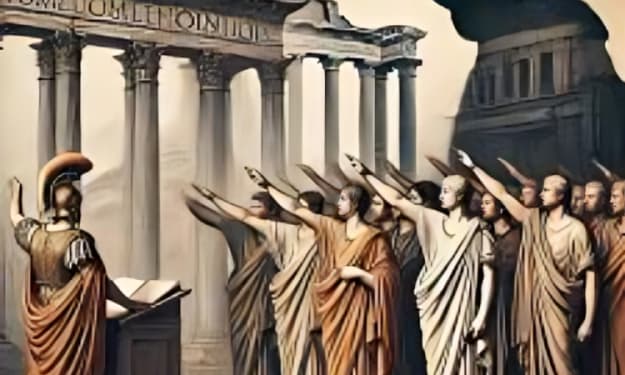
The Roman salute is a gesture where a person raises one arm forward with the palm facing down or slightly up. It is often associated with ancient Rome, but its real history and meaning are much more complicated. Over the years, this gesture has taken on different meanings in art, politics, and culture, making it a topic of debate and interest.
By Farhan Sayed2 years ago in History
The Roman Salute: History, Misconceptions, and Modern Interpretations"
Introduction The Roman salute, an iconic gesture often associated with ancient Rome, has become a topic of intrigue and controversy. Widely depicted in art and literature as a symbol of allegiance, it is commonly imagined as an outstretched arm raised with the palm facing downward. Despite its widespread recognition, much of what is believed about the Roman salute is rooted in misconceptions and modern reinterpretations rather than historical evidence.
By Razia Aman2 years ago in History
Exhibits of Fortitude Even with Fiasco. Content Warning.
History is stacked up with depictions of outstanding boldness during times of crisis. Two flight fiascoes — one out of 1982 and one more in 2009 — highlight the strength and unselfishness of individuals who put others before themselves. These episodes, but numerous years isolated, share a run of the mill subject: human mental guts despite overwhelming gamble.
By SHAPNA SARKAR2 years ago in History
Mahakumbh Mela
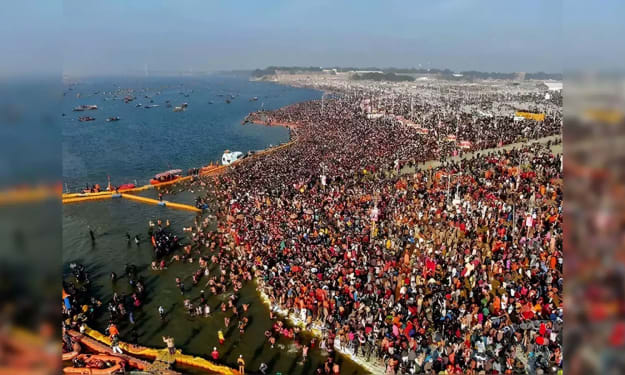
The Mahakumbh: A Spiritual Odyssey The Mahakumbh Mela, often regarded as the world’s largest spiritual gathering, is a festival that embodies the essence of India’s rich cultural and religious tapestry. Held once every twelve years, it is a celestial confluence of faith, mythology, and community. Millions of devotees, ascetics, pilgrims, and tourists from across the globe flock to the designated holy sites to immerse themselves in the sanctity of this grand event.
By NEERAJ KUMAR SINGH2 years ago in History
Snowstorm Weather Forecast for the UK
The United Kingdom is preparing for a significant snowstorm, and weather experts are warning people to get ready. Winter weather can bring beauty, but it can also cause challenges for travel, homes, and daily life. Here's everything you need to know about the upcoming snowstorm in simple terms.
By Farhan Sayed2 years ago in History
Dr. Martin Luther King Jr. Day
Dr. Martin Luther King Jr. Day: Honoring a Legacy of Justice and Equality Dr. Martin Luther King Jr. Day, celebrated annually on the third Monday of January, stands as a powerful reminder of the values of justice, equality, and nonviolence. This federal holiday, first observed in 1986, honors the life and legacy of Dr. Martin Luther King Jr., one of America’s most prominent civil rights leaders. His unwavering commitment to social change continues to inspire individuals worldwide.
By Sikandar prasad2 years ago in History
Blue Monday
Every year, on the third Monday of January, people around the world hear about something called "Blue Monday." It is often referred to as the "saddest day of the year." But what is Blue Monday, and why do people believe it is so depressing? Let’s explore the meaning, origins, and truth behind this idea.
By Farhan Sayed2 years ago in History
Mahakumbh mela
The Mahakumbh Mela is one of the largest spiritual gatherings in the world celebrated with great fervor and devotion by Hindus Rooted in ancient tradition and mythology the event signifies the confluence of faith culture and spirituality Held every twelve years at four holy riverbank locations in India Haridwar Prayagraj Ujjain and Nashik the Mahakumbh is an occasion where millions of devotees come together to take a sacred dip in the holy rivers believing it will purify their souls and wash away their sins Historical and Mythological Significance The origin of the Mahakumbh Mela is deeply embedded in Hindu mythology particularly the tale of the Samudra Manthan Churning of the Ocean According to legend gods Devas and demons Asuras churned the cosmic ocean to extract the nectar of immortality or Amrit As the pot containing Amrit emerged a fierce battle ensued To safeguard the nectar Lord Vishnu in the guise of Mohini took the pot and ensured its distribution among the gods During this pursuit drops of Amrit fell at four places Haridwar Prayagraj Ujjain and Nashik sanctifying these locations The Mahakumbh is celebrated to commemorate this divine event Rituals and Practices The central ritual of the Mahakumbh Mela is the Shahi Snan Royal Bath where devotees bathe in the holy river It is believed that the waters become charged with divine energy during this period offering spiritual benefits Several auspicious dates are chosen for these baths often coinciding with planetary alignments which are considered to amplify the spiritual potency of the ritual
By Anishant Singh2 years ago in History
A cutthroat love story
Some time ago, in a domain where hearts were the most valuable fortunes, there carried on with a young lady named Lyra. Her reality was one of unending magnificence, yet in addition of perpetual distress. The land, called Lumen, was managed by a strong and baffling power known as the Wanton — spirits who had lost their affection, their feelings, and their mankind. They meandered the world, unfilled and empty, trying to take the hearts of others to make up for their own shortcoming.
By Ahmad hasan Tamim2 years ago in History
Indira Gandhi and the National Emergency: A Turning Point in Indian Democracy. Content Warning.
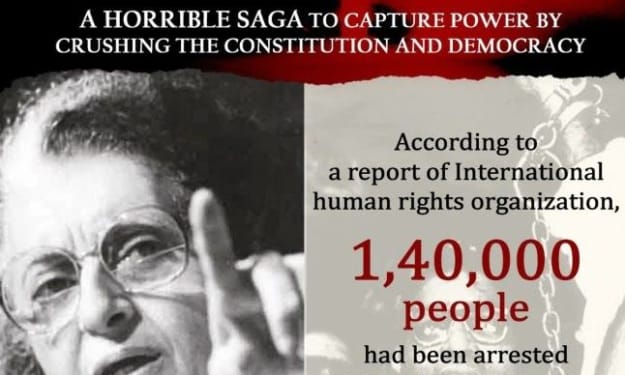
The Civic Emergency of 1975 Declared by Indira Gandhi: Reasons, Advantages, and Consequences The acknowledgment of a civic emergency in India by Prime Minister Indira Gandhi on June 25, 1975, charcoal one of the best arguable and debated capacity in Indian history. This period, abiding until March 21, 1977, greatly impacted the nation’s autonomous framework and governance. Let us analyze the reasons, advantages, disadvantages, causes, and furnishings of this cogent event. Reasons for the Civic Emergency Political Unrest: The 1970s witnessed boundless political agitation in India, primarily led by action leaders like Jayaprakash Narayan (JP). Corruption, bread-and-butter instability, and poor babyminding led to all-embracing protests and strikes, creating anarchy in assorted sectors. Judicial Adjudication Adjoin Indira Gandhi: In 1975, the Allahabad High Court declared Indira Gandhi’s acclamation to Parliament invalid due to balloter malpractices. This adjudication challenged her angary as Prime Minister, accumulative political instability. Economic Crisis: The country was grappling with an bread-and-butter downturn, ascent inflation, aliment shortages, and unemployment. These issues affronted accessible discontent. Call for Revolution: Leaders like JP aboveboard alleged for civilian defiance and a “Total Revolution,” advancement citizens to abolish the government, which Gandhi perceived as a absolute blackmail to capitalism and civic security. External Threats: India faced alien challenges from Pakistan, and there were apropos about civic security. Indira Gandhi argued that the emergency was all-important to aegis the nation. Advantages of the Civic Emergency Restoration of Order: The emergency finer concise the boundless strikes, protests, and riots, bringing actual law and adjustment to the nation. Economic Reforms: The government alien measures to ascendancy aggrandizement and advance agronomical production. Projects like the 20-Point Affairs aimed at abjection advancement and bread-and-butter development. Discipline: Industrial and authoritative sectors accomplished added discipline, with bargain disruptions and added adeptness in government operations. Infrastructure Development: The government focused on developing basement and acclamation basal needs, which saw abstinent advance during the emergency period. Disadvantages and Criticism Suppression of Civilian Liberties: The axiological rights of citizens, including abandon of accent and expression, were acutely restricted. The columnist was heavily censored, and bone was suppressed. Arrests and Detentions: Thousands of action leaders, activists, and critics of the government were arrested beneath the Maintenance of Internal Aegis Act (MISA), generally after trial. Forced Sterilization: One of the best criticized behavior was the affected sterilization affairs accomplished during this aeon as a agency of citizenry control. It led to boundless abhorrence and resentment. Political Manipulation: The Constitution was adapted to favor the cardinal government. The 42nd Amendment, anesthetized during the emergency, concise administrative analysis and adequate the executive's power. Erosion of Democracy: The emergency debilitated autonomous institutions and set a alarming antecedent for absolute governance. Consequences and Aftermath Electoral Defeat of Indira Gandhi: The emergency concluded in 1977, and in the consecutive accepted elections, the Congress Party suffered a massive defeat. The Janata Party, a affiliation of action parties, formed the government, appearance the aboriginal non-Congress administering in India. Strengthening of Autonomous Institutions: The backfire adjoin the emergency led to reforms aimed at attention autonomous institutions and preventing approaching abusage of emergency powers. Public Awareness: The aeon served as a admonition of the accent of civilian liberties and the charge for acuity in attention autonomous values. Indira Gandhi’s Comeback: Despite her defeat, Indira Gandhi alternate to adeptness in 1980, showcasing her animation and the continuing abutment she allowable amid a area of the populace. Cause and Effect Cause: The emergency was primarily a acknowledgment to political instability, bread-and-butter crises, and challenges to Indira Gandhi’s leadership. It additionally reflected her absolute tendencies and assurance to absorb power. Effect: While it briefly adequate adjustment and discipline, the emergency acutely damaged India’s autonomous appearance and larboard a abiding blister on the nation’s political and amusing fabric. It additionally fabricated citizens added acquainted of their rights and the accent of attention democracy. Lessons Learned The civic emergency of 1975-77 was a axis point in Indian history. It accent the aerial antithesis amid babyminding and civilian liberties and underscored the accent of accountability and accuracy in a democracy. While it showcased the government's adeptness to act actually in times of crisis, it additionally served as a abrupt admonition of the after-effects of absolved power. Indira Gandhi’s accommodation to appoint an emergency charcoal a accountable of acute debate. For some, it was a all-important footfall to restore order; for others, it was an absolute move that betrayed the attempt of democracy. The aeon continues to affect discussions about the animation of India’s autonomous institutions and the acuity appropriate to bottle them.
By Say the truth 2 years ago in History
Weather
Weather affects everyone, every day. Whether it’s sunny, rainy, or snowy, weather impacts what we wear, how we travel, and even how we feel. This article explains weather in simple and easy words, helping you understand what it is, how it works, and why it changes.
By Farhan Sayed2 years ago in History