Lessons
The philosophy of punishment and justice
It raises fundamental questions about the nature of justice, the goals of punishment, and the ethical foundations of legal systems. The theories surrounding punishment reflect varying ideals of justice, aiming either to deter crime, rehabilitate offenders, or exact retribution.
By Badhan Sen2 years ago in History
Yours, Always. AI-Generated.
#WHY DISTANCE CAN NEVER FADE TRUE LOVE ! April 15th, 1942 England's London Thomas, my dearest, The days feel longer without you here. Since you left for the front, the city is different. The streets are quieter, the skies darker, and every time the sirens wail, I hold my breath and whisper a prayer — not just for our city, but for you. I keep your photograph by my bedside, the one we took by the river last summer. I often touch the corner of it, as though by doing so, I can feel your hand again. Do you remember that day? The sun was high, and you made me laugh so hard that I spilled my tea. Those moments feel so distant now, like another life. Mother is well, though she worries about you just as much as I do. She knits scarves for the soldiers, hoping one might reach you. I’ve taken up helping at the community shelter, handing out bread and tea to those who have lost their homes in the bombings. Even though it keeps me busy, my heart stays with you. Please write soon. Even the smallest word from you would mean the world to me. Yours, always, Elizabeth --- May 2nd, 1942 Somewhere in France My Sweet Elizabeth, Your letter was a light in this dark place. I read it over and over, imagining your voice with every word. It made me remember the river too — the way your hair danced in the breeze, the way you scolded me for making you laugh too much. If I close my eyes, I can almost feel that day again. Love, things are hard here. The nights are cold, and the days are loud with the sounds of war. We march through fields and sleep in trenches, and though I am surrounded by men, I have never felt more alone. But your letter — your words — they remind me why I fight. für Sie. For us. I carry the handkerchief you gave me in my coat pocket. It smells faintly of lavender still, though the scent fades a little more each day. It’s a small piece of home I refuse to let go of. Tell your mother I am grateful for her scarves — I hope one reaches me. Tell her I promise to come home to you both, no matter how long it takes. With every beat of my heart, Thomas --- October 18th, 1943 England's London Thomas, my dearest, The sky appears permanently gray as the days get shorter and colder. Another winter is coming, and I worry about you more with each passing day. Are you cozy? Do you consume enough food? I lie awake at night and wonder where you are, if you’re safe. I learned of a battle near the town from which you last wrote. I held my breath, waiting for the telegram boy to pass our door, praying he would not stop. He didn't, but I never forget the fear. I still walk to the river sometimes. It’s quieter now, fewer people, but I sit by the same bench where we once laughed and dreamed of the future. I talk to you there, whispering into the wind, hoping somehow you hear me. Write to me when you can. Even a single word will ease my heart. Forever yours, Elizabeth --- December 9th, 1943 Somewhere in Belgium My Beloved Elizabeth, I am alive. I am safe — for now. I know you must have worried when the news came of the battle, but I made it through. The loss of many of my friends that did not comes with a heavy burden. Your letter was a comfort. Knowing you still sit by our river, still speak to me there, makes me feel less far away. I wish I could be there with you, holding your hand, promising you that this war will end soon. But I can't lie: I have no idea when that time will come. We march on, through snow and mud, but I keep moving forward with the thought of you. I picture you in your coat by the river, waiting for me, and it gives me strength. My love, hold on. I will come back to you. Yours until my last breath, Thomas --- May 7th, 1945 England's London Thomas, my dearest, The conflict is over. People are singing, crying, and embracing strangers again on London's streets, but all I can do is wait by our window and watch the road in the hope that you will return to me. I have heard nothing from you in months. No letters, no word. I am trying not to fear the worst, but it is hard. Every soldier I see returning home makes my heart race — is this the moment I see you again? Please, if you are alive, write to me. Inform me of your upcoming return. I cannot bear the thought of this joy all around me if you are not here to share it. Forever waiting, Elizabeth --- May 20th, 1945 England's London My Dearest Elizabeth, I am coming home. I write this from a small hospital in France, where I have been recovering from an injury since March. I'm so sorry I couldn't get in touch with you sooner; I can only imagine how scared you must have been. However, I am alive and healing. And now, I am coming back to you. I think of the river, of our bench, and of you standing there with the wind in your hair. I will be there beside you again soon — not in a dream, but in life. Now that the war is over, we can finally begin our life together. Hold me in your heart a little longer, my love. I am almost home. Forever yours, Thomas.
By Samiha Bushra 2 years ago in History
Love Letters Through Time. AI-Generated.
My Dearest Eleanor, November 14, 1863 As I sit by the dim lantern light, the soft crackling of the fire my only companion, I find my thoughts drawn irresistibly to you. The battlefield may rage with chaos and despair, but my heart, dear Eleanor, knows only the calm serenity of your love. Each night, when silence falls over the camp and the scent of damp earth fills the air, I close my eyes and imagine the warmth of your embrace, the gentle melody of your laughter carrying me home, if only in spirit.
By Word Weaver2 years ago in History
9 million year old shark ancestor fossil found in the desert
9 million year old shark ancestor fossil found in the desert. A recent discovery has left scientists and enthusiasts alike astonished a 9 million year old shark ancestor fossil was found buried beneath layers of scorching desert sand. This revelation challenges our understanding of prehistoric life and raises fascinating questions about how an ocean predator ended up in an arid landscape. While the idea of a shark fossil in the middle of a desert seems almost unbelievable it is a testament to the ever changing nature of our planet. To understand this phenomenon it is essential to look back millions of years when the Earth was vastly different from what we see today. Scientists explain that the very desert where the fossil was found was once submerged beneath a vast ocean. This prehistoric body of water teemed with marine life including sharks before geological and climatic shifts transformed it into the barren land we now see. The fossilized remains of this ancient shark serve as a reminder of a time when this region was part of a thriving underwater ecosystem. One of the key reasons behind such drastic transformations is the movement of tectonic plates. These massive sections of the Earth's crust are constantly shifting albeit at an imperceptibly slow pace. Over millions of years these movements can cause oceans to retreat and landmasses to rise reshaping entire continents. What was once a deep ocean floor eventually became exposed land subject to erosion and the relentless forces of nature.
By Adnan Rasheed2 years ago in History
Why Do Temples Still Matter? The Enduring Role of Spiritual Spaces in Our Modern Lives
Introduction: The Timeless Role of Temples in a Modern World Temples have always been central to the spiritual, cultural, and social fabric of society. They are not just places of worship but also hubs for community interaction, cultural preservation, and emotional well-being. In a world that is increasingly fast-paced, digital, and driven by technology, the question arises:
By Sri Kamakshi Ambal Temple2 years ago in History
The Tallest Man History
The tallest man in recorded history was Robert Wadlow, who reached the astounding height of 8 feet 11 inches, a record that has yet to be beaten. Born Robert Pershing Wadlow on Feb. 22, 1918, in Alton, Ill. He was not only the tallest person in the world, but in many ways he seemed larger than life itself , as he grappled with a condition that turned him into a medical wonder.
By Rohitha Lanka2 years ago in History
Love letters through time
November 12, 1943 My Dearest Eleanor, I have sat down to sit and write this letter a hundred times and, each time, I came up short, my heart overflowing with words I could not quite find. But tonight, here I sit with the soft buzzing of crickets that blow through my window and with the moon pouring its soft light upon my desk, I am compelled to write to you here and speak every word my heart has carried with me since meeting you.
By Parveen Baloch 2 years ago in History
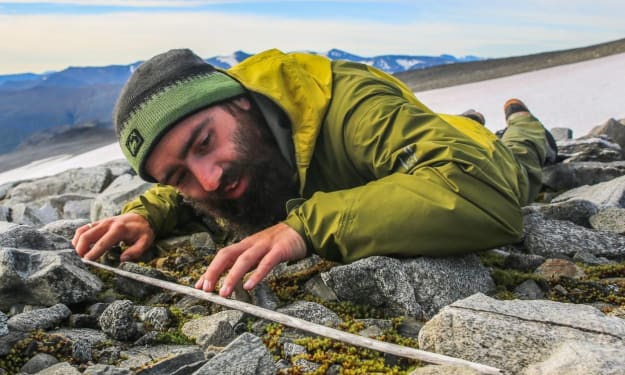
Archaeologists are finding mysterious ancient objects on Norway's melting glaciers.
Archaeologists are finding mysterious ancient objects on Norway's melting glaciers. The melting glaciers of Norway are exposing a hidden world frozen in time objects from the Stone Age Iron Age and medieval periods that provide rare glimpses into the lives of ancient humans. As climate change accelerates glacial melt archaeologists are racing against time to recover and study these remarkable artifacts before they are lost forever. From primitive wooden tools and well preserved textiles to weapons and human remains each discovery helps researchers unravel the mysteries of the past.
By Adnan Rasheed2 years ago in History
"Forbidden Love Triangle."
[Begins.] It was a cold, dark and dank morning. My platoon had finally arrived at our designated duty station. As I caught myself trying not to yawn while removing the crusty cold from my left eye. I just realized that it was a tidbit smidgen past 5 something o'clock. Boy, I almost had forgotten the letter tucked away -- crumpled more like it, in my left coat pocket. How could I have even forgotten I had put it there. Certainly, I did not have time to properly place it in my US Army issued backpack.
By Shane J Charbonnet, Ph.D.2 years ago in History