General
A broken love story. AI-Generated.
It happened one winter morning, when the city put on her cold as though it were a decoration. Claire had Rilke out in a quiet caf and was reading it and underlining it with a red pen along with drinking black coffee. Eli came in seeking warmth and his scarf fell off the face, and his fingertips trempled off the cold. He did not first notice her eyes but the book.
By Md Peyel Hassanabout a year ago in History
When Nations Build Machines of Power and Others Dance to Decline: A Reflection on Modern Decay
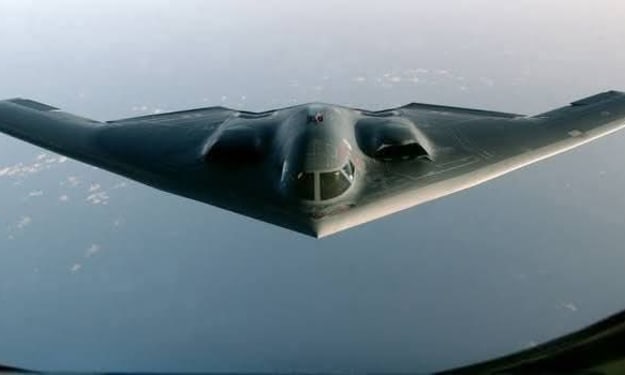
In the early decades of the 21st century, the world bore witness to an astonishing technological arms race. Among the most iconic symbols of this era was the B-2 Spirit, a stealth bomber engineered by the United States with surgical precision and strategic foresight. Capable of infiltrating heavily fortified enemy airspace undetected, this aircraft stands as a marvel of modern science, engineering, and military innovation. But as some nations were busy building such terrifying symbols of aerial dominance—quiet, deadly, and almost invisible—other nations were plunging into a different trajectory. Not one of development, science, or critical thinking, but one immersed in distractions, moral decay, and a systematic divorce from knowledge traditions that once made them world leaders in civilization. This dichotomy—one society building machines of control while another dances in the ruins of its intellectual heritage—is not merely a tale of technological imbalance; it is a lesson in the civilizational consequences of lost purpose. --- The Rise of the Machines The image of the B-2 Spirit, soaring over clouds in eerie silence, isn’t just a symbol of aerial dominance—it is a result of relentless pursuit of scientific mastery. Engineers, physicists, computer scientists, metallurgists, and military strategists pooled together knowledge over decades to make this possible. Billions of dollars were invested not in spectacle but in substance. The stealth aircraft reflects an ecosystem where science and technology were taken seriously—where knowledge was weaponized for dominance. The West, particularly the United States, understood early on that power in the modern world would not be decided by armies alone, but by who controls data, technology, skies, and space. Thus, institutions of learning and research were tailored to produce minds that could serve strategic national interests. --- Meanwhile in the East: From Knowledge to Noise Contrast this with the condition in many universities of the Muslim world and South Asia. Once glorious centers of mathematics, astronomy, chemistry, and philosophy, they now often serve as echo chambers for entertainment, cultural confusion, and intellectual laziness. Instead of focusing on space sciences, material physics, robotics, or artificial intelligence, many universities have become breeding grounds of moral chaos and cultural mimicry. Student unions and social media influencers dominate academic discourse. Holi and Diwali celebrations are more passionately organized than science fairs. Dance performances get more attention than research presentations. Protests for LGBTQ+ inclusion and gender fluidity gain traction, while research labs gather dust. And in the midst of this chaos, religious scholars and spiritual leaders become convenient scapegoats. Rather than asking why governments have failed to invest in R&D, or why our curriculum hasn’t evolved in decades, students and intellectuals find it easier to blame "mullahs" and "maulvis" for their own mediocrity. --- A Broken Mirror: The Psychology of Blame Blaming religious figures for the backwardness of science in Muslim societies is not only historically inaccurate—it is a form of intellectual dishonesty. It was Imam Ghazali, Ibn al-Haytham, Ibn Sina, and others who once carried the torch of both spiritual and scientific enlightenment. Their faith didn’t prevent progress—it fueled it. The separation of knowledge and faith, imported through colonial academic models, is what created the artificial divide. The modern student, holding a degree in physics yet unable to design a basic drone, finds it easier to mock traditionalists than to confront their own incompetence. The result? An entire generation that romanticizes rebellion but lacks the tools to rebuild anything worthwhile. --- Universities: Factories of Frivolity? Universities, once meant to be beacons of enlightenment, have in many countries become factories of frivolity. Here are some disturbing trends: Surveillance of private behavior is now more interesting than surveillance satellites. Leaked bathroom videos generate more outrage than leaked national data. New dance moves trend faster than new inventions. Gender identity discourse overshadows identity crisis in knowledge. In such an environment, critical thinking is suffocated, scientific inquiry is sidelined, and moral clarity is replaced by moral relativism. --- Meanwhile, the War Machines Grow As students protest for gender-neutral bathrooms and host TikTok dance competitions, the same governments they ignore continue to fund next-gen stealth bombers, hypersonic missiles, orbital drones, and AI-powered weapons. And so the question becomes stark: What happens when one civilization builds tools of power while another builds excuses? The answer is already visible in the geopolitics of today. Drones rain down silently in places where debates rage about pronouns. Sanctions are imposed on those who can't even agree on national priorities. Satellite surveillance watches over nations who can’t fix electricity. --- Reclaiming Purpose: What Needs to Be Done This article is not a call for regression into blind religiosity, nor is it a condemnation of arts or civil liberties. It is a call for balance, purpose, and self-respect. Here’s what must be done: 1. Prioritize Scientific Revival – Establish high-tech research institutions with real funding, international collaborations, and freedom of thought. 2. Reconnect Faith and Reason – Embrace a holistic worldview where religion and rational inquiry coexist. 3. Cultural Detox – Limit the distractions of hypersexualized media, vanity-driven digital content, and mindless mimicry. 4. Inspire Role Models – Promote figures who build, invent, write, and serve—rather than those who just entertain. 5. Hold Students to Standards – Reward academic excellence, punish plagiarism, and create an environment where merit thrives over mediocrity. --- Conclusion: The Silence of the Stealth Bomber, the Noise of a Lost Generation The B-2 Spirit flies silently—not just because it is designed to evade radar, but because true power often moves quietly. On the other hand, the noise of failing societies is loud—filled with blame, dance, protests, and moral confusion. A generation that forgets how to build will eventually be ruled by those who remember. A people who abandon knowledge will be enslaved by those who master it. The lesson is clear: either universities become engines of future-building, or they will become museums of what was once a great civilization.
By 🇲 🇮 🇳 🇩 🇺 🇳 🇫 🇴 🇱 🇩 🇪 🇩 about a year ago in History
12 Days War
The 12-Day War: A Strategy, Many Faces, and One Failure On the morning of June 13, 2025, the Middle East erupted into a full-blown military conflict. Israel launched a wave of surprise airstrikes against Iran, targeting suspected nuclear sites. Within hours, the region was drawn into a dangerous escalation. But this wasn’t just a fight between two nations. It was the breakdown of a much larger political strategy — one led by the United States, hoping to reshape the regional balance of power. What followed over the next 12 days revealed not just military tactics, but deep geopolitical miscalculations. --- 🇺🇸 America’s Strategy: Divide, Isolate, Defeat The United States, under the leadership of Donald Trump, had envisioned a master plan. The goal wasn’t just to help Israel. It was to pressure Arab countries to turn openly against Iran and join a military front. This would create a regional coalition where Iran would find itself encircled — politically, economically, and militarily. Trump believed that with enough pressure and incentive, Arab states would publicly align with Israel and help deliver a decisive blow to Iran. If that happened, Iran would be left alone, weakened, and forced to negotiate or retreat. But this plan never materialized. And by the end of the war, it had completely collapsed. --- ✈️ The First Strike — And Iran’s Countermove On Day 1, Israel targeted nuclear facilities deep inside Iran. The hope was that precision strikes could halt Iran’s nuclear program — or at least send a strong warning. But Iran had prepared well. Its defensive systems intercepted several incoming missiles, and within hours, it launched a coordinated response. Iran targeted southern Israel, specifically cities like Beersheba, using ballistic missiles and drones. The Iron Dome defense system was overwhelmed at times, allowing some missiles to strike urban areas. Fear and chaos spread in southern Israel, forcing thousands into shelters. Iran didn’t stop there. It expanded the battlefield by attacking American bases in Qatar, including the strategic Al-Udeid Air Base. This widened the conflict — no longer was it just Israel vs. Iran. It was now Iran vs. the U.S. and its regional presence. --- 🌍 Arab States Back Off: The Plan Falls Apart America’s plan to rally Arab states around an anti-Iran war front failed dramatically. Some governments stayed silent, others issued neutral statements, and a few even called for de-escalation. Public pressure and fear of internal unrest kept many from siding openly with the U.S. Iran’s leadership, particularly Ayatollah Khamenei, used this moment to strengthen ties with regional allies. Instead of being isolated, Iran gained sympathy in parts of the Muslim world — particularly as images of bombed cities and civilian injuries spread online. --- 🛡️ Southern Front: Iran’s Strength on Display The battle for southern Israel became a key test. Iran’s missiles, some launched from proxy networks in Iraq and Yemen, showed improved range and accuracy. Israel struggled to maintain full control of the skies, despite U.S. intelligence support. At the same time, Israeli strikes on Iran’s nuclear sites were largely ineffective. The key infrastructure remained intact. The goal of setting back Iran’s nuclear program by years was not achieved. --- ✋ A Ceasefire — And A Strategic Loss By Day 11, diplomatic pressure mounted. The global economy was reacting, oil prices were rising, and European powers began demanding a halt. On June 24, a ceasefire was brokered by the Trump administration. By June 25, the fighting stopped — but the consequences had already taken shape. Iran’s military remained standing. Its nuclear sites remained functional. Its government appeared more united, not weakened. On the other hand: America’s plan to isolate Iran had failed. Israel failed to achieve military goals. Arab countries refused to play the role Washington expected. --- 📌 Conclusion: A Superpower’s Miscalculation The 12-Day War exposed a painful truth for the U.S. and Israel: power does not guarantee success. Strategy matters. Timing matters. And most of all, understanding the regional landscape matters. While bombs fell and missiles flew, the real collapse happened behind the scenes — in meeting rooms, foreign ministries, and political speeches. Iran wasn’t just militarily resilient; it was politically prepared. And in the end, it wasn’t just a 12-day war. It was a 12-day failure of planning, pressure, and pride.
By Muhammad Usman Bangashabout a year ago in History
Trump Drops the Mother of All F-Bombs on Live TV: Chaos, Cheers, and Consequences
By [Lal Sher Khan ] Vocal Media In a media moment already being described as “unprecedented,” former President Donald J. Trump shocked the nation during a late-night appearance on Nightly Scroll with Hayley Caronia by unleashing a profanity-laced outburst that has left Americans divided, the political class scrambling, and newsrooms buzzing. The segment, aired live across digital platforms and replayed endlessly on cable news and social media, showed Trump at his most raw and unfiltered. When asked about ongoing legal troubles, his campaign’s direction, and his views on the Biden administration, Trump responded with a barrage of frustration — and then dropped a full-throated “This whole damn thing is a f---ing witch hunt!” The expletive, unbleeped in its original broadcast, sparked a firestorm. The Moment That Shook the Night Hayley Caronia, a rising star in political commentary known for her tough interviews and Gen Z edge, sat stunned for a second before regaining composure. “Mr. President, this is live,” she reminded him gently — but the damage, or the magic (depending on who you ask), had been done. Trump continued undeterred, railing against what he called “deep state criminals,” “radical left freaks,” and “corrupt prosecutors,” painting himself as the lone warrior in a battle against institutional rot. His supporters, already energized by his anti-establishment rhetoric, took to social media to defend him. “Finally, someone who says what we all feel!” wrote one user on X (formerly Twitter). Others called it “Trump unplugged — the warrior unleashed.” Backlash and Broadcast Fallout However, the backlash was immediate and severe. Media watchdog groups criticized both Trump’s language and the show’s producers for not having a delay safeguard in place. The Federal Communications Commission (FCC) has launched an inquiry into whether any fines or sanctions are appropriate — though, as the show was streaming and not broadcast over traditional airwaves, regulatory jurisdiction is murky. Prominent Democrats slammed the moment as “unpresidential” and “dangerously unhinged.” House Minority Leader Hakeem Jeffries called it “an insult to the dignity of public discourse,” while Vice President Kamala Harris tweeted, “Our children are watching. Our democracy is not a playground for foul-mouthed egos.” Supporters Applaud the Rawness Yet, for millions of Trump loyalists, this was yet another example of why they love him. “He says what he means and doesn’t filter it,” said Republican strategist Liz Montgomery. “The F-bomb might have shocked some viewers, but for his base, it signals authenticity.” Polls conducted in the aftermath show a minor bump in enthusiasm among GOP primary voters, especially younger conservatives who view political correctness as a tool of elite control. Memes featuring Trump’s outburst flooded TikTok and Instagram, with the phrase “F-Bomb 2025” even trending on Truth Social, Trump’s own social media platform. Republican Rivals Caught Off Guard Trump’s GOP primary rivals were left in a bind. Florida Governor Ron DeSantis called the moment “a distraction,” while former South Carolina Governor Nikki Haley stated, “Leadership is about discipline, not tantrums.” However, neither criticized Trump too strongly — a sign of his continued dominance over the Republican base. Privately, GOP strategists are divided. Some worry that moments like these alienate moderate voters and women in key swing states. Others believe the outrage cycle only deepens Trump’s grip on the MAGA movement and energizes his campaign heading into the 2025 election. Media Ethics and the Platform Dilemma The incident has reignited the debate around political speech and media responsibility. Should shows like Nightly Scroll provide unfiltered platforms to controversial figures? Is it ethical to give airtime to rhetoric that may incite or offend large swaths of the population? Hayley Caronia, for her part, defended the segment in a post-show statement. “Our job is to hold power to account, not censor it. Trump was Trump — and the American people deserve to see that, unfiltered.” Still, several media outlets have since imposed new policies for live interviews, including mandatory delay buffers and stricter moderation. The Long-Term Impact: A Nation Further Polarized What does Trump’s explosive appearance mean for the future of American politics? Analysts say it’s a microcosm of the larger cultural and political schisms dividing the country. “Every time Trump does something outrageous, the left condemns it, the right embraces it, and the middle gets more disillusioned,” said Dr. Melissa Hargrove, a political sociologist at Georgetown University. “It’s a cycle of escalation — and there’s no sign of it slowing down.” Some speculate the tirade may become a historic turning point — either as a warning of worsening incivility or as a rallying cry for a candidate who refuses to play by the rules. Conclusion: A Defining 2025 Moment? In an election cycle already overflowing with scandals, indictments, and political theater, Trump’s F-bomb has added a new layer of intensity. For his detractors, it’s yet more proof of his unsuitability for office. For his fans, it’s a bold, unvarnished statement of war against the establishment. One thing is clear: whether you view it as a disgrace or a declaration, the moment will echo in American political history for years to come.
By Lal Sher Khan about a year ago in History
Iran’s Strategic Balancing Act: Domestic Struggles and Global Tensions in 2025
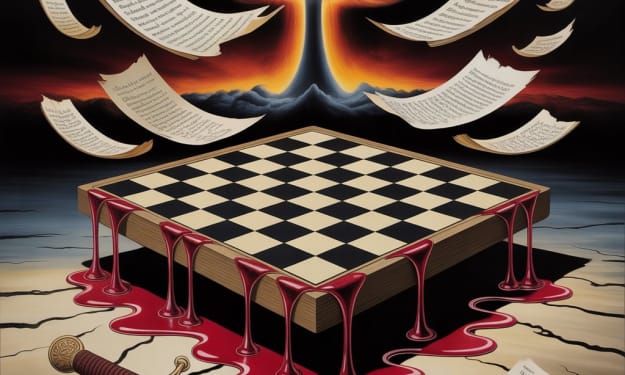
In 2025, Iran finds itself walking a tightrope — between defiance and diplomacy, survival and suppression, war and peace. As tensions rise across the Middle East and discontent simmers at home, Tehran is maneuvering through one of its most precarious moments in decades. A Nation Under Pressure Internally, Iran continues to face a severe economic downturn. Inflation has soared above 60%, the Iranian rial is in freefall, and unemployment — particularly among the youth — remains alarmingly high. Western sanctions, exacerbated by corruption and mismanagement, have crippled major sectors including oil exports, banking, and imports of vital goods like medicine and technology. The daily life of ordinary Iranians reflects this distress. Shortages of basic necessities are becoming routine, while many families struggle to afford food, rent, and medical care. Blackouts, water scarcity, and rising crime have added to public frustration. Meanwhile, protests — although heavily censored in state media — have erupted once again. From Mashhad to Tehran, demonstrators have voiced anger not just over economic conditions but also over government repression, lack of freedom, and the recent spike in executions. Human rights groups report that over 200 people have been arrested in the past two months alone, with dozens believed to have been killed in clashes with security forces. Despite this, the Iranian regime remains steadfast. Supreme Leader Ayatollah Ali Khamenei has insisted that the unrest is the result of "foreign meddling," and the Islamic Revolutionary Guard Corps (IRGC) has doubled down on surveillance, arrests, and digital crackdowns. A Boiling Regional Conflict Beyond its borders, Iran’s foreign policy continues to raise alarm across the globe. In the wake of a deadly drone strike on an Iranian consulate in Syria — widely blamed on Israel — Tehran has issued threats of “severe retaliation.” This follows years of low-intensity conflict between the two nations, including cyberattacks, sabotage campaigns, and targeted killings of nuclear scientists. In response to Israeli airstrikes in Syria and Lebanon, Iran-backed Hezbollah has reportedly intensified its cross-border rocket fire, raising fears of a full-scale war on Israel’s northern front. Iranian proxies in Iraq and Yemen — particularly the Houthis — have also stepped up operations, targeting U.S. assets and commercial shipping routes in the Persian Gulf and Red Sea. These actions have prompted a strong reaction from the West. The United States has increased its naval presence in the Strait of Hormuz, one of the world’s most vital oil chokepoints, while NATO officials have issued warnings about Iran’s growing threat in the region. In Europe, leaders are split between urging diplomacy and imposing fresh sanctions. France and Germany have called for a renewed nuclear deal — commonly referred to as the JCPOA — but hardliners in both Washington and Tehran appear unwilling to compromise. Nuclear Ambitions Back in Focus Iran's nuclear program is once again at the center of global concern. Following the collapse of the 2015 nuclear agreement after the U.S. withdrawal in 2018, Tehran has ramped up its uranium enrichment to levels close to weapons-grade. Recent IAEA (International Atomic Energy Agency) inspections have found alarming signs — advanced centrifuges spinning at the Fordow facility, reduced transparency, and a stockpile of enriched uranium far beyond the JCPOA’s limits. Western intelligence agencies have warned that Iran could theoretically develop a nuclear weapon within a matter of months — a move that would dramatically alter the balance of power in the Middle East and potentially trigger military intervention by Israel or the U.S. However, Iranian officials maintain that their program is entirely peaceful, designed for energy production and medical research. Nevertheless, their refusal to allow full inspections has only deepened suspicions. The Global Chessboard: Allies and Adversaries As U.S.-Iran tensions deepen, Tehran is seeking to pivot eastward. China and Russia have emerged as key partners, offering economic lifelines and military cooperation in exchange for strategic influence. In March, Iran officially joined the Shanghai Cooperation Organization (SCO), strengthening ties with Eurasian powers. Chinese companies have resumed work on key infrastructure projects in Iran, including railways and energy pipelines, while Russia continues to provide military support and intelligence sharing. This emerging alliance has added a new layer of complexity to global geopolitics, drawing battle lines reminiscent of Cold War blocs. Iran’s alignment with anti-Western powers also fuels fears that the Middle East could become a flashpoint for broader global conflict. The People’s Voice: Resistance and Resilience Despite relentless government control, the Iranian people continue to find ways to express their dissent. Underground artists, exiled journalists, and brave activists inside the country are using encrypted apps, VPNs, and satellite broadcasts to bypass censorship and share the truth. In recent months, the "Woman, Life, Freedom" movement — ignited by the 2022 death of Mahsa Amini — has seen a revival, especially among students and women’s groups. While brutally suppressed by authorities, the spirit of the movement persists. Iranian diaspora communities in the U.S., Europe, and beyond have organized large-scale protests, calling for international action and amplifying the voices of those inside the country. Their message is clear: the struggle for freedom in Iran is not over. What Lies Ahead? As Iran approaches the 2025 parliamentary elections, uncertainty looms. The ruling clerics are tightening their grip, disqualifying reformist candidates and increasing surveillance of political gatherings. Many analysts predict low voter turnout amid widespread disillusionment. At the same time, global observers worry that the next confrontation — whether over nuclear weapons, oil shipping lanes, or proxy wars — could spiral out of control. For now, Iran remains caught between internal collapse and external confrontation. The decisions made in Tehran — and in capitals across the world — in the coming months will determine whether the region can avoid catastrophe, or if it plunges into yet another war. One thing is certain: the eyes of the world are on Iran, and the stakes have never been higher. --- Tags: Iran, Middle East, Israel, Nuclear Deal, JCPOA, Protests, Ayatollah Khamenei, U.S.-Iran Tensions, Human Rights, Revolutionary Guard, Strait of Hormuz, Hezbollah, China, Russia, 2025 Politics
By Lal Sher Khan about a year ago in History
Above the Law? Supreme Court Ruling on Presidential Immunity Sparks U.S. Protests"
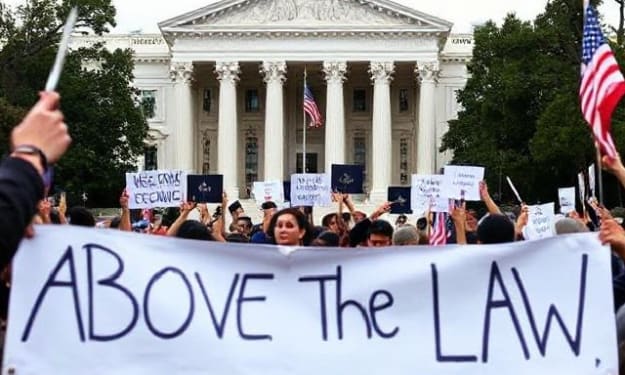
In one of the most consequential rulings in American judicial history, the U.S. Supreme Court on Monday granted former presidents substantial immunity from criminal prosecution for actions taken while in office. The decision, rendered in a 5–4 vote, has ignited a political firestorm, sending shockwaves across the country and plunging the nation into a fresh round of civic unrest. The majority opinion, authored by Chief Justice John Roberts, stated that “a former president is entitled to immunity from criminal prosecution for conduct within the outer perimeter of his official responsibilities.” While the ruling refrains from granting absolute immunity in all circumstances, critics argue that it opens the door for future presidents to abuse power without fear of accountability. Former President Donald Trump, who faces multiple indictments, including charges related to the January 6 insurrection, immediately celebrated the ruling as a “total victory for the Constitution and presidential power.” His legal team moved swiftly to pause ongoing cases, citing the Court’s decision. A Nation Reacts: "No One is Above the Law" The response from the public was swift and fierce. Within hours, protestors flooded major cities—New York, Chicago, Los Angeles, Atlanta, and beyond—holding banners that read “No Crown for Presidents,” “Justice Not Immunity,” and “Democracy Under Attack.” Organized by grassroots movements and civil rights groups, the demonstrations have largely remained peaceful, though tensions have flared in several locations. “This is not about Trump,” said Mariah Jefferson, a law student marching in Washington, D.C. “This is about the future of every presidency. This is about whether we live in a democracy or a monarchy.” In Philadelphia, a symbolic “funeral for accountability” was held in front of Independence Hall. Protesters dressed in colonial garb staged a reenactment of the Founding Fathers tearing up the Constitution—a visual metaphor for what many fear is happening in real time. Political Fallout: Echoes Across Washington On Capitol Hill, Democrats condemned the ruling as a dangerous overreach by the conservative-majority court. Senate Majority Leader Chuck Schumer called it “a seismic blow to the balance of power,” and House Democrats are reportedly considering legislative responses to clarify the limits of presidential immunity. “This court has fundamentally misunderstood the role of the presidency,” said Rep. Jamie Raskin, a constitutional scholar. “This is not an imperial office. Presidents must be subject to the rule of law like every other citizen.” Republicans, however, largely praised the decision, framing it as a necessary protection of executive authority. “Presidents must be able to make hard decisions without the threat of political prosecution hanging over them,” said Senator Josh Hawley. “This ruling restores constitutional clarity.” Still, a minority of GOP lawmakers voiced concern. “Immunity must never become impunity,” said Senator Lisa Murkowski, breaking ranks with her party. Legal Scholars Warn of Dangerous Precedent Legal experts across the spectrum are weighing in, with many warning that the decision could reshape the nature of American governance. Harvard Law professor Laurence Tribe described it as “an open invitation for tyranny,” while former federal judge Michael Luttig, a conservative, warned it “destroys the very principle of checks and balances.” “If a president can order the military to seize voting machines or instruct the IRS to target political enemies without legal consequence, where do we draw the line?” asked Yale constitutional law expert Akhil Reed Amar. Others, including conservative think tanks like the Heritage Foundation, argue the decision simply reinforces the need for careful delineation of official vs. private conduct. Media, Celebrities, and Public Sentiment Social media exploded with commentary following the announcement. Hashtags like #NoOneAboveTheLaw, #DemocracyCrisis, and #SCOTUSFailure trended on X (formerly Twitter). Celebrities including Mark Ruffalo, Kerry Washington, and Leonardo DiCaprio voiced their concern. “The Constitution is not a cloak of invisibility,” wrote Ruffalo. “It’s a shield for the people. We cannot let this stand.” A nationwide poll conducted by Quinnipiac University just two days after the ruling shows that 68% of Americans disagree with the decision, including 42% of Republican voters. The numbers reflect a growing anxiety about the future of accountability in American politics. What Comes Next? While the ruling is final, its implications are still unfolding. Legal analysts say Trump’s trials will be significantly delayed, if not entirely derailed. Prosecutors must now revisit their cases and prove that certain actions were not “official duties”—a high bar that could be open to wide interpretation. In the meantime, civic action is surging. Petitions, protest marches, and voter registration drives are accelerating as citizens brace for what could be one of the most contentious election seasons in U.S. history. “If the courts won’t hold presidents accountable, then we must,” said Jasmine Delgado, a high school civics teacher speaking at a rally in Austin, Texas. “We still have the ballot box. We still have our voices.” But as dusk falls over the Capitol and protestors light candles outside the Supreme Court, the mood remains uncertain—half defiance, half dread. Democracy, once taken for granted, now feels like something Americans must fight for all over again.
By Lal Sher Khan about a year ago in History
The Middle East: A Tinderbox of Empires, Wars, and Unending Conflict. AI-Generated.
The Middle East: A Tinderbox of Empires, Wars, and Unending Conflict The Middle East has always been more than just a geographical region—it’s a crucible of civilizations, a battleground of empires, and a vortex of geopolitical rivalries that have shaped world history. From the ancient wars of Mesopotamia to the modern-day clashes between Israel and Iran, this land has rarely known lasting peace. Today, as tensions escalate once again, the Middle East stands at the brink of another catastrophic conflict, threatening not just regional stability but global security.
By Muhammad Salman Akbarabout a year ago in History
The Cat and the Mouse
In a quiet village nestled between rolling hills and golden fields, stood an old, ivy-covered farmhouse. It had been abandoned by humans long ago, but it wasn't empty. Inside lived a sleek black cat named Nero. With piercing yellow eyes and paws that barely made a sound, Nero ruled the farmhouse like a silent king.
By MUHAMMAD SALMANabout a year ago in History
Fire in the Crescent: The 2025 Israel-Iran Conflict and the Fractured Path to Peace
By: Lal Sher Khan The morning of June 13, 2025, dawned like any other in Tehran. But within minutes, the sky turned to fire. What began as the faint sound of jets over the city quickly turned into an orchestrated barrage. Israel, for the first time in history, launched a full-scale direct military operation against Iran, striking deep into the heart of the Islamic Republic. Dubbed "Operation Rising Lion," Israeli fighter jets, drones, and cyber units unleashed a swift, coordinated assault targeting Iran’s nuclear facilities, missile silos, and Revolutionary Guard command centers. Explosions were reported in Tehran, Natanz, Isfahan, and Qom. Dozens of high-ranking IRGC officers, including General Hossein Salami, were confirmed dead within hours. Israel had long warned the world that a nuclear-armed Iran was a red line it would never tolerate. But this wasn’t just a preemptive strike—it was the beginning of a direct war between two bitter rivals that had previously limited their hostilities to proxies, cyberattacks, and espionage. A Decade in the Making The seeds of this conflict were planted long before the first missile was fired. Tensions had been escalating throughout the 2020s. Iran had gradually accelerated its nuclear program, frequently clashing with the IAEA over inspection rights. Meanwhile, Israel had ramped up sabotage operations inside Iran—explosions at enrichment facilities, assassinations of nuclear scientists, and increasingly public threats. By early 2025, after years of shadow warfare, several red lines were crossed. Iran’s missile program had made significant leaps, and its enrichment levels reportedly surpassed 90% uranium purity—the threshold for a bomb. Israel’s cabinet, under Prime Minister Benjamin Netanyahu, faced mounting pressure from military and intelligence leaders to act decisively. The trigger, according to Israeli officials, was an imminent Iranian plan to activate underground weaponization labs, a claim Iran vehemently denied. Iran’s Retaliation: The Shadow Breaks Into Light Within 24 hours of the Israeli strikes, Iran launched over 550 missiles at Israel, targeting military bases, airports, and urban centers including Tel Aviv, Haifa, and Beersheba. Though Israel's Iron Dome and David’s Sling systems intercepted many of them, several penetrated defenses, resulting in over two dozen civilian deaths and injuring hundreds. Hezbollah, Iran’s key proxy in Lebanon, opened a second front in the north. Rockets rained down on the Galilee region, prompting mass evacuations. The Houthi rebels in Yemen fired drones toward Eilat, further complicating Israel’s multi-front defense efforts. But perhaps the most startling development came from the United States. The U.S. Intervenes: Precision and Pressure President Donald Trump, recently reelected, addressed the nation from the White House, flanked by Secretary of Defense and Vice President J.D. Vance. Declaring Iran’s nuclear infrastructure “a global threat,” Trump ordered precision U.S. airstrikes on Fordow, Natanz, and Isfahan, joining Israel in its military campaign. In a matter of days, Iran’s nuclear capabilities were severely degraded. The Fordow facility was reduced to rubble. Key centrifuge halls in Natanz were rendered inoperable. Tehran’s air defense system struggled to respond, overwhelmed by the scope of the operation. Though Tehran declared victory in propaganda broadcasts, the reality on the ground told a different story: significant infrastructure loss, hundreds of military and civilian deaths, and economic devastation. Ceasefire—or Ceasefire for Now? By June 24, with international pressure mounting and domestic unrest stirring in Iran, a fragile Qatari-brokered ceasefire was announced. Both sides claimed victory. Iran’s Supreme Leader, Ayatollah Khamenei, called it “a divine test passed with honor.” Netanyahu stated the mission had “secured Israel’s future.” The ceasefire held—for now. Yet, questions swirl around its longevity. Iran’s parliament, controlled by hardliners, has since voted to expel all IAEA inspectors and resume nuclear activities “at full pace.” Israel, while pausing military operations, has declared itself ready to strike again “at a moment’s notice.” Behind closed doors, analysts fear this is not peace, but simply a pause before another storm. Echoes on the Street: Voices from Tehran and Tel Aviv In Tehran, the mood is mixed. Some, whipped into patriotic fervor, see the war as a stand against Western and Zionist aggression. Others mourn their losses—family members, homes, entire neighborhoods destroyed. “We didn’t ask for this,” said Reza, a university student in Tehran, whose dormitory was damaged in the air raids. “We wanted jobs, freedom, a normal life. Now we’re left with rubble and silence.” In Tel Aviv, residents emerge from bomb shelters with war-weariness etched on their faces. “We knew this day might come,” said Naomi, a school teacher. “But no one is ever truly ready. I just want my kids to feel safe again.” Regional Repercussions and Global Stakes The Israel-Iran conflict has redrawn the geopolitical map. Saudi Arabia, long a quiet backer of Israeli efforts to counter Iran, opened its airspace for the Israeli air force for the first time—a major diplomatic signal. Turkey condemned Israel, but stopped short of military action. Russia and China, Iran’s economic lifelines, have called for restraint, while the **
By Lal Sher Khan about a year ago in History