General
MISSION NOOR.
Nowadays in Pakistan, Mission Noor is underway. The question arises: Whose legacy is Mission Noor? After the death of Mirza Ghulam Ahmad Qadiani, his close companion Hakim Noor-ud-Din was chosen as the first Caliph. Hakim Noor-ud-Din is considered a key figure in the preaching and expansion of the Qadiani (Ahmadiyya) movement, and in remembrance of his services, the community introduced the concept of Mission Noor. This mission forms part of the global missionary activities of the Ahmadiyya Jamaat.
By Voxwrite ✍️ 12 months ago in History
Mike the Headless Chicken: The Bird That Lived 18 Months Without a Head
The Strange Survival of Mike the Headless Chicken When people hear the story of Mike the Headless Chicken, it almost sounds like a hoax. A bird with its head cut off that somehow lived for 18 months?
By Be The Best12 months ago in History
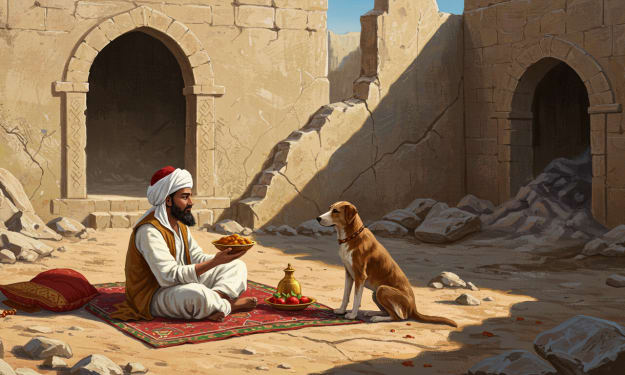
Bahlool and the Khalifa’s Food – A Lesson in Wisdom
The history of Islamic civilization is full of wise men, saints, and mystics whose words and actions carried lessons that went far beyond their time. Among these remarkable figures stands Bahlool ibn Amr, more commonly remembered as Bahlool Dana—a man who outwardly appeared eccentric and mad, but whose intelligence, insight, and wit often left scholars, rulers, and ordinary people stunned.
By Amir Husen12 months ago in History
Fads Gone Wrong: When America Threw Elbows for Toys, Trinkets, and Sauce
Fog Horn Blast 🚨 Every few years, a shiny new obsession descends on America and flips a switch in our brains labeled MUST… HAVE… NOW. Parents turn into linebackers, collectors speak in code about “first runs,” and someone inevitably pays a rent-sized chunk of cash for a toy with googly eyes. This isn’t a list of fads, we all remember those. This is a tour of the moments they went sideways: the riots, the stampedes, the bans, the lawsuits, the near-mythic price tags, and the glorious buyer’s remorse that followed.
By The Iron Lighthouse12 months ago in History
The Strange Yet Fascinating Nature of the Pakistani Nation
There is something truly unusual about the temperament of the Pakistani nation. Their behavior is unpredictable, their reactions are surprising, and their courage is often mixed with humor in a way that the rest of the world finds hard to understand. This story reflects that very nature, showing how ordinary villagers and ordinary citizens turn into something extraordinary when the time demands it.
By Izhar Ullah12 months ago in History
What Toronto Might Tell Us About the Oscars
With something of a reputation as an “Oscar Predictor”, the People’s Choice Award at the TIFF has been the first step in celebrating many a future Best Picture Academy Award winner. As this year’s iteration of the TIFF draws to a close, we have our entertainment lawyer in the know at Blake & Wang P.A., Brandon Blake, with all the insights.
By Aaron Patrick12 months ago in History
Rajat Khare Believes That India May Undercut an AI Revolution by Tackling Brain Drain
Artificial intelligence came on the scene as a defining technology in the 21st century, with industries from healthcare to finance and defense being overhauled. India, aided by a large pool of engineers and data scientists and a rapidly digitizing economy, should therefore be on the path to establishing itself as a leader. But an age-old challenge has, however, worked towards weakening the Indian position-The brain drain to foreign shores for great minds.
By Paula Stokes12 months ago in History
The Great Emu War
In 1932, Australia fought a war. Not against another country, not even against rebellious settlers or invading forces—but against emus. Yes, actual birds. The Great Emu War, as it is now remembered, remains one of history’s strangest and most unintentionally hilarious military campaigns. And the best part? The emus won. The story begins in Western Australia, where farmers were already struggling through the Great Depression. To make matters worse, enormous flocks of emus—giant, flightless birds standing over six feet tall—decided that newly planted wheat fields were the perfect all-you-can-eat buffet. Tens of thousands of emus marched across farmland, trampling fences, devouring crops, and leaving behind chaos in their feathery wake. The farmers were furious and desperate. Their solution? Call in the military. After all, when facing an army of overgrown birds, who better to help than men with machine guns? The government agreed, sending soldiers armed with Lewis guns and 10,000 rounds of ammunition. Their mission was simple: reduce the emu population and restore peace to the wheat fields. It was, in hindsight, a ridiculous plan. The first encounter came in November 1932 near the town of Campion. Soldiers spotted a group of about fifty emus grazing. Confident, they opened fire. The birds scattered immediately, sprinting in all directions. Emus, it turned out, were not only fast but also highly skilled at zigzagging across open fields, making them surprisingly difficult targets. The soldiers managed to hit only a few. The rest disappeared into the brush, no doubt squawking in birdlike laughter at their would-be hunters. Undeterred, the soldiers tried again, this time ambushing a group of a thousand emus. They set up their machine gun, waited for the birds to gather, and prepared to unleash chaos. But the gun jammed almost instantly, and by the time it was fixed, the emus had dispersed. Once again, the birds escaped. This became a pattern. Whenever soldiers engaged, the emus scattered into small groups, outmaneuvering their pursuers. One commander later admitted that the birds displayed “a remarkable ability to withstand bullets.” In truth, it wasn’t that emus were invincible—it was just that hitting a fast-moving target with early 20th-century machine guns was harder than expected. The soldiers joked bitterly that each bird had the stamina of a tank. Within weeks, the press was mocking the campaign. Headlines called it “The Great Emu War,” and Australians chuckled at reports of soldiers being outwitted by oversized poultry. Farmers, meanwhile, still had their crops destroyed, and the government faced embarrassment. After firing thousands of rounds and killing only a fraction of the birds, the military eventually gave up. The war was over. The emus had won. The aftermath was as strange as the war itself. Politicians debated whether to try again, but public ridicule was too strong. Instead, the government turned to more practical measures, like bounty hunting and better fencing. Farmers continued to battle emus for years, but never again with the full force of the Australian Army. Today, the Great Emu War is remembered less as a tragedy and more as a comedy of errors—a tale of human pride brought low by nature’s resilience. It is taught in classrooms, shared online as a meme, and told with a mixture of embarrassment and laughter. But beneath the humor lies something more meaningful. The Great Emu War was really a clash between human ambition and the stubborn unpredictability of nature. In the end, the lesson is simple: no matter how advanced our weapons or how clever our strategies, sometimes nature just refuses to cooperate. And perhaps the most humbling part? If you visit Australia today, you’ll still find emus striding across the landscape, unbothered and undefeated. The birds remain a living reminder that, once upon a time, humans went to war with them—and lost. The Great Emu War may have been a military failure, but as a story, it is unforgettable. After all, how many wars can you name where the enemy couldn’t even fly?.
By LUNA EDITH12 months ago in History
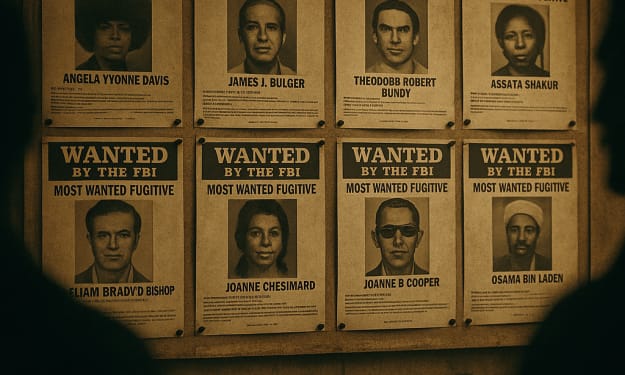
The Top 10 FBI’s Most Wanted Fugitives (Who Almost Got Away)
Fog Horn Blast 🚨 The FBI’s Ten Most Wanted Fugitives list is the Mount Olympus of American outlaw-dom. Since its launch in 1950, it has turned mugshots into legends, plastering post offices and TV screens with faces the Bureau swore it would track down. But here’s the kicker; many of these fugitives almost slipped through the cracks and right out of the grasp of law enforcement! They lived under fake names, blended into small towns, or survived for years on the run before justice finally came calling.
By The Iron Lighthouse12 months ago in History
Voynich Manuscript
In 1912, an antiquarian named Wilfrid Voynich purchased a collection of old books from a Jesuit college near Rome. Among them was a manuscript unlike anything the world had ever seen. Its pages were filled with strange looping script, bizarre plants that do not exist on Earth, astronomical diagrams that made little sense, and illustrations of women bathing in mysterious green pools. The book was written in an unknown language, and to this day, more than a century later, no one has been able to read it. The manuscript is now famously called the Voynich Manuscript, after its modern discoverer. It is 240 pages long, bound in calfskin vellum, and carbon dating suggests it was created sometime in the early 1400s. What makes it so mysterious is that the language it is written in does not match any known alphabet. The words follow patterns, as if they were part of a real language, but every attempt to translate them has failed. Throughout history, some of the greatest minds have tried to solve its puzzle. In the 1920s, a team of American codebreakers who had cracked enemy codes in World War I attempted to decipher it. They left frustrated, admitting defeat. During World War II, British and American cryptographers who broke German Enigma codes also tried their hand at the manuscript. Again, they failed. Even modern computer algorithms have not been able to provide a solution. The mystery deepens with the manuscript’s illustrations. The plants drawn inside look like they belong in a botanical guide, but most do not exist anywhere in nature. Some resemble common herbs with strange, impossible features. The astronomical drawings show stars and zodiac signs, but with unusual patterns and odd shapes. The bathing women, connected by pipes and pools, have led some to believe the book describes a secret medical or alchemical system. Others believe it is simply nonsense, created to trick a wealthy buyer in the Middle Ages. Over the years, countless theories have been proposed. Some say it was written by a medieval alchemist, using a secret code to protect valuable medical knowledge. Others suggest it was the work of Roger Bacon, a 13th-century English philosopher who experimented with science centuries ahead of his time. A few have even claimed it was created by Leonardo da Vinci as a boy, though the dates do not match. More fantastic theories argue that it could be the work of aliens, recording knowledge from another world. In 2018, a researcher claimed the manuscript was a medical text written in a forgotten dialect of Old Turkish. In 2020, another team suggested it was an elaborate hoax created in the Renaissance to make money. Yet none of these claims have convinced the wider scholarly community. Every time a solution is proposed, it quickly falls apart under closer examination. The truth is that the Voynich Manuscript remains unsolved. It sits today in the Beinecke Rare Book & Manuscript Library at Yale University, where anyone can view high-resolution scans online. People from around the world continue to study it, hoping to be the one to finally crack its code. Its mystery is not just about words on a page—it is about the human desire to understand the unknown. We are drawn to it because it reminds us that, even in our age of technology and information, there are still secrets left in the world. What makes the Voynich Manuscript so haunting is not only that we cannot read it, but that someone, hundreds of years ago, went to great lengths to write it. The author, whoever they were, spent years carefully drawing each plant, each symbol, each page. Was it a genuine attempt to record knowledge? A playful invention to fool the curious? Or a personal project, never meant to be understood by anyone else? More than six hundred years later, the manuscript has outlived its creator and baffled generations of readers. Perhaps one day artificial intelligence or new linguistic techniques will unlock its secrets. Or perhaps it will forever remain a riddle, a reminder that some mysteries resist explanation. Until then, the Voynich Manuscript will continue to hold its place as the world’s most mysterious book—a story not of what it says, but of our endless fascination with trying to read it.
By LUNA EDITH12 months ago in History
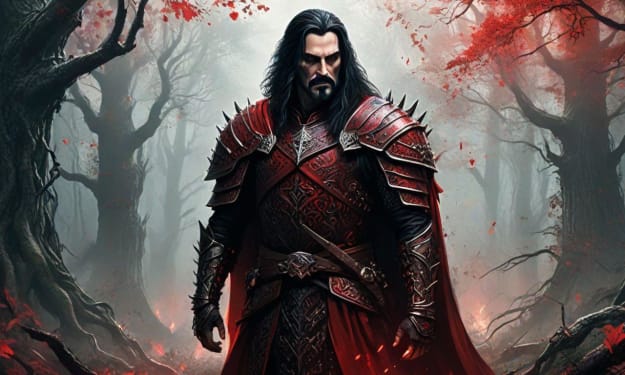
Vlad The Impaler
Deep in the heart of Transylvania, where mist clings to mountains and forests whisper with secrets, there once lived a prince whose name became both a legend and a nightmare. To his enemies, he was Vlad Tepes, the Impaler, a tyrant who lined roads with the blood of the dead. But to his people, he was a protector, fierce and merciless, who defended their land against invaders. And in the centuries that followed, he became Dracula- the Dragon’s Son, immortalized in history and horror.
By Carolyn Patton12 months ago in History