General
Anarcha Westcott
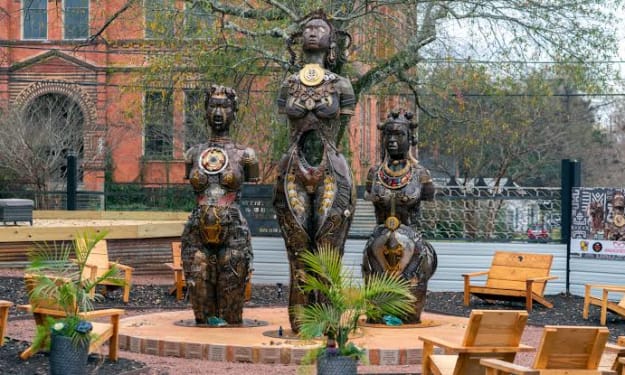
In the dusty medical archives of the 19th century, the name Anarcha Westcott appears quietly, not in headlines, but buried in surgical reports and footnotes. She was not a doctor. She was not a nurse. She was a young enslaved Black woman on a plantation in Montgomery, Alabama. Her body became the unwilling stage for a series of surgical experiments that would transform the field of medicine, at a devastating human cost. Anarcha suffered from a condition called vesicovaginal fistula, a severe childbirth injury that caused uncontrollable leakage of urine, chronic infections, and deep social stigma. In the 1840s, there was no known cure in America. Enter Dr. James Marion Sims, a physician who would later be celebrated as “the father of modern gynecology.” But before the accolades and fame, there was Anarcha. Sims saw in Anarcha and other enslaved women a chance to experiment and develop new surgical methods. These women had no choice; their bodies were controlled by their owners and by Sims himself. Between 1845 and 1849, Sims performed around 30 experimental surgeries on Anarcha in an effort to treat her fistula. He did this without anesthesia. Although ether anesthesia was already available during that period, Sims chose not to use it, driven by the racist belief that Black women did not feel pain in the same way white women did. The surgeries were brutal. Anarcha was fully conscious as Sims operated on her repeatedly. She screamed in pain while other enslaved women held her down. Surgery after surgery failed, leaving her in agony, but Sims persisted, not for her comfort, but for medical discovery. She wasn’t alone. Sims also experimented on at least ten other enslaved women, including Lucy and Betsy, whose names survive through fragments of historical records. But Anarcha became his most frequent subject, enduring four long years of procedures. Eventually, Sims developed a successful surgical technique to repair the fistula, a technique that would go on to revolutionize women’s healthcare. He published his methods, built a hospital for women, and was honored by the medical community. Statues were raised in his name. But Anarcha’s name was almost erased. Her suffering was the foundation on which Sims built his legacy, yet she received no recognition, no honor, and no freedom for her ordeal. Her body carried the weight of history, and her pain paved the way for modern gynecology. For decades, the world celebrated Sims while forgetting the women whose bodies he used. But history began to reckon with the truth. Activists, historians, and communities brought Anarcha’s story back into the light. In 2018, after public outcry, the statue of Sims in New York’s Central Park was removed. In its place, new voices began to speak the names of Anarcha, Lucy, Betsy, and the other women, acknowledging their pain and their forced contribution to medical history. Anarcha Westcott’s story is not one of medical glory. It is a story of injustice, survival, and truth. She endured unimaginable pain, not by choice but by force. Her body carried the weight of experiments that would go on to save countless lives, yet she remained voiceless for more than a century. Today, the world is beginning to remember her, not as a footnote, but as a central figure in the painful birth of modern gynecology. History remembered the doctor. But the world is finally beginning to remember the woman.
By Stories You Never Heard11 months ago in History
The Movies That Shaped My Soul: How Five Stories Redefined What Cinema Could Feel Like
Cinema doesn’t evolve in a straight line. It lurches forward when a film arrives that audiences can’t stop quoting, critics can’t stop arguing about, and other filmmakers can’t stop studying. These movies don’t just make money; they reset expectations for what stories can do, how images can move us, and where performance can go. They alter careers, reshape genres, and even tweak the way studios greenlight projects.
By Flip The Movie Script11 months ago in History
Jesse James
In every family, some names carry pride, sadness, controversy- men and women whose stories never stayed tucked away in the past. For me, one such name echoes with both pride and sorrow: Jesse Woodson James. To the rest of the world, he was an outlaw and a legend, immortalized in print and film, but through his wife, Zerelda “Zee” Mimms, he is family, remembered as a man, a husband, a father. His life was tangled in violence and rebellion, yet it was woven with loyalty, family, and resilience. To speak of Jesse is not to recite his legend, but to tell the story of a man who carried scars inside and out, and who walked a path too tangled for most men to survive.
By Carolyn Patton11 months ago in History
The Forgotten Fields - A 10 Part Series
By The Iron Lighthouse If you listen closely on a still summer evening, you can almost hear them... faint echoes carried on the wind. The crack of a wooden bat. The whistle of a coach with more spirit than players. The hum of a crowd huddled on splintered bleachers, wrapped in the kind of excitement that never needed a scoreboard to matter.
By The Iron Lighthouse11 months ago in History
Book of Unsung Heroes Hidden in the Attic
It was a rainy afternoon when I decided to clean out my grandmother’s attic — a task I had postponed for years. The ceiling groaned under my footsteps, and the smell of wood and old paper filled the air. I expected nothing more than forgotten furniture and boxes of clothes. But tucked beneath an old trunk, wrapped in a torn piece of linen, was a book that changed everything I thought I knew about my family — and about what it means to be a hero. The cover was cracked and faded, with no title. When I opened it, the first page was written in careful cursive: “The Book of Unsung Heroes.” Every page that followed told a story — handwritten in ink that had browned with time. These weren’t stories of kings or soldiers or famous inventors. They were stories of ordinary people who had done extraordinary things — and never been remembered. The Seamstress Who Saved a Village One story told of Marta Lenz, a seamstress from a nearby town who hid resistance messages in the seams of soldiers’ uniforms during the Second World War. She never left her village, never fired a weapon, but her stitches carried hope across occupied Europe. According to the note, she was arrested but never betrayed a single name. She died unknown, buried in an unmarked grave. At the bottom of the page, in my grandmother’s handwriting, it read: “She was my aunt.” I paused, stunned. I had grown up hearing my grandmother hum old songs while sewing, never realizing her hands carried the same quiet courage as Marta’s. The Boy Who Lit the Sky The next page told of Anton Weiss, a 14-year-old boy who climbed the church bell tower every night to light a lantern — a signal to refugees crossing the river below. The note said he was eventually caught, but the night before his capture, he lit two lanterns instead of one. It was his way of saying goodbye. Again, at the bottom of the page, my grandmother had written: “He was our neighbor.” It struck me then — this wasn’t a random collection. This was a book of memories, a secret archive of courage my grandmother had chosen to preserve. The Nurse Who Never Slept Farther into the book, another story was marked with pressed flowers. It told of Eva Müller, a nurse who stayed behind in a bombed hospital to care for the wounded when everyone else fled. She kept working until the fire reached her ward. They found her still holding a patient’s hand. The pressed flowers, brittle and scentless, seemed to whisper her name. Realizing the Purpose By the time I reached the last pages, tears blurred my vision. The final entry wasn’t about a stranger. It was about my grandmother herself. She wrote about how, after the war, she walked for miles to return a single letter to a mother whose son had died in combat. She described how she worked in a bakery, giving leftover bread to children who had lost their parents. She never mentioned these things to anyone. At the end of her entry, she wrote: “If history forgets them, then I will remember. If the world forgets me, then this book will remember us all.” I sat there for hours, surrounded by silence and dust, holding the book like it was made of glass. It wasn’t a history book. It was a heart, bound in paper. The Weight of Forgotten Bravery We are taught to honor heroes whose names appear in textbooks, whose faces adorn statues. But there are others — quiet souls whose courage never reached the news or the pages of history. They stitched messages, lit lanterns, held hands in fire, and believed that kindness mattered, even when the world fell apart. My grandmother had spent her life recording them, preserving stories that could’ve disappeared forever. In that attic, I realized she hadn’t just written about heroes. She had been one. The Legacy Continues I decided not to leave the book in the attic. I took it home, scanning each page, digitizing every story. I created an online archive — “The Unsung Project” — where anyone could submit stories of ordinary heroes. Within weeks, stories poured in from around the world: a teacher who taught during war, a doctor who worked through a pandemic, a stranger who paid someone’s rent during hard times. I sometimes imagine my grandmother smiling, knowing her quiet wish — to make sure no hero is forgotten — is finally coming true. Final Reflection Every attic, every box, every old family diary might hold a fragment of history waiting to be rediscovered. Heroes don’t always wear medals or make speeches. Sometimes they write in notebooks no one reads, believing that memory itself is an act of defiance. When I close the book now, I whisper the same words my grandmother once wrote: “If history forgets them, I will remember.” And I do.
By LUNA EDITH11 months ago in History
Latest Developments: Government Shutdown 2025 — **Current Status & Outlook
# Latest Developments: Government Shutdown 2025 — **Current Status & Outlook** Since October 1, 2025, the U.S. federal government has been in a partial shutdown after Congress failed to pass appropriation bills to fund operations for fiscal year 2026. Below is a thorough, question-based update on the current state of affairs, the causes, and possible paths forward.
By America today 12 months ago in History
The Rock That Wasn’t a Rock: A Journey Through 724 Million Kilometers of Mystery
When we look up at the night sky, we see twinkling dots that seem calm and distant. But hidden among those stars are travelers ancient, silent wanderers that have been moving through the darkness for billions of years. This is the story of one such wanderer a story that began on Earth but ended 724 million kilometers away, on the surface of something that wasn’t what scientists thought it was.
By Izhar Ullah12 months ago in History
Potawatomi. AI-Generated.
Where the Earth Still Speaks and the Sky Still Listens The morning mist rolled softly across the edge of the forest, carrying with it the quiet songs of the river. The Potawatomi people called this land Bodewadmi, “the Keepers of the Fire,” for they believed that the flame of life and wisdom must never be allowed to die.
By shakir hamid12 months ago in History
Roadside America & The Giant Fiberglass Statues
Somewhere out on Route 66, the sun is low, the asphalt hums, and the family station wagon’s AC isn’t quite keeping up. The kids are restless, Mom is flipping through the AAA TripTik, and Dad’s patience is hanging by a thread when suddenly... there it is! A massive, square-jawed Paul Bunyan figure looms on the horizon, clutching a hot dog the size of a telephone pole. Cameras click, kids scream, and Dad pulls over with a grin.
By The Iron Lighthouse12 months ago in History
The Iron Fist of Karanja: Rise and Fall of General Nyota. AI-Generated.
In the dusty hills of Karanja, a small East African nation, Samuel Nyota was born in 1948 into a poor farming family. His father toiled in the fields, his mother raised him and his siblings under the unforgiving sun, and from an early age, Samuel learned that life rewarded the strong and punished the weak. Tall, imposing, and fiercely intelligent, he quickly realized that survival required more than hard work — it demanded cunning, strategy, and ruthlessness.
By shakir hamid12 months ago in History
The Tyrant of Uganda: The Rise and Fall of Idi Amin. AI-Generated.
The story of Idi Amin Dada begins far from the marble halls of power — in a small village in northwestern Uganda, around 1925. Born into poverty among the Kakwa ethnic group, Amin’s early years were marked by hardship and survival. His father abandoned the family, and his mother, a herbalist, raised him in the shadow of colonial rule. He had little education, but he possessed an intimidating physical strength — tall, broad-shouldered, and fiercely ambitious.
By shakir hamid12 months ago in History
Watches With a History: Finds and Tips of a Collector Vitaly Buzoverya
Every watch collector dreams of coming across a rare and valuable item. In the 1990s, after the collapse of the USSR, it was easier to find precious Soviet watches than now. Owners would sell them at an affordable price on flea markets and in thrift stores. However, even then, it was rare luck to discover a rarity among hundreds or thousands of items on offer. Vitaliy Buzoverya, a renowned collector and an expert in Soviet watches, shares his personal experience and tips for aspiring connoisseurs.
By Emma Taylor12 months ago in History