General
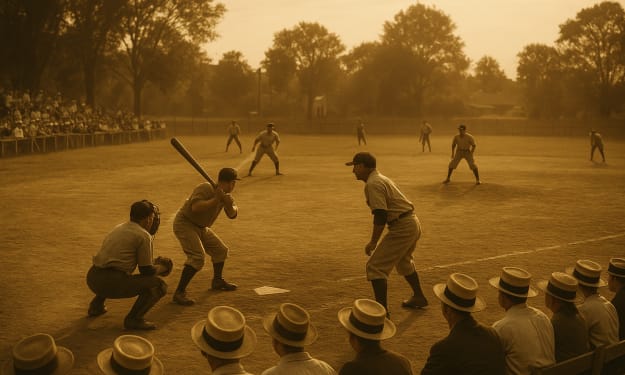
The Forgotten Fields: Part II – Football
Autumn smells like football. Not the polished kind with pyrotechnics and halftime performers, the kind that lives in your bones. The kind where the air bites, the grass is slick, and your breath shows in the huddle.
By The Iron Lighthouse11 months ago in History
Plague Doctor’s Journal
The journal was found in a wooden chest beneath the floorboards of an old house in Venice. Its pages were brittle, its ink faded, but the handwriting was elegant and precise. On the first page was a single line written in Latin: “To heal the living, one must walk with the dying.” No one knew who had written it at first. But the following pages revealed the name of its owner — Dr. Matteo Bellini, a plague doctor who had lived during the great outbreak of 1630. His words began simply. “The city is quiet now,” he wrote. “Not with peace, but with fear. The bells ring for the dead, and the living no longer open their windows.” Matteo had been a young physician, full of hope when the disease first reached Venice. He believed in reason, in science, in the power of medicine to overcome darkness. When the plague arrived, he donned the long black coat, gloves, and the mask shaped like a bird’s beak. The people called him “the raven of mercy.” At first, he treated the sick in noble houses and monasteries. He tried herbs, oils, prayers — anything that could ease their pain. But soon, the number of the dying grew so large that the streets became rivers of silence. He wrote, “I no longer remember the sound of laughter. The only sound that remains is coughing and the scrape of the death cart.” Each night, he would sit by a candle and record what he had seen. “Today I saw a mother holding her child as if warmth could stop death. I saw a man sing as he died, perhaps to make peace with God. I saw the canals carry flowers thrown for funerals that never came.” But as the weeks passed, Matteo’s words began to change. The lines grew shorter, the handwriting unsteady. “I begin to feel the weight of every breath I save and every one I cannot. My hands no longer feel like mine.” In one entry, dated June 14, 1630, he wrote something different. “Today a boy handed me a white lily. He said it was for courage. I placed it in my mask. For a moment, I remembered that beauty can live even among death.” The journal continued, page after page of quiet humanity. He wrote about how he began to visit the poorest parts of the city when others refused to go. He tended to fishermen, servants, and beggars — those who had no coin for doctors. He shared his food, his herbs, and his time. Then came an entry marked with only one word: “Exposed.” After that, his writing grew faint, almost fragile. “The fever comes in waves. I feel as though I am dissolving into air. Yet I must keep writing. If I die, let it not be in silence. Let these words live for those who remain.” The final page carried only a few lines. “If anyone should find this journal, know that I did not fear death. I feared forgetting what it means to be human. To heal is not only to cure, but to care. Remember that.” The last line was signed simply, “Matteo.” Centuries later, the journal found its way into the hands of a museum curator named Elena Rossi. She spent months translating and restoring it. When she read Matteo’s final words, she felt something shift inside her. The world had changed — the plague was long gone — but the fear, the isolation, and the need for kindness were timeless. Elena decided to create an exhibition around his journal. She called it “The Hands That Healed.” The mask, coat, and candle were displayed alongside the fragile pages. People came from all over Europe to read the doctor’s words, to see how courage had looked in the face of despair. One visitor wrote in the guest book, “He wore a mask to protect others, not himself. Perhaps that is what love truly means.” That night, as Elena locked the museum, she paused in front of the display. The candle beside the journal flickered slightly, though there was no wind. She smiled, whispering into the quiet room, “Rest now, Matteo. Your words still heal.” Outside, the bells of Venice rang once again — not for mourning this time, but as if to honor the man who had written through the darkness so that others might remember the light.
By LUNA EDITH11 months ago in History
Crown of Dust
In the heart of an old English town stood a crumbling mansion that had long been forgotten. The locals called it the Ashbourne House. Its gates were rusted, its windows clouded, and ivy crawled like veins up its walls. But once, it had been filled with laughter, music, and light. Eleanor grew up hearing stories about it. Her grandmother used to say that a king had once lived there — not a royal king, but a man who had built his own little empire from dust and dreams. His name was Lord Henry Ashbourne, and his crown, as the story went, was not made of gold, but of dust. Eleanor was a history student, the kind who loved forgotten places and lost people. One rainy afternoon, she decided to visit the mansion. The gate creaked open reluctantly, as if warning her to turn back. But she stepped inside, brushing the raindrops from her coat, her curiosity stronger than fear. Inside, the air smelled of old wood and time. Faded portraits hung crooked on the walls, their subjects staring out with eyes that once held power. She walked through a ballroom where chandeliers still clung to the ceiling, covered in cobwebs that shimmered faintly in the dim light. At the end of the hall, she found a library. Books were scattered across the floor, their pages yellow and curling. In the middle of the room stood a chair, and on it rested a small object beneath a layer of dust — a crown, simple and tarnished, made not of jewels but of iron and faded silver. Eleanor picked it up gently. The metal was cold against her skin. As she brushed away the dust, a slip of paper fell from beneath it. The handwriting was neat but faded with age. “To those who seek glory, remember this. Dust returns to dust, and crowns fall with kings.” She read the line twice. There was something deeply human in it — the voice of a man who had once stood high, only to realize that time humbles everyone. She sat by the window, holding the crown, and imagined Lord Henry in that very room. Perhaps he had once worn this crown proudly, walking among guests who toasted his name. Perhaps he had built this house not for wealth, but for meaning. And when it all faded, he had left behind this message — not of power, but of acceptance. Eleanor felt a strange sadness. She had studied history all her life, but this moment felt more real than any book she had read. It wasn’t just about ruins or relics — it was about people who tried to leave something behind, even when everything they built turned to dust. As the rain eased outside, she placed the crown back on the chair. She knew it didn’t belong to her. Some things are meant to stay where they rest, holding the weight of memory. Before she left, she looked around the room once more. The light from the window touched the iron crown, and for a brief second, it seemed to glow — not with grandeur, but with quiet dignity. Years later, Eleanor became a historian known for her writings on forgotten lives. Her most famous essay was called “The Crown of Dust.” In it, she wrote: “History is not built by kings or warriors, but by the hands that fade and the hearts that break. Every empire turns to dust, but the stories we tell about them keep them breathing.” Her essay became widely read, not because it was about power, but because it was about humility. People from all over Europe wrote to her, saying the words reminded them that even in their smallness, they too were part of something lasting. Eleanor often returned to Ashbourne House. The mansion continued to crumble, but she didn’t mind. She would sit in the same library, listening to the wind move through the cracks. Sometimes she’d speak aloud, as if Lord Henry could still hear her. “Your crown still shines,” she would say softly. “Just not the way you expected.” When she grew old, Eleanor left instructions in her will. She asked to be buried near Ashbourne House, beneath a simple stone carved with the same words that had once changed her life: “Dust returns to dust, and crowns fall with kings.” And so, on a hill outside the town, near the ruins of the house that had once held music and laughter, two stories rested side by side — one of a man who built an empire, and one of a woman who remembered it. Both wearing, in their own way, a crown of dust.
By LUNA EDITH11 months ago in History
The Forgotten Fields: Part I – Baseball
If you stand on a quiet summer field somewhere in the Midwest, you can still hear it... The faint echo of leather against leather, the soft thud of a ball in a glove, the ghostly cheer of a crowd that has long since gone home. The weeds have grown over the baselines, the scoreboard has lost its numbers, and the bleachers sag beneath decades of rain. But the sound remains. It drifts on the wind like a hymn.
By The Iron Lighthouse11 months ago in History
Timeless Tales of Japan: The Magic and Morality of Traditional Folklore
How centuries-old Japanese folktales still guide hearts and minds today From the snowy mountains of Hokkaido to the tranquil islands of Okinawa, Japan’s folktales have traveled through generations like whispered dreams by the fireside. These timeless stories, often featuring brave heroes, mischievous spirits, and talking animals, reveal not only Japan’s imagination but also its moral compass — teaching lessons about kindness, humility, and respect for nature.
By Takashi Nagaya11 months ago in History
Vesna Vulović: The Woman Who Cheated Death
Imagine this: you’re 22, living your dream job as a flight attendant, excited to visit Denmark for the first time. The world feels wide open, full of possibility. Then, in a split second, everything changes. Your plane explodes at 33,333 feet, and you’re plummeting to earth-no parachute, no protection, just you and the laws of physics. Sounds like the end, right? But for Vesna Vulović, it was just the beginning of a story so wild it feels like it belongs in a movie. Her survival is a tale of miracles, mysteries, and a touch of human stubbornness that makes you wonder: how does someone walk away from the impossible?
By KWAO LEARNER WINFRED11 months ago in History
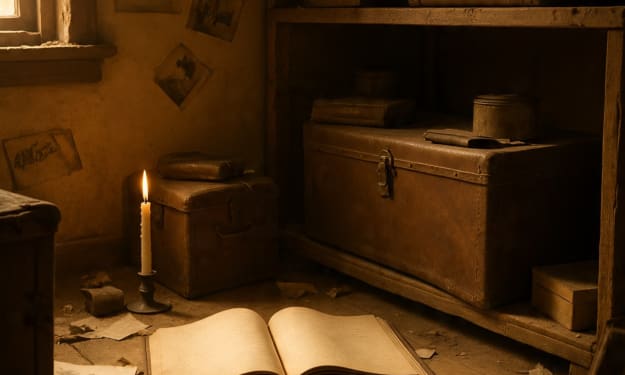
Book of Unsung Heroes Hidden in the Attic
It was a quiet Sunday afternoon when I decided to clean my grandmother’s attic. The air was thick with dust and old memories. I thought I would only find broken furniture and forgotten clothes. But instead, I found something that changed the way I looked at my family. In a corner behind a wooden trunk, there was a small box covered in cobwebs. Inside it lay a single old notebook wrapped in a piece of cloth. The cover was cracked, and on it, someone had written in faded ink, The Book of Unsung Heroes. Curiosity took over. I sat down on the wooden floor and opened it. The handwriting was neat but shaky. Each page told a story about a person who had done something brave or kind but was never remembered in history books. The first story was about a woman named Marta. She was a seamstress who lived in a small town during the war. She hid secret messages inside the seams of soldiers’ uniforms. Those little stitches carried hope and saved lives. But no one ever knew. At the bottom of the page, my grandmother had written, She was my aunt. I turned the pages slowly. Another story was about a boy named Anton. He was only fourteen but climbed a bell tower every night to light a lantern for people escaping across the river. One night he did not return. My grandmother had written again, He was our neighbor. Each page revealed another person who had lived an ordinary life but done something extraordinary. A nurse who refused to leave her patients during a bombing. A teacher who taught children in secret when schools were closed. A baker who gave away bread to families who had nothing left. When I reached the last page, I saw my grandmother’s own name. She wrote about how she helped her town after the war. She carried letters for people who could not travel. She shared food even when she barely had enough. She ended her story with a line that made me stop reading. She wrote, If history forgets them, then I will remember. I sat there in silence for a long time. I never knew my grandmother had seen so much or done so much. She had always been quiet about her past. But through this book, she had kept the memories alive. I took the book downstairs and showed it to my mother. She stared at it with tears in her eyes. She said she had never seen it before. We decided to keep it safe and share its stories with others. Later that night, I scanned every page and posted the stories online. I called it The Unsung Project. Within days, people from all over began sending their own stories of quiet heroes. Some wrote about grandparents, others about teachers, nurses, and friends who had helped them in small but powerful ways. It made me realize that heroism is not always loud. It often lives in silence, in small acts of kindness, and in sacrifices no one sees. Whenever I think of my grandmother now, I imagine her sitting at that old table, writing in her notebook by candlelight. She probably never expected anyone to find it. But I did. And because of that, her heroes will never be forgotten. The book still sits on my shelf. Its pages are fragile, and the ink is fading. But the stories inside it are stronger than time. Every family has someone like Marta or Anton. Someone who gave something, risked something, or loved deeply without asking for recognition. The world may never remember their names, but someone must. And maybe that is what being human truly means. To remember the ones who made the world kinder, even if no one ever knew their names.
By LUNA EDITH11 months ago in History
Bahlool and His Friend – The Voice of Wisdom and the Sound of a Donkey
In the bustling streets of ancient Baghdad, during the reign of Caliph Haroun al-Rashid, there lived a man whose name became synonymous with wit, wisdom, and divine madness — Bahlool Dana. He was known throughout the city as the wise fool, a man who spoke in riddles yet revealed profound truths through humor and paradox. People laughed at him, but they also learned from him; even kings respected his insight.
By Amir Husen11 months ago in History