General
The Real Santa Claus Explained by Michael Savage, New Canaan
Every December, the image of Santa Claus appears everywhere, from store windows to holiday movies and children’s letters. He is cheerful, generous, and always ready to bring joy. However, behind the red suit and flying reindeer is a true story rooted in history and kindness. Understanding where Santa Claus really came from adds deeper meaning to Christmas. New Canaan’s blogger Michael Savage often says that knowing the origin of holiday traditions helps people appreciate the values behind them, not just the symbols.
By Mike Savage New Canaan9 months ago in History
The Letters That Survived a War
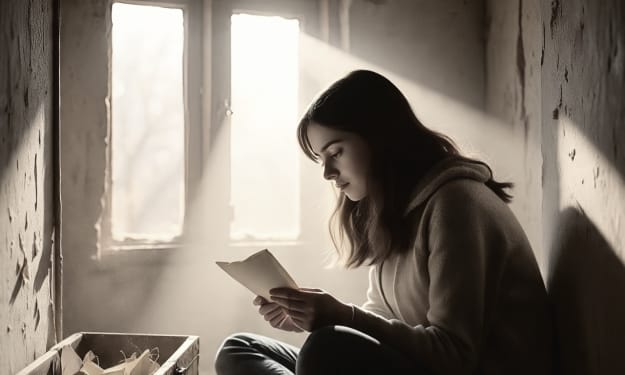
In 1942, in a small town in northern France, life felt impossibly fragile. The war had already changed everything. Streets that once carried children laughing were now filled with silence or the distant thrum of military vehicles. The air carried a tension that had no scent, a weight you could feel pressing on your chest whenever you stepped outside. Marie, a young schoolteacher, had grown up surrounded by books. History fascinated her even then, though she never imagined she would live through an era that would one day be studied as history itself. Her days were consumed with teaching, with rationing, and with the quiet fear of what tomorrow might bring. Every morning, she would walk past the same corner where the local market used to be, imagining the bustling life that had vanished almost overnight. One day, while clearing out her small attic, Marie discovered a box of letters. They were brittle, the ink faded with age, but each one bore the signature of her father, who had disappeared years earlier at the onset of the war. Reading them felt like touching history itself. These letters told stories of a man who loved deeply, who worried endlessly about his family, and who clung to the small moments of humanity that war could not take away. The letters became her secret refuge. At night, she would sit by the window, candlelight flickering across the paper, reading her father’s words over and over. He wrote about the changing seasons, about neighbors who had fled, and about the quiet hope that he would one day return home. Though he never did, his words taught Marie something profound: history is not just dates and battles; it is the human experience that survives between them. As the war progressed, the town experienced more upheaval. Soldiers came and went. Families were torn apart. But Marie held onto the letters, treating them like a lifeline. She shared some of their stories with her students, teaching them not only language and arithmetic but also the power of memory and the importance of recording life as it happens. The children listened in silence, absorbing the weight of history through her voice. Years later, long after the war ended, Marie moved to Paris. The city was rebuilding, but the scars of the past were visible in every street, every building, every story whispered among strangers. She carried the box of letters with her, a reminder that ordinary people live through extraordinary times and that their experiences form the threads of history that textbooks cannot capture. One afternoon, she donated the letters to a small museum dedicated to documenting the lives affected by the war. The curator looked at the fragile papers and said, “These are not just letters. They are a testimony to resilience.” For Marie, it was the first time she realized that the story of her father, and of her town, could teach others lessons about courage, hope, and the endurance of the human spirit. Visitors to the museum would often pause in front of the letters, tracing the faded ink with their eyes, imagining the life behind each word. They could almost hear the father’s voice, whispering across time, carrying love, fear, and hope. History, Marie realized, is not only about kings and generals, treaties and battles. It is about the people who lived, who wrote, who remembered, and who survived despite everything. The letters had survived decades of neglect, decay, and silence. They survived because someone cared enough to keep them safe. In doing so, they became a bridge between the past and the present, a reminder that history is alive in the smallest details of everyday life. Marie’s story, though small in the vast timeline of the war, reflected a universal truth: history is not only found in monuments or textbooks. It lives in letters, photographs, memories, and the ordinary moments of people who endure extraordinary circumstances. Every word on those pages was a pulse, a heartbeat echoing across time, teaching future generations what it meant to live, to love, and to hope in the midst of uncertainty. In the end, history is not simply a record of what happened. It is a story waiting to be discovered, understood, and remembered. And sometimes, it survives in a box of letters in an attic, waiting for someone to open it and let the past speak.
By Jhon smith9 months ago in History
The 5 Most Dangerous Jobs in Early America - And the People Who Did Them Anyway
There was a time in America when going to work meant making peace with the possibility that you might not come home. No safety regulations. No OSHA posters. No warning labels. No compensation forms.
By The Iron Lighthouse9 months ago in History
When the Sky Fell Back to Earth
On a bright September morning in 1986, downtown Cleveland looked like it was preparing for a celebration that would be remembered forever. Volunteers filled Public Square with nets, smiles, and helium tanks. Children laughed. Cameras rolled. The plan was simple and beautiful: release an ocean of colorful balloons into the sky, break a world record, and raise money for a good cause. What could possibly go wrong?
By Izhar Ullah9 months ago in History
What Do You Mean by “Retro Spirit”?
What Do You Mean by “Retro Spirit”? When people say they love the retro spirit, they’re not just talking about old clothes, vinyl records, or vintage furniture. They’re pointing at something deeper and harder to pin down: a mood, a feeling, a way of looking at life through a softer, warmer lens. Retro isn’t only about the past. Retro spirit is about how we use the past to make the present feel more human.
By Sayed Zewayed9 months ago in History
The Holy Grail. AI-Generated.
The Holy Grail is considered one of the most enigmatic and captivating subjects in Western literature and Christian tradition. It is not merely an artifact; it is a profound symbol that embodies the search for spiritual perfection, salvation, and divine knowledge. The concept of the Grail ranges from the historical cup used by Christ at the Last Supper to a mythical vessel that grants eternal power and healing.
By Mayar Younes9 months ago in History
The Library Ladder
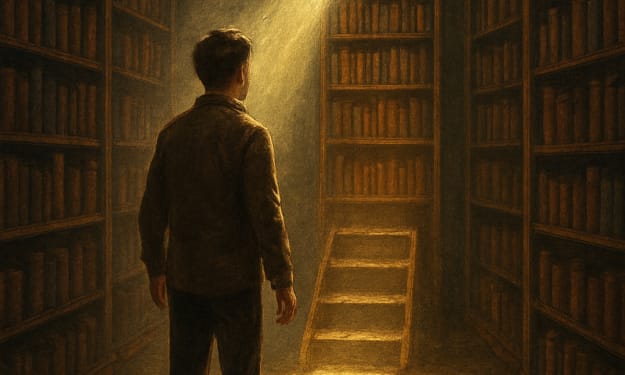
I’ve always believed that old libraries have their own kind of weather. Not rain or wind, but something gentler—like a hush that settles between the shelves, carrying the scent of dust, paper, and the thousands of hands that once turned those pages. On the morning everything changed, the library felt storm-still, as if it had been waiting for someone to open its doors and let the light in. That someone happened to be me. I wasn’t there for anything profound. I’d only stepped inside the town’s historic library because the bus was late and I needed somewhere warm to wait. My life at the time felt like a string of almosts—almost stable, almost happy, almost moving forward. I didn’t know what I was searching for, but I knew it wasn’t on my cracked phone screen or inside the stack of ignored job applications on my kitchen table. I wandered the aisles with no intention, touching the spines of books I wouldn’t check out. Then, as I stepped into the farthest wing—a part of the building that looked like it hadn’t been repainted since the 1940s—I noticed something strange on the floor. A perfect beam of white-gold sunlight poured through a fractured window in the ceiling, illuminating the dust like crushed diamonds. But it wasn’t the light that stunned me. It was the shape. The beam fell in straight, ladder-like segments across the wooden floor—exact angles, exact spacing—as if someone had sketched a staircase made of light directly onto the room. A ladder. A literal ladder of sunlight. I laughed softly to myself, thinking it was the kind of strange, beautiful coincidence that only happens when you’re too exhausted to question magic. But as the dust flickered around it, something in me—some quiet, childlike piece—felt nudged. Climb it. The thought wasn’t mine, not really. It was more like an invitation, warm and curious. So I did something I hadn’t done in months: I acted on instinct instead of fear. I stepped into the first square of light. My foot tingled, as if I were stepping onto something warm and waking. Then the next step. Then the next. And with each one, the sunlight grew brighter—not blinding, but encouraging—guiding me toward the very top shelf of the tallest bookcase in the old wing. That shelf should’ve been empty. It always had been, according to the librarian who later confirmed it. But that morning, tucked neatly into the corner, was a row of thin, cloth-bound books. Each one had a handwritten year on the spine. 1942. 1943. 1944. My pulse quickened. I climbed the remaining sunlight-steps and reached for the first book. The cover felt fragile, as if it were made of the same dust that drifted in the air. Inside was a letter. Not a story. Not a diary entry. A letter—addressed simply: To the next reader. The handwriting was elegant, looping, unmistakably old-fashioned. The message was short but deliberate. If you are reading this, then you found the light. I believe every reader is chosen by the story they stumble upon. My name is Eleanor Faye, librarian during the war. I write these “future letters” because the world is heavy, and we need reminders of our ability to carry each other. If you can, do one small good thing today. Pass the light forward. I froze. Not because of the request, but because of the date at the bottom: November 12th, 1943 — For whoever needs this most. There were more books. More letters. More years. Each one contained a similar message—some hopeful, some grieving, some reflecting on the war’s darkest days—but all ending with a simple instruction: Do one good thing. Leave the world better than you found it. I don’t know how long I stood there in the ladder of light, flipping through those fragile pages. Maybe minutes. Maybe hours. All I know is that when I climbed back down, something inside me felt rearranged—subtly, gently, but undeniably. For months I’d been drifting, waiting for direction that never came. And here, from a librarian who’d lived eighty years before me, was a direction so simple I couldn’t argue with it. One small good thing. I went home and thought about what that could be. I thought about Eleanor Faye writing her letters during blackouts and air-raid drills, believing that someone decades later would need them. I thought about the sunlight that formed a ladder only when I happened to walk past. The next morning, I walked into the local shelter. My hands were shaking, but I signed up. I gave two hours. Then two more the next week. Then a Saturday. Then a few evenings after work. I started learning names. I started remembering stories. I started caring again—more than I’d believed I was still capable of. The funny thing is, volunteering didn’t solve my life. It didn’t hand me a miracle or erase the past. But it anchored me. It made me feel useful. And when you feel useful, hope grows in places it hasn’t lived in a long time. Sometimes, when I’m putting away food donations or helping someone find warm clothes for the winter, I imagine Eleanor Faye somewhere—tucked between the shelves of time—smiling. Her letters didn’t fix the world. But they fixed something in me. And maybe that’s enough.
By Jhon smith9 months ago in History