General
Did the Titanic REALLY sink?
The world was startled in 1912 when the Titanic sank. With the ruthless destruction of such a technically advanced ship, the limits of human ingenuity were ruthlessly exposed. However, a rumour that has been circulating online in recent years, most recently on Reddit, raises the question of whether the Titanic actually sank.
By Phoenix Daily Conspiracies3 years ago in History
Canada Day Mothers Day | Bc Stat Holidays 2023
Once upon a time, in the picturesque town of Maplewood, Canada, anticipation filled the air as the residents prepared to celebrate their beloved national holiday, Canada Day. The vibrant red and white decorations adorned the streets, and the sweet aroma of maple syrup wafted through the town.
By Majid khan3 years ago in History
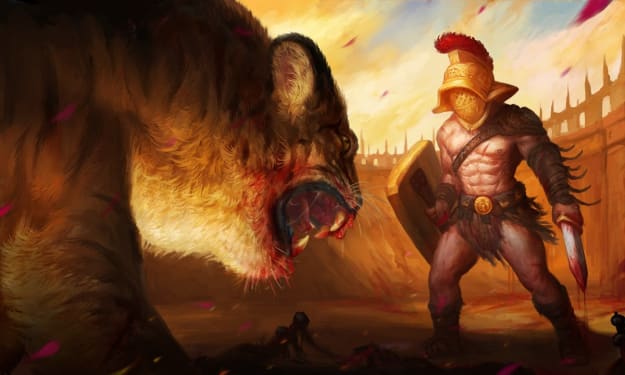
Gladiator's Triumph. Content Warning.
In the vast colosseum, where blood and honor clashed, a gladiator named Maximus stood tall. His chiseled physique and steely gaze concealed a heart burdened by tragedy and a thirst for justice. Maximus, once a celebrated general, had been betrayed by the very empire he had sworn to protect. Now, he fought not for glory, but for vengeance.
By Atikul Hoque Jahan3 years ago in History
KHATU SHYAM MANDIR
Khatu Shyam Ji Mandir, situated in the Sikar district of Rajasthan, is renowned as one of the most significant pilgrimage destinations in the state. Devotees flock to this temple seeking blessings and relief from their troubles by chanting the name of Khatu Shyam Ji, who is believed to be the manifestation of Barbarika, the son of Ghatotkacha. According to Hindu mythology, Khatu Shyam Ji's name, pronounced with sincere devotion, has the power to alleviate one's difficulties.
By Aaksh Kumar3 years ago in History
Lifestyle of Indian culture
Indian Culture is diverse and vibrant, encompassing a wide range of customs, traditions, languages, religions, and cuisines. With a population of over 1.3 billion people, India is the second-most populous country in the world and has a rich and complex cultural heritage that spans thousands of years. One of the defining aspects of Indian culture is its strong emphasis on family and community. Family ties are highly valued, and extended families often live together in multi-generational households. Respect for elders and authority figures is deeply ingrained in Indian society, and traditional gender roles are still prevalent in many parts of the country. Religion plays a central role in Indian culture, with Hinduism being the largest and most widely practiced religion. Other major religions include Islam, Christianity, Sikhism, Buddhism, and Jainism. Religious festivals and rituals are an integral part of Indian life, with celebrations such as Diwali (the Festival of Lights), Eid, Christmas, and Holi (the Festival of Colors) bringing communities together in joyous and colorful celebrations. Indian cuisine is renowned for its bold flavors and diverse range of dishes. Each region of India has its own distinct culinary traditions, with staple ingredients such as rice, wheat, lentils, spices, and vegetables forming the basis of most meals. Popular dishes include biryani, curry, dosa, samosa, and roti. Indian food is known for its use of aromatic spices such as cumin, coriander, turmeric, and cardamom, which give dishes their distinctive taste. Traditional Indian clothing varies greatly across different regions and religions. The sari is a popular garment for women, consisting of a long piece of fabric draped around the body. Men often wear a kurta or sherwani, paired with trousers or a dhoti. Western-style clothing is also commonly worn in urban areas, particularly among the younger generation. Indian music and dance are integral parts of the culture, with a rich tradition of classical music and various regional folk dances. Classical music is characterized by intricate melodies and rhythms, with instruments such as the sitar, tabla, and sarod being commonly used. Bollywood music, which combines traditional Indian music with Western influences, is also immensely popular. Art and literature have a long and esteemed history in India, with ancient texts such as the Vedas, Mahabharata, and Ramayana shaping the country's cultural identity. Indian literature encompasses a wide range of genres, from ancient epics to modern novels and poetry. Indian art is known for its intricate designs and vibrant colors, with forms such as painting, sculpture, and pottery being widely practiced. In recent years, India has experienced rapid economic growth and urbanization, leading to significant social and cultural changes. The country has a burgeoning middle class and a growing youth population that is increasingly influenced by Western trends and lifestyles. However, traditional values and customs still hold strong in many parts of the country, particularly in rural areas. Despite its cultural diversity, India faces various social challenges such as poverty, gender inequality, caste discrimination, and religious tensions. Efforts are being made to address these issues through government initiatives, social movements, and grassroots organizations. Tourism is a major industry in India, with millions of visitors coming each year to explore its historic landmarks, natural beauty, and cultural attractions. Popular tourist destinations include the Taj Mahal in Agra, Jaipur's palaces and forts, the backwaters of Kerala, and the beaches of Goa. Yoga and meditation retreats also attract many travelers seeking spiritual enlightenment and relaxation. In conclusion, Indian culture is a tapestry of traditions, languages, religions, and cuisines that reflect the country's rich history and diversity. From its ancient temples and palaces to its bustling cities and vibrant festivals, India offers a unique and immersive cultural experience at the ptivates visitors from around the world.
By Rakshanda Khan3 years ago in History
Embracing Liberation: A Journey of Self-Discovery on Independence Day
Once upon a time, in a small town nestled amidst rolling hills, there lived a young woman named Emma. She had always been a dutiful daughter, conforming to the expectations placed upon her by society and her family. But as the sun rose on another Independence Day, a yearning for something more stirred deep within her soul.
By Tresha Mcfadden3 years ago in History
Journey of Compassion
Introduction: In a world often plagued by divisiveness and self-interest, there exists a profound need for compassion and kindness. These virtues have the power to transcend boundaries, bridge differences, and remind us of the innate goodness that resides within humanity. In no place is this spirit of compassion more exemplified than in the United States, a nation built on the principles of liberty, justice, and the pursuit of happiness. It is within the vast and diverse landscapes of this great country that unforgettable acts of kindness have shaped and defined the American spirit.
By James Dickson3 years ago in History
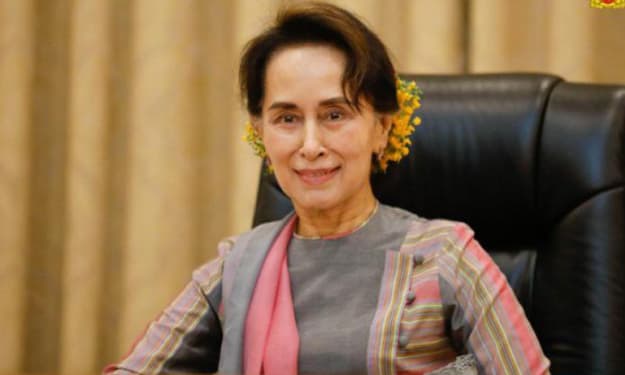
"The Unyielding Spirit: Daw Aung San Suu Kyi's Journey for Democracy and Human Rights"
Once upon a time in the beautiful land of Myanmar, there was a remarkable woman named Daw Aung San Suu Kyi. She was born on June 19, 1945, in the city of Yangon, which was then known as Rangoon. Daw Aung San Suu Kyi was the daughter of General Aung San, a national hero and the architect of Myanmar's independence.
By Kuric Adem3 years ago in History