General
The Aksumites
The African continent is renowned for its vastness, diverse cultures, peoples, languages, and rich history. As one of the oldest inhabited regions, Africa has witnessed numerous migratory waves and the rise and fall of powerful kingdoms and empires. However, it is important to note that the concepts of "empire" and "kingdom" may not fully account for the political-military phenomena that existed in Africa. Therefore, the use of these terms must be understood as conventions, and some specialist historians in Africa have already adopted alternative concepts such as "centralized unit" and "political-military unit". In this video, we explore the history of the Axumite Empire, an African kingdom that left a significant mark on history.
By A História3 years ago in History
The Unconventional Horse Behavior That Led to a Surprising Medical Discovery
In the realm of animal behavior, horses are known for their nuzzling, neighing, and occasionally quirky actions. However, one peculiar incident involving a horse named Stardust left Mary bewildered and concerned, ultimately leading to a surprising discovery that would prompt a visit to the doctor. This unexpected journey into equine behavior and human health sheds light on the intricate connections that exist between animals and their human companions.
By Bala Tahir Yunusa 3 years ago in History
The Gift of Unity in Ancient Nalanda. Content Warning.
In the ancient land of Nalanda, where lush green fields stretched to the horizon and wisdom flourished like the flowers in spring, there existed a renowned center of learning. This institution, known as Nalanda University, was a sanctuary of knowledge where scholars from across the world gathered to seek wisdom and understanding.
By Eddie Sayoo3 years ago in History
Unraveling the Complexities of Coup d'État in West Africa
Coup d'État, a French term meaning "blow of state," refers to the sudden overthrow of a government by a faction within the existing power structure, typically carried out by military forces or other dissident groups. This phenomenon has been a recurrent occurrence throughout history and continues to shape the political landscape of various regions. In recent years, West Africa has witnessed its fair share of coup d'État, a phenomenon deeply embedded in the region's complex historical, social, and political dynamics.
By Victor Godspower3 years ago in History
Beauty in Art
In art, the elements of composition such as line, shape, color, and texture, work together to create the whole piece. However, it is the frame that brings all of these together and enhances the work as a whole. The frame can be considered the most important element in the composition of a painting. It is the frame that gives the painting depth, dimension, and structure. It can also be used to create a sense of movement within the painting. A well-chosen frame can make a painting more beautiful and powerful.
By John Nogueira3 years ago in History
"Gabonese Military Officers' Seizure of Power Following President Bongo's Controversial Third Term Re-Election: "
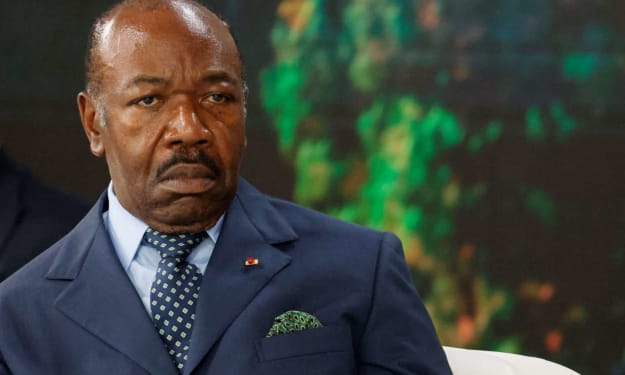
Make this article litary Officers' Seizure of Power Following President Bongo's Controversial Third Term Re-Election: Unraveling the Political, Social, and International Implications" In recent times, the political landscape in Gabon has been thrust into turmoil as a group of Gabonese military officers orchestrated a seizure of power immediately following President Ali Bongo's contested re-election to a third term. This incident has sparked considerable debate and analysis, not only within the country but also on the international stage. This topic presents a multifaceted exploration of the events, implications, and broader context surrounding this situation. 1. Political Background and Election Controversy: Gabon's political history is deeply intertwined with the Bongo family's rule, which has spanned several decades. Omar Bongo, Ali Bongo's father, ruled for over four decades before his passing in 2009. Ali Bongo's own presidency began amidst allegations of electoral irregularities, which resurfaced during his re-election. The 2022 election was met with accusations of voter suppression, irregular vote counting, and manipulation of results. These allegations raised concerns about the democratic integrity of the process and cast a shadow over Bongo's victory. 2. Military Intervention and Seizure of Power: In the wake of the controversial election, a group of military officers orchestrated a takeover. The military's involvement raises questions about the officers' motivations and intentions. Were they genuinely concerned about the democratic process and perceived irregularities, or did personal ambition and power play a significant role? The abruptness of the military's intervention adds complexity to the unfolding narrative, leaving observers to speculate on the military's long-term plans for governance. 3. Social and Domestic Implications: The Gabonese population's reactions to the military takeover have been mixed. While some view it as a necessary move to rectify electoral injustices, others fear the return to military rule and the potential suppression of civil liberties. Civil unrest is a possibility, and whether the military's grip on power is accepted or challenged by the citizens will significantly shape the country's future stability. 4. International Reaction and Diplomatic Relations: The international community's response to the military intervention varied. Many countries issued statements expressing concern over the interruption of democratic processes. International organizations, such as the African Union and the United Nations, called for a peaceful resolution and the restoration of constitutional order. The incident strained Gabon's diplomatic relations with foreign governments, especially those that prioritize democratic governance and human rights. 5. Economic and Resource Implications: Gabon's economy heavily relies on oil production, which contributes significantly to government revenue. The political upheaval raises concerns about how the interruption of governance might affect oil production and trade. Foreign investors may hesitate to engage with the country in an environment of uncertainty and instability, potentially impacting economic growth and development. 6. Path Forward and Potential Scenarios: The future of Gabon remains uncertain. Possible scenarios include a return to civilian rule through negotiations, the continuation of military control, or a transitional period overseen by a coalition of civilian and military leaders. The outcome will depend on domestic dynamics, international pressures, and the willingness of the military to engage in dialogue with various stakeholders. 7. Lessons from History and Comparative Analysis: The events in Gabon draw parallels with similar instances of military interventions in other countries. Historically, military takeovers have led to a range of outcomes, from sustained military rule to eventual restoration of democratic governance. Learning from these historical cases can provide insights into the potential trajectory of Gabon's political situation. 8. Prospects for Democracy and Governance: The fate of democracy and governance in Gabon hinges on several factors, including the resilience of civil society, the willingness of the military to engage in a power-sharing arrangement, and the degree of pressure exerted by international actors. The country's ability to rebuild democratic institutions and ensure the protection of civil liberties will play a pivotal role in its stability. 9. Role of Regional and International Actors: Regional neighbors and international actors have a significant role to play in shaping Gabon's future. Neighboring countries may seek to prevent the spread of instability, while international organizations can provide diplomatic channels for resolution. Economic partners may also leverage their influence to encourage a peaceful transition. In conclusion, the seizure of power by Gabonese military officers in the aftermath of President Ali Bongo's contested third term re-election has sent shockwaves through the nation and beyond. The situation is complex, with deep-seated political, social, and economic implications. The events raise questions about the balance between democratic governance and military intervention, the potential for civil unrest, and the role of regional and international actors in guiding the country's path forward. As Gabon navigates these challenges, the world watches closely, hoping for a peaceful resolution and a stable future for the nation and its people.
By Adeniyi Olayinka3 years ago in History
My story about traveling to Egypt
I had always dreamed of visiting Egypt, and finally, my dream came true. I arrived in Cairo on a hot summer day, and was immediately struck by the city's vibrant energy. There were people everywhere, and the streets were filled with the sound of traffic and the smell of spices.
By mohamedahmed3 years ago in History
Napoleon: Unraveling the Legacy of a Visionary Leader
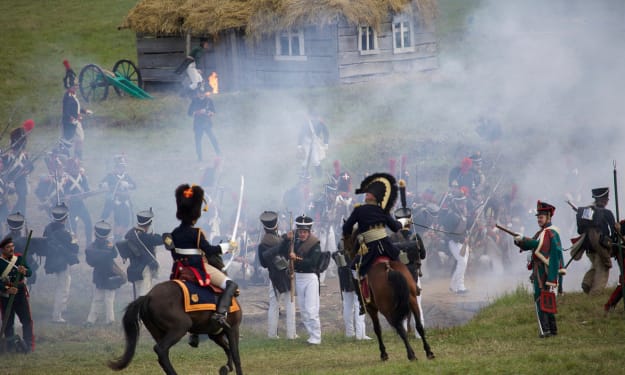
Napoleon Bonaparte, a name that resonates throughout history, stands as an enigmatic figure whose legacy continues to shape the world even centuries after his time. From his rise as a military genius to his fall as an emperor, Napoleon's life story is a captivating blend of ambition, strategic brilliance, and complex politics. In this article, we delve into the life and impact of Napoleon, exploring his remarkable journey and lasting influence on global affairs.
By Yassir Bellaoui3 years ago in History
Unveiling the Enigma
In the heart of the Amazon rainforest, where the lush green canopy stretches as far as the eye can see, there lies a remarkable and mysterious wonder known as the Boiling River. It is a place where nature's magic and scientific intrigue intertwine, captivating the hearts and minds of all who venture near.
By Franca Wealth3 years ago in History