General
The Whispers of the Forgotten Library. AI-Generated.
In the heart of the bustling city of Everglade, nestled between modern skyscrapers and quaint cafes, stood an old, nearly forgotten library. The Everglade Public Library was a relic of a bygone era, its grand façade crumbling and ivy-covered, whispering secrets of the past to anyone who dared to listen. For most of the city's residents, it was just another old building, a shadow of history they'd rather forget. But for 17-year-old Ella, it was a sanctuary. Ella had always felt like an outsider. Her mother, a renowned archaeologist, was often away on expeditions, leaving Ella to find solace in the stories hidden within the library's ancient shelves. The librarian, Mrs. Hawthorne, a kindly woman with a mysterious past, had become like a grandmother to her, sharing tales of the library's golden days and the many adventurers who had passed through its doors. One rainy afternoon, as Ella browsed the dusty aisles, she stumbled upon a peculiar book. Its cover was worn, the title faded, but a strange symbol—a circle with an eye in the center—caught her attention. She opened the book, and a folded piece of parchment slipped out. It was a map, but not of any place she recognized. Intrigued, Ella decided to show it to Mrs. Hawthorne. Mrs. Hawthorne's eyes widened in recognition. "This is a map of the hidden rooms beneath the library," she whispered. "Rooms that were sealed off over a century ago. Legend has it that they contain secrets that could change the course of history." Eager for an adventure, Ella convinced Mrs. Hawthorne to help her explore the hidden rooms. Armed with flashlights and the map, they descended into the depths of the library. The air grew colder, and the shadows deeper, as they navigated the labyrinthine corridors. At last, they arrived at a massive, ornate door. The strange symbol from the book was etched into the wood. With a creak and a groan, the door swung open, revealing a vast chamber filled with artifacts, ancient texts, and forgotten treasures. But one object stood out—a pedestal in the center of the room, upon which lay a small, intricately carved box. Ella felt an inexplicable pull towards it. As she opened the box, a soft, golden light enveloped her, and she heard a voice, gentle yet commanding. "Child of destiny, you have found the Heart of Everglade. Within you lies the power to unlock the past and shape the future. Use it wisely." Ella's mind was flooded with visions of the city's history—the triumphs, the tragedies, and the countless lives intertwined with the library's legacy. She saw her mother's face, and understood the sacrifices she had made to protect these secrets. As the light faded, Ella knew that her life would never be the same. With Mrs. Hawthorne's guidance, Ella began to uncover the library's hidden truths, sharing its wonders with the world. The Everglade Public Library transformed from a forgotten relic into a vibrant hub of knowledge and discovery, drawing people from all corners of the globe. Ella's journey taught her that the past, no matter how hidden or forgotten, holds the keys to understanding our present and shaping our future. In the months that followed, the library became a beacon of hope and inspiration. Scholars, historians, and curious minds flocked to Everglade, drawn by the promise of uncovering hidden truths and untold stories. Ella, now a respected guardian of the library's secrets, worked tirelessly alongside Mrs. Hawthorne to catalog and share their discoveries.
By John Francis2 years ago in History
Rise of Amina
Chapter 1: A Dream is Born Amina was born in a small village in Nigeria, where life was simple and dreams were often shaped by the horizon of daily survival. From an early age, Amina was different. While other children played in the fields, she would be lost in her books, imagining a world beyond the village. Her father, a farmer, and her mother, a weaver, encouraged her education, knowing it was the key to a brighter future.
By Nouhou Balamtockhan2 years ago in History
When is the Uk general election ?
The United Kingdom stands on the brink of one of its most significant general elections in recent history, anticipated to take place in 2024. This election is not just a routine political event; it is a critical juncture that will shape the nation's future in numerous ways. The stakes are high, with the electorate poised to decide on issues ranging from economic management and public services to climate action and the post-Brexit landscape.
By Joshua Onabor2 years ago in History
The Myth of the Lone Wolf
There's a tempting charm to the possibility of the solitary individual. The picture of a lone figure, depending entirely on their own solidarity and creativity to accomplish significance, has pervaded stories and societies for a really long time. This conviction - that achievement is ensured by going solo - is many times romanticized, yet as a general rule, it's a recipe for seclusion and, as a rule, stagnation.
By Iftikhar Akram2 years ago in History
Discoveries That Could Change History Forever
Discoveries That Could Change History Forever All through the archives of mankind's set of experiences, certain disclosures have reformed how we might interpret the world and our place inside it. These leap forwards have modified the direction of history as well as prepared for future developments. As we stand on the cusp of new and possibly world-evolving revelations, how about we investigate a few late and expected discoveries that could reshape how we might interpret history and what's in store.
By robail shahzadi2 years ago in History
The Emotional Farewell to a Beloved Movie Theater
The old movie theater stood at the corner of Elm and Maple, its marquee adorned with faded letters that spelled out "The Grand Cinema". For decades, it had been a beacon of nostalgia and entertainment in the small town of Millbrook. Families gathered on weekends, teenagers shared first dates, and the elderly found solace in the silver screen that flickered to life every evening.But tonight was different. Tonight was the last show.Part 1: The Glory DaysIn its heyday, The Grand Cinema was a bustling hub of activity. Clara, now in her seventies, reminisced about the summer nights she spent with her high school sweetheart, Jack, sneaking into the back row and stealing kisses between scenes of black-and-white classics. The theater's velvet seats had witnessed laughter, tears, and moments of sheer magic as films transported viewers to distant worlds and touched their hearts in ways they couldn't articulate.As the town grew and modern multiplexes emerged, The Grand Cinema struggled to compete. Its single screen and aging infrastructure couldn't keep pace with digital projections and stadium seating. Yet, for those who cherished its charm, The Grand Cinema was more than just a place to watch movies—it was a sanctuary of memories.Part 2: The ClosureThe news of The Grand Cinema's closure spread like wildfire through Millbrook. Residents, young and old, rallied together in a last-ditch effort to save their beloved theater. Fundraisers were organized, petitions signed, and impassioned letters sent to the city council. But despite their efforts, financial realities loomed large.On a chilly evening in November, the final show was announced: "Casablanca", a timeless classic that had graced The Grand Cinema's screen countless times over the years. The atmosphere was bittersweet as patrons lined up outside, exchanging nostalgic anecdotes and sharing their hopes for a miracle that never came.Inside the theater, the air was thick with emotion. The familiar scent of popcorn mingled with a sense of impending loss. Clara, now a widow with silver hair and a lifetime of memories, clutched Jack's old wool scarf as she took her seat. Beside her sat Emily, a young film enthusiast who had grown up attending matinees with her grandmother.Part 3: ReflectionsAs the lights dimmed and the opening credits rolled, a hush fell over the audience. For the next two hours, time stood still as "Casablanca" unfolded on the screen. The dialogues that once echoed through the theater now resonated with deeper meaning, capturing the essence of love, sacrifice, and fleeting moments of happiness.In the darkness, Clara's mind wandered back to the first time she had seen "Casablanca" with Jack. They had been just teenagers, dreaming of a future filled with possibilities. Now, sitting alone in the same theater where their love had blossomed, Clara felt a sense of closure mingled with profound sadness.Beside her, Emily wiped away tears as she watched Humphrey Bogart and Ingrid Bergman share their final moments together in Rick's Café Américain. The Grand Cinema had been Emily's refuge during turbulent teenage years, a place where she could lose herself in stories that offered solace and perspective.Part 4: The FarewellAs the credits rolled and the final strains of "As Time Goes By" faded into silence, the audience remained seated in a collective moment of reflection. The Grand Cinema had been more than just a building—it had been a repository of dreams, a testament to the power of storytelling, and a thread that connected generations.Slowly, patrons filed out of the theater, their footsteps echoing in the empty lobby. Outside, a crowd had gathered, holding candles and reminiscing about their favorite movie memories. Clara stood among them, clutching Jack's scarf to her chest, feeling a profound sense of gratitude for the memories that had been etched into the walls of The Grand Cinema.As the last of the attendees dispersed into the night, Emily approached Clara with tears in her eyes. "Thank you," she whispered, her voice trembling with emotion. "For sharing your stories with me. For showing me what this place meant to you."Clara smiled through her tears, her heart heavy yet full. "The pleasure was mine," she replied softly. "And remember, Emily, as long as there are stories to tell, The Grand Cinema will live on in our hearts."And with that, Clara turned and walked away, leaving behind a legacy of love, loss, and the enduring power of cinema.
By Francisco H Walker2 years ago in History
New York
New York City (NYC), often referred to simply as New York, is one of the most iconic and vibrant cities in the world. Known for its towering skyscrapers, cultural diversity, and bustling streets, New York is a place that offers something for everyone. This article will delve into the rich history of New York, highlight some must-visit places, and provide tips on the best times to explore this incredible city.
By Santosh Sahu2 years ago in History
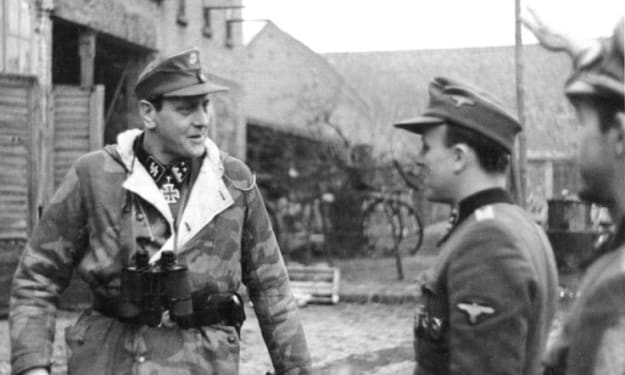
Otto Skorzeny: 'The Most Dangerous Man in Europe
Otto Skorzeny, often referred to as "The Most Dangerous Man in Europe," was a high-ranking officer in Nazi Germany's Waffen-SS during World War II. Known for his audacious and successful commando operations, Skorzeny's legacy is a mix of military brilliance, ruthless cunning, and post-war intrigue. His life, marked by extraordinary missions and controversial actions, has made him one of the most infamous figures of the 20th century. Early Life and Military Career Otto Skorzeny was born on June 12, 1908, in Vienna, Austria. He was raised in a middle-class family and pursued engineering studies at the Vienna University of Technology. Skorzeny's early life was relatively unremarkable until he joined the Austrian Nazi Party in the early 1930s, drawn by the ideology and the promise of restoring Germanic pride and power. When Germany annexed Austria in 1938, Skorzeny quickly integrated into the German military structure. He initially served in the Luftwaffe but soon transferred to the Waffen-SS, where his leadership skills and tactical ingenuity became evident. By 1943, Skorzeny had risen to the rank of Sturmbannführer (Major) and was put in charge of special operations. The Gran Sasso Raid Skorzeny's most famous mission, and the one that earned him international notoriety, was the rescue of Italian dictator Benito Mussolini. In July 1943, Mussolini was deposed and imprisoned by his own government. Hitler, determined to rescue his ally, assigned the task to Skorzeny. On September 12, 1943, Skorzeny led a daring glider assault on the Gran Sasso mountain in Italy, where Mussolini was held captive in a hotel. The operation was a high-risk endeavor, but Skorzeny's meticulous planning and fearless execution led to its success. The team landed their gliders near the hotel, took the guards by surprise, and freed Mussolini without a single shot being fired. Mussolini was flown to safety, and the mission significantly boosted Nazi morale while cementing Skorzeny's reputation as a master of special operations. The Battle of the Bulge Another notable operation led by Skorzeny was during the Battle of the Bulge in December 1944. Hitler ordered Skorzeny to lead Operation Greif, a covert mission aimed at creating chaos behind Allied lines. Skorzeny organized a unit of English-speaking German soldiers, disguised them in American uniforms, and sent them to sabotage communications and spread misinformation. The operation caused significant confusion among the Allied forces, leading to stricter security measures and a temporary loss of trust among the troops. Although the overall impact of Operation Greif was limited, it showcased Skorzeny's ability to think outside conventional military tactics and exploit psychological warfare. Post-War Intrigue After Germany's defeat in 1945, Skorzeny was captured by Allied forces and imprisoned. He was tried at the Dachau Trials for war crimes but was acquitted due to the ambiguous nature of his operations and lack of concrete evidence. In 1948, Skorzeny escaped from an internment camp in a daring breakout, further enhancing his legendary status. Skorzeny fled to Spain, where he was protected by the Franco regime. He became a prominent figure in the post-war underground network, helping former Nazis escape to South America via the "ratlines." He also established a successful engineering business and reportedly worked as a military advisor for several Middle Eastern countries, including Egypt. One of the most controversial aspects of Skorzeny's post-war life was his alleged involvement with Israeli intelligence agency Mossad. Reports suggest that in the 1960s, Skorzeny was recruited by Mossad to assist in operations against former Nazis and Arab enemies, in exchange for immunity from prosecution. This surprising twist added another layer to Skorzeny's complex legacy. Legacy and Controversy Otto Skorzeny died of cancer on July 5, 1975, in Madrid, Spain. His legacy remains contentious, with views on his life and actions deeply divided. To some, Skorzeny was a brilliant military tactician and a fearless leader. His successful missions, especially the Gran Sasso raid, are studied in military academies worldwide for their audacity and execution. However, Skorzeny's legacy is also marred by his association with the Nazi regime and the atrocities committed by the SS. His post-war activities, including aiding Nazi fugitives and potentially working for Mossad, paint a picture of a man who thrived on intrigue and conflict, regardless of the ideological sides involved. Skorzeny's life story is a reminder of the complexities and moral ambiguities of war. His ability to operate effectively in both overt and covert missions, coupled with his survival and adaptation in the post-war world, make him a unique figure in modern history. The title "The Most Dangerous Man in Europe" reflects not just his military prowess but also the lasting impact of his actions on the world stage. In studying Otto Skorzeny, one delves into a narrative that spans the extremes of human experience – from calculated heroism to ruthless opportunism. His life encapsulates the dualities of war, where lines between right and wrong blur, and survival often trumps morality.
By Deji Akomolafe2 years ago in History
Oceanic Outlaw: The Pirate Cutlass Sword
Introduction The pirate cutlass sword, an emblem of maritime outlaws, evokes images of swashbuckling adventures, treasure hunts, and epic battles on the high seas. This iconic weapon, with its distinctive design and historical significance, is more than just a tool of combat; it represents the rugged and rebellious spirit of pirates. In this article, we will delve deep into the history, design, and cultural impact of the pirate cutlass sword, exploring its origins, evolution, and enduring legacy.
By Mai Sophia2 years ago in History