General
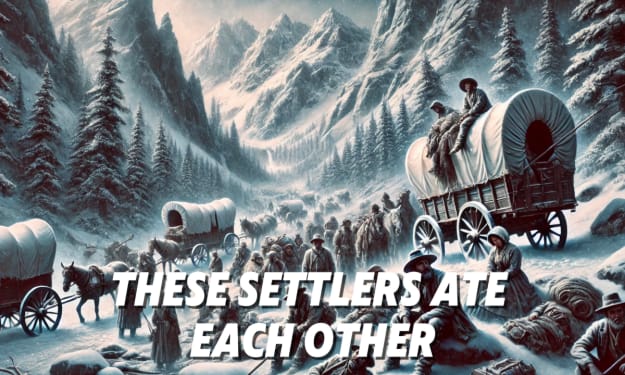
Why These American Settlers Eat Each Other: The Tragic Tale of the Donner Party
By the mid-19th century, America was caught in the grip of pioneer fever, a fervent desire to explore and settle the vast, uncharted territories of the West. Like a giant star-spangled bird stretching its wings, the nation was eager to gobble up new lands and lay claim to untouched regions. Among those captivated by this siren call were brothers George and Jacob Donner, who, along with their families, embarked on a monumental 2,500-mile journey from Springfield, Illinois, to California in search of the prosperity and wealth promised by the American West.
By Marveline Merab2 years ago in History
A third of the world's children suffer from myopia, which will reach 40% in 2050. Girls have more hand problems than boys - says study. AI-Generated.
The sun hung low in the sky, casting a warm glow over the bustling city of Hanamura. Children rushed home after school, their laughter echoing in the narrow streets. Among them was twelve-year-old Yuki, her small frame adorned with a colorful backpack heavier than her. She often fell behind the pack, her nose buried in a book, lost in worlds crafted from ink and paper, though she sometimes missed the beauty of the sprawling skyline just beyond her pages. Yuki had always struggled to see distant objects clearly. It started slowly; the words in her favorite novels would blur when she read without her glasses. She remembered a day in the park, her mother's anxious eyes watching her squint at the rainbow kite soaring high above, a flickering disappointment in her thin smile. "Let’s get your eyes checked, Yuki," her mother had suggested gently, and from that day on, thick lenses sat on the bridge of her nose like an unwelcome accessory. As the years passed, the blur of the world outside crept closer, leaving behind a sharp clarity in all things near. The stories she read had begun to shine brightly in her mind, but the enchanting sights of distant mountains and cityscapes remained elusive. Her world grew narrower, outlined only by the things that lay within an arm’s reach. One evening, as dusk settled in, Yuki found herself curled up in her small bedroom, surrounded by mounds of books and the blue light of her tablet flickering across her face. Her mom often reminded her to play outside, but the allure of stories was far too tempting. Yet, something gnawed at her—a feeling that as she buried her head in worlds fabricated by authors, the external world faded further away. The following day, school class shared jingles of giggles and lessons. Their teacher, Mr. Nakamura, a passionate man with heavy glasses that magnified his warm eyes, announced an inter-school project focusing on health and well-being. It was a call to action—a chance to address the rising concern of myopia among their peers. “Research suggests that myopia is affecting more and more children, especially post-pandemic,” he explained to the class, handing out pamphlets. “As emerging leaders, you can make a change. Our project will include physical activities, awareness programs, and encouraging outdoor time.” Yuki sat up, her mind racing through its corridors, connecting dots that had once felt apart. Her classmates buzzed with ideas, discussing posters and videos, but Yuki wanted to do something far more powerful. That night, she drafted a proposal to create a community play day, where families would be invited to partake in outdoor games, workshops on reducing screen time, and discussions about eye health. The following weeks were an exhilarating blur of planning, getting help from her classmates, and pouring her heart into the project. She felt a spark of something she had often missed—connection. She orchestrated delicious food stalls, outdoor games, and storytelling corners ignited by the idea of raising awareness that encompassed everyone. Finally, the big day arrived, and the park transformed into a vibrant world filled with laughter and joy. Yuki stood at the entrance, watching parents and children alike emerge, free of screens and focusing on each other. Little tents lined the walkways, where kids learned to frolic and play while their parents attended talks on reducing screen time and increasing outdoor activities. As the sun dipped below the horizon and the evening unfolded, Yuki captured the beauty of youth—children running, playing catch, climbing trees, their faces illuminated with joy. In that chaotic bliss, she spotted Akira, a boy from her class, struggling to shoot a basketball into the hoop. She looked closer, realizing he had squinted for the last few minutes, frustration clear on his face. “Hey, Akira!” Yuki called, her heart racing as she ran over. “Try using both hands and stand back a bit!” With a flicker of hope and following her guidance, he hurled the ball, the swish of the net echoing the flourish of triumph. The joy overtook him, and Yuki felt a rush of warmth; it wasn’t just about eye health anymore—it was about embracing their world together, reconnecting amidst their struggles. As day turned to night and lanterns glowed around them, Yuki realized that she was part of something grander than herself. Together, they weren’t just combating myopia—they were nurturing connections, memories, and the aching clarity of the world beyond the haze of their lenses. In that moment, Yuki felt hopeful that the world wouldn’t just remain a blur; it would be a canvas yet to be drawn upon, a life of distance waiting to be embraced, even through a child’s small but brave lenses. And perhaps, just perhaps, it was a journey they could embark on together.
By Prohura Research - PRU2 years ago in History
Is 5G really responsible for human cancer and death?. AI-Generated.
In a small town nestled between rolling hills and dense woods, curiosity about the modern world often clashed with the deep-seated beliefs of its residents. The townsfolk were a close-knit group, sharing traditions that stretched back generations. Yet, as technology advanced and the world embraced innovation, a fierce debate began to swirl around the implementation of 5G networks. It all started when a video went viral on social media, claiming that 5G was responsible for a sudden spate of illnesses and bird deaths. The townspeople, who relied on their local community platforms for news, quickly became consumed by fear. Margaret, a retired teacher with a genuine love for nature, was especially troubled. She spent her early mornings in the woods, watching the birds flit from tree to tree, cherishing their songs. The thought that something could harm them sent her into a panic. One evening, as the sun dipped behind the hills, casting a warm golden glow over the town, Margaret called a town hall meeting. She wanted answers. “We need to understand this 5G thing better. What if it’s true? What if it’s hurting us and the birds?” she implored the crowd, her voice quivering with urgency. People murmured in agreement, their faces etched with worry. Among them sat David, a local scientist who had just returned home after years of research across the country. He often kept to himself, preferring the company of books over people, but tonight, he felt the weight of the room's anxiety pressing against him. As Margaret concluded her monologue, he raised his hand, signaling for attention. “I can provide some insights,” David began, his voice steady. “5G, at its core, is just another iteration of wireless communication—using radio waves to transfer data. Yes, the frequencies are higher, but studies show that they are still within the radio frequency range. They are low power and incapable of deeper skin penetration, which means they don’t cause DNA damage or health problems like cancer.” The room fell silent, and as he spoke, David could see the flicker of skepticism begin to fade. “There’s been research, too, on birds. Remember the deaths reported in the Netherlands a few years back? Subsequent investigation revealed that those birds died from poisoning, not from 5G. Organizations like the Dutch Wildlife Health Center studied this and found no harmful effects from 5G waves on avian behavior or health.” Margaret’s brow furrowed. “But what about the reports of headaches and sleep issues?” she pressed. “Those claims are often tied to anxiety about technology itself rather than the technology’s actual effects on our bodies. There’s a psychological component at play. The main culprits in our health issues are still the same: stress, poor diets, lack of exercise. Not to mention the ongoing destruction of bird habitats caused by deforestation and pollution. These are the issues we should concern ourselves with—protecting nature and our health, rather than vilifying technology.” As David spoke, he noticed nods of understanding spreading through the crowd. He continued, “It’s crucial for us to foster an environment of awareness. The destruction of nature is what endangers both our health and the health of birds. Instead of blaming 5G, let’s channel that concern into actions that benefit our ecosystem. Let’s plant trees. Create wildlife sanctuaries. Raise awareness about pollution and habitat destruction.” By the end of the meeting, the townsfolk were no longer discussing their fears of 5G; they were outlining plans to protect their natural surroundings. Inspired by David’s insights, they resolved to start community workshops on environmental awareness. Months passed, and the town blossomed with greenery as the residents banded together, planting trees and creating small parks to encourage bird populations to thrive. Margaret often smiled as she watched the delicate creatures return, flitting about in their newfound spaces, oblivious to the earlier fears that had clouded their human guardians’ minds. Through the collaboration of science, community resilience, and a commitment to understanding, the small town learned a valuable lesson. Misconceptions may spread like wildfire in the age of technology, but knowledge, compassion, and effort could ignite a positive fire that protected both the people and the feathered friends they dearly loved.
By Prohura Research - PRU2 years ago in History
History's Footprints
History is a vast tapestry woven with countless events, each leaving an indelible mark on the fabric of our existence. From groundbreaking discoveries to pivotal moments of triumph and tragedy, the past is replete with stories that have shaped the world we live in today. This article delves into some of these remarkable events, tracing the footprints of history and exploring their enduring impact on our society.
By Sazeeb Chowdury2 years ago in History
Anna Karenina
1. The Appalling Courageous Woman: Anna Karenina's Personality Curve Anna Karenina, the hero, is perhaps the most convincing person in scholarly history. Her story is characterized by the pressure between her longing for individual bliss and the abusive social standards of her time. At first a regarded socialite and a caring mother, Anna becomes untouchable because of her undertaking with Count Vronsky. As she seeks affection at the expense of her social standing and family, Anna's process twists into mental unrest and inevitable misfortune, representing the damaging influence of unrestrained enthusiasm.
By Imran Khan2 years ago in History
Understanding Vascular Disorders: Treatments Available in Dubai
Vascular disorders affect the network of blood vessels that carry oxygen and nutrients throughout the body. These conditions can range from mild cosmetic concerns like varicose veins to life-threatening issues such as aneurysms and blocked arteries. Without timely treatment, vascular disorders can lead to serious health complications, including strokes, heart attacks, and even amputation. Fortunately, advancements in medical technology and healthcare in Dubai have made it possible to effectively diagnose and treat a wide range of vascular disorders, improving patients' quality of life.
By Momina Abid2 years ago in History
The Rise and Fall of the Mauryan Empire
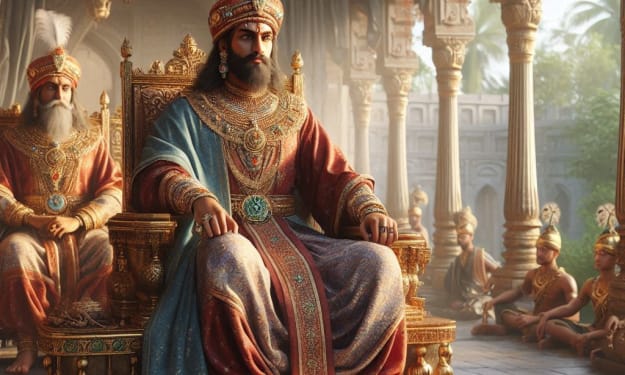
Few things have driven humanity more than the ambition for power. Across history, we've witnessed how the desire for control, glory, and land can elevate or destroy empires. Today, we explore one of the most influential civilizations in ancient India: the Mauryan Empire. This post dives deep into how this empire emerged, expanded, and left a lasting impact not only on the Indian subcontinent but on the world. Starting in the 6th century BCE, the Indian subcontinent saw the rise of various political units called the Mahajanapadas. Among them, the Kingdom of Magadha was the most powerful, but under the rule of the Nanda dynasty, it became infamous for oppressive governance. King Dhana Nanda's reign (329-321 BCE) was marked by high taxes and cruelty, making the dynasty deeply unpopular. Adding to this internal unrest, the western part of India was thrown into chaos after the invasion of Alexander the Great, further destabilizing the region. Amidst this turmoil, a Brahmin statesman named Kautilya (or Chanakya) envisioned the possibility of uniting India under a centralized empire to ward off invaders and restore peace. After being scorned by King Dhana Nanda, Kautilya found an ally in Chandragupta Maurya, a young warrior with immense potential. Together, they plotted to overthrow the Nanda dynasty and establish a new order. Taking advantage of the power vacuum left by Alexander’s forces, Chandragupta began his military campaigns in northwest India, toppling weakened Greek-Macedonian rule. With Kautilya’s brilliant strategy, Chandragupta continued to advance through India, eventually taking the heart of Magadha and claiming the throne. In 321 BCE, Chandragupta founded the Mauryan Empire, establishing Pataliputra (modern-day Patna) as its capital. Chandragupta's empire quickly expanded to encompass much of India, from its western coast to the southern regions. Plutarch even noted that his army reached an astonishing 600,000 soldiers. Chandragupta also came into conflict with Seleucus I Nicator, one of Alexander’s successors. After a war in 301 BCE, the two leaders signed a treaty that gave Chandragupta large territories in exchange for war elephants—a move that further cemented the Mauryan power. The Mauryan Empire was one of the most well-organized empires of its time. Chandragupta ruled through a sophisticated bureaucratic system. The king was the head of the state, with a council of ministers advising him on military, financial, and administrative matters. Provinces were governed by royal princes, and the administration extended down to village levels, ensuring strict control over social and economic life. The empire maintained a vast spy network and a large standing army, with specialized units for infantry, cavalry, navy, and war elephants. Soldiers were highly valued, focusing solely on warfare and not being required for other services. Chandragupta’s rule established a model of efficient governance that influenced later rulers in the region. The Mauryan economy was largely state-controlled. The empire monopolized essential industries like coinage, salt production, mining, and weapon manufacturing. Agriculture was heavily taxed, and merchants were organized into guilds that held judicial and executive power. Trade flourished under state supervision, with strict regulations on prices, weights, and measures. Roads and rivers connected the empire to foreign markets, extending even to Sri Lanka, China, and Arab ports, promoting a vibrant trade network. After ruling for 25 years, Chandragupta abdicated in favor of his son Bindusara, who expanded the empire further into southern India. However, it was Ashoka, Chandragupta’s grandson, who left the most significant mark on the empire and the world. Initially a ruthless ruler known for his cruelty, Ashoka waged a bloody war against the kingdom of Kalinga, resulting in immense loss of life. This campaign traumatized Ashoka, leading him to adopt Buddhism and embrace non-violence, promoting the concept of dhamma—a philosophy of righteous behavior and goodwill. Ashoka’s reign saw the construction of monumental stupas and the spread of Buddhism across Asia, with missionary efforts reaching Sri Lanka, Southeast Asia, and beyond. Yet, despite Ashoka’s efforts to promote peace, his successors lacked his strength. After his death, the empire began to fracture, and by 185 BCE, the last Mauryan ruler, Brihadratha, was assassinated, ending the dynasty. The Mauryan Empire, the largest to ever exist on the Indian subcontinent, was driven by a relentless pursuit of power, but like many great empires, it faced internal strife and external pressures that led to its decline. The administrative, economic, and cultural advancements during its reign left an indelible legacy that shaped the Indian subcontinent for centuries. The rise and fall of the Mauryan Empire serve as a testament to the cyclical nature of power—where ambition builds great civilizations, but also sows the seeds of their eventual collapse. Their names, however, live on, carried by the cultural and social reforms they left behind. If you enjoyed this article, give it a thumbs up, and don't forget to share it with others. Stay tuned for more stories about empires, power, and history!
By A História2 years ago in History
Where is Maanhuttaan?
The biggest problem that Latvian immigrants had in New York City in the 1950s was that the older generation in families the grandmothers and grandfathers often had a most difficult time with English. Mostly they managed by going outside with other family members, babysitting for their grandchildren who picked up English real quick, or just socializing with other Latvians. Well, one grandpa took himself and his wife on a great adventure one fine day.
By Rasma Raisters2 years ago in History
Flutterwave Scandal: What It Means for Africa’s Start-Up Scene
The African start-up ecosystem has seen incredible growth in recent years, with innovative companies emerging in fintech, e-commerce, healthcare, and agriculture, aiming to solve local problems with global solutions. Among the top players in this ecosystem is Flutterwave, a Nigerian-founded fintech company that provides payment services to businesses and individuals across Africa. However, the company has recently come under scrutiny due to a series of scandals that have threatened its reputation and raised concerns about governance, transparency, and accountability in Africa’s booming start-up scene.
By Farhan Mirza2 years ago in History
Reflections on Nigeria’s 64th Independence
As we gather today to commemorate Nigeria's 64th independence anniversary, it is natural to feel a surge of patriotic pride. For six decades, we have charted our own course as a sovereign nation, blessed with an abundance of natural and human resources. However, this occasion should also serve as a moment of sober reflection—a time to critically evaluate where we stand as a people and what the future holds for Nigeria.
By Prince Chukwuka 2 years ago in History