General
Why Is Thanksgiving Celebrated Today?
The modern celebration of Thanksgiving Day, with its huge feasts and family gatherings, has been shaped by history and tradition. While it may be a national holiday here in the United States today, it's ironic that this holiday often transcends far beyond the creators of this original movement. No longer about turkey or pumpkin pie, it is about the connections we share and can step back, reflect, and give thanks for the blessings in our lives. Today, Thanksgiving has become an excuse for bonding, giving thanks to people, and enjoying each other's company. With time, it changes, but the truth is that the heart of Thanksgiving remains very much rooted in appreciation.
By The Leather Jackets2 years ago in History
Giordano Bruno: The Visionary Monk
Giordano Bruno: The Visionary Monk Introduction: A Man Beyond His Time In a world where the Earth sat immovable at the center of the universe, Giordano Bruno dared to imagine otherwise. Born in 1548 in the Kingdom of Naples, Bruno grew up in an age of intellectual suppression, where the Catholic Church held tight reins on thought and knowledge. But Bruno was a visionary, and his radical ideas about the universe would not only challenge the Church’s doctrines but also cost him his life. His story is one of courage, imagination, and the price of unyielding conviction.
By Mahalakshmi2 years ago in History
Nicolaus Copernicus: The Revolutionary Astronomer Who Changed Our View of the Universe**
**Nicolaus Copernicus: The Revolutionary Astronomer Who Changed Our View of the Universe** **Introduction** Nicolaus Copernicus (1473 - 1543) is renowned for transforming the scientific worldview of the cosmos. His revolutionary theory placed the Sun, rather than the Earth, at the center of the universe, challenging centuries of established beliefs. Copernicus’s life and work laid the foundation for modern astronomy and altered the trajectory of scientific thought, ultimately inspiring other great scientists like Galileo, Kepler, and Newton.
By Mahalakshmi2 years ago in History
No Time for Sorrow
Mara was a medical caretaker — a title she'd worn proudly once. Be that as it may, presently, she felt more like a scrounger. Supplies were waning, and she expected to return food and medication once again to the facility. She lacked the opportunity and energy to contemplate the companions she'd lost, or the patients she wasn't ready to save. There was no time for anguish. Consistently spent grieving was a second squandered, and in circumstances such as these, seconds could mean endurance. She rushed through the vacant roads, her heart beating as she dodged into the back streets, staying away from watches. Each corner brought another risk, each shadow could conceal somebody standing by to snare her. Mara's brain was well-honed, working out each move. She didn't permit herself to choose not to move on, to ponder the countenances she'd once known or the recollections she'd appreciated. They were covered now, locked away in some piece of her brain that she was unable to bear to get to. Not at present. As she approached the center, Mara saw a young man, no more seasoned than twelve, sitting by a heap of rubble. His face was smeared with soil, and his eyes were empty, empty such that somebody who had seen a lot of it could be. Mara felt an ache in her chest, a glimmer of sympathy she hadn't permitted herself to feel in weeks. She realized she ought to continue to move — her provisions were required back at the facility — however, something made her interruption. The kid didn't gaze upward as she drew nearer; he was gazing at his hands, which gripped a little, messy toy — a reminder of a day-to-day existence before the conflict. She hunched next to him, delicately putting a hand on his shoulder. "Are you alone?" she asked delicately. The kid gazed upward, and briefly, Mara saw the profundity of his anguish. His lips shuddered, however, he gestured. She didn't have to inquire as to whether he had family. She knew the response as of now; she had seen that look too often. The inclination to help him was overpowering. In any case, Mara's brain was at battle with her heart. She didn't have the assets to take on someone else, particularly not a youngster who might require security. The center was at that point packed, and every patient was barely surviving. She was unable to allow herself to be answerable for another life. Not when so many others were relying upon her. "I… I don't have any place to go," the kid said, his voice scarcely over a murmur. Mara gulped, the contention seething inside her. The consistent piece of her brain shouted that she was unable to take him with her. Yet, something more profound, something more human, overwhelmed that rationale. "Accompany me," she said at last, realizing that this choice could cost her and others. "I'll take you someplace safe." The kid didn't grin or say thanks to her; he essentially gestured, like he'd lost the capacity to expect much else. Together, they advanced back to the center. Mara kept a tight hang on his hand, her faculties increased. She examined the roads, alert for any indication of risk. The facility was concealed in the cellar of an old emergency clinic building. It was dull, cold, and squeezed, yet it was a shelter. Inside, volunteers moved discreetly, keeping an eye on the injured and the debilitated. The space was loaded up with the aroma of germ-killers and the low mumbles of patients. Mara directed the kid to a corner where an improvised bed lay. She gave him a little slice of bread and a taste of water, the main arrangements she could save. As she went to leave, the kid got her hand. "Will… will you return?" Mara faltered, feeling a peculiar feeling of obligation for him. "I'll be here," she guaranteed, however, she couldn't say whether it was a commitment she could keep. In this world, conviction was an extravagance she was unable to bear. The hours obscured into one another. Mara treated injuries, watched out for fevers, and held the hands of those whose time was getting ceaselessly. She lacked the opportunity and energy to think, process, or lament. The essence of the withering tormented her, however she constrained herself to keep on track. Every life was a sign of why she was unable to permit herself to feel. Sorrow would just dial her back, and she was unable to bear the cost of that. Days passed, and the kid remained close by, helping in little ways — getting water, consoling more youthful youngsters, and figuring out how to change basic dressings. Mara could see the versatility working in him, and in some little way, it gave her expectations. Perhaps, she thought, they could endure this together. In any case, she held her feelings under tight restraints, reluctant to allow herself to become connected. Each bond was a potential injury, another misfortune in the works. One night, as Mara was keeping an eye on a patient, she heard a stunning blast close by. The walls shook, dust tumbling from the roof. The patients and volunteers crouched together, dread obvious in their eyes. Mara's heartbeat, and without precedent for months, she felt genuine fear. She looked around, looking for the kid, yet he was no place to be seen. Alarm flooded inside her. Disregarding her security, she darted into the passage, calling out to him. She went through the hallways, her psyche dashing. She had sworn not to mind, not to give anybody access, but rather she understood, at that time, that she had fizzled. She minded profoundly, and the prospect of losing him tore at her heart. At last, she found him close to the entry, assisting a harmed man with limping to somewhere safe and secure. Alleviation washed over her, and she maneuvered him into her arms, holding him firmly. "Never run off that way," she murmured, her voice stifled with feeling. The kid saw her, shock in his eyes. "I thought… I figured you couldn't have cared less." Mara dealt with a powerless grin. "I lack opportunity and willpower to mind," she expressed, attempting to conceal reality, however, the untruth felt empty. The conflict had stripped her of numerous things, however, it hadn't taken her mankind. Not totally. She understood, with a combination of trouble and acknowledgment, that regardless of how enthusiastically she attempted, she was unable to protect herself from pain or love. It was essential for what her identity was, a section she couldn't just stop. The days became hazier, and the difficulties just increased. Yet, Mara and the kid confronted them together, tracking down comfort in one another's presence. They figured out how to track down little snapshots of satisfaction amid the bedlam, and in those minutes, Mara permitted herself to trust. She realized the street ahead would be hard, yet she additionally knew that, as long as they had one another, they would continue to push ahead. There was no time for melancholy, yet maybe, quite possibly, there was the ideal opportunity for trust.
By Hridoy Hasan2 years ago in History
The Brazen Bull
When we think of historical punishments, we may imagine something brutal, like beheading or whipping. But among the many ways societies have meted out cruelty, the ancient Greek invention known as the brazen bull stands out as one of the most horrifying devices ever imagined. Designed not just to execute but to inflict maximum psychological and physical agony, the brazen bull’s gruesome history has echoed through the ages, leaving us in awe of the cruelty humans are capable of—and of how far society has evolved since.
By Horace Wasmore2 years ago in History
How Outsourcing Claims Processing Helps Providers Reduce Overhead
Healthcare providers across the board are facing an unprecedented rise in administrative costs, particularly in claims processing. As the industry becomes more complex with increasing regulations, claim denials, and reimbursement challenges, many providers are finding that managing claims in-house is both time-consuming and expensive. Claims processing outsourcing offers a viable solution, enabling providers to streamline operations, reduce overhead, and focus more on patient care. This article explores how outsourcing claims processing helps reduce administrative costs, improve efficiency, and ensure financial sustainability for healthcare providers.
By Aliocia Johnson2 years ago in History
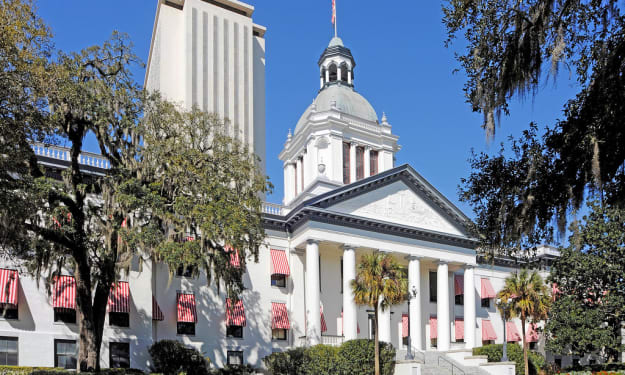
US State Capital History Connecticut Delaware and Florida
Capital Honoring an English Town Adrian Block a Dutch explorer visited the area in 1614 and set up a trade post at Fort Good Hoop or Good Hope. Today in the city of Hartford, Connecticut this site is still a neighborhood called Dutch Point. When the first English settlers arrived in 1635 they renamed it Hartford in honor of the English town of Hertford, and home of Samuel Stone, one of the settlers.
By Rasma Raisters2 years ago in History
Yemanjá
Yemanjá, also known as Iemanjá in Brazil, is a prominent figure in Afro-Brazilian religions and cultural expressions, recognized as the powerful and nurturing goddess of the sea. Revered in Candomblé and Umbanda, Yemanjá is known as the "Queen of the Ocean," embodying themes of motherhood, protection, and transformation. Her influence extends far beyond religious boundaries, touching Brazilian art, music, and annual celebrations that draw millions of devotees and tourists alike. In this article, we explore Yemanjá's origins, her symbolic role in Brazilian culture, and how her annual festival continues to inspire a sense of connection and renewal. Yemanjá originates from the Yoruba religion of West Africa, where she was venerated as one of the Orishas, powerful deities connected to nature. In the Yoruba tradition, Yemanjá is associated with rivers and motherhood, symbolizing fertility, nurturing, and emotional depth. The transatlantic slave trade, however, brought Yoruba practitioners to Brazil, where they adapted their religious practices in the face of colonial oppression. Over time, the worship of Yemanjá blended with local indigenous beliefs and elements of Catholicism, leading to the vibrant, syncretic Afro-Brazilian religious traditions we see today.
By A História2 years ago in History