General
Researching the Seven Wonders of the World: 2025 Variant. Content Warning. AI-Generated.
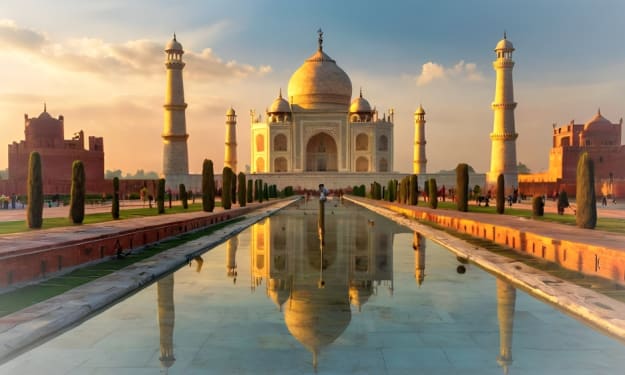
The Seven Wonders of the World are a celebration of human ingenuity, primary brilliance, and social heritage. These well-known achievements have gone all the way and continue to excite huge numbers of visitors reliably. In 2025, these marvels stay as stunning as anybody would envision, displaying the rich history and achievements of old developments. This article takes an all-around adventure through all of these marvels, exploring their significance, history, and why they continue to stand apart for the world. 1. The Taj Mahal, India The Taj Mahal, one of the most seen pictures of warmth, is arranged in Agra, India. Worked on by Mughal Head Shah Jahan in memory of his loved companion Mumtaz Mahal, this white marble mausoleum required 22 years (1632-1653) to wrap up. The Taj Mahal is a UNESCO World Heritage Site and addresses the apex of Mughal designing, uniting Persian, Indian, and Islamic styles. Designing and Significance The Taj Mahal's optimal equity, flighty carvings, and the shimmering appearance in the Yamuna Stream make it a showstopper. Its central vault climbs to a degree of 73 meters, flanked by four thin minarets. The trim work, including semi-important stones, and the calligraphy on the section entryway add to its innovative charm. In 2025, the Taj Mahal continues to draw countless visitors for its structural greatness as well as concerning the huge heartfelt story it addresses. Visitors are particularly enamored by the daybreak and sunset seas, which wash the marble in tones of pink, orange, and gold. 2. Christ the Deliverer, Brazil Staying on Mount Corcovado in Rio de Janeiro, Christ the Hero is a 30-meter-tall figure of Jesus Christ, with arms outstretched in an enticing embrace. This renowned Craftsmanship Deco milestone, completed in 1931, addresses concordance, trust, and the sparkle of Brazilian culture. Valid and Social Impact Arranged by Brazilian expert Heitor da Silva Costa and carved by French skilled worker Paul Landowski, the model was worked on for more than nine years. Made of developed concrete and soapstone, Christ the Guardian Angel dismisses Rio, offering widely inclusive points of view on the city and Guanabara River. In 2025, the figure continues to fill in as a picture of certainty for Christians, generally speaking, and an exhibit of Brazil's social person. The model is edified around nighttime, making a shocking sight that ought to be noticeable from quite far off. 3. Machu Picchu, Peru Machu Picchu, much of the time implied as the "Lost City of the Incas," is a fifteenth-century fortress arranged in the Andes Loads of Peru. Perched at a height of 2,430 meters, this archaeological site displays the creativity of the Inca human advancement. Planning Miracle Worked without the use of mortar, the stones of Machu Picchu fit so precisely that even current fashioners are befuddled by the craftsmanship. The site consolidates safe havens, decks, and water channels, all created as one with the incorporating scene. Machu Picchu's significance lies in its ability to connect visitors with an unfortunately missing advancement. In 2025, it remains a rundown of should-dos and objectives for pilgrims searching for experience, history, and shocking points of view. The first light over the site is particularly spellbinding, drawing picture takers and trailblazers from across the globe. 4. Chichen Itza, Mexico Chichen Itza, arranged on the Yucatán Expanse of land in Mexico, was an unquestionable city of the old Mayan human advancement. Among its many plans, the Asylum of Kukulcán, generally called "El Castillo," is the most well known. This step pyramid reflects the significant level of cosmic data on the Mayans. Inestimable Significance El Castillo is arranged with the goal that all through the spring and pre-winter equinoxes, the play of sunshine and shadow makes the misdirection of a snake slithering down the pyramid's means. This characteristic element is the Mayans' significant perception of heavenly turns of events. In 2025, Chichen Itza continues to dazzle visitors with its blend of legends, science, and plan. The site is in like manner a social area of interest, working with events and celebrations that honor Mayan customs. 5. Colosseum, Italy The Colosseum in Rome, Italy, is a helping-through picture of the superbness of the Roman Domain. Worked some place in the scope of 70 and 80 Advancement, this colossal amphitheater could arrange up to 50,000 spectators and worked with gladiatorial difficulties, public scenes, and sensational shows. Plan Brilliance The Colosseum is a planning wonder, featuring a staggering plan of underground sections, stowed-away entrances, and lifts that were used to coordinate elaborate events. Its layered visitor plan ensured clear points of view for all spectators, an arrangement that continues to influence current fields. In 2025, the Colosseum stays as an exhibit of Roman turns of events and adaptability. It is maybe Italy's most visited achievement, drawing history aficionados and designing sweethearts from around the world. 6. Petra, Jordan Known as the "Rose City" in view of its pink sandstone facades, Petra is an irrefutable and archeological supernatural occurrence arranged in southern Jordan. At the point when the capital of the Nabataean Domain, Petra is renowned for its stone-cut plan and significant level water the board structure. A Blend of Nature and Designing The Safe (Al-Khazneh) is Petra's most famous plan, cut directly into the stone face. Various highlights consolidate the Order, the Distinguished Entombment chambers, and the Siq a restricted ravine that fills in as the city's principal section. In 2025, Petra stays a picture of human cleverness and change. Visitors are drawn to its harsh greatness and real significance, making it one of the Middle East's most cherished achievements. 7. Staggering Mass of China, China Broadening more than 21,000 kilometers, the Great Wall of China is the longest man-made structure on earth. Worked in excess of years and years to protect China from northern intruders, the wall is a miracle of old military planning. Tirelessness Through Time The wall explores mountains, deserts, and fields, showing the confirmation and imagination of the Chinese public. Key sections, such as Badaling and Mutianyu, have been restored and are accessible to explorers, offering amazing points of view and legitimate encounters. In 2025, the Exceptional Wall continues to address China's rich social heritage and stays a must-visit objective for explorers searching for a more significant perception of history. End The Seven Supernatural Occurrences of the World are not just underlying and planning achievements; they are, in like manner, windows into the past, reflecting the dreams, convictions, and advancements of outdated developments. In 2025, these marvels continue to persuade wonderment, attracting a colossal number of visitors and filling in as a badge of what mankind can achieve. Exploring these wonders is a different option from a journey; an experience interfaces us with history, culture, and the enduring soul of human imagination. Whether it's the genuine allure of the Taj Mahal, the captivated allure of Machu Picchu, or the heavenliness of the Unique Mass of China, these wonders assist us with recalling the greatness and assortment our world holds.
By SUDHIR MALLICK2 years ago in History
The Golden Empire of Ghana
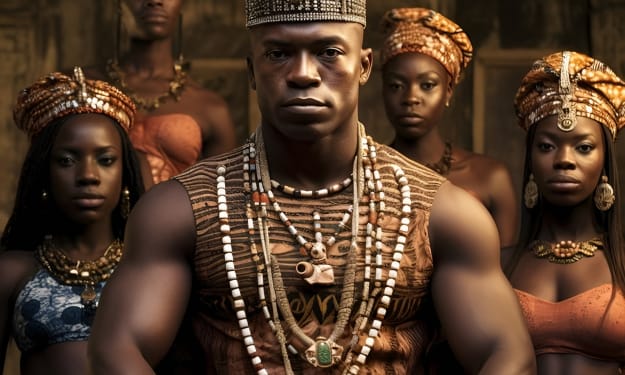
In the heart of West Africa, where the modern nations of Mauritania and Mali now stand, lies the cradle of one of the continent’s most enigmatic and powerful empires—the Empire of Ghana. For centuries, this ancient civilization has captivated historians and archaeologists alike, its origins shrouded in legend and mystery. Today, we journey back in time to uncover the secrets of this legendary empire, exploring its rise, its golden age, and its eventual decline.
By A História2 years ago in History
Sat and Asat: Swami Prakashanand on Reality and Illusion
Swami Prakashanand illuminates the concepts of reality and illusion, guiding seekers to discern between sat (reality) and asat (illusions such as attachments we create) on their spiritual journey. He emphasizes that while worldly pleasures may seem appealing, they are ultimately transient and unfulfilling. By cultivating a deeper love for Radha-Krishn and embracing divine-love-consciousness, devotees can shift their focus from the material to the spiritual. This will help them to ultimately experience the true happiness their soul longs for – the divine realization of God.
By Swami Prakashanand2 years ago in History
The Whispering Isle
In the heart of the Sapphire Sea, there was an island no map ever showed, and no sailor dared to speak of. Its name, Eryndor, was whispered only in the dead of night, when the wind howled like the cry of a long-lost friend. Those who had sailed too close swore they heard strange noises carried across the waves, faint voices calling out in a language no one could understand, just before their ships were swallowed by the fog.
By Fouad Belabiadh2 years ago in History
Magic in Ancient Egypt: A Divine Force Intertwined with Life
Introduction Magic, known as heka in ancient Egyptian culture, was more than a mystical practice—it was a cornerstone of existence. Unlike in many later societies where witchcraft was feared or persecuted, the Egyptians revered magic as an integral part of their daily lives, religion, and understanding of the universe. They believed that magic was not only a gift from the gods but also the force that sustained the cosmos and bridged the realms of the mortal and the divine.
By Sajjad Rana Hussain2 years ago in History
Chinese New Year 2025: Year of the Snake. AI-Generated.
Chinese New Year, also known as Lunar New Year, is one of the most significant cultural celebrations in the world. It marks the start of a new lunar calendar year and is deeply rooted in centuries-old traditions. In 2025, this vibrant and colorful holiday will usher in the Year of the Snake, offering a chance for families and communities to come together, honor their heritage, and look forward to a year of prosperity and growth.
By bipul biswas2 years ago in History
Afghanistan: A Nation of Resilience and Transformation
Officially known as the Islamic Emirate of Afghanistan, this landlocked nation has a population of 43.3 million, making it the 36th most populous country in the world. Covering an area of 652,000 square kilometers, Afghanistan ranks 41st in terms of size globally.
By Sajjad Rana Hussain2 years ago in History
The Origins of Love: A Journey Through Time and Emotion
Love is one of the most complex and profound emotions experienced by humans. It has inspired countless works of art, literature, and music, transcending cultures and generations. But where does love come from? What are its origins? To understand love, we must journey through the realms of biology, psychology, and history, uncovering how this powerful emotion has shaped humanity and continues to define our existence. #### **The Biological Roots of Love** From a biological perspective, love is deeply rooted in our evolutionary history. Scientists believe that love evolved as a survival mechanism, fostering bonds that ensured the continuation of our species. In the earliest human societies, pair-bonding and attachment were essential for raising offspring and providing protection. Love, in this context, was not just an emotion but a tool for ensuring the survival of families and communities. The brain plays a central role in love, with specific chemicals and regions driving the experience. The "love cocktail" includes neurotransmitters like dopamine, oxytocin, and serotonin. Dopamine is associated with pleasure and reward, creating the euphoric feelings of romantic attraction. Oxytocin, often called the "love hormone," fosters bonding and trust, particularly in long-term relationships and between parents and children. Serotonin contributes to feelings of happiness and well-being, stabilizing emotional connections. These chemical processes underscore the biological importance of love, but they do not fully capture its depth and diversity. Love is more than a biological response—it is also shaped by our minds, cultures, and histories. #### **The Psychological Dimensions of Love** Psychology offers another lens through which to understand the origins of love. Renowned psychologist John Bowlby developed the theory of attachment, which explains how early relationships with caregivers influence our capacity to love. Bowlby identified three attachment styles—secure, anxious, and avoidant—that shape how we form bonds throughout life. For instance, children who experience secure attachments with their caregivers are more likely to develop healthy, loving relationships as adults. On the other hand, those with anxious or avoidant attachment styles may struggle with trust, intimacy, or emotional regulation. These patterns reveal how love is deeply influenced by our early experiences and psychological makeup. Additionally, psychologist Robert Sternberg proposed the Triangular Theory of Love, which identifies three components of love: intimacy, passion, and commitment. Different combinations of these elements give rise to various types of love, from romantic love to friendship and familial love. This theory highlights the multifaceted nature of love and how it evolves over time. #### **The Historical and Cultural Evolution of Love** Love has not always been understood or expressed in the ways we recognize today. Its meaning and significance have evolved across cultures and historical periods. In ancient civilizations, love was often intertwined with mythology and spirituality. The Greeks, for example, identified different types of love, including **eros** (romantic or sexual love), **philia** (friendship or affectionate love), and **agape** (selfless, unconditional love). These distinctions reflect the diverse ways in which love was experienced and valued in their society. The medieval era introduced the concept of courtly love, characterized by chivalry and idealized romantic devotion. This notion of love was often unattainable, serving as a source of inspiration for poets and artists. During the Renaissance, love became more humanized, celebrated as a natural and essential aspect of life. In modern times, love has taken on new meanings, influenced by societal changes, technology, and globalization. Today, love is often seen as a personal journey, emphasizing self-discovery and authenticity. However, it remains deeply connected to cultural norms and values, varying widely across the globe. #### **Love Beyond Romantic Relationships** While romantic love often dominates discussions, it is only one form of love. The origins of love can also be traced to the bonds of family, friendship, and community. Parental love is one of the earliest and most universal forms of love. From the moment a child is born, the connection between parent and child lays the foundation for emotional and social development. This love is often marked by sacrifice, patience, and unconditional support. Friendship, too, is a vital expression of love. It transcends biological ties, offering companionship, trust, and mutual respect. In many cultures, friendships are as significant as familial relationships, providing emotional support and a sense of belonging. Community and altruistic love reflect a broader sense of connection. Acts of kindness, compassion, and service demonstrate our capacity to love beyond our immediate circles. This form of love has been a driving force behind social movements, charitable efforts, and humanitarian work throughout history. #### **The Spiritual and Philosophical Perspectives** Spirituality and philosophy have long sought to understand the nature and origins of love. Religious traditions often describe love as a divine force or a reflection of the sacred. For example, Christianity emphasizes agape love, urging followers to love others selflessly and unconditionally. Similarly, Buddhism teaches **metta** (loving-kindness) as a practice of compassion toward all beings. Philosophers have also grappled with the meaning of love. Plato viewed love as a pursuit of beauty and truth, leading individuals to higher understanding. For existentialists like Jean-Paul Sartre, love was seen as a way of finding meaning in an uncertain world. These spiritual and philosophical perspectives remind us that love is not only an emotional or social construct but also a profound existential experience. #### **Love in the Modern World** In today's fast-paced, technology-driven world, the nature of love continues to evolve. Online dating, social media, and global connectivity have transformed how people form and maintain relationships. While these changes offer new opportunities, they also present challenges, such as maintaining authenticity and navigating virtual interactions. Despite these shifts, the essence of love remains unchanged. It is a force that unites, heals, and inspires. Whether expressed through a simple act of kindness, a lifelong partnership, or a shared vision for a better world, love continues to be a cornerstone of human existence. #### **Conclusion** The origins of love are as complex and multifaceted as the emotion itself. Rooted in biology, shaped by psychology, and enriched by culture and spirituality, love transcends time and space. It is a universal force that binds us to one another, to the world around us, and to the very essence of life. By exploring the origins of love, we gain a deeper appreciation for its power and significance. Love is not merely an emotion—it is a fundamental part of what it means to be human. As we navigate the challenges and opportunities of the modern world, love remains our greatest strength, reminding us of our shared humanity and our boundless capacity for connection.
By Nora Ariana2 years ago in History
Colombia
Colombia is a vibrant and diverse country in South America. Known for its rich culture, beautiful landscapes, and warm people, Colombia has much to offer. It is a country full of history, art, and nature, making it a popular destination for tourists and a place of pride for its citizens.
By Farhan Sayed2 years ago in History
The Birth of a Nation: How America’s Foundation Shaped the World
Start **The Original Foundation of America as a Country** The United States of America, one of the world’s most powerful nations, has a complex and fascinating origin story rooted in the ideals of freedom, self-governance, and the pursuit of happiness. Its foundation was shaped by various cultural, political, and social influences that have contributed to its status as a global leader. From the arrival of European settlers to the signing of the Declaration of Independence, the foundation of America as a country reflects a journey of struggle, resilience, and innovation. ### **The Arrival of European Settlers** The story of America begins long before the establishment of the United States. Indigenous peoples inhabited the land for thousands of years, living in diverse and thriving societies. However, the arrival of European explorers and settlers in the late 15th and early 16th centuries marked the beginning of a new era. In 1492, Christopher Columbus, sailing under the Spanish flag, made his famous voyage to the Americas. Although he never reached what would later become the United States, his voyages opened the door for European exploration and colonization. Over the next century, European powers, including Spain, France, and England, began establishing colonies in the New World. The first successful English settlement in North America was Jamestown, Virginia, established in 1607. This colony faced significant challenges, including disease, harsh winters, and conflicts with Indigenous peoples. However, it survived, and more colonies were founded in the years that followed. The Pilgrims, seeking religious freedom, arrived aboard the Mayflower in 1620 and founded the Plymouth Colony in present-day Massachusetts. ### **The Thirteen Colonies** By the mid-18th century, the British had established thirteen colonies along the eastern coast of North America. These colonies, stretching from New Hampshire in the north to Georgia in the south, were diverse in their economies, cultures, and religious practices. Economically, the colonies were divided into three regions: the New England, Middle, and Southern Colonies. The New England Colonies, such as Massachusetts and Connecticut, relied on fishing, shipbuilding, and small-scale farming. The Middle Colonies, including New York and Pennsylvania, were known for their fertile soil and diverse industries, including agriculture and manufacturing. The Southern Colonies, such as Virginia and South Carolina, depended heavily on plantation agriculture, particularly the cultivation of tobacco, rice, and indigo. Religiously, the colonies were equally varied. While Puritans dominated New England, the Middle Colonies welcomed Quakers, Catholics, and other religious groups. The Southern Colonies, though primarily Anglican, were home to a mix of Protestant denominations. Despite their differences, the colonies shared common experiences that would later unite them. They were all governed under British rule, experienced the challenges of frontier life, and developed a growing sense of identity distinct from their European roots. ### **The Road to Independence** The foundation of America as a country was heavily influenced by the desire for independence from British rule. This desire was fueled by a series of events in the 18th century that created tensions between the colonies and Britain. The French and Indian War (1754–1763) was a turning point. While Britain emerged victorious, the war left the empire deeply in debt. To recover financially, the British government imposed new taxes on the American colonies. Laws such as the Stamp Act (1765) and the Townshend Acts (1767) were met with widespread resistance. The colonists argued that they were being taxed without representation in Parliament, a grievance summarized in the slogan “No taxation without representation.” Protests escalated over the years, culminating in events such as the Boston Massacre in 1770 and the Boston Tea Party in 1773. In response, Britain passed the Intolerable Acts, a series of punitive measures that further alienated the colonists. As tensions mounted, colonial leaders began to organize. In 1774, the First Continental Congress convened in Philadelphia to address grievances against British rule. The following year, the situation erupted into armed conflict with the Battles of Lexington and Concord, marking the beginning of the American Revolutionary War. ### **The Declaration of Independence** On July 4, 1776, the Continental Congress adopted the Declaration of Independence, a document that proclaimed the colonies’ freedom from British rule. Drafted by Thomas Jefferson, the Declaration outlined the philosophical foundations of the new nation. It asserted that all men are created equal and are endowed with certain unalienable rights, including life, liberty, and the pursuit of happiness. The Declaration was not just a statement of independence but also a blueprint for the values that would shape the United States. It emphasized individual rights, self-governance, and the belief that governments derive their power from the consent of the governed. ### **The Revolutionary War** The fight for independence was far from easy. The Revolutionary War lasted from 1775 to 1783, pitting the American colonists against the powerful British Empire. Despite being outnumbered and outgunned, the colonists displayed remarkable resilience. Key figures, such as George Washington, who served as commander-in-chief of the Continental Army, played pivotal roles. The colonists also received crucial support from foreign allies, including France, Spain, and the Netherlands. The French, in particular, provided military assistance that helped turn the tide of the war. The war ended with the Treaty of Paris in 1783, in which Britain recognized the independence of the United States. ### **The Constitution and the Birth of a Nation** With independence secured, the challenge of building a new nation began. The Articles of Confederation, adopted in 1781, served as the first constitution of the United States. However, the Articles proved ineffective, as they granted limited power to the central government and left most authority with the states. In 1787, delegates from the states convened in Philadelphia to draft a new constitution. The result was the United States Constitution, a document that established a strong federal government while preserving the rights of the states. It created a system of checks and balances among the executive, legislative, and judicial branches to prevent any one branch from becoming too powerful. The Constitution was ratified in 1788, and the new government began operations in 1789. George Washington was elected as the first president, symbolizing a new era of governance and unity. ### **The Legacy of America’s Foundation** The foundation of America as a country is a story of courage, innovation, and a commitment to principles that have inspired generations. The ideals enshrined in the Declaration of Independence and the Constitution have served as a beacon of hope for people around the world. However, America’s foundation was not without its contradictions. The nation was built on the displacement of Indigenous peoples and the institution of slavery, which stood in stark contrast to the ideals of liberty and equality. These contradictions would later spark movements for civil rights and justice that continue to shape the nation’s identity. ### **Conclusion** The original foundation of America as a country is a testament to the power of unity, perseverance, and the pursuit of a better future. From the struggles of the early settlers to the Revolutionary War and the creation of a democratic government, the story of America’s foundation is a reminder that freedom and self-governance are hard-won achievements. While the nation has faced challenges and contradictions, its enduring commitment to the ideals of liberty and equality continues to inspire its citizens and the world.
By Nora Ariana2 years ago in History
Sargon the Great
History often dazzles us with tales of grand achievements, larger-than-life figures, and pivotal moments that changed the world. Yet, with the help of archaeology, we also gain intimate glimpses into ancient societies and the extraordinary individuals who shaped them. One such figure is Sargon the Great, a man who lived over 4,300 years ago in the Mesopotamian region. Sargon’s story is nothing short of legendary—he was a simple man who rose to wield the powers of an emperor, becoming the first ruler to unify a vast, multinational empire.
By A História2 years ago in History