General
The Generous King and the Wise Woman
The Wise King Once upon a time, in a prosperous kingdom nestled between vast mountains, there lived a wise and just king, Sultan Malik. Everyone admired his rule because he was known not only for his strength but also for being fair and caring. The Sultan made the decision to go to a village outside his kingdom one day. The villagers had heard of his kindness and had prepared a grand feast to honor him.
By Md Tofayel Ahmed2 years ago in History
The Merchant and the Mysterious Beggar
The City of Wealth and Greed In the heart of Damascus, where golden domes shimmered under the sun and traders filled the bustling markets with silks, spices, and perfumes, there lived a wealthy merchant named Abdullah ibn Qasim.
By Md Tofayel Ahmed2 years ago in History
The Fall of Giants
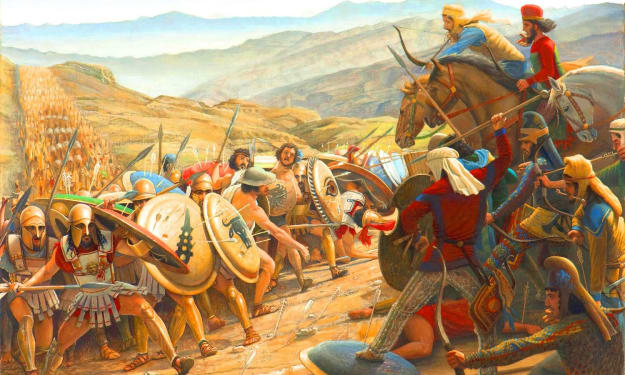
History has a unique way of demonstrating that no empire, regardless of its size or strength, is truly invulnerable. Time after time, those who seem all-powerful have succumbed, often to adversaries who initially appeared weak and inconsequential. This recurring narrative is prominently showcased in the ascension and decline of empires such as the Akkadian, Assyrian, and the Qin Dynasty in China. However, one of the most remarkable illustrations of this concept is the saga of the Persian Empire, a giant of the ancient world, ultimately defeated by a coalition of small, resolute Greek city-states. This narrative encompasses the Greco-Persian Wars, a series of battles that not only influenced the ancient world but also established the groundwork for Western civilization as we recognize it today.
By A História2 years ago in History
The Thousand and One Nights Tales from the Arab World and India
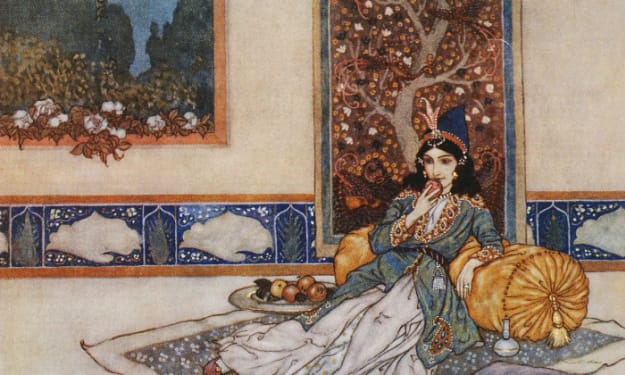
The Thousand and One Nights, or the Arabian Nights, is an expansive compilation of folk tales stretching out over generations. The best known version is a sort of compendium of tales of diverse provenance, from the Middle East to India, and is often credited with popularizing stories like Aladdin, Ali Baba, and Sindbad the Sailor, tales that have all but become synonymous with Western folklore.
By Rohitha Lanka2 years ago in History
The Rise and Fall of the Mughal Empires
One of the most remarkable empires in world history, the Mughal Empire spread across the Indian subcontinent from the early years of the 16th century. At its height, it ruled almost the entire Indian subcontinent, with access to immense riches and military strength.
By Rohitha Lanka2 years ago in History
The Nomadic Empire
For millennia, the vast expanse of the Asian steppes has been a crucible of human history. Its strategic location and abundant resources made it a prize fiercely contested by numerous ancient peoples. Among these, the Scythians stand out as one of the most influential civilizations, leaving an indelible mark on both Asia and Europe. Their nomadic lifestyle, warrior culture, and intricate artistry not only defined their own era but also shaped the civilizations that followed. This is the story of how the Scythians, a people of the open plains, became a force to be reckoned with, defying empires and leaving a legacy that endures to this day.
By A História2 years ago in History
The Cursed Manuscript: A Tale of Knowledge and Greed
The Forbidden Library An ancient library was hidden deep within the Sultan's palace in the grand city of Samarkand, which was known for its scholars and wisdom. It was said that there were books on medicine, astronomy, and even long-forgotten information from ancient civilizations. On the other hand, there was one book that no one dared touch. The Manuscript of Al-Zahir was encased in a golden chain-wrapped glass case. It was said to be cursed, holding knowledge so powerful that it could either bless a man with unlimited wisdom or destroy him completely.
By Md Tofayel Ahmed2 years ago in History
Turkey's Underworld
What Is Derinkuyu All About Derinkuyu's Underground City Discovering An Underground City Beneath Cappadocia Nestled in Turkey’s Cappadocia region is a city so enigmatic that it had been lost to history for centuries. And Derinkuyu, buried 18 stories beneath the surface, is as much of an archaeological feat as it is a tale of survival, adaptation, and the mysteries of a lost civilization.
By Rohitha Lanka2 years ago in History
The Amazon rainforest
The Amazon rainforest, often referred to as the "lungs of the Earth," is a sprawling, vibrant ecosystem that spans across nine South American countries: Brazil, Peru, Colombia, Venezuela, Ecuador, Bolivia, Guyana, Suriname, and French Guiana. Covering over 5.5 million square kilometers, it is the largest tropical rainforest in the world, home to unparalleled biodiversity and a rich history shaped by both nature and human activity. The history of the Amazon forest dates back tens of millions of years. Scientists believe the rainforest began forming during the Eocene epoch, around 55 million years ago, when the Earth's climate became warm and humid enough to support vast, dense forests. Over time, the Amazon Basin evolved into an intricate web of rivers, trees, and wildlife, creating one of the most complex ecosystems on the planet. Long before European explorers set foot in South America, the Amazon was inhabited by Indigenous peoples who thrived within the forest for thousands of years. Archaeological evidence suggests that complex societies existed in the region as far back as 11,000 years ago. These ancient civilizations developed sophisticated agricultural practices, such as terra preta (dark earth) farming, which involved enriching the soil with charcoal and organic matter to boost its fertility. This contradicts the once-held belief that the Amazon was a pristine wilderness untouched by human hands. The arrival of European explorers in the 16th century marked a dramatic shift in the history of the Amazon. Spanish conquistador Francisco de Orellana was the first European to navigate the entire length of the Amazon River in 1542. During his journey, he reported encountering large, organized Indigenous communities, though many of these populations were later decimated by disease, violence, and colonization. By the 19th century, the Amazon became a focal point of global interest due to the rubber boom. The discovery of natural latex, harvested from rubber trees, fueled a period of intense economic exploitation. Cities like Manaus and Iquitos flourished, while Indigenous communities were often subjected to forced labor and brutal conditions. The rubber boom eventually collapsed in the early 20th century when rubber plantations in Southeast Asia outcompeted the Amazon's supply. Throughout the 20th century, the Amazon faced increasing threats from deforestation, driven by agriculture, logging, mining, and infrastructure projects. The construction of the Trans-Amazonian Highway in the 1970s opened vast stretches of the forest to human activity, accelerating habitat destruction. Between 1970 and 2019, the Amazon lost around 17% of its forest cover, raising global concerns about climate change and biodiversity loss. Despite these challenges, the Amazon remains a crucial part of the Earth's ecological balance. It produces 20% of the world’s oxygen and stores vast amounts of carbon, helping to mitigate global warming. The rainforest is home to more than 10% of the planet’s known species, including jaguars, anacondas, toucans, and countless medicinal plants. In recent decades, conservation efforts have gained momentum. Indigenous groups, environmental organizations, and governments have pushed for sustainable practices and the protection of the Amazon’s biodiversity. Countries like Brazil have established national parks and Indigenous reserves, though enforcement remains a persistent challenge due to illegal logging and land grabs. The history of the Amazon rainforest is a powerful reminder of the delicate relationship between nature and humanity. It tells a story of ancient civilizations, colonial exploitation, and modern struggles for preservation. As the world grapples with climate change, the future of the Amazon stands at a crossroads, highlighting the urgent need to safeguard this irreplaceable treasure for generations to come.
By Budhirai Tripura2 years ago in History