General
Hijacked at Sea: The Maersk Alabama Story. AI-Generated.
### Key Points - On April 8, 2009, the Maersk Alabama, a U.S.-flagged ship carrying humanitarian aid from Oman to Kenya, was hijacked by Somali pirates 440 km off Somalia’s coast. - The crew tried to defend themselves using water hoses and hiding in a safe room, but pirates boarded, taking Captain Richard Phillips hostage. - The U.S. Navy intervened, and on April 12, 2009, Navy SEALs rescued Phillips, killing three pirates, with one surrendering and later imprisoned. - It seems likely that this event highlighted the need for better ship security, leading to changes like armed guards on cargo ships. ### The Hijacking Event The Maersk Alabama, a large cargo ship, was on a mission to deliver aid when it faced a terrifying attack. On April 8, 2009, while 440 km from Somalia, the crew spotted a speedboat approaching fast. The ship’s top speed of 18-20 knots couldn’t outrun the pirates’ 25-knot boats, leaving them vulnerable. Captain Richard Phillips sounded the alarm, and the crew rushed to a safe room, with 14 of 19 members making it there. Two hid elsewhere, while Phillips and two others stayed on the bridge, the ship’s command center at the front. ### Crew’s Defense and Hostage Situation The crew had few options to fight back. They used water hoses to try and stop pirates from climbing aboard, but it wasn’t enough. A pirate with an AK-47 rifle boarded, and the helmsman rocked the ship side to side to throw them off. Despite their efforts, the pirates took control, capturing Phillips and forcing him into a lifeboat, demanding ransom. The crew managed to capture one pirate briefly during a hostage exchange attempt but released him under threat. ### Rescue and Aftermath The U.S. Navy arrived, with ships like the USS Bainbridge and Navy SEALs joining the effort. On April 12, 2009, when a pirate pointed a gun at Phillips, SEAL snipers killed three pirates simultaneously, rescuing him unharmed. One pirate surrendered, later sentenced to 33 years in prison in 2011. This event, the first U.S.-flagged ship hijacked by pirates in nearly two centuries, led to increased security measures, like armed guards on ships, reducing pirate attacks off Somalia. An unexpected detail is that the crew later sued Maersk Line, alleging Phillips ignored warnings to stay farther from the coast, settling for an undisclosed sum. This shows the complexity of responsibility in such incidents. --- ### Survey Note: Detailed Analysis of the Maersk Alabama Hijacking The Maersk Alabama hijacking on April 8, 2009, stands as a significant maritime security event, capturing global attention and highlighting the persistent threat of piracy off Somalia. This incident involved the U.S.-flagged cargo ship Maersk Alabama, which was en route from Ṣalālah, Oman, to Mombasa, Kenya, carrying humanitarian aid. The ship, measuring 508 feet (155 meters), had 21 Americans onboard, including Captain Richard Phillips. The attack occurred 240 nautical miles (440 km) southeast of Eyl, Somalia, a region notorious for pirate activity due to decades of instability and lack of policing in Somali waters. #### Incident Overview and Context The hijacking began when the crew sighted a speedboat with four armed pirates, each carrying AK-47s, approaching on the morning of April 8, 2009. This was not the first close call; the crew had evaded similar boats twice in the previous 24 hours, but this time, escape was impossible. The Maersk Alabama’s top speed of 18-20 knots was outpaced by the pirates’ speedboats, capable of over 25 knots, leaving the ship vulnerable. Captain Phillips, aware of the danger, sounded the alarm, initiating a desperate defense. #### Crew Actions and Defense Strategies The crew’s initial response included shooting flares and spraying fire hoses to ward off the attackers, aligning with the user’s mention of water hoses as a defense method. Of the 19 crew members, 14 managed to retreat to a fortified steering room, a safe haven designed for such emergencies. Two others hid elsewhere, while Phillips and two companions remained on the bridge, the ship’s highest point and command center at the front. The helmsman attempted to disrupt the pirates by rocking the ship side to side, a tactic to prevent boarding, but it proved ineffective against the determined attackers. Two pirates successfully boarded, marking the first U.S.-flagged ship boarded by pirates in nearly two centuries, a detail confirmed by multiple sources. The crew’s efforts to disable the ship and send distress calls were critical. They ambushed and briefly captured one pirate during an attempted hostage exchange, later releasing him when the pirates threatened Phillips. This back-and-forth highlighted the crew’s resilience, using limited tools like water hoses and their wits to resist. #### Pirate Actions and Hostage Crisis The pirates, demanding a $2 million ransom, forced Phillips into an 18-foot (5.5-meter) covered lifeboat after their initial boat capsized. This escalation intensified the standoff, with the pirates running out of khat, a stimulant, by April 11, allowing the U.S. ship to attach a tow cable. The hostage situation drew global attention, with Phillips’ life hanging in the balance. #### Rescue Operation and Resolution The U.S. Navy’s response was swift, with the USS Bainbridge reaching the scene on April 9, joined by other vessels and aircraft. The Maersk Alabama was ordered to continue to Kenya with an armed sailor security detail, a precursor to broader security changes. On April 10, Phillips attempted to escape by jumping overboard but was recaptured, adding to the tension. By April 11, Navy SEAL Team 6 arrived from Virginia, and on April 12, the crisis ended dramatically. One pirate surrendered, requesting medical treatment, and was later sentenced to 33 years in prison in 2011. Simultaneously, SEAL snipers killed three pirates when one pointed a gun at Phillips, believing imminent danger, ensuring his safe rescue. #### Aftermath and Broader Implications The aftermath revealed controversies, with the crew alleging Phillips failed to heed warnings to stay at least 600 miles from the coast, a decision criticized later. They sued Maersk Line in 2009, settling for an undisclosed sum, highlighting debates over captain responsibility. This incident, detailed in Phillips’ book *A Captain’s Duty* (2010, co-written with Stephan Talty) and adapted into the 2013 film *Captain Phillips* starring Tom Hanks, spurred significant changes. Post-hijacking, cargo ships began employing armed security details, reducing pirate attacks off Somalia, a shift noted in subsequent reports. An unexpected detail is the crew’s legal action, underscoring the complexity of maritime safety and corporate accountability. This event, the sixth vessel attacked in a week at the time, underscored the peak of Somali piracy in the late 2000s, with ransoms previously reaching tens of millions, as per historical records. #### Table: Key Timeline of Events | **Date** | **Event** | |----------------|---------------------------------------------------------------------------| | April 8, 2009 | Pirates board Maersk Alabama, crew defends with hoses, Phillips taken hostage. | | April 9, 2009 | USS Bainbridge arrives, standoff begins. | | April 10, 2009 | Phillips jumps overboard, recaptured by pirates. | | April 11, 2009 | Navy SEAL Team 6 arrives, pirates run out of khat, tow cable attached. | | April 12, 2009 | SEAL snipers kill three pirates, one surrenders, Phillips rescued. | | 2011 | Surrendered pirate sentenced to 33 years in prison. |
By Muhammad Waseem khanabout a year ago in History
"The Greatest Invasion in History: Empires at War"
The Most Significant Invasions in History: When Empires Transformed the World Throughout the annals of history, formidable empires have endeavored to expand their domains through extensive invasions. These conquests shaped civilizations, redefined boundaries, and transformed cultures permanently. Below are some of the most consequential invasions in history that shaped the trajectory of humanity. 1. The Mongol Invasions (13th-14th Century) One of the most extensive and lethal military campaigns in history was orchestrated by Genghis Khan and his Mongol legions. Beginning in 1206, the Mongols invaded China, the Middle East, and Europe, establishing the largest continuous empire the world had ever witnessed. Cities such as Baghdad, Kyiv, and Samarkand were destroyed, resulting in the loss of millions of lives. The Mongols' exceptional equestrian skills, composite bows, and psychological warfare strategies rendered them nearly invincible. 2. The Roman Invasions (1st Century BC - 5th Century AD) The Roman Empire expanded through numerous invasions, but perhaps its most renowned campaigns were Julius Caesar’s conquest of Gaul (58-50 BC) and the invasion of Britain in 43 AD. Rome’s legions overwhelmed local tribes with superior discipline, engineering, and organization. Over the centuries, Rome incorporated extensive territories from Spain to the Middle East, disseminating its language, culture, and laws. 3. The Islamic Conquests (7th-8th Century) Following the emergence of Islam in the Arabian Peninsula, Muslim armies swiftly expanded into the Persian and Byzantine Empires. Under the Rashidun and Umayyad Caliphs, Islamic forces subdued Persia, North Africa, and Spain in less than a century. The proliferation of Islam, Arabic culture, and the establishment of the Caliphate transformed the political landscape of the medieval world. 4. The Norman Invasion of England (1066) One of the most renowned invasions in Western history, the Norman conquest of England by William the Conqueror in 1066, irrevocably altered England. The Battle of Hastings resulted in the defeat of Anglo-Saxon King Harold II, ushering in a new ruling class, the introduction of feudalism, and significant cultural shifts that continue to impact England today. 5. The Spanish Conquest of the Americas (15th-16th Century) The Spanish Empire, led by explorers like Hernán Cortés and Francisco Pizarro, seized extensive territories in the Americas. The Aztec and Inca Empires succumbed to Spanish forces due to superior weaponry, alliances with local tribes, and the catastrophic effects of European diseases. The conquest resulted in immense wealth for Spain but at the expense of indigenous civilizations and cultures. 6. Napoleon’s Invasion of Russia (1812) Napoleon Bonaparte’s ambitious endeavor to conquer Russia became one of the most significant military catastrophes in history. In 1812, he commanded over 600,000 troops into Russia, anticipating a swift triumph. However, severe winters, the scorched-earth tactics employed by the Russian army, and logistical shortcomings decimated his forces, culminating in a humiliating retreat and weakening the French Empire. 7. Hitler’s Invasion of the Soviet Union (1941) Operation Barbarossa, Nazi Germany's incursion into the Soviet Union in 1941, constituted the most extensive military undertaking in history. Hitler's objective was to seize Moscow and eradicate communism, yet the expansive Soviet terrain, severe winters, and resolute resistance reversed the momentum against Germany. The unsuccessful outcome of this invasion signaled the onset of the decline for Nazi Germany in World War II. Conclusion From the Mongols to the Nazis, history is replete with empires striving to expand through monumental invasions. While some of these conquests resulted in innovation and cultural interchange, others caused profound suffering and devastation. Each invasion imparted a significant influence, molding the world as we recognize it today.
By Say the truth about a year ago in History
The Great Pyramid: Tomb or Ancient Power Plant?
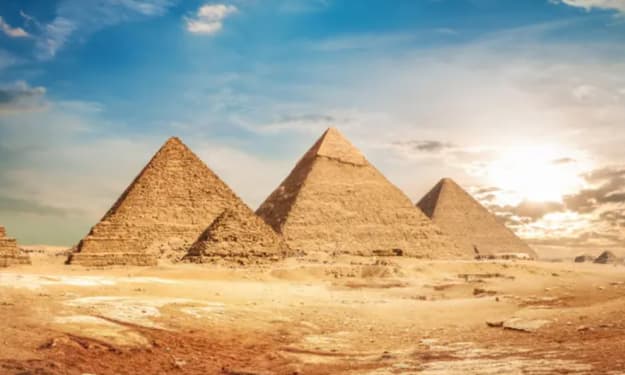
For centuries, the Great Pyramid of Giza has stood as an enduring marvel, its towering presence sparking awe and curiosity. Mainstream history tells us it was built 4,500 years ago as a grand tomb for Pharaoh Khufu, a monument to honor a god-king of Egypt’s Fourth Dynasty. Yet, a closer look reveals a structure that defies the conventions of a burial site-lacking artifacts, hieroglyphs, or the ornate decorations typical of Egyptian tombs. No mummies have ever been found inside any pyramid, including this one. So, if it wasn’t a tomb, what was it? Some daring thinkers, including the visionary Nikola Tesla, suggest an astonishing possibility: the Great Pyramid was a colossal power plant, tapping into the Earth’s energy and distributing it wirelessly across the globe-an idea that might have been conceived not 4,500 years ago, but perhaps 13,500 years in the distant past.
By KWAO LEARNER WINFREDabout a year ago in History
The Tsar and the Empress
Chapter One: The Beginning of the Plot In ancient times, when great empires ruled the world, there was a powerful empire known as the "Empire of Nova". Empress Helena ruled with wisdom and fairness, while Caesar Marcus managed the affairs of the army with an iron fist. Their palace, the Grand Palace, was surrounded by secrets and mysteries.
By mohamed elsayedabout a year ago in History
A New Beginning
As Sarah stood in front of this cool Jana Armagen mirror, she didn't recognize the woman staring at her. Reflexes showed tired faces, pressured by stress and fatigue. A few pounds were watching for years, and although often out of breath, it was just my mailbox. But it wasn't just her physical health that scored the goal - her mind and her heart were dulled, straining her demanding work and her endless responsibility.
By Liton Biswasabout a year ago in History
The Timeless History of Koi Fish
Koi fish are more than just ornamental pond fish; they are a symbol of perseverance, luck, and prosperity. Their vibrant colors and graceful movements have fascinated collectors and enthusiasts for centuries. The history of koi fish is a tale of evolution, culture, and passion that spans from ancient China and Japan to modern-day collectors like Mike Savage from New Canaan, who appreciates their beauty and significance.
By Mike Savage New Canaanabout a year ago in History
Raccoon Removal: Strategies for Pre-Winter Effective Wildlife Control
Raccoons are clever, resourceful animals that can easily invade your home, particularly as winter approaches. Pre-winter raccoon removal protects your property and ensures a safe, cozy environment. These nocturnal creatures often seek shelter in attics or basements, leading to property damage and health risks.
By SEO agencyabout a year ago in History
The Elamites
Beneath the passage of time lies the ancient Elamites, one of history's most intriguing civilizations. Thriving in the rugged highlands of the Iranian plateau, they exerted influence that extended well beyond their own territory, significantly impacting the cultural and political dynamics of Mesopotamia and adjacent regions. However, despite their importance, the Elamites often remain eclipsed by their more renowned neighbors—the Sumerians, Babylonians, and Assyrians.
By A Históriaabout a year ago in History
Life Inside The Victorian Prisons
“It is not the prisoners who need reformation, it is the prisons “ — Oscar Wilde The Victorian Era reminds us of the “Class System”, when the wealthy lived in elegant surroundings and had plenty to eat and beautiful clothes to wear. The “Poor” class had virtually nothing to eat, nothing to wear and very often nowhere to live. When ‘prison’ was a better alternative to living ‘at home’, it does make us wonder (in 2025), just what was life like in Victorian prisons (in the 1800s)?
By Ruth Elizabeth Stiffabout a year ago in History
"Beneath the Sands of Time: The Controversial Discovery of a Subterranean Metropolis Under Egypt’s Pyramids"
The Eternal Allure of Egypt’s Mysteries The Great Pyramids of Giza, guardians of the desert for over 4,500 years, have long captivated humanity. These colossal structures, aligned with celestial precision, are testaments to the sophistication of ancient Egyptian civilization. Yet, as modern technology peels back layers of sand and stone, a provocative theory has emerged: beneath the pyramids and the Sphinx lies a sprawling subterranean network—a “hidden city” that could redefine Egyptology. This claim, however, has ignited fierce debate among experts, pitting traditional archaeologists against interdisciplinary researchers armed with radar scans and AI-driven simulations.
By Nada solimanabout a year ago in History