General
2025 Youth & Health: Discover the Fountain of Youth. AI-Generated.
2025 Youth & Health: Discover the Fountain of Youth Looking ahead to 2025, we all want to stay young and healthy. The idea of finding the "fountain of youth" has changed. Now, it's about the newest wellness trends and tech that help us live longer.
By Junayed Ahmedabout a year ago in History
Lets explore about Nasa
We know that Nasa stands for the national aeronautic and Space administration . The National Aeronautics and Space Administration (NASA) is the United States government agency responsible for the nation's civilian space program and for aeronautics and aerospace research. Established on July 29, 1958, NASA has led many of the world’s most groundbreaking space missions and scientific discoveries.
By Nafis Hossenabout a year ago in History
Old Rules
In the heart of the Swat Valley, nestled between mountains and rivers, lay a quiet village named Derai. Known for its beautiful orchards and strong community spirit, Derai was also known for something else: its old rules. These rules were written down over a hundred years ago by the village elders, etched into stone and memorized by every household. They governed everything—from how land was divided to how disputes were settled. The rules forbade things like girls going to school, the use of mobile phones, or any change in farming methods. The villagers called it Riwaj, the sacred tradition. For years, the old rules served the village well. But as the world outside began to change, the youth of Derai began to question them. Among them was a boy named Ayan. At seventeen, Ayan was curious, bold, and smart. He loved reading, especially books about science and technology. His father, Gul Rahman, was a farmer and a firm believer in the old rules. He often warned Ayan, “The old ways are the best ways. Don’t bring trouble by challenging them.” But Ayan couldn’t help himself. One day, Ayan brought home a solar-powered water pump he had built using old parts and some help from YouTube videos. The pump could help the farmers irrigate their land more efficiently, especially during power outages. Excited, he demonstrated it to his father. Gul Rahman was stunned. It worked. The water flowed steadily from the pump, and the fields drank it eagerly. But instead of joy, fear settled on his face. “If the elders see this, they’ll say it’s against the Riwaj,” he warned. “They’ll accuse you of bringing outside influence.” “But Baba,” Ayan replied, “isn’t it better than letting crops die? Isn’t helping the village more important than following old rules blindly?” Gul Rahman had no answer. News of the pump spread quickly, and within days, the village jirga (council) summoned Ayan. The jirga consisted of white-bearded men who sat on carved wooden chairs, with the Riwaj stones laid out before them. The head of the jirga, Haji Meeran, spoke first. “Young man, we heard you have brought something new into our village. A machine that defies tradition. Is this true?” “Yes, Haji Sahib,” Ayan replied respectfully. “But it is not to defy. It is to improve.” Another elder scoffed. “Improvement? Our ancestors survived without machines. So can we.” “But our ancestors also walked for miles to fetch water. Do we still do that?” Ayan asked. “They lit lamps with oil. Should we break our bulbs and go back to darkness?” A silence fell. Ayan continued, “Respecting our traditions doesn’t mean we stop thinking. We can honor the past and still move forward. My invention doesn’t break Riwaj—it saves our land.” Some elders looked at each other. Others frowned. Then Haji Meeran stood up. “The boy speaks with wisdom. Maybe it is time we review the old rules. The world is changing. Perhaps we too must adapt, not abandon our ways, but evolve them.” It was a turning point. For the first time in decades, the jirga agreed to form a small committee of young and old members to review the Riwaj. They decided that rules harming progress or education would be discussed and possibly revised. Girls were slowly allowed to attend the village school. Farmers started adopting modern techniques. Mobile phones were still restricted in some areas, but the wall was cracking. The village began to breathe. Gul Rahman watched his son with pride. “You did what I was afraid to even imagine,” he said one evening. “I only asked questions,” Ayan replied, smiling. “Sometimes, that’s all it takes to start change.” Years later, Derai became known not just for its orchards, but also as a model village in the Swat Valley—where old rules were honored, but not worshipped, and where new ideas were welcomed, not feared. And on one of the original Riwaj stones, a new line was carved:
By Hazrat bilal about a year ago in History
Tutankhamun: The Boy King and the Forgotten Truth of the Sphinx
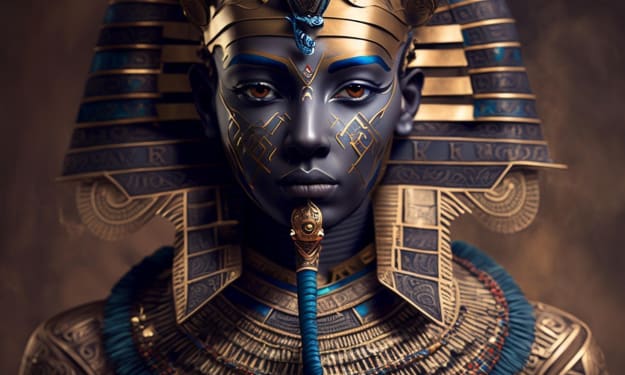
Tutankhamun: The Boy King and the Forgotten Truth of the Sphinx When Tutankhamun, the boy pharaoh, was discovered in 1922 by Howard Carter, his tomb stunned the world. Sealed for over 3,000 years, it was a time capsule from a forgotten era. Gold, art, and strange symbols filled the chambers. But what the world saw was just the surface.
By The Secret History Of The Worldabout a year ago in History
Free Palestine, Safe Palestine: A Call for Justice, Peace, and Human Dignity . AI-Generated.
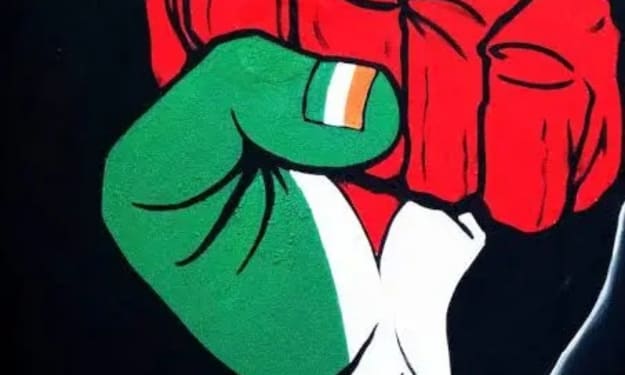
Free Palestine, Safe Palestine: A Call for Justice, Peace, and Human Dignity The phrase "Free Palestine, Safe Palestine" conveys a profound and pressing message. They are more than just a political slogan; rather, they are a human demand for freedom, safety, justice, and dignity for millions of people who have been subjected to occupation, violence, and displacement for decades. This message is about more than geography; it is about human rights, equality, and the dream of a peaceful future. Recognizing the Conflict The Israeli-Palestinian conflict is one of the most long-standing and deeply rooted struggles in the modern world. It began in the early 20th century and escalated dramatically with the creation of the state of Israel in 1948. For Palestinians, this event is remembered as the Nakba (Arabic for “catastrophe”), when more than 700,000 people were forced from their homes and became refugees. That wound has never healed. While they wait for permission to return home, many of these refugees and their descendants continue to live in camps in Lebanon, Jordan, Syria, Gaza, and the West Bank. Since 1967, Israel has occupied the West Bank, East Jerusalem, and Gaza. Though Israel withdrew settlers and troops from Gaza in 2005, it has continued to control Gaza’s airspace, coastline, and borders, enforcing a blockade that has crippled the economy and caused immense human suffering. Palestinians face restrictions on movement, home demolitions, military raids, and violent settler attacks in the West Bank, where illegal settlements continue to grow. What Does “Free Palestine” Mean? Freedom from military occupation, oppression, and conditions resembling apartheid is referred to as "Free Palestine." It means Palestinians should be able to: Live without fear of bombings, checkpoints, or demolitions. Travel freely in and out of their cities and homes. Access clean water, education, healthcare, and opportunities. Elect their own leaders and govern their own land. Either return to their ancestral homes or receive a fair settlement. It does not mean the destruction of Israel or harm to innocent civilians. The objective is justice, not retribution. Peace based on truth, equality, and dignity for all is the goal, not conflict. What Does “Safe Palestine” Mean? Safety is a basic human right. However, for many Palestinians, safety is a far-off goal. In Gaza, over 2 million people live under siege. They are subjected to frequent military assaults, do not have access to clean water, only have a few hours of daily electricity, and have severe shortages of medical supplies. In the West Bank, Palestinians must pass through military checkpoints daily. Children are often arrested. Homes are being bulldozed. Farmlands are taken. Families live with the constant threat of violence, not only from Israeli forces but also from extremist settlers. To say “Safe Palestine” is to demand: An end to violence against Palestinian civilians. safeguarding of Palestinian hospitals, schools, and homes. Accountability for war crimes and human rights violations. Psychological safety for children growing up in fear. Respect for international laws that guarantee the rights of people under occupation. The Human Cost The human cost of this conflict is staggering. Thousands of civilians — including women and children — have died in wars, airstrikes, and clashes. Generations have grown up knowing nothing but trauma, poverty, and fear. Families are torn apart. Education is interrupted. Dreams are shattered. However, Palestinians continue to resist through culture, art, storytelling, hope, and protests in addition to activism. Despite the suffering, they continue to love, laugh, raise families, and dream of a better life. A Global Movement The slogan "Free Palestine, Safe Palestine" has spread all over the world. From the streets of London and New York to villages in South Africa and South America, millions have raised their voices in support of Palestinian rights. They are saying clearly: Enough is enough. International organizations like Amnesty International, Human Rights Watch, and the United Nations have documented numerous violations against Palestinians and have called for an end to the occupation and blockade. Many countries and individuals have started to boycott companies and institutions that profit from or support the occupation. Even within Israel, there are voices — including Jewish Israelis — who speak out against the occupation and support Palestinian freedom. They understand that true peace and safety cannot exist when one group dominates another. Equality and justice are the only way forward. Why Justice is the Key to Peace Peace without justice is temporary and fragile. Lasting peace must be based on truth and fairness. That means acknowledging the suffering of Palestinians, recognizing their right to exist, and ensuring they have the same rights and freedoms as anyone else. Justice means: Ending the occupation. Stopping illegal settlements. Giving Palestinians control over their own borders and resources. allowing refugees to return or receive compensation Holding those who commit crimes against civilians accountable. Only through justice can trust be rebuilt. Only through freedom can peace take root.
By Ekramul Hassanabout a year ago in History
Akhenaten: The Heretic Pharaoh and the God from the Sun
Akhenaten: The Heretic Pharaoh and the God from the Sun In the golden sands of ancient Egypt, a pharaoh rose who defied the gods, rewrote the spiritual order, and may have unlocked secrets far beyond our world. His name was Akhenaten, and his reign marked one of the most mysterious and radical chapters in Egyptian history. But was his "one god" merely a religious experiment… or something more?
By The Secret History Of The Worldabout a year ago in History
Global Climate Change
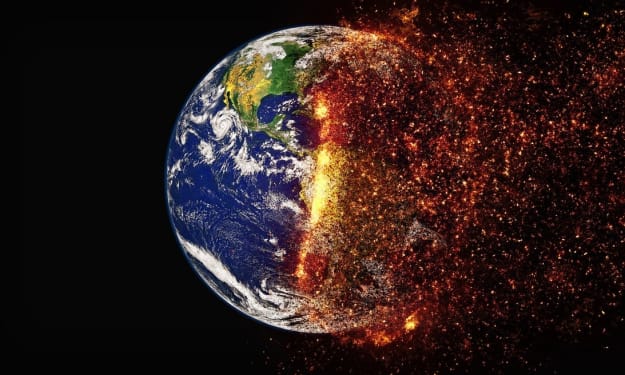
Climate Change on a Global Scale: A Key Challenge of Our Time Global climate change is one of the most pressing challenges facing humanity today. It refers to the long-term alterations in temperature, precipitation, wind patterns, and other aspects of the Earth's climate system. Human activities, particularly the release of greenhouse gases like carbon dioxide, methane, and nitrous oxide, are largely to blame for these shifts. Global warming is the result of heat being trapped in Earth's atmosphere by these gases. The impacts of climate change are far-reaching and affect every region of the world, disrupting ecosystems, economies, and societies.
By Md Sohrab hossainabout a year ago in History
The great Taj
From afar, Ravi had always admired the Taj Mahal. As a child, he had heard stories of the majestic marble monument—the "Crown of Palaces"—built by an emperor for his beloved wife. Stone and beauty brought love and loss together there. But today, Ravi was standing before it, finally seeing the intricate carvings, the towering dome, and the shimmering reflection in the long, still pool.
By Snigdha Ahmed about a year ago in History