General
The Myth of Isis
Chapter One: The Beginning of Bliss In the heart of ancient Egypt, where the Blue Nile winds around towering temples and sandy deserts, Queen Isis and her husband Osiris lived a perfect marital life. One day, they sat together in the garden of their palace, discussing the future of Egypt and the plans they would set to build a great civilization.
By mohamed elsayedabout a year ago in History
Muhammad's (peace be upon him) Finest Qualities
The last messenger of Islam, Prophet Muhammad (peace be upon him), was sent by Allah out of compassion for all living things. He was born in Mecca in 570 CE and led a life marked by honesty, kindness, modesty, and resilience. His words (Hadith), deeds (Sunnah), and character have influenced billions throughout history and still serve as a source of guidance today.
By nurul alamabout a year ago in History
The Cat and the Mouse
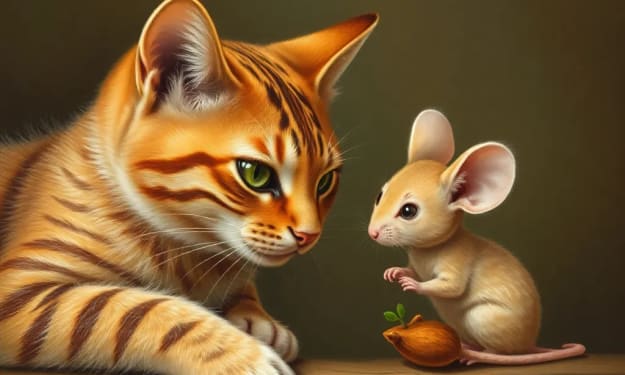
In a quiet old cottage tucked at the edge of a sun-dappled forest, there lived a cat named Silas. With fur as black as midnight and eyes sharp as polished emeralds, Silas was known to be a skilled hunter. He moved like smoke—silent, swift, and always watching. The humans who lived in the cottage were away more often than not, leaving Silas in charge, and he liked it that way. It meant the house was his kingdom.
By ukasha khanabout a year ago in History
The whispering banyan tree.
Within the heart of a calm town in West Bengal stood an enormous, old banyan tree. Its roots turned just like the fingers of overlooked mammoths, coming into the soil and sky. The villagers called it “Boroboro Gachh,” and they accepted it had a soul.For eras, individuals whispered stories almost to the tree. A few said it ensured the town. Others claimed it tuned in. But no one had ever demonstrated anything—until Arman arrived.Arman was not a villager. He was a 22-year-old college understudy from Kolkata, examining old stories. When he first heard of the banyan tree, he thought it would be just another town myth. But something about the way the ancient postmaster talked of it caught his interest.“It talks when the moon is full,” the postmaster had said, his eyes cloudy with age. “But not in words. In whispers.”Charmed, Arman pressed his sacks and traveled to the town. The individuals were inviting but cautious. They told him stories of how the tree had spared lives amid surges, how it shined faintly on certain evenings, and how feathered creatures never settled in its branches—but none would go close to it after sunset.Arman giggled it off. “Superstition,” he said to himself. But deep down, he wasn't beyond any doubt.That night, beneath a full moon, Arman set up camp close the tree. He brought a scratchpad, a voice recorder, and his camera. The villagers cautioned him once more, but he waved them off considerately.Midnight arrived. Crickets sang. The wind moved delicately. The tree stood silent—just a tree.But then… the discussion changed.It wasn't colder, but heavier. As in the event that the world was holding its breath. Arman looked up. The moonlight sparkled on the roots. And after that, exceptionally faintly, he listened to it:“Arman…”He solidified.It was a whisper. Delicate. Like wind passing through ancient leaves—but clearer.“Who's there?” he inquired, checking the obscurity.No answer.He checked his recorder. It was still running. He rewound some seconds and played it back.“Arman…”“Why have you come?”His heart dashed. The voice was there. But no one was around.Swallowing his fear, he sat back down and whispered, “I need to know your story.”Hush.Then:“Listen.” Over the following few hours, Arman listened to pieces of a tale—fragmented whispers carried by the wind. A story of a lady named Meera, who had once lived within the town centuries back. A healer, a kind soul. But amid a starvation, she was faulted for awful good fortune and blamed for witchcraft. The villagers, frantic and frightened, tied her to the banyan tree and cleared out of there.She passed on beneath the moon, shattered.The tree, fed by her blood, took in her torment. And her soul.Since at that point, Meera's soul had whispered to those who listened—not for exact retribution, but for recognition.“They overlooked me,” the tree whispered. “But I keep in mind them all.”Arman sat still, overpowered by distress he couldn't clarify. He saw flashes in his mind—of Meera's life, her thoughtfulness, and her passing. And the centuries of hush that followed.When first light drew closer, the whispers faded. The weight within the discussion lifted.The tree stood still once more.Arman didn't take off from the town. He remained for a week, tuning in each night, learning more about approximately Meera. He composed everything down. His recorder filled with ghostly, whispering voices. But the villagers refused to tune in.“They'll think you're mad,” the postmaster cautioned.“I don't care,” Arman answered. “The world ought to know.”When he returned to Kolkata, Arman distributed a paper titled “Whispers of the Forgotten.” It picked up consideration from teachers, history specialists, and otherworldly searchers. Numerous people rejected it as fiction. A few accepted. But Arman didn't care. He had listened to the truth.He returned to the town once a year, always on the night of the total moon. He sat beneath the banyan tree, not anxious, and tuned in to Meera's voice.One year, he brought blossoms.“I keep you in mind,” he whispered, putting them at the base of the tree.The branches overhung gently—though the wind was still.And from deep inside the roots, a whisper came:“Thank you.”
By Sumaiya’s Wordboxabout a year ago in History
Biography of the Prophet (PBUH) at a Glance
Why should we read the Sirat? Humans are naturally very imitative. From the moment of birth, a child imitates his parents. When he grows up, he imitates his playmate or friend. When he grows up, he imitates a person of his choice in the path of life. This imitation and imitation, a person carries his nature from the moment of birth. Now the question is, is there really such a person? Who can be an example for people to follow. Yes, there is. He is our beloved Prophet Hazrat Muhammad (PBUH). Allah the Almighty says, And indeed, you are of great character. (Surah 24 An-Nur, verse 56). It is stated in the Hadith Sharif, narrated by Hazrat Anas (RA), who said, The Prophet (PBUH) said, "None of you will truly believe until I am more beloved to him than his father, his children and all of mankind." (Bukhari Sharif).
By Md Abu Daudabout a year ago in History
Malik Ambar (Abyssinian Warrior in India)
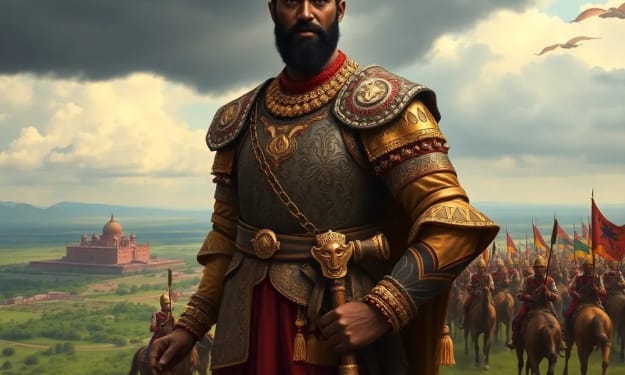
Introduction In the shifting sands of 16th and 17th-century Deccan India, a remarkable figure emerged from the shadows of slavery to challenge the might of the Mughal Empire: Malik Ambar. Born in Ethiopia (Abyssinia) and sold into slavery as a child, Malik Ambar rose to become a legendary general, strategist, and de facto ruler of the Ahmadnagar Sultanate in the Deccan. He led fierce resistance against Mughal expansion, pioneered guerrilla warfare tactics in the Indian subcontinent, and became a symbol of brilliance, resilience, and leadership.
By Muhammad Sohailabout a year ago in History
The Dark Night,
It was a night just like any other, the sun had set over the horizon, and the sky was painted with hues of crimson and gold. The sea was calm, and the wind was whispering secrets to the waves. My crew, the Straw Hat Pirates, and I were sailing on our ship, the Thousand Sunny, through the vast ocean, in search of our next adventure.
By MOHAMMED NAZIM HOSSAINabout a year ago in History
ChatGPT’s Rising Costs and Viral Politeness Myth: Why Sam Altman Says It’s All Worth It
The Myth About ChatGPT's Rising Prices and Viral Politeness: Why Sam Altman Claims That It's All Worth It On the internet, there has been a surprising claim that users keep saying "please" and "thank you" and that OpenAI's ChatGPT is spending "tens of millions of dollars" on it. While humorous and clearly exaggerated, the viral statement taps into a very real issue—ChatGPT is getting expensive. Additionally, OpenAI CEO Sam Altman has stated that he is willing to pay that cost. Let’s separate fact from fiction and dive into the real financial stakes behind one of the most popular AI tools on the planet.
By Md Shahadat Hossainabout a year ago in History
Google’s Digital Ad Monopoly Declared Illegal: What the Landmark Ruling Means for the Tech Giant and the Internet
The Landmark Decision Declares Google's Digital Ad Monopoly Illegal: What It Means for the Internet and the Tech Giant In a major blow to one of the world’s most powerful companies, a U.S. federal judge has ruled that Google operates illegal advertising monopolies that have “substantially harmed” customers, competitors, and the online advertising market as a whole. One of the most significant antitrust rulings against a technology company in recent history is this one.
By Md Shahadat Hossainabout a year ago in History
Returning Without Questions
Returning Without Questions They came a little closer to me one odd evening, I recall. Despite its simplicity, the relationship had an odd depth. There was a kind of connection between them that spoke before words, the language of their eyes—even when they were silent in front of each other, they understood each other. However, despite being by each other's side, there are times in life when people move on. There came a time when the two of them moved far away from each other.
By Arshad Aliabout a year ago in History