General
Araújo Porto-Alegre
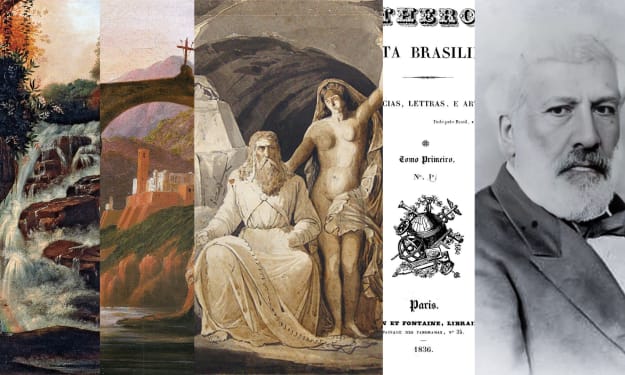
Manuel de Araújo Porto-Alegre stands out as a remarkable figure in Brazilian cultural history. Born in 1806 in Rio Pardo, located in the southern province of Rio Grande do Sul, Porto-Alegre was truly a visionary. As a painter, poet, playwright, architect, critic, diplomat, and professor, his impact was felt across various fields, securing his essential role in shaping Brazil's cultural identity in the 19th century.
By A Históriaabout a year ago in History
Hamid Karzai: The Man Who Stood at the Crossroads of History
Hamid Karzai: The Man Who Stood at the Crossroads of History In the rugged mountains of Kandahar, where the wind carries tales of warriors and poets, a young man once dreamed not of power, but of peace. Hamid Karzai, born in 1957 to a politically prominent Pashtun family, would grow into a figure of resilience, navigating one of the most complex political landscapes of the modern era — Afghanistan.
By Ihsas Feeling about a year ago in History
10 Fun Family Fishing Trips Everyone Will Enjoy
Fishing isn’t just a hobby—it’s an opportunity for families to bond, relax, and explore nature together. Whether you’re a seasoned angler or a beginner looking to cast your first line, planning the perfect family fishing trip can create lifelong memories. From peaceful lakes to exciting deep-sea adventures, here are 10 fun family fishing trips everyone will enjoy.
By Khadim Hussainabout a year ago in History
How to Plan the Perfect Family Fishing Day
Spending time outdoors with your family is one of the best ways to bond, and nothing beats the fun and excitement of a well-planned fishing day. Whether you’re an experienced angler or a beginner, planning a successful family fishing trip involves a mix of preparation, knowledge, and fun. Here's a complete guide on how to plan the perfect family fishing day, from choosing the location to celebrating your catch.
By Khadim Hussainabout a year ago in History
An Epic Medieval Beard Battle Expanded. The War of the Whiskers (1325–1327)
The early 1300s in Europe were marked by rapid social changes and simmering tensions. Feudalism was still the dominant social order, but towns like Compiègne were growing in wealth and influence due to trade. This economic shift empowered a new middle class of merchants, artisans, and guild members, who often challenged the old aristocratic customs.
By History Seekerabout a year ago in History
A Brief History of the Wheel: The Turning Point in Civilization
The wheel is one of the most important inventions in human history. It is a simple object, yet its impact on the development of civilization is profound. The invention of the wheel helped humans move from a primitive lifestyle to a more advanced society. It played a crucial role in transportation, agriculture, industry, and technology, allowing people to achieve things that were once impossible.
By MD BILLAL HOSSAINabout a year ago in History
The Life Journey of Dinosaurs: From Dominance to Extinction
Dinosaurs have captivated the imagination of humans for centuries. These colossal creatures once ruled the Earth, leaving behind fossils and mysteries that continue to inspire scientists, filmmakers, and curious minds. Their story is not just about their size and strength, but also about evolution, survival, and extinction. From their first appearance during the Triassic period to their sudden disappearance at the end of the Cretaceous, the life journey of dinosaurs is one of the most fascinating sagas in the history of our planet.
By ankesh kushwahabout a year ago in History
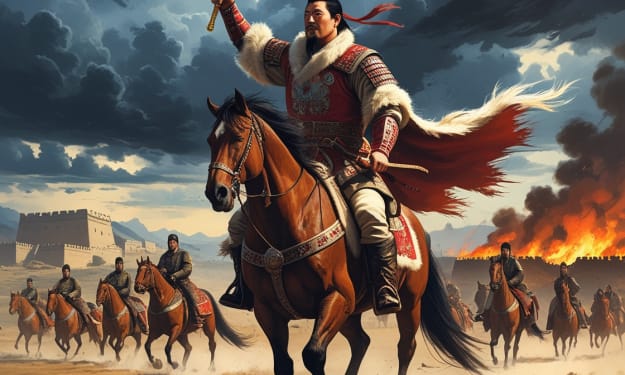
Genghis Khan: The Equine-Born Tempest – Tactics of the Mongolian Warlord Who Dominated the Globe . AI-Generated.
The Ascendancy of a Nomadic Fighting Man Temujin was born circa 1162 into a tribal environment fragmented by familial conflicts and fluctuating alliances. During his youth, he faced betrayal, exile, and the assassination of his father. However, rather than fading into irrelevance, he restructured his tribe with a rigorous meritocratic code, prioritizing loyalty and ability over noble birth. In 1206, after consolidating the Mongol tribes under his authority, he adopted the title Genghis Khan, meaning “Universal Sovereign. ” His metamorphosis from pariah to monarch was merely the commencement. Genghis Khan would proceed to establish an empire that extended from the Pacific Ocean to the fringes of Europe. Tactic 1: Consolidation Through Meritocracy and Discipline Before Genghis Khan could dominate the world, he had to unify Mongolia. His insight lay in recognizing that tribal discord weakened his people. To counter this: He dismantled tribal allegiances and reorganized his military into decimal formations (units of 10, 100, 1,000, and 10,000), integrating fighters from various clans. He advanced officers based on capability, not heritage. Discipline was rigorous, and defection or treason was dealt with promptly. This tactic forged an army of unparalleled loyalty and effectiveness, with each soldier perceiving themselves as part of a grander entity. Tactic 2: Velocity, Mobility, and Communication Mongolian warriors were adept equestrians. Each soldier rode with multiple horses, facilitating swift travel across extensive distances. Their cavalry could traverse 100 miles per day, an extraordinary pace for the era. Genghis Khan further implemented: A courier relay network (Yam), equipped with stations and fresh mounts every 20-40 miles. Signal flags and horns for battlefield coordination. These advancements enabled synchronized assaults, even across significant distances, and facilitated rapid adjustments in real-time, crucial to his triumphs. Tactic 3: Intelligence, Spies, and Psychological Manipulation Prior to engaging in battle, Genghis Khan consistently gathered intelligence: He dispatched spies and traders to survey landscapes, pinpoint weaknesses, and analyze local governance. He employed double agents and misinformation, prompting adversaries to underestimate or misjudge Mongol strength. His strategies of psychological manipulation were equally effective: Towns that opposed were obliterated, and survivors were annihilated, instilling dread ahead of the Mongol forces. Cities that capitulated were often spared and even rewarded. This notoriety preceded the Mongols, frequently resulting in cities yielding without resistance. Tactic 4: Innovation in Siege Warfare Although nomadic, the Mongols swiftly mastered siege methodologies by: Recruiting engineers from China and Persia to construct catapults, battering rams, and explosives. Exploiting Chinese gunpowder to develop early grenades and bombs. Surrounding cities with total encirclement, obstructing supplies and water. The Mongols captured cities once deemed unconquerable, including Zhongdu (Beijing) and the formidable strongholds of the Khwarazmian Empire. Strategy 5: Fragment and Conquer In extensive campaigns, Genghis Khan frequently separated his troops, attacking numerous objectives simultaneously: In Central Asia, he dispatched distinct armies into Transoxiana and Persia, overwhelming the Khwarazmian Sultan. Against the Jin dynasty in China, he employed pincer maneuvers and multi-front offensives. This multifaceted approach disoriented adversaries and undermined coalitions before they could consolidate. Strategy 6: Flexibility and Ruthless Effectiveness Unlike many conquerors, Genghis Khan was not constrained by convention: He incorporated weapons, strategies, and technologies from every civilization he encountered. He integrated defeated foes’ soldiers and engineers into his own forces. He was brutally practicalif a city resisted, it was annihilated. If it surrendered, it became part of his administration. His armies gleaned insights from every confrontation, progressing as they advanced westward into Russia and Europe.
By Say the truth about a year ago in History