General
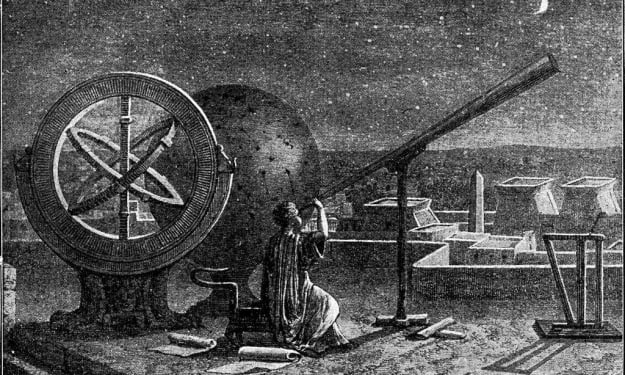
The Invention of the Telescope
Each month as part of this new series from the Historical Astronomy Division of the AAS, an important discovery or memorable event in the history of astronomy will be highlighted. This month, we look at the discovery of Neptune
By jahidul Islam Sifatabout a year ago in History
A Silent Battle Within
Sometimes a person smiles, talks, cooks, holds their children, and walks among people like everyone else. But no one knows the storm raging inside their heart. Behind that calm smile, behind those tired eyes, a sea of silent pain rises and falls. They act like everything is fine, but deep inside, quietly and profoundly, they are breaking down.
By Magic Bitesabout a year ago in History
“Petals of Time: Exploring the Global Beauty and Cultural Significance of Cherry Blossoms”
🌸 Introduction: The Ephemeral Allure of Cherry Blossoms Every spring, cherry blossoms, or sakura, paint landscapes with delicate shades of pink and white, captivating hearts worldwide. Beyond their visual appeal, these blossoms embody profound cultural meanings, symbolizing the transient nature of life. This article delves into the rich history, cultural significance, and top destinations to experience the mesmerizing beauty of cherry blossoms.
By Md Muij Ahmedabout a year ago in History
12,000-Year-Old Rock Carvings Baffle Researchers: Echoes of a Lost Civilization
Stones That Speak Across Time In the shifting sands of time, some stories are not told in books. They are carved in stone, hidden beneath the soil, and waiting. Beneath layers of earth and centuries of silence, a forgotten voice has emerged, etched into massive stones over 12,000 years ago. These rock carvings, now brought to light, are not only ancient, they are impossible.
By The Secret History Of The Worldabout a year ago in History
Buddha is Smiling: The Secret Message of India's Nuclear Triumph
India's First Nuclear Test and the Broken Jeep: When the Bomb’s Creator Fell Face-First to the Ground Due to the Tremor Exactly 51 years ago today (on May 18, 1974), India announced its first nuclear test. The following account is being republished to mark the occasion. On the morning of May 18, 1974, All India Radio’s Delhi station was broadcasting the popular song from the film Bobby, “Hum Tum Ek Kamre Mein Band Hon, Aur Chaabi Kho Jaye” (“If you and I were locked in a room and the key got lost”). At exactly 9 AM, the song was cut off and an announcement was made: “Please stand by for an important announcement.” A few seconds later, the announcer’s voice came on: “At 8:05 this morning, India conducted an underground nuclear test for peaceful purposes at an undisclosed location in western India.” One Day Earlier in London… A day earlier in London, Indian Prime Minister Indira Gandhi’s Principal Secretary, P.N. Haksar, kept asking Indian High Commissioner B.K. Nehru, “Any news from Delhi?” As soon as the news of the nuclear test arrived, Nehru could see the visible relief on Haksar’s face. He understood why Haksar had been so anxious. Who Would Be Beheaded? Five days before the test, on May 13, under the supervision of Homi Sethna, Chairman of the Atomic Energy Commission, Indian nuclear scientists began assembling the bomb. On the night of May 14, the device was taken to an L-shaped underground shaft. The next day, Sethna traveled to Delhi for a pre-scheduled meeting with Indira Gandhi. Sethna told her, “We have placed the device in the shaft. Now please don’t ask us to remove it, because it’s no longer possible. You can’t stop us now.” Indira Gandhi replied, “Go ahead. Are you afraid?” Sethna said, “Not at all. I just wanted to say, there’s no turning back from here.” After getting Gandhi’s approval the next day, Sethna returned to Pokhran. He gathered the team and asked, “If the test fails, whose head will roll?” Bomb designer Rajagopal Chidambaram promptly responded, “Mine.” Deputy leader P.K. Iyengar added, “No heads need to roll. If it fails, it means the laws of physics are wrong.” The Jeep That Failed On the morning of May 18, the desert heat in Pokhran was intense. A makeshift observation post had been set up five kilometers from the blast site. Present were Homi Sethna, Raja Ramanna, Indian Army Chief General Bewoor, DRDO Chairman B.D. Nag Chaudhry, Deputy Leader P.K. Iyengar, and Lt. Col. P.P. Subharwal. Nag Chaudhry had a camera around his neck and was continuously taking photos. Chidambaram and fellow designer Satinder Kumar Sikka were on another hill near the control room. The electronic detonation team, led by Srinivasan and Pranab Dastidar, was inside the control room. The blast was scheduled for 8:00 AM. But an hour earlier, scientist Virendra Singh Sethi’s jeep refused to start on the way to the test site for the final check. Time was running out. Sethi abandoned the jeep and walked 2 kilometers to the control room. Sethna asked General Bewoor what to do about the broken-down jeep so close to the test site. Bewoor replied, “Oh, you can blow the damn thing up.” Fortunately, Indian Army troops soon arrived with another jeep and moved the faulty one to a safe distance. Still, the test was delayed by five minutes. “We Will Proceed” Finally, a countdown began over the loudspeaker near the observation post. Sethna and Ramanna gave Pranab Dastidar the honor of pressing the trigger. At the count of five, Dastidar switched on the high-voltage switch. Seeing the electric meter, Dastidar was shaken — it showed that only 10% of the required voltage was reaching the device. He panicked: “Shall we stop? Shall we stop?” The countdown halted. But Dastidar suspected the reading was wrong due to moisture inside the shaft. He shouted, “No! We will proceed!” According to George Perkovich in his book India’s Nuclear Bomb, Dastidar pressed the red button at exactly 8:05 AM. “Krishna Lifted the Mountain with His Finger” At the observation post, when Sethna and Ramanna heard the countdown stop, they thought the test had failed. Ramanna wrote in his memoir Years of Pilgrimage that his colleague Venkatashan, who had been chanting the Vishnu Sahasranama, stopped mid-prayer. Everyone feared all their hard work had gone to waste. Suddenly, a huge sand column shot up from the earth and stayed suspended for nearly a minute. P.K. Iyengar later wrote, “It was a breathtaking sight. The legends of Krishna lifting a mountain with his finger started to seem real.” Jitendra Soni, head of the system integration team, felt like a sand minaret had risen in front of him. Fell Face-First to the Ground At that moment, it felt like a massive earthquake struck. Sethna felt the earth shaking violently. But he was puzzled — why wasn’t there a blast sound? Or could he simply not hear it? A second later, a faint explosion sound was heard. Chidambaram, Sikka, and their team began hugging each other. Chidambaram later said, “It was the greatest moment of my life.” Overcome with excitement, Sikka jumped off the observation post, spraining his ankle. In the control room, Srinivasan felt like he was on a small boat in a stormy sea. Ramanna later wrote in his memoir, “I saw the sand mountain rise as if Hanuman (a Hindu deity) had lifted it.” But he forgot in his excitement that the earth would soon shake. As he descended from the observation post, the ground trembled. Ramanna lost his balance and fell flat on his face. Ironically, the architects of India’s nuclear bomb ended up face-first in the hot sands of Pokhran on the very day of their monumental success.
By Ikram Ullahabout a year ago in History
The Iron Amir: The Story of Abdur Rahman Khan
The Iron Amir: The Story of Abdur Rahman Khan In the heart of 19th-century Afghanistan, when the winds of empire and rebellion blew fiercely across the mountains, a man of steely will emerged to forge unity from chaos. His name was Abdur Rahman Khan, a prince in exile, a warrior by blood, and the man who would become known as “The Iron Amir.”
By Ihsas Feeling about a year ago in History
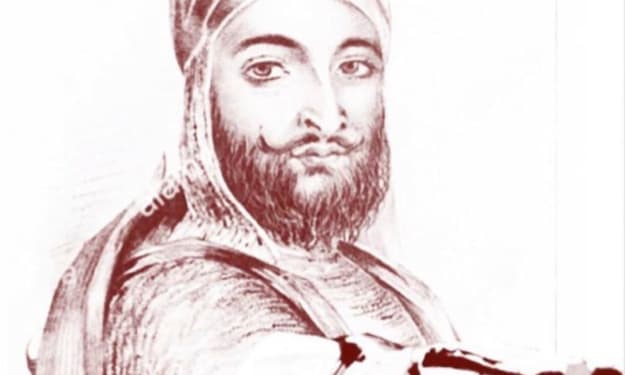
Wazir Akbar Khan: The Lion of Kabul
Wazir Akbar Khan: The Lion of Kabul In the heart of 19th-century Afghanistan, where rugged mountains carved the land into fierce independence, a young warrior emerged from the shadows of legacy and war. His name was Wazir Akbar Khan — son of the great Dost Mohammad Khan, prince of Kabul, and a man whose name would be forever etched into the tumultuous history of the British invasion of Afghanistan.
By Ihsas Feeling about a year ago in History
Under the Banyan Tree
**"Under the Banyan Tree"** In a quiet village nestled between the emerald folds of the Western Ghats, there stood an ancient banyan tree, its roots trailing like the fingers of time. Beneath its shade, children played, elders told stories, and life passed gently. It was under this tree that Asha and Kiran’s story began. Asha was the village schoolteacher's daughter—bright, curious, and full of laughter. She loved books, especially stories about far-off lands and the kind of love that crossed oceans and mountains. Every morning, she'd walk to school with her satchel swinging at her side and her thoughts dancing in verse. Kiran was the son of a potter—quiet, thoughtful, and known for his beautiful clay work. While other boys ran wild, Kiran sculpted animals and gods with careful hands. His world was made of silence and observation, but his heart beat with an artist’s passion. They first met when Asha dropped her notebook on the path by the banyan tree. Kiran, passing by with a stack of clay pots, picked it up and handed it to her without a word. She smiled, and he nodded. That was all. But something began that day—like a seed planted in soft soil. Days passed. Then weeks. Each afternoon, Asha would walk by the tree, hoping to see Kiran. And often, he’d be there—sitting with his clay, shaping something new. Gradually, words replaced nods. Conversations blossomed like the jasmine in Asha’s hair. “I want to travel the world,” Asha said one day, watching the sunset paint the sky in gold and crimson. “I want to write stories that people read even after I’m gone.” Kiran looked at her, his fingers coated in wet earth. “And I want to build a house,” he said. “A place filled with light, where someone like you could write a thousand stories.” They both laughed, shyly, but neither forgot those words. Their friendship deepened. Asha read him her stories; Kiran sculpted tiny figures inspired by her tales. She taught him to read English, and he taught her how to mold clay. Time seemed to slow when they were together, the banyan tree their silent witness. But as seasons changed, so did expectations. Asha's father wanted her to attend college in the city. “You’re smart,” he told her. “You can’t stay trapped in a village. There’s more out there for you.” Kiran, too, faced pressure. His father grew ill, and the family needed him to take over the pottery. The future loomed large and uncertain. The night before Asha was to leave, she met Kiran beneath the banyan tree. The air was heavy with monsoon rain, the sky a canvas of thunderclouds. “I don’t want to go without saying goodbye,” she whispered. He gave her a small wrapped bundle. Inside was a miniature clay house, its windows wide, its doors open. On the roof, he had etched a tiny flower—her favorite, hibiscus. “When you come back,” he said, “we’ll build the real one.” Asha’s eyes filled with tears. “And I’ll write about this place. About you. About us.” They didn’t kiss. They didn’t need to. Sometimes love isn’t loud. Sometimes, it’s a promise whispered through clay and paper. Years passed. Asha studied, wrote, and traveled. Her stories appeared in magazines, and one day, her first book was published. The dedication read: *To the boy who taught me to listen to silence.* And then, she returned. The village was the same, but different. The banyan tree still stood strong. Beneath it, a small clay workshop had expanded, filled with pots, statues, and a new addition—a house. She walked through its open door and saw him, still sculpting, still quiet. He looked up, smiled, and said, “You came back.” She stepped forward, her suitcase beside her, her heart full. “I never really left,” she replied. --- Would you like a continuation or a version in another style or genre (like tragic, fantasy, or historical)?
By Nasir Khanabout a year ago in History
🍯 The Great Molasses Flood of Boston, January 15, 1919: A Sticky Catastrophe That Swept Through the Streets and Caused Multiple Fatalitie
🌇 Part 1: Boston at Boiling Point - The City Before the Flood To understand how a flood of molasses could destroy part of a city and take lives, we must first travel back to Boston in the winter of 1919 - a city full of contradictions, opportunity, and unrest. The Great War had just ended in November 1918, and like many American cities, Boston was adjusting to the uneasy transition from wartime industry to peacetime life. Amid economic shifts, labor strikes, political radicalism, and the tail-end of a deadly flu pandemic, tension simmered in the air.
By History Seekerabout a year ago in History
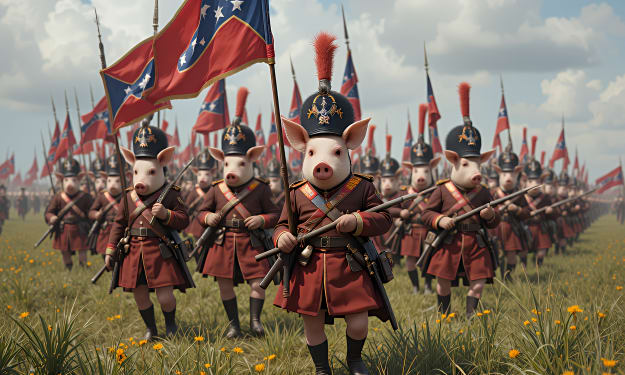
🐖The Pig War on the US–Canada Border, 1859: A Territorial Dispute Triggered by the Killing of a Single Pig
🏞 Part 1: A Snoutful of Trouble - The Pig That Started It All In the otherwise quiet and pastoral June of 1859, San Juan Island - then an unsettled jewel in the Pacific Northwest's emerald crown - became the unlikely battleground for a bizarre territorial standoff between two of the world's most powerful nations: the United States and Great Britain. San Juan Island, lush with cedar forests, rugged coastlines, and fertile grazing fields, was inhabited by a small but tense mix of British employees of the Hudson's Bay Company and independent American homesteaders drawn west by the promise of land and opportunity.
By History Seekerabout a year ago in History