General
How Leonel Messi struggle?
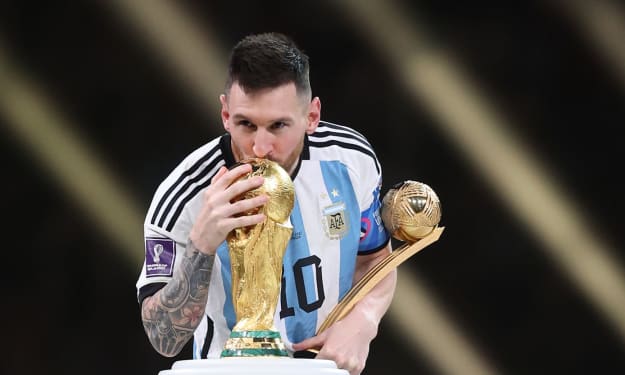
Lionel Messi: A Life in Football Early Life and Childhood Lionel Andrés Messi was born on June 24, 1987, in Rosario, Santa Fe, Argentina. The third of four children, he was raised in a tight-knit, football-loving family. His father, Jorge Messi, worked in a steel factory, and his mother, Celia Cuccittini, was employed as a cleaner. From an early age, Messi showed an extraordinary affinity for football, often playing with his older brothers and cousins. Messi joined his first football club, Grandoli, a local team coached by his father, at the age of five. His talents soon became evident, and by the age of eight, he was playing for Newell’s Old Boys, a prominent club in Rosario. His youth career was marked by dazzling dribbles, precise passing, and an innate understanding of the game. However, at the age of 10, Messi was diagnosed with a growth hormone deficiency (GHD), a condition that stunted his physical development. His family could not afford the expensive treatment, and while Newell’s provided some support, it wasn’t enough to cover the full cost. The situation seemed dire until a miracle happened from across the Atlantic. Move to Barcelona and Youth Career In 2000, when Messi was 13, he traveled to Barcelona, Spain, for a trial with FC Barcelona, arranged through contacts and agents. Carles Rexach, the club’s sporting director, was so impressed with Messi's abilities that he famously offered a contract on a napkin—one of football’s most iconic moments. Barcelona agreed to cover his medical treatment and invited the Messi family to settle in Spain. Messi joined La Masia, Barcelona’s renowned youth academy. Though shy and reserved, Messi quickly rose through the ranks due to his exceptional skills. His close control, low center of gravity, and explosive speed made him stand out among peers. Professional Debut and Rise to Stardom Messi made his first-team debut for Barcelona on October 16, 2004, at the age of 17, against Espanyol. His first goal came on May 1, 2005, against Albacete, making him the youngest goal-scorer in the club's history at the time. Under Frank Rijkaard, and later Pep Guardiola, Messi’s career skyrocketed. Initially playing alongside Ronaldinho, Messi evolved into the focal point of Barcelona's attack. Guardiola’s tactical system, built around short passing and positional play, complemented Messi’s style perfectly. The Guardiola Era (2008–2012) The period from 2008 to 2012 is considered Messi’s golden era. Under Guardiola, Messi played in a “false nine” role, and Barcelona dominated both domestic and European football. Major Achievements: La Liga titles: 2009, 2010, 2011 UEFA Champions League: 2009, 2011 Ballon d’Or wins: 2009, 2010, 2011, 2012 Notable records: Most goals in a calendar year (91 goals in 2012) Messi formed a deadly trio with Xavi Hernández and Andrés Iniesta, revolutionizing modern football. Barcelona's 2009 treble-winning season (La Liga, Copa del Rey, Champions League) was historic. Continued Success and Individual Brilliance Post-Guardiola, Messi continued to thrive under different managers: Tito Vilanova, Luis Enrique, and Ernesto Valverde. He adapted his style, becoming more of a playmaker while retaining his goal-scoring edge. In 2015, under Luis Enrique, Messi led the famous attacking trio "MSN"—Messi, Suárez, Neymar—to another treble, winning the Champions League, La Liga, and Copa del Rey. Records and Stats: All-time top scorer for FC Barcelona (672 goals in 778 games) Most goals in La Liga history Most assists in La Liga history International Career with Argentina Youth Success: Messi made his senior debut for Argentina in 2005 and won the FIFA U-20 World Cup the same year. In 2008, he led Argentina to a gold medal at the Beijing Olympics. Challenges and Criticism: Despite his club success, Messi faced criticism for underperforming with the national team. Argentina lost three major finals during his prime: 2014 FIFA World Cup final vs. Germany Copa América finals in 2015 and 2016 (both to Chile) In 2016, after the third loss, Messi temporarily retired from international football, citing frustration and emotional burnout. The nation pleaded for his return, and he eventually came back. Triumph at Last: In 2021, Messi finally achieved what had eluded him—he won the Copa América, beating Brazil in the final at the Maracanã. The victory was deeply emotional and cemented his legacy. In 2022, Messi crowned his international career by leading Argentina to win the FIFA World Cup in Qatar. He scored 7 goals, was named Player of the Tournament, and lifted the trophy after a dramatic final against France, which ended in a penalty shootout. Departure from Barcelona and Move to PSG Due to Barcelona's financial crisis and La Liga salary cap regulations, Messi’s contract renewal became impossible. In August 2021, Messi tearfully announced his departure after 21 years at the club. He joined Paris Saint-Germain (PSG) on a two-year deal, reuniting with Neymar and playing alongside Kylian Mbappé. Though his first season was relatively quiet, he eventually adapted and helped PSG secure domestic titles. Move to Inter Miami and MLS Impact In 2023, Messi made a landmark move to Inter Miami CF in the Major League Soccer (MLS). His arrival boosted the profile of American soccer significantly. He led the team to win the Leagues Cup, their first trophy, and brought unprecedented media attention to MLS. Messi’s move was more than a career choice—it was a cultural shift, bringing global attention to a growing football market. Playing Style and Influence Messi is often described as a complete footballer. He combines vision, dribbling, finishing, passing, and tactical intelligence. Notably, he: Is famous for his left foot Has a low center of gravity that aids his balance Excels in both goal-scoring and playmaking Comparisons with Cristiano Ronaldo have defined an era. While Ronaldo is known for athleticism and power, Messi is seen as the natural genius with a poetic style of play. Personal Life Messi is known for his humility and introverted personality. He married his childhood sweetheart, Antonela Roccuzzo, in 2017. They have three sons: Thiago, Mateo, and Ciro. He has been involved in charity work through the Leo Messi Foundation, focusing on health and education for underprivileged children. Despite occasional controversies (like tax issues in Spain), Messi is widely regarded as a model professional with an impeccable public image. Awards and Honors Club: 10× La Liga titles 7× Copa del Rey titles 4× UEFA Champions League titles 3× FIFA Club World Cups International: 1× FIFA World Cup (2022) 1× Copa América (2021) 1× Olympic Gold Medal (2008) 1× FIFA U-20 World Cup (2005) Individual: 8× Ballon d'Or (record) 6× European Golden Shoes 2× FIFA World Cup Golden Ball Numerous records for goals, assists, and appearances Legacy Lionel Messi is widely regarded as one of the greatest footballers of all time, if not the greatest. He transcended the sport, not only because of his technical abilities but also due to his story—overcoming physical adversity, staying loyal to his club, and finally achieving international glory. He has influenced generations of players and fans with his elegance, sportsmanship, and humility. Beyond the records and trophies, Messi’s greatness lies in how he made football look like art.
By Saleh uddin Hiraabout a year ago in History
2024 Election Fallout: Supreme Court Rules on Trump’s Immunity Case
Introduction In a historic decision that could reshape the future of U.S. presidential accountability, the Supreme Court ruled on former President Donald Trump’s immunity case in 2024. The case, Trump v. United States, centered on whether a former president enjoys absolute immunity from criminal prosecution for actions taken while in office. The ruling not only impacts Trump’s multiple legal battles but also sets a precedent for the limits of executive power. This article examines the Court’s decision, its legal and political implications, and the potential consequences for the 2024 election and beyond. Background: The Legal Battle Over Presidential Immunity
By Silas Blackwoodabout a year ago in History
The Top Ten Fascinating Facts and Myths About Microwave Ovens
The microwave oven, a kitchen staple in over 90% of households worldwide, is both a marvel of modern engineering and a magnet for myths. Born from a wartime accident, this appliance revolutionized cooking by harnessing the power of microwaves—a form of electromagnetic radiation. Yet, despite its ubiquity, misconceptions about its safety, functionality, and health impacts persist. Is it truly a nutrient-destroying villain, or an unsung hero of efficiency? Drawing from historical records, scientific studies, and expert insights, this article explores ten pivotal facts and myths about microwave ovens. From their serendipitous origins to debunking fears about radiation, we unravel the science behind the hum of this everyday appliance and reveal why it deserves more credit—and less suspicion—than it often receives.
By Only Incredibleabout a year ago in History
Creating a Comfortable and Stylish Home: A Guide to Modern Living
Your home is more than a place—it’s an extension of your identity. It's where comfort meets creativity, and where everyday life unfolds. Whether you're settling into a new space or looking to refresh your current one, creating a home that reflects your lifestyle and values is key.
By Qadir Khichiabout a year ago in History
Travel Banner Ads: Best Practices for Maximum Engagement
As a child or teenager, you probably experienced a vacation where, upon nearing your destination, you encountered "Welcome" banners greeting you. While this concept still exists, the landscape has changed significantly, as online banner ads have taken over everything. You have all been to a website where a notification pops up with an engaging travel banner ad, prompting you to consider going on vacation.
By Bela Arnoldabout a year ago in History
The Time Capsule Tapes
Tucked away in the dusty basement of the Willow Creek Library, behind a stack of moldy encyclopedias, a rusted metal box was about to change our town forever. When librarian Ellie Harper stumbled across it during a routine inventory last spring, she thought it was just another forgotten relic. But inside that unassuming time capsule, buried 50 years ago, was a treasure trove of cassette tapes—recordings of our town’s long-lost music scene that have sparked a joyous, toe-tapping revival.
By Shohel Ranaabout a year ago in History
The River Runs Again
There was a time when our river was more of a punchline than a point of pride. Locals called it “Muddy Creek,” and not affectionately. Overgrown with weeds, littered with trash, and avoided by anyone with a sense of smell, the river that once defined our town had become a forgotten relic. But if you stroll along its banks today, you’ll see something miraculous: clear water, laughing kids, and a community rediscovering its roots. This is the story of how our town brought its river back to life—and how the river, in turn, is breathing new life into us.
By Shohel Ranaabout a year ago in History
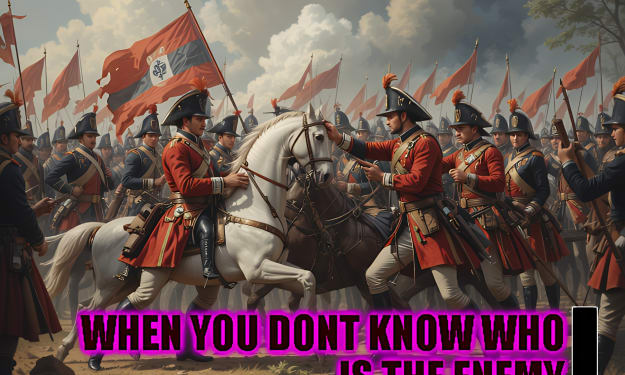
The Battle of Karansebes, 1788: The Austrian Army Accidentally Fighting Itself in the Chaos of War
Among the most bewildering and farcical episodes in military history, the Battle of Karansebes stands out as a stunning example of miscommunication, panic, and human error spiraling out of control. Fought during the Austro-Turkish War of 1787–1791, the event is infamous not for a valiant clash with the Ottoman enemy, but for a chaotic episode where an Austrian army ended up attacking itself. Taking place on the night of September 17–18, 1788, in what is now modern-day Romania, the so-called battle involved confusion, fear, and an abundance of alcohol - ultimately leading to hundreds of Austrian soldiers dead or wounded by friendly fire, long before the Ottomans even arrived.
By History Seekerabout a year ago in History
Ashes of Pompeii: The Day the Sky Fell
**Ashes of Pompeii: The Day the Sky Fell** **Pompeii, Roman Empire – August 24, 79 AD** The morning sun was already warm as Lucia, the 16-year-old daughter of a wealthy merchant, stepped onto the balcony of her family’s villa in Pompeii. The sky above was a serene blue, and in the distance, the great mountain—Vesuvius—stood quietly, cloaked in a light mist. Lucia could hear the clatter of hooves and the distant calls of market sellers echoing through the city.
By Asia khanomabout a year ago in History
🌷 The Tulip Mania Bubble in the Dutch Republic, 1636–1637: When Tulip Bulbs Became the World's Most Valuable Commodities Before the Crash
🏩 Part 1: A Blooming Republic - The Dutch Golden Age and the Rise of the Tulip In the early 17th century, the Dutch Republic stood at the pinnacle of European power and prosperity. This confederation of provinces, recently liberated from Spanish rule after decades of conflict, had rapidly evolved into a formidable maritime, financial, and cultural powerhouse. The Dutch Golden Age, as historians now call it, was marked by explosive growth in global trade, scientific exploration, art, and banking.
By History Seekerabout a year ago in History