Fiction
Julie Clary, Imperial Princess
Julie looked at the mirror with horror that grew with every second. She was in a beautiful white dress, embroidered with silver and gold, with a low neckline and a high waist. Julie wore earrings that matched and to complete the ensemble, there was a gold coronet on top of her dark hair. As her maids told her, she was beautiful and looked like the princess she was.
By Rebecca Pattonabout a year ago in History
The Overlooked Treasures of the Khmer Empire: Cambodia's Concealed Wealth
The Overlooked Treasures of the Khmer Empire: Cambodia's Concealed Wealth When discussing the world's most affluent ancient empires, names such as Rome, Persia, and Mali often take precedence. However, nestled deep within the jungles of Southeast Asia lies an unrecognized giant—the Khmer Empire, whose lavishness once matched the greatest empires globally. Spanning across present-day Cambodia, Thailand, Laos, and Vietnam, the Khmer Empire thrived between the 9th and 15th centuries, leaving behind treasures—both material and spiritual—that astonish contemporary observers. At the core of this empire was Angkor, the largest pre-industrial urban center globally, home to the magnificent temple of Angkor Wat, now recognized as a UNESCO World Heritage site. Yet Angkor was more than a spiritual and architectural wonder—it was also a bastion of wealth and authority. The Riches Beneath the Stone The Khmer Empire's affluence stemmed from a potent mix of agriculture, commerce, and expertise in hydraulic engineering. The empire flourished through rice cultivation, utilizing sophisticated irrigation systems that supported a vast populace. However, agriculture formed only the foundation. What genuinely enriched the Khmer elite was trade—especially in gold, gemstones, ivory, and forest resources. The empire occupied a pivotal position along the trade routes connecting the Indian Ocean and East Asia. Chinese, Indian, and Arab merchants frequently visited Khmer ports to barter silks, ceramics, and spices for Khmer gold, sandalwood, and exotic birds. Evidence of this wealth is dispersed throughout the temples. Inscriptions and bas-reliefs portray processions of royals and priests adorned in jewels, gold necklaces, and intricately designed crowns. Archaeological discoveries suggest that the Khmer elite possessed substantial quantities of sapphires, rubies, and emeralds—many of which came from the empire’s own mines and riverbeds. The Concealed Treasures of Angkor Despite centuries of looting, some Khmer treasures remain hidden. In 2008, during the excavation of a concealed chamber in Angkor Thom, archaeologists uncovered numerous gold artifacts, including rings, figurines, and ceremonial implements dating back to the 11th century. Many experts believe this is merely the beginning. Submerged crypts, underground reservoirs, and temples lost to history continue to conceal what could amount to millions of dollars in ancient relics. Looters have long targeted these locations, selling statues and jewelry on the black market; however, extensive areas of Angkor remain unexplored due to dense forest coverage and insufficient funding. In 2016, LIDAR (Light Identification and Ranging) technology unveiled previously unrecognized temple complexes, roadways, and urban structures beneath the forest surface—indicating that Angkor was part of a much broader network of cities, all of which may harbor untouched caches of wealth. Assessing the Empire’s Valuation Determining a monetary value for a long-lost empire is a complex endeavor, yet historians and economists have formulated rough assessments. When adjusted for contemporary values, the Khmer Empire’s assets in gold, land, and precious stones could have been valued at over $200 billion. This does not consider cultural capital—the significance of monuments such as Angkor Wat or misplaced artifacts currently residing in private collections. The immense scale of Angkor Wat alone, which necessitated 5 million tons of sandstone, illustrates the magnitude of resources the empire could assemble. In current terms, constructing such a edifice would entail billions—and this figure pertains to merely one of over 1,000 temples erected during the apex of the empire. The Decline and Heritage The Khmer Empire commenced its decline in the 13th century, attributed to a combination of factors: climatic shifts, overpopulation, internal discord, and assaults from neighboring realms such as the Ayutthaya of Thailand. As the capital cities deteriorated, numerous temples were forsaken, and their riches abandoned—some interred, some pilfered, and others simply overlooked. Nevertheless, the Khmer heritage endures. The Cambodian royal regalia still features symbols derived from the Khmer Empire, and the national pride associated with Angkor is substantial. Initiatives are currently underway to reclaim and conserve what remains of this concealed wealth, with museums and archaeologists collaborating closely with local communities. Final Thoughts Although the Khmer Empire may not garner the same prominence as Rome or Egypt, its affluence, creativity, and magnificence warrant acknowledgment. Beneath the towering trees and moss-laden stones of Cambodia lies a narrative of monarchs, deities, and gold—a narrative still being uncovered. As technology and international collaboration progress, we may yet rediscover more of this lost wealth and redefine the history of the world’s most affluent empires.
By Say the truth about a year ago in History
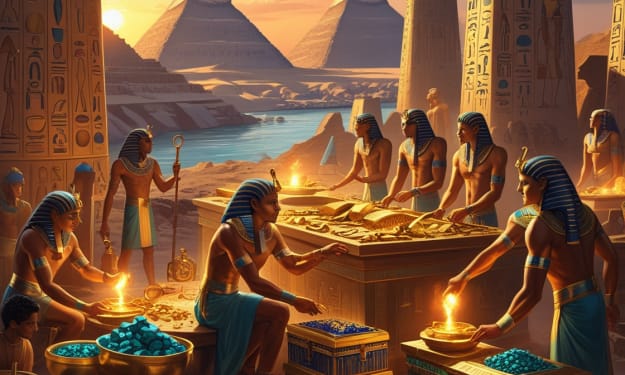
The Treasure Beneath the Nile: Egypt's Lost Gold Mines and Ancient Wealth. AI-Generated.
The Golden Legacy of the Nile The Nile River is justifiably regarded as the lifeblood of Ancient Egypt. Spanning over 6,600 kilometers, it not only facilitated agriculture in the arid desert but also functioned as a trade artery and spiritual thoroughfare. However, what rests beneath the deserts encircling the Nile has intrigued archaeologists and historians for centuries—gold. Gold represented more than a mere metal in Ancient Egypt. It symbolized divine power, eternal existence, and royal dominion. The pharaohs believed it constituted the flesh of the deities, particularly the sun god Ra. It adorned temples, accompanied kings in burial, and was crafted into objects of remarkable beauty and precision. But from whence did all this gold originate? The Lost Mines of Nubia The ancient territory of Nubia, situated south of Egypt (present-day Sudan), was abundant in gold mines. This region was so vital that the pharaohs referred to it as Ta-Seti (Land of the Bow) and often waged warfare or engaged in diplomacy to gain control. The gold of Nubia was sourced from quartz veins and alluvial deposits, subsequently smelted and refined in desert workshops. Evidence from inscriptions and archaeological excavations indicates that Egypt possessed a highly organized gold mining system as early as 2600 BCE. Laborers resided in isolated desert camps and utilized rudimentary tools to excavate shafts and tunnels deep into the rock. Despite the challenges and hazards, the allure of wealth motivated the empire's aspirations.
By Say the truth about a year ago in History
The Wealthiest Empire in History: The Golden Heritage of the Mali Empire
The Foundations of the Mali Empire The Mali Empire was established circa 1235 AD by Sundiata Keita, who unified several smaller kingdoms following the decline of the Ghana Empire. Under Sundiata’s guidance, Mali evolved into a centralized entity with a formidable military and effective administration. Nonetheless, it was under his successors—most notably Mansa Musa (r. 1312–1337)—that the empire attained its pinnacle. Encompassing portions of contemporary Mali, Senegal, Gambia, Guinea, Niger, Nigeria, and Mauritania, the Mali Empire governed extensive territories and essential trade routes, including segments of the Sahara Desert. This positioned it to dominate trans-Saharan commerce, especially in salt, ivory, enslaved individuals, and most crucially—gold. Mansa Musa: The Most Affluent Individual in History Mansa Musa, the tenth sovereign of Mali, is frequently recognized as the most affluent person in documented history. His net worth, adjusted for inflation and current assessments, is approximated to exceed $400 billion USD. This fortune was not solely attributed to dominion over land but also the empire’s gold mines, which contributed more than half of the world’s gold during his reign. In 1324, Mansa Musa embarked on a renowned pilgrimage to Mecca (Hajj), an occasion that highlighted the immense scale of his empire’s riches. He journeyed with a caravan composed of: 60,000 individuals, 12,000 enslaved individuals conveying gold bars, 80 camels transporting hundreds of pounds of gold dust each. According to historians, he distributed so much gold in Cairo, Mecca, and Medina that it diminished the value of the metal, resulting in economic inflation in the region for over a decade. This singular incident established Mali—and Musa—as significant players on the medieval global landscape. Sources of Wealth
By Say the truth about a year ago in History
Last Letter from the Lighthouse
The last time I saw Thomas, he stood at the edge of the cliffs beneath the lighthouse, his coat whipping in the sea wind. He smiled at me with that quiet sadness he always carried, as though part of him belonged more to the ocean than to the land.
By Shohel Ranaabout a year ago in History
The Boy Who Drew the Stars
Liam was not like the other kids in his town. He didn’t play football or race his bike in the streets. Instead, he liked quiet places, soft light, and the sound of a pencil moving across paper. His favorite spot was his small desk by the window, where he would sit for hours under the warm yellow light of his old desk lamp.
By ihsandanishabout a year ago in History
The Creation of the World: A Bible Story of God’s Power and Love. AI-Generated.
In the very beginning, before time as we know it began, there was nothing but God—eternal, infinite, and full of love. The story of the Creation of the World, found in the Book of Genesis (1:1-2:3), is the foundation of the Bible, revealing how God brought everything into existence with His mighty word. This sacred account, believed to have occurred thousands of years ago, tells of the origins of the heavens, the earth, and all living things, showcasing God’s power, creativity, and purpose for humanity. Shared across generations, this story continues to inspire awe and gratitude for the world we live in today.
By David Andrewsabout a year ago in History
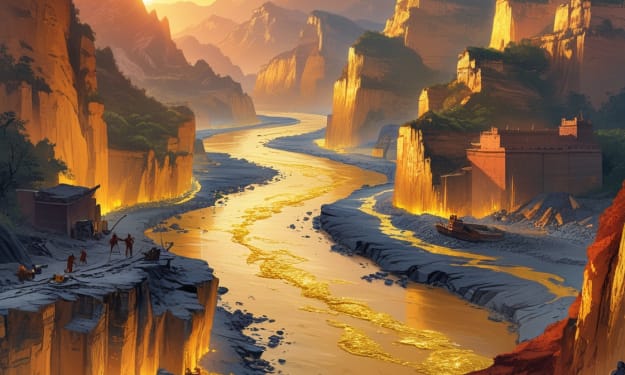
Beneath the Golden Tides: Revealing the Concealed Mineral Wealth of China's Yellow River. AI-Generated.
A River Shaping Through Epochs and Stone The Yellow River traverses a multitude of landscapes: towering mountains, fertile plains, loess plateaus, and desert basins. This journey has enabled it to carve into rock strata rich in minerals, revealing deposits that ancient civilizations soon learned to utilize. As early as the Shang Dynasty (c. 1600–1046 BCE), bronze metallurgy thrived along the river, with copper, tin, and lead extracted locally and crafted into weapons, ceremonial items, and tools. By the Han Dynasty (206 BCE – 220 CE), systematic mining had become prevalent in the Yellow River provinces, particularly in present-day Shaanxi, Shanxi, Henan, and Gansu. These regions evolved into hubs of iron production, mercury extraction, and gold panning. Inscriptions, historical documents, and artifacts indicate that mining was not only a skilled profession but also a foundation of regional economies. Wealth Beneath the Surface: Principal Minerals of the Yellow River The Yellow River basin is a mineralogical tapestry, showcasing a wide array of resources: Gold Gold-laden sands and rock veins are particularly abundant in Qinghai and Gansu, along the upper stretches of the river. In antiquity, gold was extracted from riverbeds; today, it is obtained through both surface and subterranean mining. Silver Silver is frequently discovered alongside gold or lead-zinc ores, particularly in the central basin. Historical accounts suggest that silver coins and artifacts were fabricated from locally sourced metal during the Tang and Song Dynasties. Coal Shanxi Province, located along the central Yellow River, stands as one of China’s most prosperous coal regions. With reserves amounting to hundreds of billions of tons, this area has been pivotal to China’s energy sector for over a century. Iron and Manganese Historically utilized for tools, weapons, and subsequently railways and factories, iron ore is significantly concentrated in Shanxi and Henan. Manganese, crucial in steel production, is also mined in adjacent regions. Copper, Lead, and Zinc These base metals have been extracted for centuries in Shaanxi and Gansu, powering early bronze industries and now underpinning contemporary electronics and manufacturing. Rare Earth Elements (REEs) While more prominent in southern China, northern Gansu and certain areas of Inner Mongolia along the river have been explored for REEs vital to electronics, magnets, and batteries. Salt and Potash The lower Yellow River delta has historically served as a source of salt, essential for food preservation, and potash, crucial for agriculture. Economic Assessment of the Yellow River’s Mineral Resources Determining the overall economic value of the Yellow River’s mineral resources is intricate, due to variable market rates, unidentified reserves, and ecological restrictions. Nonetheless, based on existing geological and industrial information: Gold: Estimated at 1,200 tons at approximately $70,000/kg = $84 billion USD Silver: Estimated at 20,000 tons at about $850/kg = $17 billion USD Coal: Over 260 billion tons in Shanxi, with recoverable coal valued at $200+ billion USD Iron Ore: Estimated reserves appraised at $100 billion USD Copper/Lead/Zinc: Cumulative estimates = $60 billion USD Rare Earths: Emerging deposits could be worth as much as $10 billion USD Total projected value: Approximately $471 billion USD These are conservative valuations and do not account for future discoveries or increasing values due to technological demand, particularly for rare earths and green energy metals.
By Say the truth about a year ago in History
The Wealthiest Cathedral in Christianity: A Chronicle of St. Peter’s Basilica. Content Warning. AI-Generated.
The Origins: A Tomb Transformed into a Basilica The narrative commences in the 1st century CE. According to Christian doctrine, St. Peter, one of Jesus Christ's twelve disciples and viewed as the first Pope, was martyred in Rome during Emperor Nero's rule. He was crucified upside-down and interred in a burial site on Vatican Hill. Over his resting place, Emperor Constantine, the first Roman emperor to embrace Christianity, commissioned a basilica circa 319 CE. This initial basilica endured for over a millennium. However, due to its advancing deterioration, Pope Julius II mandated the erection of a new church in the early 16th century. This initiated a significant endeavor that would extend beyond 120 years and engage some of the most renowned artists and architects throughout history. The Renaissance Renovation: A Testament to Authority and Belief The construction of the contemporary St. Peter’s Basilica commenced in 1506 and reached completion in 1626. Numerous master architects, including Donato Bramante, Michelangelo, Carlo Maderno, and Gian Lorenzo Bernini, played vital roles in the design and construction of the basilica. This architectural wonder was envisioned not merely as a site of worship, but also as a proclamation of the Catholic Church’s dominance during the Renaissance and the Counter-Reformation.
By Say the truth about a year ago in History
The Golden Vein of China: History and Wealth of the Yellow River's Mineral Deposits
Historical Background The history of mining and mineral utilization in the Yellow River region can be traced back to ancient China, particularly during the Xia, Shang, and Zhou dynasties (2100–256 BCE). Early Chinese metallurgy predominantly relied on copper and tin for the creation of bronze tools, weapons, and ceremonial vessels. Archaeological discoveries from the Yellow River valley, especially within Henan and Shaanxi provinces, indicate that bronze mining and casting practices were highly developed as early as 1700 BCE. During the Han Dynasty (206 BCE – 220 CE), China commenced the extraction of a broader array of minerals, including iron, gold, and mercury, which found applications in everyday life as well as traditional medicine. Historical documents, such as The Records of the Grand Historian by Sima Qian, describe organized mining activities in the mountainous areas adjacent to the Yellow River. By the Tang and Song dynasties, more advanced techniques like deep shaft mining and hydraulic power facilitated enhanced utilization of mineral resources in the region. Key Mineral Deposits in the Yellow River Basin The Yellow River basin is endowed with a diverse assortment of minerals, attributable to its varied geological formations. Some of the most prominent mineral resources encompass: Gold and Silver The upper portions of the Yellow River in Qinghai and Gansu provinces are recognized for their gold-rich sands and quartz veins. Traditional panning techniques have been supplanted by contemporary large-scale open-pit and underground mining endeavors. Silver is commonly found in conjunction with gold and lead ores in the area. Iron Ore The Loess Plateau region, particularly in Shanxi, boasts plentiful iron deposits. These ores powered ancient blacksmithing industries and continue to sustain modern steel production. Coal Shanxi Province, situated in the mid-Yellow River basin, hosts some of China’s most abundant coal reserves, which generate a substantial portion of the country’s electricity and industrial output. The Datong and Taiyuan basins are particularly noteworthy. Copper and Lead-Zinc Deposits Primarily located in Gansu and Shaanxi provinces, these base metals are essential for electrical wiring, batteries, and industrial uses. Rare Earth Elements (REEs) While more concentrated in southern China, rare earth minerals have also been identified in small but valuable amounts in the Yellow River basin, especially in Gansu Province, which has been earmarked for REE exploration. Salt and Alkali The salt lakes and alkaline soils of the lower Yellow River have historically supplied significant chemical resources, utilized in both culinary applications and early chemical processes. Economic Evaluation: The Valuation of Yellow River Mineral Deposits Assessing the valuation of the Yellow River’s mineral resources is complex due to various factors: continuous extraction, undiscovered reserves, ecological costs, and variable global prices. Nevertheless, based on geological assessments, production data, and recent economic evaluations from Chinese mining organizations, we can outline a preliminary estimate. Gold reserves: Estimated to exceed 1,200 tons across Gansu and Qinghai, with a current price of approximately $70,000/kg, totaling $84 billion USD. Silver: Roughly 20,000 tons valued at $850/kg, resulting in $17 billion USD. Iron ore: Billions of tons available in Shanxi, with high-grade reserves assessed to be worth $100 billion USD. Coal reserves: Shanxi alone contains over 260 billion tons, with economically recoverable coal valued at over $200 billion USD. Copper, Lead, Zinc: Combined base metal reserves may reach a total estimated market valuation of $60 billion USD. Rare Earth Elements: Smaller yet high-value accumulations may have an estimated worth of around $10 billion USD, contingent on development and market demand. Total Valuation Estimate: $471 billion USD (conservative projection) This amount solely reflects identified and economically extractable resources. With additional exploration and technological progress, the actual worth could be considerably higher. Ecological Impact and Challenges While mineral extraction has brought economic benefits to the Yellow River region, it has also induced significant environmental harm. Coal mining and smelting have led to air and water contamination, soil degradation, and land subsidence. Over-extraction has diminished groundwater levels, adversely affecting agriculture and human health. The Chinese government has enacted more rigorous regulations in recent years to mitigate pollution and encourage sustainable mining practices. Several initiatives now aim to reconcile economic benefits with environmental preservation, particularly in ecologically sensitive regions. Conclusion The mineral wealth of the Yellow River has been a discreet yet influential factor in China’s advancement. From ancient bronze artifacts to contemporary steel and rare earth exports, the riches beneath this iconic river have substantially influenced Chinese civilization and its position in the global economy. However, as the demand for these resources continues to escalate, sustainable practices and ecological consciousness must steer future extraction efforts. In many respects, the Yellow River stands not only as the "Mother River of China" but also as one of its most significant concealed treasures.
By Say the truth about a year ago in History