Fiction
Henry Ford: The Man Who Drove the World Forward
When we hear the name Henry Ford, most of us immediately think of cars. But Ford’s impact goes far beyond four wheels and an engine. He didn’t just invent a car—he transformed how people work, live, and dream. From humble beginnings on a Michigan farm to becoming one of the most influential industrialists in history, Henry Ford's story is a blueprint of innovation, perseverance, and bold thinking. --- Early Life: A Curious Mind on a Quiet Farm Henry Ford was born on July 30, 1863, in Dearborn, Michigan, to a farming family. Even as a child, Ford was never quite content with the farming life. He was fascinated by machines. At just 15, he dismantled and rebuilt a pocket watch, earning him the reputation of a local tinkerer. His curiosity with mechanics would become the engine that powered his future. At 16, Ford left home for Detroit, where he became an apprentice machinist. Over the next few years, he learned everything he could about engines and machines, always dreaming of creating something that would change the world. --- The First Car: A Dream on Four Wheels By 1891, Ford was working as an engineer for the Edison Illuminating Company, and his career was rising. In 1896, he built his first gasoline-powered vehicle in a small shed behind his home. It was called the Quadricycle, and though it looked more like a buggy than a modern car, it was a breakthrough. It had four bicycle wheels and a light gasoline engine—and most importantly, it worked. That same year, Ford met Thomas Edison, who encouraged him to keep working on his automobile project. That encouragement would push Ford further into his mission: to make cars accessible to ordinary people—not just the wealthy elite. --- Founding the Ford Motor Company After two failed business attempts, Ford finally got it right. In 1903, he launched the Ford Motor Company with $28,000 from investors. Unlike other carmakers of the time, who focused on building expensive, handcrafted vehicles, Ford had a different vision: create a car for the average American. In 1908, the dream became a reality with the launch of the Model T—a simple, reliable, and affordable car that changed everything. --- The Model T: The Car That Changed America The Model T was more than just a car—it was a symbol of freedom. Priced at $825 (eventually dropping to as low as $260), it allowed everyday people to travel, explore, and dream bigger. The Model T was easy to repair, sturdy on rough roads, and perfect for the American lifestyle. But the real revolution wasn’t just the car—it was how it was made. --- The Assembly Line: A Revolution in Motion In 1913, Ford introduced the moving assembly line, inspired by meat-packing plants. This single innovation reduced the time to build a car from 12 hours to just 90 minutes. Suddenly, production skyrocketed, costs plummeted, and Ford was able to pay his workers more—while still lowering the price of his cars. Ford famously introduced the $5 workday in 1914—double the average wage at the time. Though criticized by some, the move allowed his workers to afford the cars they built and set a new standard for labor across America. --- Ford’s Beliefs and Controversies Henry Ford wasn’t just an industrialist—he was a man with strong opinions, not all of them popular or ethical. He believed in efficiency, hard work, and the power of capitalism—but he also held anti-Semitic views that stained his legacy. He published a newspaper that spread conspiracy theories about Jewish people, which drew widespread criticism, including from public figures and human rights groups. Despite later issuing an apology, this dark chapter in his life remains a controversial part of his story and a reminder that even giants have shadows. --- Innovations Beyond Cars Ford’s innovations weren’t limited to automobiles. He experimented with aviation, helped develop the tractor industry, and even built a company town called Fordlandia in Brazil, aiming to create a rubber-producing utopia (though it ultimately failed). He also revolutionized industrial labor, setting precedents in wages, work hours, and employee welfare—many of which influenced modern labor laws. --- Later Years and Legacy Ford stepped down as president of his company in 1919, handing over the reins to his son, Edsel Ford, though he would return during WWII after Edsel’s untimely death. During the war, Ford Motor Company produced tanks, airplanes, and military vehicles—once again proving Ford's ability to adapt and serve the times. Henry Ford died on April 7, 1947, at the age of 83. By the time of his death, more than 15 million Model Ts had been sold, and the world was never the same. --- Final Thoughts: More Than Metal and Machines Henry Ford didn’t invent the car—but he perfected it for the people. He didn’t discover the assembly line—but he mastered it to build a new society. His story is one of genius and contradiction, ambition and controversy, vision and imperfection. Yet, his influence is undeniable. Roads were paved for his cars. Cities were shaped by his factories. Lives were changed by his ideas.
By Hasbanullahabout a year ago in History
British Monarchy Facts: How Accurate is Netflix’s The Crown?
Netflix’s The Crown has become a global obsession, especially after the passing of British monarchy’s longest-serving sovereign in 2022. With six seasons depicting the life of the royals from 1997 to 2005, it’s inevitable to ask - how much of that is true? And just how much is for TV drama?
By Pat Zuniegaabout a year ago in History
One Mistake Cost 16 Skydivers their Lives | Disaster in Ohio
Part 1: The Dream Flight On a calm Sunday, August 27, 1967, around thirty thrill-seekers gathered at Ortner Airport near Wakeman, Ohio. Many had traveled across the state, drawn not by competition or a national skydiving event—but by a gesture of gratitude.
By 🕵️♂️ True Crime Enthusiast | Storyteller of the Dark Side 🔍about a year ago in History
Zero Hour
The sky was the color of steel, thick with the kind of clouds that seemed to weigh down on the world. The streets of the once-thriving city were now empty, except for the occasional gust of wind that kicked up debris, sending it tumbling across shattered glass and rusted vehicles. Buildings that had once housed families and businesses stood in ruins, their broken windows reflecting the hopelessness that had consumed the area. Four men stood in the midst of the devastation, each of them battle-worn and weathered by years of conflict. Their faces were etched with scars, both physical and emotional. The world had forgotten about them long ago—veterans of wars that had no meaning anymore, soldiers whose names were lost in the shuffle of time. But today, the world would remember them. “We’re the last ones left,” grunted Sergeant Jack Mitchell, his voice hoarse from years of fighting. His graying hair was tucked under a cap, his eyes sharp and unyielding as he surveyed the desolate landscape. In his hand, he held a rifle—well-worn but reliable. His team had been his family, his brothers-in-arms, and now they were the only ones standing between survival and annihilation. Beside him stood Captain Luke Reynolds, the youngest of the group, his face a mixture of youthful determination and a deeper, unspoken sadness. His rifle was cocked and ready, but his eyes kept darting nervously, as though waiting for something he couldn’t quite see. He wasn’t afraid—he had long since buried that emotion—but fear still had a way of creeping in during moments like this. Behind them was Sergeant First Class Tony “Bones” McAllister, the medic who had patched up more soldiers than anyone cared to count. His hands were steady, even as they gripped the handle of a combat knife, his dark eyes focused on the horizon. He had seen too many friends fall, and the memory of their faces would forever haunt him. But he had a job to do, and he wasn’t going to let the war win. The last man in their group was Corporal Daniel “Danny” Rivers, the explosives expert. His rugged face was streaked with dirt and sweat, his brow furrowed in concentration. He had a way of making things explode, and that was precisely what the group needed now. They had one final chance to stop a force far greater than them—a force that threatened to wipe out what little remained of humanity. “This is it,” Jack said quietly, his voice carrying the weight of years of battle. “The last stand. There’s no turning back now.” The sound of distant gunfire echoed through the streets, a reminder that they were not alone. The enemy was closing in. They had been tracking the soldiers for days, an army of merciless soldiers hired by an organization that wanted to erase all trace of the past. They had already taken over half the city, and now they were coming for the rest. “Stay tight,” Jack ordered. “We move in two. One, two.” The soldiers moved in unison, their footsteps muffled by the rubble beneath them. They had been through this routine a thousand times before, but the weight of the moment hung heavy in the air. There was no escape this time, no retreat. The only way out was victory—or death. As they approached the enemy’s last known position, Tony paused for a moment, crouching to adjust his gear. “I’ve patched up enough bodies to know we won’t get a second chance,” he muttered under his breath. Danny’s fingers danced over the wires of his explosives, his mind working quickly. He was the only one who could bring the fight to the enemy. He had planted bombs at strategic points throughout the city, and they were all set to go off in a matter of minutes. “You sure these are going to work?” Luke asked, his voice tense. Danny gave a grim smile. “They’ll work. Trust me.” With one last nod, they advanced into the heart of the enemy’s stronghold—an abandoned government building now overrun with soldiers. The air smelled of gunpowder, and the faint sound of enemy voices echoed down the hallways. “Zero hour is upon us,” Jack muttered, as they took their positions. The clock was ticking, and the countdown had already begun. Gunfire erupted as the soldiers stormed the building. The air was thick with chaos—bullets flying, the sound of shouting, and the crash of doors being kicked open. Jack led the charge, his rifle raised as he took down two enemies in quick succession. Tony followed close behind, providing cover, while Danny dashed ahead to set off the explosives that would cripple the enemy's supply line. “Time’s almost up!” Danny shouted over the noise, his fingers trembling as he armed the final bomb. The building shook as the first of the explosives went off, a deafening explosion that rocked the foundation. The enemy screamed in panic, but the soldiers pressed on, relentless, determined. They fought like men with nothing left to lose—because they had nothing left to lose. Every movement was a statement, every shot a declaration of defiance. And in that final moment, as the clock hit zero, the building was engulfed in fire and debris. The soldiers didn’t see the outcome of their actions—not immediately, anyway. The war might be over for them, but the battle had only just begun for the world. And as the dust settled and the smoke cleared, they knew one thing for sure: they had made their last stand, and the world would never forget them. Their names might be forgotten by history, but today, at least, they were heroes.
By HONESTLY ANFALabout a year ago in History
The Precambrian Eon: The Forgotten Era Where It All Began
Long before dinosaurs, trees, or even the oxygen we breathe existed, there was an era that marked the beginning of everything—the Precambrian Eon. Spanning from Earth's formation over 4.6 billion years ago to 540 million years ago, this colossal period represents a staggering 88% of our planet's history. Yet, it remains one of the least understood chapters in Earth’s story.
By denizan Lawyerabout a year ago in History
The Google Pixel 10 phone Launch
A Date to Mark: August 20, 2025 Google officially announced the date of its hardware showcase earlier this month. The event kicks off at 10 AM Pacific (1 PM Eastern), at a familiar venue in NYC, with press, influencers, and industry insiders in attendance. The company will also livestream the keynote on YouTube and its own website, ensuring that anyone with an internet connection can tune in.
By Tariq jamilabout a year ago in History
Why We’re Still Obsessed with 90s Nostalgia
The 1990s: a decade of neon scrunchies, dial‑up tones, grunge music and VHS tapes. In 2025 it seems odd that today’s generation—born well after the 90s ended—are enveloped in nostalgia for an era they barely (or never) experienced. From reboots of Friends to resurgence of cassette tapes and flannel shirts, the 90s persist in pop culture. But why? Why does 90s nostalgia grip us so deeply—even two and a half decades later?
By Muhammad Sabeelabout a year ago in History
Shaheed-e-Mohabbat: The Tragic Love of Boota Singh
In the annals of South Asian history, where love stories are many but true ones are few, one tale continues to haunt the hearts of millions—because it wasn’t born in romance but in rescue, not nurtured in luxury but in war-torn refugee camps, and not broken by betrayal but by the ruthless hands of politics and partition. This is the tragic yet timeless love story of Boota Singh, a Sikh ex-soldier from Jalandhar, and Zainab, a young Muslim girl he saved and loved during the blood-soaked chaos of 1947. --- A Soldier in a World Divided Boota Singh was an ordinary man, a humble Sikh farmer from the Jalandhar district of Punjab. He served in the British Indian Army during World War II and fought on the Burma front under Lord Mountbatten. Like many young men of his generation, he believed in duty, discipline, and sacrifice. But none of his training could prepare him for what he would witness in 1947. The year India gained independence was also the year it was split apart—violently and bloodily—into India and Pakistan. As British rulers drew an arbitrary line through the heart of Punjab, millions were displaced overnight. The land bled. Trains packed with bodies arrived daily. Friends turned into enemies. Neighbors into murderers. Humanity collapsed. Boota Singh returned from the war to a land consumed by fire and fury. But among the flames, he found a spark of love. --- Zainab: The Girl He Couldn’t Leave Behind In the communal riots that followed Partition, women became the worst victims—kidnapped, assaulted, disowned by their families. One such girl was Zainab, a young Muslim woman fleeing with her family from what had now become India to reach the new Muslim homeland—Pakistan. Zainab was attacked by a mob near Boota Singh’s village. Unlike the many who turned their eyes away, Boota stepped in. He fought to save her, risking his own life. He took her in. Hid her. Protected her. In the weeks that followed, compassion turned into companionship. Companionship grew into love. Love became marriage. The two began a quiet life in post-partition India. Boota defied the social norms of the time, marrying a Muslim woman despite the rising tide of religious hatred. Zainab embraced her new life, and together they welcomed a daughter into the world—Tanveer, who would later be known as Sultana. But peace never lasted long in the shadows of Partition. --- Betrayed by Blood, Separated by Borders Ten years after Partition, the Indian and Pakistani governments reached an agreement: all abducted women were to be returned to their original families—even if they were now married or had children. It didn’t matter that Zainab had found love. It didn’t matter that she had become a mother. In the eyes of the law, she was still a “recovered woman.” Under pressure, and perhaps spurred by Boota Singh’s own greedy relatives who saw her removal as a path to claim his land, the Indian authorities took her away forcibly and sent her to Pakistan. Boota’s world collapsed. His wife was gone. His daughter cried endlessly for her mother. And his heart refused to accept that this was the end. So Boota Singh made a decision that would etch his name into history. --- A Man Against the World Boota Singh sold what little he had, converted to Islam to make his case stronger, took on the name “Jamil Ahmed,” and illegally crossed into Pakistan with his daughter in tow—just to be with the woman he loved. There, he knocked on every door, pleaded with every authority, and finally reached a court of law in Lahore. His only request: let me speak to Zainab. Let me ask her if she wants to return. When the day of the court hearing arrived, Boota stood trembling as Zainab entered the courtroom. This was the moment he had lived for, the reunion his heart believed in. But the reunion turned bitter. Under family pressure, societal fear, or her own resignation to fate, Zainab told the judge she did not wish to return with him. Those few words shattered Boota’s soul. --- Death on the Tracks, Love in the Grave Boota did not fight or argue. He simply walked out of the courtroom, carrying his daughter in his arms. He wandered the streets of Lahore with no destination. All he had was a broken heart and a child who looked like the woman he loved. Then, one rainy morning, Boota walked onto the train tracks near Shahdara railway station. As the horn of the approaching engine echoed in the air, he hugged his daughter tightly and jumped. The train roared past. Boota Singh died on impact. Miraculously, his daughter survived. --- His Final Wish, and a Nation’s Tears In his final note, Boota Singh wrote only one request: Bury me in Barki village, near where Zainab’s family lived. He wanted, even in death, to be close to her. But the authorities denied that wish. Boota Singh was buried in Lahore’s Miani Sahib graveyard, alone, but mourned by many. News of his suicide sent shockwaves across both India and Pakistan. Newspapers covered his story. People wept for a man they had never met but suddenly understood. He was not just a lover—he was a symbol of a broken generation, a martyr of love in a time of hatred. He became known as Shaheed-e-Mohabbat—The Martyr of Love. --- The Legacy That Would Not Die Boota Singh's story was not forgotten. Decades later, it inspired the 1999 Punjabi film Shaheed-e-Mohabbat Boota Singh, starring Gurdas Maan. The movie won a National Award and reintroduced his sacrifice to a new generation. Bollywood took inspiration too—films like Gadar: Ek Prem Katha and Veer-Zaara echoed the pain of his love story, fictionalized, but rooted in his truth. His daughter, Sultana, was raised in Pakistan. Her life too carried the weight of her father’s sacrifice, a silent testament to what love can endure and what it sometimes cannot survive. --- Why This Story Still Matters Boota Singh’s tale is not just a love story. It’s a story about: How politics can tear apart what love builds. How real courage sometimes means fighting not for a nation, but for a person. How, even in the darkest moments of human history, love tries to survive. In a world where hatred still draws lines and religion still divides people, Boota Singh reminds us of a simple truth: Love has no religion, no nationality, no border. It just is. And sometimes, even when it ends in tragedy, it becomes immortal.
By Hasbanullahabout a year ago in History
Christopher Columbus – The Man Who Changed the Map of the World
🔹 Born: 1451 – Genoa, Italy 🔹 Died: 1506 – Valladolid, Spain 🔹 Fame: The first European to officially discover the American continent --- 🧭 Who Was Christopher Columbus? Christopher Columbus was an Italian explorer, navigator, and maritime adventurer who earned global recognition for being the man who led Europe to the New World—what we now call the Americas. But it wasn’t originally his goal. Columbus set out to discover a sea route to Asia—specifically India and China—by sailing westward across the Atlantic Ocean. At the time, European nations were desperate to find new trade routes to the East for spices, gold, and silk. But instead of reaching Asia, Columbus stumbled upon lands previously unknown to Europeans, forever altering the world's understanding of geography. Though he died never knowing the true extent of his discovery, Columbus’ voyages marked the beginning of a new era in world history—one that connected continents and transformed civilizations. --- 🚢 The First Voyage – 1492 In the late 15th century, Columbus pitched his vision of a westward sea route to Asia to several European courts. After years of rejection, King Ferdinand and Queen Isabella of Spain finally agreed to sponsor his voyage. They provided him with three ships: Niña Pinta Santa María Columbus and his small fleet set sail westward from Spain in August 1492. After more than two months at sea, the crew spotted land on October 12, 1492. This land was one of the Bahamas islands in the Caribbean. However, Columbus believed he had reached Asia, and mistakenly referred to the native inhabitants as “Indians”—a term that remained in use for centuries. --- 🌍 Total Number of Voyages Columbus undertook four major voyages across the Atlantic Ocean, each time exploring new areas and establishing the foundation for future European colonization. 1. 1492 – Discovery of the Caribbean Islands He landed on islands such as the Bahamas, Cuba, and Hispaniola (present-day Haiti and the Dominican Republic). 2. 1493 – Second Voyage and Colonization This expedition focused on establishing settlements. He returned with more ships and men to build colonies in the New World. 3. 1498 – South America Columbus explored parts of Venezuela and the northern coasts of South America, still believing he had found parts of Asia. 4. 1502 – Final Expedition to Central America His last voyage took him to Central America, including modern-day Honduras, Nicaragua, and Costa Rica. Despite all these journeys, Columbus never realized he had discovered an entirely new continent. He believed until his death that he had found islands near India or China. --- 📌 A Fascinating Truth One of the most intriguing facts about Columbus is this: he never set foot in what is today the mainland United States. His landings were primarily on Caribbean islands and parts of Central and South America. Also, he never knew that his discovery would lead to the founding of nations like the United States, Mexico, Brazil, and Canada. To him, it was just a new trade route. --- ⚖️ Hero or Villain? Columbus is perhaps one of history’s most debated figures. On one hand: He is celebrated as a brave explorer who challenged the unknown. His courage opened up the Western Hemisphere to European exploration. He initiated a new chapter in global exchange—of culture, ideas, and commerce. On the other hand: Critics point out the devastating consequences of his voyages for native populations. His arrival marked the start of colonization, forced conversions, slavery, and the decimation of indigenous cultures. His crews committed violence, theft, and exploitation, especially in Hispaniola. So, was Columbus a hero or a villain? The answer depends on which side of history you're looking from. For some, he is a visionary. For others, he represents the beginning of centuries of suffering for native people. --- 📅 Columbus Day vs. Indigenous Peoples' Day In the United States, Columbus Day is observed on the second Monday of October every year. It was originally established as a federal holiday to honor Columbus' achievements. However, in recent years, many states and cities have renamed or replaced the holiday as “Indigenous Peoples’ Day.” This change reflects a broader recognition of the native cultures that suffered due to European colonization. The aim is not just to celebrate discovery but also to acknowledge historical truth and honor the resilience of indigenous communities. --- 🎯 Legacy and Impact Christopher Columbus’ voyages had earth-shaking effects on the world: 🌐 Global Trade His discovery paved the way for the Columbian Exchange, a massive exchange of plants, animals, cultures, and diseases between the Eastern and Western hemispheres. 🗺 Changed Geography Before Columbus, world maps had no knowledge of the Americas. After him, the globe was reimagined. 🏴☠️ Age of Exploration His success inspired other explorers like Amerigo Vespucci, Hernán Cortés, and Ferdinand Magellan to venture into the unknown. 🛶 Colonization Columbus’ expeditions began Europe’s colonization of the Americas, bringing both prosperity and tragedy to the New World. --- 📚 Conclusion: A Turning Point in Human History Whether viewed as a courageous adventurer or a flawed symbol of imperialism, Christopher Columbus undeniably changed the course of human history. He opened the door to a new world—one that would become home to hundreds of millions. His journey across the Atlantic marked the end of the medieval age and the dawn of the modern global era. The map of the world was never the same again.
By Ikram Ullahabout a year ago in History
Sekhmet: The Lioness of Flame and Fury
In the burning deserts of ancient Egypt, where the sun scorches the sands and life clings to the Nile, there roared a goddess of fire and blood: Sekhmet, the lion-headed warrior deity whose power could both destroy and heal. She was not a gentle goddess of grain or love—Sekhmet was born of wrath, her breath the desert wind, her eyes burning with the heat of Ra himself. She was feared and revered, invoked in both war and plague, and her name—meaning “The Powerful One”—echoed through the temples like a growl from the divine.
By Kristen Orkoshneliabout a year ago in History
Hekate: Guardian of the Threshold, Goddess of Shadows and Sorcery
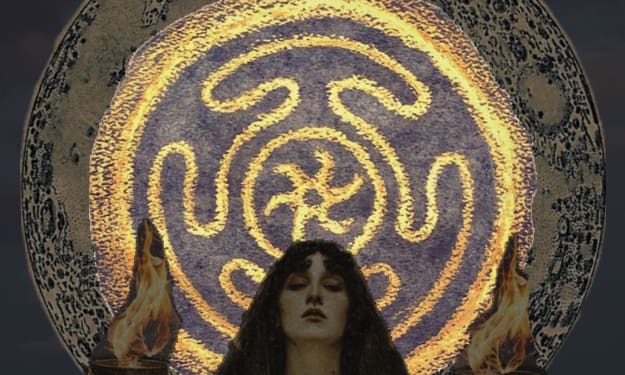
In the flickering light of ancient torches, standing at the crossroads where choices are made and fates are sealed, Hekate waits. Neither wholly light nor dark, she is the Greek goddess of magic, the moon, necromancy, and transitions. Revered and feared in equal measure, Hekate is a guardian of liminal spaces—the in-between realms of dusk and dawn, life and death, body and spirit.
By Kristen Orkoshneliabout a year ago in History