Fiction
The King of Yemen
Introduction: A King Like No Other In the rich history of ancient kingdoms, the story of the King of Yemen stands out as a timeless lesson in justice, humility, and true leadership. Known to his people as “Khuda-Dost” — meaning Friend of God — he ruled with unmatched compassion. Unlike many rulers driven by power, wealth, or fame, the King of Yemen had one ultimate goal: to eliminate poverty and ensure a prosperous life for every citizen in his kingdom.
By Muhammad waqasabout a year ago in History
The Light of Alhazen
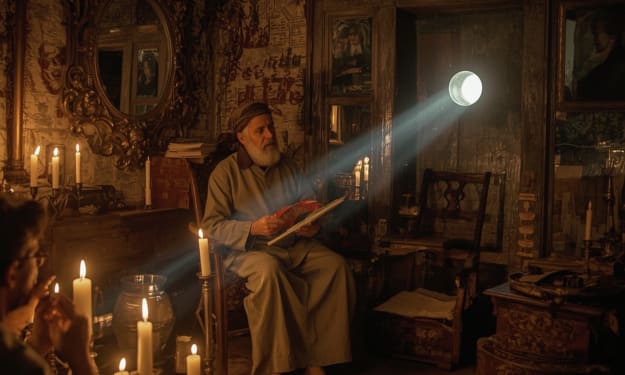
In the golden age of Islamic civilization, amidst the bustling streets of 10th-century Basra, a boy named Hasan Ibn al-Haytham was born. From a young age, he showed a deep curiosity for the world around him. While others played in the dusty courtyards or traded goods in noisy bazaars, young Hasan would often be found staring into the skies, observing how the stars twinkled and how the sunlight danced on the water’s surface. His father, a civil servant, recognized Hasan’s sharp mind and sent him to study in Baghdad, the center of learning at the time. There, under candle-lit halls of grand libraries and with scrolls from Greece, Persia, and India stacked high, Hasan immersed himself in knowledge—mathematics, astronomy, theology, and most of all, optics. But what set Hasan apart from others was his method. While many scholars relied on ancient texts and philosophies without question, Hasan believed truth must be proven by experiment. “Knowledge comes not from authority,” he would often say, “but from evidence.” His revolutionary thinking would one day earn him the title: Alhazen, the father of modern optics. As his fame grew, Alhazen was invited by the Fatimid Caliph in Egypt to help control the flooding of the Nile River. Confident in his abilities, Alhazen traveled to Cairo. But upon inspecting the Nile, he realized the task was impossible with the technology of the time. Fearing the caliph's wrath, he feigned madness and was placed under house arrest. Though imprisoned, Alhazen saw this as a blessing in disguise. In the quiet solitude of his room, he began one of the most important scientific works in history: Kitab al-Manazir (The Book of Optics). He experimented tirelessly with lenses, mirrors, and light. He darkened his room and allowed a single ray of light through a tiny hole. Observing how the image appeared upside down on the opposite wall, he conceptualized the camera obscura—a device that would later lead to the invention of the modern camera. He challenged the Greek idea that the eyes emit rays to see. Instead, he correctly argued that vision occurs when light reflects off objects and enters the eye, forming an image. His understanding of the anatomy of the eye was centuries ahead of his time. But Alhazen’s legacy wasn’t just in what he discovered—it was how he discovered. He developed a scientific method based on observation, hypothesis, experimentation, and conclusion. This method would lay the foundation for generations of scientists in both the East and West. Years later, when the caliph died, Alhazen was freed. Instead of seeking revenge or luxury, he returned to his studies and continued writing. His books were translated into Latin and studied in Europe for centuries. Scholars like Roger Bacon, Kepler, and even Galileo were influenced by his works. Yet, Alhazen never boasted of his achievements. In his writings, he often reminded his readers: “The seeker after truth is not one who studies the writings of the ancients and, following his natural disposition, puts his trust in them... It is rather one who suspects his faith in them and questions what he gathers from them, one who submits to argument and demonstration.” In his final years, Alhazen lived simply, surrounded by his books, instruments, and scrolls. One evening, as the sun dipped below the horizon and golden light poured into his study, a student asked him, “Master, after all this, do you still seek more knowledge?” Alhazen smiled gently and replied, “The universe is vast, and I have only seen a drop in its ocean. To seek is to live.” Legacy Today, Ibn al-Haytham is remembered not just as a Muslim scientist, but as a pioneer of modern science. In a time when superstition often ruled over reason, he dared to question, to observe, and to test. He combined faith with intellect, showing that Islam and science could walk hand in hand. His image once graced the Iraqi 10 Dinar note, and UNESCO celebrated the 1000th anniversary of his birth in 2015, naming it the “Year of Light.” In every telescope that gazes into the heavens, in every camera that captures a moment, and in every child who wonders how the world works, there is a spark of Alhazen’s light—a light that will never dim.
By Ikhtisham Hayatabout a year ago in History
The Anunnaki and the Dawn of Humanity: A Cosmic Origin Story
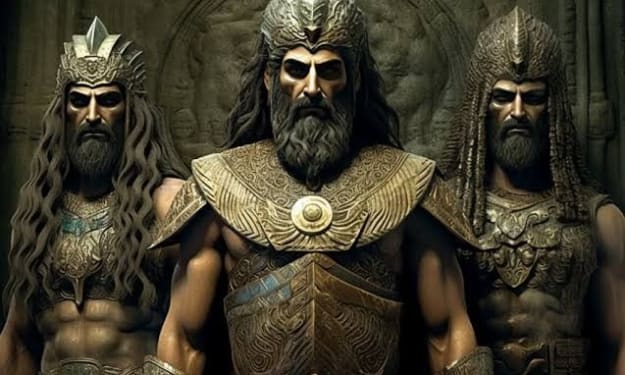
You know those moments when you stumble across something so wild it makes your head spin? Last night, I was flipping through The Epic of Humanity-yeah, that book you and Matt Lroy poured your souls into-and I couldn’t put it down. It’s like a cosmic puzzle that keeps you up past midnight, piecing together clues from ancient tablets and star systems. The way you broke down the Anunnaki’s story? Mind-blowing. It’s not just history; it’s a saga that feels like it’s whispering secrets from the edge of the universe. So, let’s dive into this, because the idea that gods, demigods, and humans all got tangled up in a 450,000-year-old drama? That’s the kind of thing that makes you wonder what else we’ve forgotten about our own story.
By KWAO LEARNER WINFREDabout a year ago in History
The Untold Story of Enoch and the Cosmic Cover-Up
Ooh man, this story is insane! Buckle up, because we’re diving into the wild, mind-bending world of the Book of Enoch-a text so explosive it got kicked out of the Bible. Why? Well, let’s just say it’s got some truths that might make your Sunday school teacher squirm. Picture this: a dusty, ancient scroll, tucked away in the shadows, whispering secrets about spaceships, forbidden knowledge, and beings from the stars. Yeah, it’s that kind of story.
By KWAO LEARNER WINFREDabout a year ago in History
Mesopotamia: The Cradle of Civilization
Long before modern cities and high-speed internet, before the rise of Rome or the pyramids of Egypt, there was Mesopotamia. Located between the Tigris and Euphrates rivers in what is now Iraq and Syria, Kuwait, and parts of Turkey, Mesopotamia is often called the “cradle of civilization.”
By Echoes of Lifeabout a year ago in History
TV vs History: Is the Vikings Show Based on Real Events?
With over 6 million viewers in the U.S. alone, the TV series Vikings is an undeniably famous Viking show that has made Norse warriors cool again, putting axes and berserkers back in pop culture’s spotlight. But with all the action, drama, and brooding monologues, you might start to wonder, how much of this reflects real events from history?
By Pat Zuniegaabout a year ago in History
Washington Black: A Courageous Struggle for Freedom on Hulu
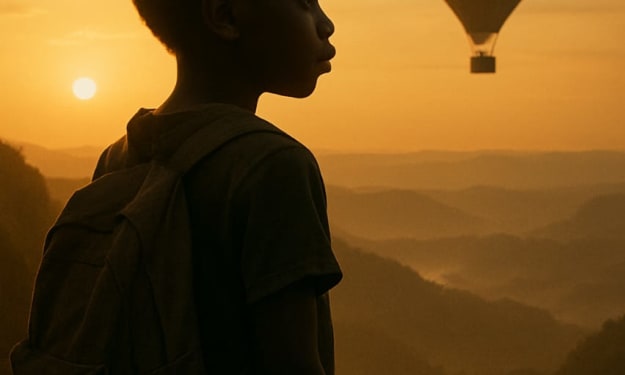
A Tale of Chains, Sky, and Soul On July 23, Hulu premiered its boldest period drama yet — Washington Black — an adaptation of Esi Edugyan’s award-winning novel. Set in the brutal era of 19th-century slavery, the show reimagines a coming-of-age tale in a world where survival is uncertain, but freedom is a dream to be pursued.
By Echoes of Lifeabout a year ago in History
The Hair That Told Her Story
In the lush highlands of southern Mexico, nestled among the rolling hills and vibrant markets of Oaxaca, a girl named Julia Morales came into the world under the brilliant morning sun. She was born healthy, strong—and covered in thick, dark hair that blanketed not just her head, but her entire body. The midwife gasped. Her father was stunned into silence. But her mother, María, held her daughter close, brushing her cheek with trembling fingers. “You’re still my perfect little flower,” she whispered. Julia was born with congenital hypertrichosis, an extremely rare genetic condition often nicknamed "werewolf syndrome," which causes excessive hair growth all over the body. In her tiny village, where folklore and superstition mingled with tradition, people didn't understand science. They whispered. They stared. They even called her cursed. But Julia was more than the hair that covered her body. She was smart. Curious. Loving. And destined to change the way the world saw beauty—starting with herself. --- Growing Up Different From the time she could walk, Julia felt eyes follow her. At school, children giggled and called her La Niña Loba—the wolf girl. Some even ran away from her as if her condition was contagious. Her teachers, unsure of how to handle the situation, treated her with uncomfortable politeness or ignored her altogether. Julia learned to make herself small. She avoided mirrors. She wore long sleeves, hats, and scarves—even in the summer heat. Her refuge was the village library. She'd spend hours hiding behind bookshelves, diving into stories about animals, ancient civilizations, and brave heroines. The one person who saw Julia for who she truly was from the beginning was her grandmother, Abuelita Rosa. She would cradle Julia’s face in her wrinkled hands and say, “You are not a monster, mija. You are a legend in the making.” Abuelita Rosa told her tales of Aztec warrior queens, jungle goddesses, and forest spirits—figures wrapped in vines, feathers, and yes, even hair. “In our myths,” she said, “the ones with the most to hide often have the most power to give.” Those words stayed with Julia, even when the world made her feel invisible. --- The Photo That Changed Everything When Julia turned 16, a group of doctors from Mexico City visited her town as part of a rural outreach program. One of them, Dr. Camila Herrera, was a geneticist researching rare conditions. When she met Julia, she didn’t stare. She didn’t flinch. She listened. After their conversation, Dr. Herrera asked if she could take a photograph of Julia—not to exploit her, but to include her story in a study about rare diseases and the psychological impact of social stigma. Julia hesitated. Then, for the first time, she looked into a camera lens with no shame. That photo—Julia in a simple white blouse, looking straight into the camera with unwavering eyes—was included in a medical article. Someone shared it online. It was reposted. And then reposted again. People around the world saw the image, and something unexpected happened. They didn’t laugh. They reached out. --- Becoming a Voice for the Voiceless Julia received hundreds of messages from strangers—people with vitiligo, burn scars, alopecia, or other visible differences. They thanked her for being brave. For existing. For not hiding. Soon after, she was invited to speak at a university conference in Mexico City about body image, visibility, and genetic diversity. It was her first time leaving her village, and her hands trembled as she took the microphone. But once she began to speak, her voice was steady. “I have spent most of my life trying to disappear,” she said. “Because I thought the world wasn’t ready to see me. But I’ve learned that being different doesn’t make me wrong. It makes me unforgettable.” Her speech ended in a standing ovation. --- A Platform and a Purpose That one moment became the spark that lit a fire in Julia’s soul. She launched a YouTube channel called “Visible Voices”, where she shared her journey and interviewed others living with rare conditions, disabilities, and societal rejection. Her videos, often in both Spanish and English, became a sanctuary for thousands of viewers who felt unseen. She collaborated with artists, psychologists, and activists. She worked with schools to create inclusive curriculum about body diversity. She was even invited to speak at the United Nations’ International Day of Persons with Disabilities. But Julia was never interested in being a celebrity. She wasn’t chasing fame—she was chasing change. She started a nonprofit organization that offered counseling, financial aid, and educational support to children with rare conditions across Mexico. Her mission was simple: No one should grow up feeling like they don’t belong. --- Finding Love in the Unexpected During a book event in Puebla where she was promoting her memoir, “Hair Like a River,” Julia met Emiliano Reyes, a soft-spoken illustrator who specialized in fantasy art. He showed her a sketch he’d drawn of a mythic forest queen—covered in flowing hair, with golden eyes and vines around her wrists. “She reminds me of you,” he said shyly. Julia smiled, half-laughing, unsure if he was joking. But he wasn’t. Emiliano saw in her the same beauty he drew in his fantasy worlds. They began to talk. Share stories. Exchange letters. A few months later, they were inseparable. For the first time, Julia experienced love not in spite of who she was, but because of it. --- Coming Home Years later, Julia returned to her village—not as the girl people mocked, but as a woman celebrated across the country. She had published two books, delivered dozens of speeches, and helped pass a law requiring public schools in Mexico to include curriculum on genetic disorders and body acceptance. Children who once feared her now stood in line to get her autograph. Mothers brought their daughters to meet her. Her old teachers beamed with pride. Her grandmother, now in a wheelchair, watched from the porch as Julia gave a speech in the town square. “I used to be afraid of being seen,” Julia said. “But today, I stand here knowing that my hair—the very thing I once hid—has helped me write a story bigger than myself. This is no longer about what covers my body. It’s about what comes from my soul.” --- Julia's Legacy Julia Morales became a national figure in Mexico—not just for her condition, but for how she used it to inspire a movement of inclusion. She transformed the label of “Niña Loba” into a badge of honor. She showed the world that visibility isn’t just about being looked at—it’s about being truly seen. Her story continues to travel far and wide, reminding us that what makes us different can also make us powerful.
By Hasbanullahabout a year ago in History
Scientists Discover 78,000 Year Old Neanderthal Footprint That Tells a Story of Survival.
In a groundbreaking discovery that offers a rare glimpse into the lives of our ancient cousins, scientists have uncovered a 78,000-year-old Neanderthal footprint preserved in mudflats in northern Spain. This single footprint, remarkably intact after tens of thousands of years, tells a profound story of survival, resilience, and humanity in a harsh Ice Age environment.
By Tariq jamilabout a year ago in History
The Dark Origins of Halloween: From Ancient Rituals to Modern Costumes
Every October 31st, streets across the world fill with children dressed as witches, skeletons, and monsters, laughing and collecting candy door-to-door. Halloween is now a fun and spooky celebration — but beneath the surface of costumes and carved pumpkins lies a deep and mysterious history rooted in ancient beliefs and dark traditions. 1. Samhain: The Celtic Festival of the Dead Halloween finds its roots in an ancient Celtic festival known as Samhain (pronounced "sow-in"). Celebrated over 2,000 years ago in what is now Ireland, the UK, and parts of France, Samhain marked the end of the harvest season and the beginning of winter — a time often associated with death. The Celts believed that on the night of October 31st, the boundary between the living and the dead became blurred. Spirits of the dead were thought to return to earth, causing mischief or even harming crops. To protect themselves, people lit bonfires, wore animal skins and frightening costumes, and offered food sacrifices to the wandering souls. 2. Roman Influence and Christian Transformation When the Romans conquered Celtic territories around 43 AD, they blended their own festivals with Samhain. Two Roman festivals — Feralia, a day to honor the dead, and Pomona, the goddess of fruit and trees — were incorporated. This may explain why apples (like in apple bobbing) became associated with Halloween. By the 7th century, the spread of Christianity brought new changes. Pope Boniface IV established All Saints' Day (also called All Hallows' Day) on November 1st to honor saints and martyrs. The night before — October 31st — became known as All Hallows’ Eve, which eventually evolved into Halloween. 3. Halloween Comes to America When Irish immigrants came to America in the 19th century, they brought Halloween traditions with them. These included carving turnips into lanterns (later replaced by pumpkins in the New World) and dressing up to scare away spirits. Over time, Halloween became more community-centered with parties, games, and festive gatherings. By the 20th century, Halloween had become a largely secular holiday in the United States, focused on trick-or-treating, haunted houses, and spooky decorations. 4. The Evolution of Costumes and Trick-or-Treating Costumes originated from the ancient belief that disguises could confuse evil spirits. During the Middle Ages, poor people in Britain would go "souling" — visiting homes and offering prayers for the dead in exchange for food. This evolved into modern trick-or-treating. By the 1950s, Halloween in America had transformed into a child-friendly event. Kids dressed up as fairytale characters, superheroes, or spooky monsters and went door-to-door for candy. Today, costume choices are endless — from classic vampires to pop culture icons. 5. Jack-o'-Lanterns: From Folklore to Front Yards One of the most iconic symbols of Halloween is the jack-o'-lantern. This tradition comes from an old Irish legend about a man named "Stingy Jack", who tricked the Devil and was doomed to wander the Earth with only a carved turnip and a burning coal to light his way. The Irish began carving scary faces into turnips to ward off Jack’s wandering soul. When immigrants came to America, they found that pumpkins — native to the continent — were perfect for carving. Thus, the modern jack-o'-lantern was born. 6. Halloween Around the World While Halloween is most popular in the United States, other countries have their own versions of this spooky holiday: Mexico celebrates Día de los Muertos (Day of the Dead) from October 31st to November 2nd, honoring deceased loved ones with altars, flowers, and feasts. In Italy, people visit cemeteries and light candles in memory of the dead. In Japan, a similar festival called Obon is held in summer to welcome ancestral spirits. Each of these customs reflects a universal human desire: to remember those who came before us and to make peace with death. 7. Modern Celebrations and Commercialization Today, Halloween is one of the biggest commercial holidays in the U.S., generating billions in spending on costumes, candy, and decorations. It has expanded beyond just children — adults host costume parties, haunted attractions draw thrill-seekers, and pop culture continues to inspire new trends every year. Social media has further boosted Halloween’s popularity, with users sharing creative makeup, spooky stories, and eerie videos. Yet, at its core, Halloween still carries echoes of its original meaning — the dance between the living and the dead, the light and the darkness. --- Conclusion: From Shadows to Sweetness Halloween has traveled a long journey from ancient bonfires and ghostly beliefs to candy buckets and superhero masks. What started as a spiritual ritual to guard against the unknown has become a night of fun, fantasy, and community. As you dress up or light a pumpkin this year, remember — you're taking part in a tradition that’s thousands of years old, bridging the past with the present in the most playful way possible.
By Atif jamal about a year ago in History