Fiction
Velask: The First Spark of World War 3
Velask: The First Spark of World War 3” Cold wind clawed at the edge of the Karakorum ridge, carrying ice and sand in equal measure. Dawn light crept weakly across the skyline, illuminating the jagged peaks in dull gold. Border guards in both Naryanov and Velask—once peaceful neighbors—watched through binoculars, breaths invisible in the razor-sharp air. Tension rippled in frozen lines, each soldier a living fuse.
By Wings of Time about a year ago in History
The Art of War: Global Power Projection and Strategic Alliances. AI-Generated.
The history of nations and empires is, in many ways, the history of war and the mastery of strategic power projection. From the writings of Sun Tzu in The Art of War to the modern doctrines of military science, the core idea remains the same: victory is not merely about fighting battles but about shaping the world in ways that favor one’s long-term interests. Superpowers throughout history have understood that wars are not only fought on their own borders but are often projected thousands of miles away to establish dominance and deter adversaries. The United States and Russia exemplified this in the 20th century by bringing their power far beyond their homelands—whether through proxy wars, military bases, or political alliances—to maintain their global influence.
By INAM ULLAHabout a year ago in History
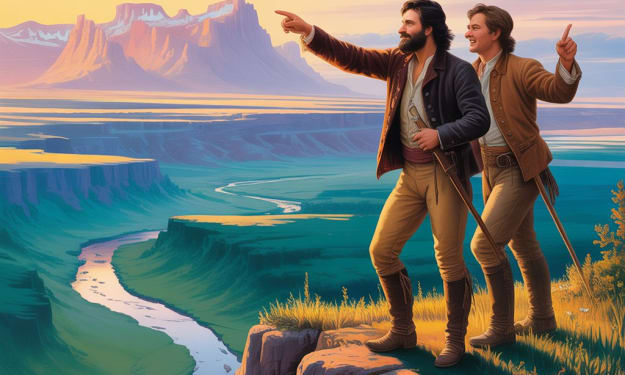
Lewis and Clark: Mapping the Unknown West
The year 1803 brought a new turn in American history. That year, the United States purchased a vast territory from France called the "Louisiana Purchase." This land covered almost half of the United States, but no one knew much about it. It was at this point that President Thomas Jefferson selected two brave explorers and adventurers to write a new chapter in the history of the fledgling nation. These two men were Merriweather Lewis and William Clark. Their goal was to map the unknown West, establish contact with the native tribes, and find out if there was a waterway that led to the Pacific Ocean.
By Echoes of Lifeabout a year ago in History
Dreams of Ellis Island: The Immigrants Who Made America
Ellis Island, located off the coast of New York, is the place where millions of immigrants first set foot on American soil. This small island is a testament to the dreams and prayers that people of different nations, languages, and religions cherished in their hearts. Some came to escape hunger and poverty, others to escape war and oppression, and still others to seek a better future for their children. Each story was different, but all had the same dream: “A new life in America.”
By Echoes of Lifeabout a year ago in History
UN Report Accuses Israel of Genocide and War Crimes in Gaza
Key UN Reports & Findings Settlement & Annexation in West Bank / East Jerusalem A report by the UN Human Rights Office (OHCHR), covering from Nov 2023 to Oct 2024, states that Israel has been increasing settlement activity, demolishing Palestinian homes, and expanding Israeli settler outposts. It says these actions violate international law, including the right to self-determination, and cites the International Court of Justice confirming those legal breaches. It urges Israel to cease settlement activity, evacuate settlers in occupied territory, stop forcible transfers, and prevent settler attacks.
By Wings of Time about a year ago in History
The Mysteries of Faith: Unraveling Belief in an Age of Skepticism
I, Stefano D'Angelo, found myself absorbed by a Netflix documentary series, a compelling exploration that boldly challenged conventional narratives, presenting what some might label as heresy, while others might see as profound truth. It delved into the very fabric of belief, juxtaposing the raw power of faith – often said to move mountains – against archaeological findings and scientific scrutiny. The series, much like our modern world, asked: what truly is real, and what is merely perceived?
By Stefano D'angelloabout a year ago in History
When a Coin Decided an Empire’s Fate
History often feels like the grand work of kings, queens, and generals. Yet, sometimes, it turns on something as small and ordinary as a coin. A single toss, a random choice, or a moment of chance has shifted the course of empires. These tiny accidents remind us that behind the sweeping arcs of history are fragile threads of fate. One of the most fascinating examples comes from the Roman Empire, where power often rested on fragile loyalties and sudden decisions. The Coin Toss Before a Battle In 69 CE, Rome was a storm. The emperor Nero had died, leaving behind no heir, and the empire was thrown into chaos. Historians call it “The Year of the Four Emperors.” Four men — Galba, Otho, Vitellius, and Vespasian — each rose and fell within a single year. Rome was bloodied by civil war, and its future trembled in uncertainty. Otho, a former ally of Nero, took the throne in January. But Vitellius, a general commanding powerful legions in Germany, began marching toward Rome with an army eager for conquest. A decisive battle loomed. Otho, desperate to secure his empire, gathered his commanders to discuss whether to face Vitellius in open battle or retreat to wait for reinforcements. Here comes the accident: the commanders could not agree. Their arguments grew so heated that one officer suggested leaving the decision to fate — by flipping a coin. According to some accounts, the coin toss favored immediate battle. Otho obeyed the verdict of chance, and his forces marched to war unprepared. The result was catastrophic. Vitellius’s legions crushed Otho’s army. Rather than plunge Rome into more bloodshed, Otho chose to take his own life. He left behind a final note praising loyalty and urging his men to accept defeat with dignity. He was only 36 years old. The empire changed hands because of a single flip of a coin. When Chance Shapes Destiny This was not the only time chance played with history. Consider how Alexander the Great once delayed an assault on Tyre because of an unfavorable omen, sparing his army from exhaustion. Or how the storm that sank part of the Spanish Armada in 1588 reshaped Europe’s balance of power, allowing England to rise as a naval giant. But the story of Otho’s coin remains striking because it was not nature, omens, or storms at play. It was a decision — left to the randomness of metal spinning in the air. What If the Coin Had Landed Differently? Had the coin landed the other way, Otho might have waited for reinforcements. His armies could have stood stronger, and Vitellius might have been defeated. Rome’s history could have unfolded under Otho’s rule instead of passing to Vespasian, the eventual victor of the chaos, who founded the Flavian dynasty and commissioned the Colosseum. Would Rome have still become the empire we read about today? Or would its culture, architecture, and politics have taken another path? We will never know. Lessons from a Coin What we can take from this story is simple yet powerful: sometimes the smallest choices carry the heaviest weight. A flip of a coin may seem trivial, but it can decide whether thousands live or die, whether a city thrives or falls, whether an empire survives or collapses. In our modern lives, decisions rarely involve empires — but they do shape our personal worlds. A quick yes or no, a chance encounter, or even a missed opportunity can redirect the story of a lifetime. History is not only made by the strong and the strategic. It is also shaped by the unpredictable and the accidental. Final Thought When we read history, it is tempting to imagine inevitability — that Rome was always meant to fall, that England was always meant to rise, that progress always marches forward. But the truth is messier. Sometimes, history turns on a coin spinning in the air, catching the light for a brief second before it lands. And in that moment, the fate of an empire rests not on armies or emperors, but on chance itself.
By LUNA EDITHabout a year ago in History
The Day That Changed Everything: Remembering 9/11 Through Ordinary Voices
On the morning of September 11, 2001, America woke up to a day that felt like any other. The late summer sky over New York City was clear and blue, the kind of morning that makes people pause to notice the beauty of an ordinary day. Commuters hurried into Manhattan, children walked to school, and office workers rode elevators into the World Trade Center, not knowing it would be their last day.
By arsalan ahmadabout a year ago in History
The Pyramids
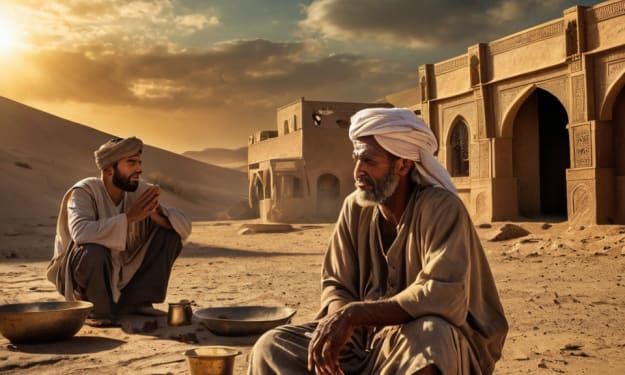
The desert sun burned mercilessly on the horizon, casting long shadows over the Nile’s banks where boats creaked under the weight of limestone blocks. Each slab was hauled from the quarries across the river, destined to become part of a monument that, according to Pharaoh Khufu, would outlast time itself. To the world, it was to be a tomb fit for a god. To those who built it, it was both burden and legacy. Among the thousands of laborers was Khepri, a farmer’s son from a small village near Memphis. He had come to Giza to escape hunger, lured by the promise of food, clothing, and steady work. Each dawn, he tied a strip of cloth around his brow, pressed his hands to the rough rope, and pulled with hundreds of others to drag the stones up massive ramps. His body grew lean, his shoulders hard, but his thoughts often drifted to his family, who waited for him with faith that his sacrifices would keep them alive. At the construction’s heart stood Imhotep, the Pharaoh’s chief architect. Though he wore fine linen and carried papyrus plans, his brow was furrowed with the same weight Khepri carried in his arms. For Imhotep bore responsibility not for one stone, but for all—every angle, every ramp, every life. Pharaoh demanded a pyramid that pierced the heavens, its sides flawless, its capstone gleaming with gold. Yet sandstorms battered the desert, workers fell ill, ropes snapped, and blocks cracked under strain. Each problem was his to solve, or his to answer for. Despite the hardships, the site was alive with determination. Workers sang rhythmic chants to keep time while hauling blocks, their voices rising above the desert winds. Artisans chipped away at limestone, shaping it smooth so the sun would glint off its face. Cooks stirred great pots of lentils and bread to feed the masses, while doctors tended to cuts, fevers, and broken bones. Though history would speak of kings, the pyramid was being raised by thousands of nameless hands. For Khepri, the work was grueling yet strangely meaningful. At night, he would sit with his companions around a small fire, sharing bread and dates. They spoke of their homes, of the Pharaoh’s glory, and of the whispers that perhaps building such a monument was a way of ensuring their own immortality. One older worker told him, “When this stone outlives us all, the world will know we once stood here. Our sweat will shine in its walls.” Imhotep, too, wrestled with deeper thoughts. Though loyal to Khufu, he wondered if the pyramid was truly for the Pharaoh—or for Egypt itself. It was a symbol of power, of unity, of human will against the desert. Yet it came at a cost measured in aching backs, calloused hands, and lives quietly lost along the ramps. He often walked among the workers, watching them strain and bleed, and he knew the monument was theirs as much as his. Years passed. The pyramid rose layer by layer, its steps climbing toward the sky. The ramps grew higher, curling around the structure like a serpent. Khepri had grown from a boy into a man, his arms corded with muscle, his eyes weathered by sand and sun. He had seen friends carried away on stretchers, never to return. He had seen men cheer when a stone finally slid into place after days of struggle. He had felt both despair and pride in equal measure. One evening, as the setting sun bathed the half-built pyramid in crimson light, Khepri stood beside Imhotep. It was rare for a laborer to stand beside the great architect, yet Imhotep often sought the perspective of those who bore the burden of his designs. “Does it feel worth it to you?” Imhotep asked quietly, his gaze fixed on the towering structure. Khepri hesitated. “It is hard, and many have fallen. But when I look at what we’ve built… I feel something greater than myself. My children will know I helped raise this mountain of stone. That is enough.” Imhotep nodded, a faint smile crossing his lips. “Then it is not just a tomb. It is a story carved in stone—a story of us all.” Finally, after decades of toil, the pyramid stood complete. Its smooth sides rose from the desert like a stairway to the gods, its capstone gleaming as the morning sun touched it. Trumpets blared, priests chanted, and the Pharaoh gazed upon his eternal house with satisfaction. Yet for Khepri, the greatest moment came when he stood among his fellow workers, sweat and dust still clinging to his skin, and looked at the monument in silence. It was not Pharaoh’s glory he saw, but the legacy of countless hands. He saw the songs, the laughter, the tears, and the dreams etched into every block. The pyramid would be remembered as Khufu’s, but Khepri knew the truth—that it was theirs too. Theirs, as much as the Pharaoh’s. The monument did not belong to one man, but to a nation, to the nameless souls who built it with strength, endurance, and faith. As the desert winds swept across the plateau, Khepri closed his eyes. For the first time, he felt not like a worker, but like a part of history. And the pyramid, standing tall against the sands of eternity, bore witness to his truth.
By LUNA EDITHabout a year ago in History