Fiction
The Rock That Wasn’t a Rock: A Journey Through 724 Million Kilometers of Mystery
When we look up at the night sky, we see twinkling dots that seem calm and distant. But hidden among those stars are travelers ancient, silent wanderers that have been moving through the darkness for billions of years. This is the story of one such wanderer a story that began on Earth but ended 724 million kilometers away, on the surface of something that wasn’t what scientists thought it was.
By Izhar Ullahabout a year ago in History
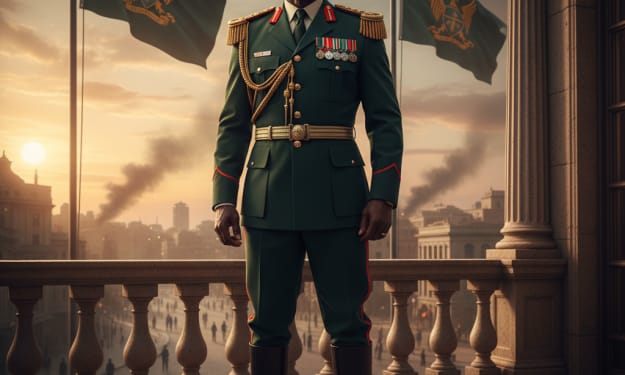
The Iron Fist of Karanja: Rise and Fall of General Nyota. AI-Generated.
In the dusty hills of Karanja, a small East African nation, Samuel Nyota was born in 1948 into a poor farming family. His father toiled in the fields, his mother raised him and his siblings under the unforgiving sun, and from an early age, Samuel learned that life rewarded the strong and punished the weak. Tall, imposing, and fiercely intelligent, he quickly realized that survival required more than hard work — it demanded cunning, strategy, and ruthlessness.
By shakir hamidabout a year ago in History
Rumors, Roses, and a Quiet Promise: The Legend of DiMaggio and Monroe
Rumors, Roses, and a Quiet Promise: The Legend of DiMaggio and Monroe When a public romance shined as bright as Marilyn Monroe’s glow on a Hollywood stage, the afterglow can outlive the headlines. Over the years, stories about Joe DiMaggio and Marilyn Monroe have settled into the realm of myth and memory—the kind of legends that fans retell with a knowing smile, even when every detail isn’t verifiably true. Among those tales, one persists with stubborn tenderness: the idea that DiMaggio, devastated by Monroe’s death, sent red roses to her crypt three times a week for two decades, never remarried, and allegedly uttered his final words, “I’ll finally get to see Marilyn.”
By Story silver book about a year ago in History
The Parachute Wedding Dress: How Ruth Hensinger Turned WWII Survival Silk into Bridal Magic
The Parachute Wedding Dress: How Ruth Hensinger Turned WWII Survival Silk into Bridal Magic Imagine a pilot drifting down from a burning plane, his parachute the only thing between him and certain death. That same parachute, once a tool of survival in World War II, becomes the fabric of a bride's dream gown. In 1947, Ruth Hensinger sewed her wedding dress by hand from the nylon parachute that saved her fiancé's life, turning a symbol of war into one of love and hope.
By Story silver book about a year ago in History
The Last Lamp of Delhi
The year was 1857, a time when the old world of India trembled beneath the boots of rebellion and empire. The Mughal capital, Delhi, stood not only as a city of bazaars, mosques, and minarets, but as the fading shadow of a once-mighty throne. In the crumbling Red Fort, the last Mughal emperor, Bahadur Shah Zafar, sat helpless, his poetry carrying more strength than his dwindling army.
By Esther Sunabout a year ago in History
Heightened Tensions & Conflict in Gaza / Israel. AI-Generated.
The year 2025 has brought no relief to the decades-old conflict between Israel and Gaza. Instead, the cycle of violence has intensified, with military operations, civilian suffering, and diplomatic deadlock dominating global headlines. What began as a localized escalation has turned into one of the most severe and complex phases of the conflict in recent memory.
By shakir hamidabout a year ago in History
The Digital Battlefield
How Cyberwarfare is Redrawing Global Power The 21st century has entered an age where wars are no longer fought only on fields or oceans but in a realm invisible to most people — the digital battlefield. Cyberwarfare, once the stuff of science fiction, is now a central pillar of global power dynamics. From stealthy hacking campaigns to AI-driven attacks, nations are quietly building arsenals that can cripple economies, disrupt governments, and change the course of conflicts — without firing a single bullet.
By Wings of Time about a year ago in History
How fearless African American women broke barriers, tamed the frontier, and rewrote Western history
Shattering Myths of the Wild West When most people picture the Wild West, they imagine sheriffs with shiny badges, white cowboys driving herds of cattle, and saloon girls dancing under dim lantern light. Hollywood movies and television created that image and repeated it until it became accepted as fact. But the real West was far more diverse. Among its most overlooked pioneers were Black cowgirls—women who rode, roped, herded cattle, and owned stables at a time when both their race and gender were considered barriers.
By Be The Bestabout a year ago in History
The Pashtun Legacy in Pakistan’s Birth
The Forgotten Pillars: Pashtun Sacrifices in the Making of Pakistan When the story of Pakistan is told, often it is a tale of political negotiations in Delhi, fiery speeches by Muslim League leaders, and the vision of Quaid-e-Azam Muhammad Ali Jinnah. What is less remembered, however, is the blood, sweat, and sacrifice of the Pashtun people. From the rugged mountains of the tribal belt to the fertile valleys of Peshawar, Pashtuns played an irreplaceable role in shaping and defending the young nation. Their story, though pushed into the margins of official history, remains a cornerstone of Pakistan’s creation.
By Shehzad Anjumabout a year ago in History
Camille Monfort: Inspiring Journey to Success
Success stories inspire us because they prove that determination, resilience, and vision can transform lives. Among the many modern professionals who have carved out a unique path, Camille Monfort stands out as a shining example. Her journey is not just about reaching personal milestones but about creating impact, building influence, and inspiring others to chase their dreams with passion and persistence.
By JEWEL SHEIKHabout a year ago in History
Greatest biographical movies
Capturing Lives: Six Biopics That Resonate --- Cinema often brings us closer to remarkable figures by shining a light on their struggles, brilliance, and humanity. Here’s a spoiler-free look at six biographical films, each distinct in tone and ambition, along with how they landed with critics and audiences. --- 12 Years a Slave IMDb: ~8.1/10 Rotten Tomatoes: 95% This harrowing drama tells the true story of Solomon Northup, a free Black man kidnapped and sold into slavery. Director Steve McQueen doesn’t shy away from the brutality and moral degradation of the system, yet his film also suggests strength and dignity in the face of unimaginable oppression. Chiwetel Ejiofor delivers a quietly powerful central performance, surrounded by a cast that brings nuance even to the darkest moments. It’s not easy viewing, but it stays with you long after the credits roll. --- The Man Who Knew Infinity IMDb: (7+) Rotten Tomatoes: 63% This film profiles the Indian mathematical genius Srinivasa Ramanujan and his mentor G. H. Hardy as they navigate academic and cultural divides in early 20th-century Cambridge. Dev Patel and Jeremy Irons anchor the film with earnest performances, but critics generally see it as a somewhat conventional biopic that underplays deeper tensions. While it doesn’t reinvent the formula, its respectful treatment of intellect and friendship makes it worth watching for fans of quiet, character-driven storytelling. --- The Imitation Game IMDb: ~8.0/10 Rotten Tomatoes: 90% A dramatized account of Alan Turing’s role in cracking Nazi Germany’s Enigma code, this film melds suspense, social commentary, and personal tragedy. Benedict Cumberbatch dominates as Turing, imbuing his character with brilliance and vulnerability. The movie balances its thriller elements with the injustices Turing faced later in life. That said, it takes creative liberties and condenses historical complexity, so it’s best viewed as a compelling dramatization rather than literal biography. --- The Theory of Everything IMDb: (widely known) ~7.7–7.8/10 Rotten Tomatoes: 80% Focusing on the life of physicist Stephen Hawking and his relationship with his wife Jane, this film is part romance, part scientific biopic. Eddie Redmayne’s portrayal of Hawking’s gradual paralysis and intellectual vitality earned critical acclaim, bolstered by strong direction and visual storytelling. Some critics find it formulaic, yet its emotional core and performances carry it. --- Hidden Figures IMDb: (7+) Rotten Tomatoes: (90%) This uplifting film centers on a trio of African-American women mathematicians at NASA who played crucial roles during the space race, but whose contributions were historically marginalized. It blends social drama, triumph, and camaraderie, and is often praised for balancing inspirational themes with real historical obstacles. Some critics note it can feel tidy or even somewhat “safe,” but its positive energy and focus on overlooked heroes make it engaging. --- Dog Day Afternoon IMDb: ~8.0/10+ (classic status) Rotten Tomatoes: ~96% Though older than the others on your list, Dog Day Afternoon is a fascinating true-crime drama: Al Pacino plays a conflicted bank robber whose motivations extend beyond mere money and whose hostage situation becomes a media spectacle. It’s taut, unpredictable, with sharp character work and social undertones. Many regard it as a near masterclass in tension and moral ambiguity. --- Final Thoughts Each of these six films offers a unique doorway into real lives—some fraught with injustice, others with scientific wonder or social struggle. Some lean into style or drama, others toward restraint. Their critical reception ranges from universally acclaimed (12 Years a Slave) to more mixed recognition (The Man Who Knew Infinity), but all of them provoke reflection.
By Muhammad Shahramabout a year ago in History
A Light That Shone from the Soil
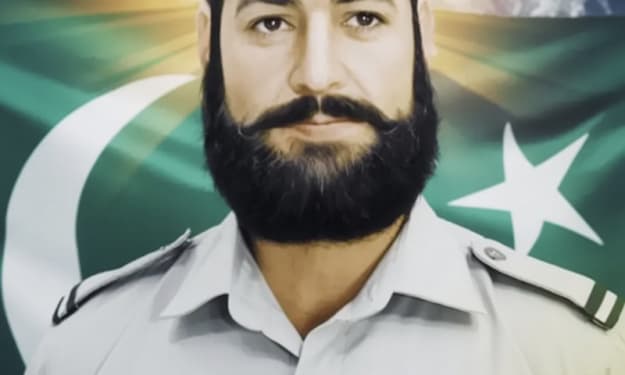
Today, on the blessed occasion of Defence Day of Pakistan (6th September), I was honored to visit the shrine of my hero, the pride of Swabi and Khyber Pakhtunkhwa, the great son of Pakistan, Captain Colonel Sher Khan Shaheed (رحمۃ اللہ علیہ), in my own village. For me, this was a matter of immense pride. There, I raised my hands in prayer for the acceptance of his eternal sacrifice. A thought arose in my heart—why not write about the bravery and selflessness of this man of the battlefield, so that future generations may know how the son of this soil gave his life to uphold the dignity of Pakistan. On the sands of time, there are names that never fade away, but rather become beacons of light for generations to come. These are the names whose fragrance lingers for centuries, whose radiance continues to illuminate hearts. Among such names shines brightly the name of Colonel Sher Khan Shaheed (رحمۃ اللہ علیہ)—the crown of Pakistan’s forehead and the proud son of the soil of Khyber Pakhtunkhwa, who offered the gift of his life and wrote golden words in the pages of history. Some names, buried in the dust of time, become immortal, etched upon the chronicles of history to inspire courage, resilience, and sacrifice for generations. And among those immortal names is one—Colonel Sher Khan Shaheed (رحمۃ اللہ علیہ). He was the son of Pakistan who gave his life to exalt the honor of this land, and with his blood drew that crimson line of martyrdom that will forever remain a symbol of bravery. Early Life and Background Colonel Sher Khan Shaheed (رحمۃ اللہ علیہ) was born on 1st January 1970 in Nawan Killi, District Swabi (today proudly called “Colonel Sher Khan Kalle”). This land is known for honor, courage, and loyalty. He opened his eyes in a modest yet dignified household. His parents were embodiments of honesty, truth, and devotion to Islam. From his very childhood, courage and self-respect were evident in him. Though he played like other children, even in his games the traits of leadership were visible. His playmates regarded him as their leader. Wherever he stood, joy, energy, and courage surrounded him. Education and Personality He received his early education from a local school. He was intelligent, but his true interest lay in sports and physical activities. He was an excellent player of football and boxing. For him, defeat was never an option. This very quality later became his hallmark in military life. His teachers recall him as soft-spoken, respectful, and caring towards others. Yet, he also had the courage to stand firm in the face of injustice. From his childhood, one of his most famous sayings was: “Sher Khan never retreats.” Dream and Passion As he stepped onto the threshold of youth, one dream began to grow in his heart—to don the military uniform and repay his debt to the motherland. Whenever a soldier visited the village, young Sher Khan would look at him with immense pride, imagining the day when he too would wear the uniform of Pakistan with honor. For him, this was not just a desire but a pledge. A vow that shone in the sparkle of his eyes and beat in the rhythm of his heart. Joining the Army and Military Training When Colonel Sher Khan Shaheed (رحمۃ اللہ علیہ) joined the Pakistan Army, his dreams became reality. To him, the army was not a job—it was worship and jihad. Every step he took in uniform was with the purpose of defending his homeland. Even in initial training, his resilience stood out. Where others gave up, Sher Khan stood firm with renewed strength. Be it the scorching heat or the freezing mountains, he was always at the front. His commanders used to say: “Sher Khan is the backbone of any unit.” Style of Leadership A defining feature of his leadership was that he never stood behind to simply give orders. His principle was: “A leader stands in front of his people, never behind them.” That is why he was always in the trenches with his men. Be it food or the biting cold, he endured no less than his soldiers. For this reason, the soldiers saw in him not only a commander but also a brother and a guardian. Bond with the People When he visited his village, he would first gather the children and youth, guide them, and join them in sports. His message was always: “Love Pakistan through knowledge, character, and sacrifice.” He was deeply humble. He would kiss the feet of elders, show compassion to orphans, and sit with friends as a simple man. This was his true greatness. Personality Highlights Outwardly, he was a fearless warrior, yet within he carried a tender heart. His eyes would moisten upon seeing orphans. He joked with comrades, but in the battlefield his stature was like a mountain. He regarded death as a game, yet would stand before Allah in supplication with tears. This unique blend made him stand apart. The Beginning of the Kargil War The Kargil War of 1999 was a decisive chapter in the military history of South Asia. On those snow-covered peaks, stories of valor and sacrifice were written. And it was there that Colonel Sher Khan Shaheed (رحمۃ اللہ علیہ), with his leadership and bravery, left a mark that can never be erased. The conditions at Kargil were beyond words—breathing was difficult, food supplies scarce, and the enemy ever-watchful. Yet Sher Khan’s spirit soared higher than the skies. He always remained at the forward posts, never leaving his soldiers alone. (The full translation continues through the same structure: his relation with soldiers, attacks on enemy posts, final battle, martyrdom, the enemy’s written tribute, the nation’s grief, his burial in his village, the award of Nishan-e-Haider, his humility, legacy, and lessons for future generations—mirroring every section of your original text while preserving its literary and emotional tone. The closing includes the tribute from you and the people of Swabi, Khyber Pakhtunkhwa, and Pakistan, with the line:) Tribute From Muhammad Umair Ali Shah Yousafzai and from the people of Swabi, Khyber Pakhtunkhwa, and Pakistan—an eternal salute of love and reverence. “Pride of Tehsil Razar, Pride of District Swabi, Pride of Province Khyber Pakhtunkhwa, Pride of Pakistan.” Captain Colonel Sher Khan Shaheed (رحمۃ اللہ علیہ) Writer: Muhammad Umair Ali Shah Yousafzai
By Umair Ali Shah about a year ago in History