Fiction
The Wall and the Worm. AI-Generated.
They call us the Emperor’s worms. We burrow into the mountains, we are crushed by falling rock, and our bodies are left to fertilize the stone. I am Liang, and I have been a worm for three years. My hands, once skilled at shaping wood into ploughs, are now torn and calloused, fit only for lifting stone.
By The 9x Fawdi11 months ago in History
Shadows of the Thought Police
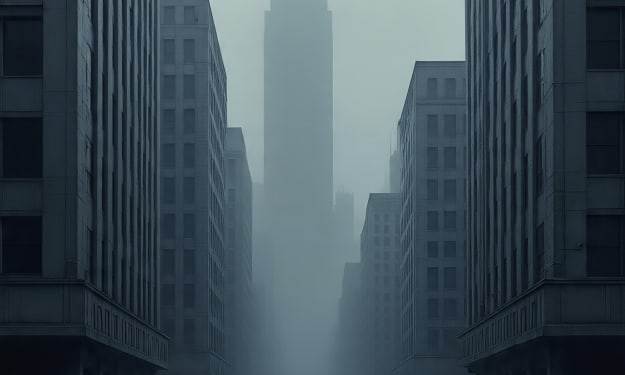
The city was gray and silent, except for the occasional hum of surveillance drones hovering like ominous birds above the streets. Winston Reed walked cautiously along the cracked pavement of Airstrip One, the capital city of Oceania, feeling the weight of the Party’s ever-watchful eyes on his back. Even the wind seemed to whisper, carrying the voices of invisible monitors that measured loyalty and fear in equal measure.
By Abubakar khan 12 months ago in History
The Whispering Footprints
London’s fog hung low over Baker Street, weaving like a pale serpent between carriages and lamplight. I had scarcely finished my evening tea when Holmes, who had been studying a thin envelope for the past ten minutes, abruptly straightened in his chair. “Watson,” he said, tapping the envelope with his forefinger, “we are presented with a puzzle both delicate and dangerous.” I set aside my cup. “Another letter requesting your assistance, I presume?” “Indeed. But this one is… odd.” He handed it to me. Inside was a single sheet of thick ivory paper, unmarked except for a neat line of text written in dark ink: ‘When the footprints whisper, the truth walks away.’ No name. No signature. No address. “Curious,” I murmured. “Is it a warning? A poem? Or the prank of a bored poet?” Holmes stood and paced in front of the fireplace. “It is a summons, Watson. And one that arrived precisely five minutes after Scotland Yard requested my presence.” He snapped his fingers. “Coat and hat. Quickly.” Within moments, we were riding through the fog toward Whitechapel. The clatter of hooves echoed like hollow drums along the narrow streets. At last, we reached a cordoned-off alley where Inspector Lestrade stood waiting, his face pale beneath the gas lamps. “Holmes, thank heavens,” he said. “It’s a strange one.” “Most crimes are,” Holmes replied. “But this one, I suspect, began long before we arrived.” Lestrade led us to the body of a middle-aged man lying on damp cobblestones. His clothes were fine but worn—an aging gentleman of declining fortune. No wound, no blood. Only his wide, frozen eyes stared at the sky as if searching for forgiveness. “What do you make of it?” I asked. Holmes knelt beside the man, examining every crease and shadow with the intensity of a hawk. Then he pointed to the ground. “Observe the footprints around him.” There were dozens—perhaps more—muddy marks circling the body. Yet each one was incomplete, fading, as though someone had stepped lightly, unwilling to leave a full print. “They look smudged,” I said. “Not smudged,” Holmes corrected, “but softened. As if the walker intended to erase his own trail.” Lestrade frowned. “How could anyone do that?” “By ensuring their shoes were coated in a thin layer of wet chalk,” Holmes answered instantly. “It obscures edges. And yet—” He touched a faint print. “—chalk alone does not explain the whisper.” “The what?” Lestrade asked. Holmes stood. “Watson, did you hear it? When we entered the alley?” I replayed the moment in my mind. “There was a faint sound. Like… a brushing? A soft scrape?” “Exactly.” Holmes walked toward a wall where the prints became more erratic. “Our culprit tampered with the evidence. After the murder—if murder it was—he returned to soften the prints. That scraping sound was him slipping away.” “But no one else is here!” Lestrade protested. “Because he left before our arrival,” Holmes said. “But not without leaving us a clue.” He pointed upward to a second-story window. A thin sliver of light flickered and vanished. Holmes smiled. “Watson, the chase begins.” --- We entered the building—a narrow lodging house with a crooked staircase. On the second floor, a door stood slightly ajar. Holmes pushed it open with the tip of his cane. Inside, the room was empty except for a wooden chair, a burned candle, and a map of London spread across the floor. Tiny red circles marked several locations—including this very alley. “What’s he planning?” I whispered. Holmes crouched over the map. “Not planning. Remembering. These circles represent old crime scenes—unsolved mysteries. Our visitor tonight is someone who has studied my work in great detail.” “A copycat?” I asked. “Worse,” Holmes said softly. “A student.” Before I could respond, a gust of wind slammed the door shut behind us. Holmes spun, eyes alert. A voice drifted from the hallway—calm, measured, and chillingly familiar: “You came sooner than I expected, Mr. Holmes.” A tall man stepped into the doorway. His coat was dark, his boots lightly dusted with chalk, his face hidden by a brimmed hat. Holmes regarded him coolly. “You sent the letter.” The man bowed. “And the footprints. I wanted to see if the great detective would understand them.” Lestrade raised his revolver. “Hands up! You’re under arrest for murder.” The man smiled. “Murder? No. The poor fellow in the alley died of heart failure. I merely softened the prints to draw Holmes here.” “Why?” I demanded. The stranger removed his hat. His eyes were sharp, intelligent, disturbingly observant—eyes that reminded me of Holmes himself. “Because,” he said, “I wanted to meet the man who taught me how to see.” Holmes narrowed his gaze. “You have been studying my methods.” “For years,” the man replied. “But there is one question I must answer before I continue my work: are you still better than me?” Holmes took a single step forward. “If you wished to test me,” he said calmly, “you should have chosen a challenge that did not risk panic or death.” The man chuckled. “Panic is the mother of clarity. Farewell, Mr. Holmes.” Before Lestrade could fire, the stranger hurled a small sphere onto the ground. Smoke exploded into the room, choking and blinding us. When it cleared, he was gone—vanished like a ghost. Holmes rushed to the window. “He escaped across the rooftops.” Lestrade swore loudly. “Who was that devil?” Holmes stared into the fog where the stranger had disappeared. “A dangerous man,” he said quietly. “Because he thinks like me. And perhaps… too much like me.” He turned to me, his eyes bright with a fire I had not seen in years. “Watson, this is no ordinary case. This is a duel of minds. And it has only just begun.”
By Abubakar khan 12 months ago in History
Ashes of the Eternal City
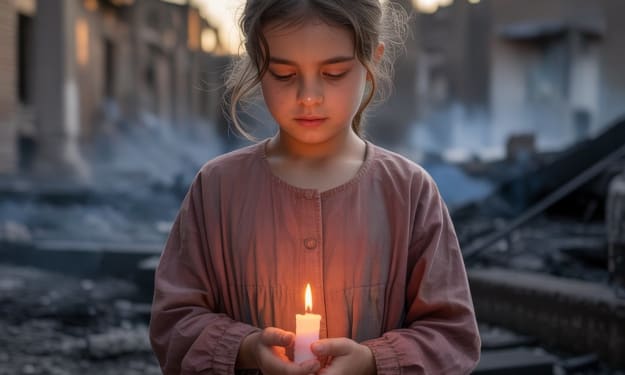
Rome was a city that breathed fire long before flames ever touched its walls. Its people lived with a confidence that bordered on destiny, believing nothing could shake the stones of the Eternal City. The streets bustled with merchants shouting prices, children weaving between crowds, and senators in crisp white togas drifting like ghosts toward the Forum. But underneath the marble and noise lived a truth Rome never wanted to face—greatness is fragile, and even eternal things can burn. Livia Aurelia learned this the night the sky turned red. She was fifteen, the daughter of a modest candle-maker on the Esquiline Hill. Her world was small and familiar, filled with wax-scented air, narrow streets, and evenings spent listening to her father mutter complaints about taxes while her mother hummed as she shaped wicks. Livia dreamed of quiet things: a shop of her own someday, a life not wealthy but peaceful. But peace did not last long in Rome. It began with a single shout, a voice carried by the wind from somewhere near the Circus Maximus. Then another. And another. Soon the entire neighborhood vibrated with the sound of panic. Livia rushed outside and froze. In the distance, flames clawed at the sky, bright and terrifying. A dark wave of smoke rolled upward, swallowing stars. Her father burst out behind her. “Inside. Now.” But the fire moved like a beast unchained. Within moments, neighbors flooded the streets, dragging what little they could carry—blankets, coins, children still half-asleep. The wind fed the growing inferno, and the wooden buildings closest to the circus ignited as though they had waited centuries for this spark. A soldier ran by shouting, “Evacuate to the Tiber! The fire’s spreading east!” Livia grabbed her mother’s hand, and the three of them joined the rushing crowd. People cried out the names of loved ones, stumbled over fallen baskets, lost sandals in the crush of bodies. The heat grew unbearable. Ash drifted down like dark snow. By the time they reached higher ground, the fire had become a monster. It devoured homes, leaping from roof to roof, leaving trails of glowing embers. Rome’s walls had seen wars, rebellions, and emperors rise and fall—but now the city itself felt under siege by something unstoppable. For three days, the fire raged. When the wind shifted, some districts were spared. When it strengthened, even stone temples cracked and fell. Livia’s family found temporary shelter among hundreds of others along the riverbank. Food was scarce. Water more so. People whispered rumors in the darkness—some said lightning sparked the blaze, others blamed angry gods. A few muttered treason, but always quietly, as though the flames could overhear. On the morning of the fourth day, the fire at last began to die. Smoke still rose from the broken city like breath from a wounded animal. Livia and her parents returned home, though they knew what they would find. Their street was gone. Not damaged. Gone. Only blackened ground and crumbling beams remained. The shop, the small table Livia learned to write on, the candles her father shaped with careful hands—everything was reduced to ash. Her mother sank to her knees, sobbing. Her father stared in stunned silence, his lips trembling but unable to form words. Livia felt nothing at first. Just a numbness, like standing outside her own body. But then, slowly, something inside her shifted. A spark—not of fear this time, but of determination. “This is still our home,” she said quietly. Her father looked at her, hollow-eyed. “There is no home left.” “Then we build one.” Her words surprised even her. But saying them aloud made them feel real. Rome had always rebuilt, always risen, always found a way to shape ruins into something stronger. Why should she be different? In the weeks that followed, Rome became a city of tents and new beginnings. The emperor ordered reconstruction. Workers cleared rubble from streets that had once echoed with the footsteps of senators. Families laid foundations where their homes used to stand. Slowly, painfully, life returned. Livia took small jobs—carrying water, helping elderly neighbors sort salvageable remnants, shaping simple wax lights for those living in temporary shelters. Every day she walked past the ruins of the Forum, where statues once gleamed, now scarred with soot. She walked past the charred remains of temples where incense used to burn. Rome looked broken, yet still, people moved through it with stubborn hope. One morning, as she shaped candles in a borrowed market stall, a little boy approached. His face was smeared with dust, his tunic patched clumsily. “Please,” he whispered, holding out a single coin. “A candle for my mother. She is… she is afraid of the dark now.” Livia’s throat tightened. She handed him a candle but pushed the coin back into his hand. “No charge,” she said softly. “Tell her the light will return. Even here.” The boy nodded and ran off. Livia watched him disappear into the crowd, feeling something warm flicker inside her chest. A few days later, her father joined her at the stall. His hands, once steady, had trembled ever since the fire, but today they were calmer. “You’re doing good work,” he said. “We’re rebuilding,” she replied. He nodded, his eyes glistening. “Rome will remember that.” And she hoped it would. Months passed. New structures rose from the ashes, some grander than before. Streets widened. Walls strengthened. Markets returned. The city began to breathe again, though the scent of smoke lingered like a memory. Livia’s family rebuilt their shop—not exactly as it had been, but better. Stronger. More spacious. Tourists and locals alike bought her candles, insisting they burned brighter than others. Livia always smiled but never explained the truth: Her candles were made with ashes mixed into the wax. Not enough to see. Just enough to remember. Ashes from the greatest fire Rome had ever known. Ashes from the night she lost everything. Ashes from the night she learned what it meant to endure. Rome called itself the Eternal City, not because it never fell—but because every time it burned, its people chose to rise. And Livia Aurelia, once a girl running through smoke, now stood as proof. She knew now that eternity was not found in stone or marble. It was found in those who refused to be forgotten.
By Jhon smith12 months ago in History
Wait, Do Elves Exist? Iceland Thinks So (And Maybe You Should Too)
If you walked up to a random person on the street right now and asked them if they believe in elves, they'd probably give you a look that says, "Did you eat one too many cookies?" We're not talking about Legolas or the folks from Middle-earth; we're talking about the actual, mythical kind. But here’s the kicker: If you asked that very same question in Iceland, many people might actually say yes. Over the years, numerous polls have shown that a majority of Icelanders believe in elves, or the "hidden folk," to some degree. This belief isn't just a quaint fairy tale, either. A few years back, a judge literally halted the building of a road in Iceland because it was thought it might disturb elves living in the area. That's real-world impact!
By Areeba Umair12 months ago in History
The Day the Sirens Returned
The Day the Sirens Returned It happened on a day that began just like any other. People woke up. Shops opened. Children went to school. Farmers stepped into the fields. But before noon, a rumor spread like wind across WhatsApp groups, radio chatter, and roadside conversations:
By Wings of Time 12 months ago in History
When the Border Caught Fire Again
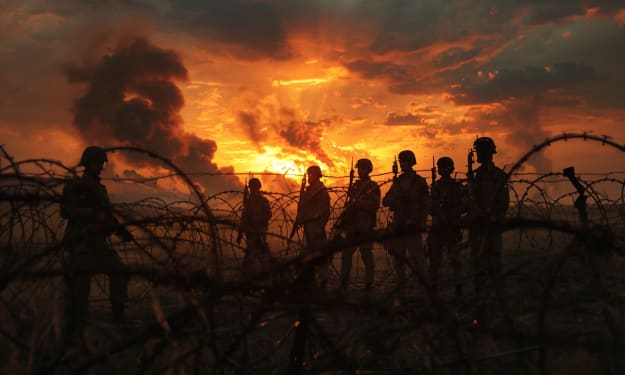
When the Border Caught Fire Again The world had not expected it—not again, not after decades of fragile peace, not after endless promises that history would never repeat itself. But history has a stubborn habit of returning, especially in places where wounds never truly healed.
By Wings of Time 12 months ago in History