Fiction
Exploring Agra, India: A Timeless Journey Through History and Culture
Agra is a city in the northern state of Uttar Pradesh, India. This city is known for housing the Taj Mahal; thus, a rich history, beautiful architectural designs, and a lively culture hold a prominent place, marking it as a destination for any traveler interested in beauty and significance in history.
By Golu Kumar2 years ago in History
"The Vatican's Hidden Vault of Mysteries"
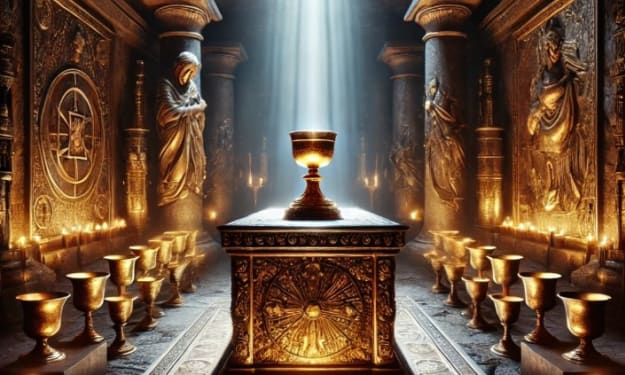
Journey into Mystery and Faith Vatican City, the smallest independent state in the world, stands as the spiritual and administrative heart of the Catholic Church. Within its borders lie architectural marvels like St. Peter’s Basilica, the Sistine Chapel, and the Vatican Museums, but there’s a more elusive aspect to this revered city-state—a legend that whispers of hidden treasures buried deep within its confines. These aren’t just gold coins or gems, but a collection of ancient artifacts, manuscripts, and secrets that could change our understanding of history, religion, and humanity. This article delves into the captivating mystery of the hidden treasures of Vatican City—a tale steeped in history, faith, and fantasy. The Origins of the Mystery For centuries, the Vatican has been shrouded in an aura of secrecy. As the seat of the papacy, it has amassed untold wealth through donations, conquests, and the patronage of the faithful. Much of this wealth is visible in its priceless art collections and religious relics, but rumors suggest that the Vatican hides treasures far beyond what the public sees. The intrigue begins with the Vatican Library and its secret archives. Founded in the mid-15th century, the library houses tens of thousands of manuscripts, some dating back over 2,000 years. These texts are said to contain lost knowledge, forbidden gospels, and records of human history that contradict mainstream narratives. Some theorists believe that these archives hold maps leading to ancient treasures, relics from early Christianity, and even evidence of extraterrestrial life. What Treasures Might Be Hidden? The mystery of Vatican City’s hidden treasure can be divided into three main categories: spiritual artifacts, historical documents, and material wealth. Spiritual Artifacts Among the legends is the belief that the Vatican possesses items of immense spiritual significance. These might include the Holy Grail, the Ark of the Covenant, or relics of saints whose powers could inspire faith—or fear. Some claim that the spear believed to have pierced Jesus Christ’s side, known as the Holy Lance, is secretly housed in the Vatican’s vaults. Historical Documents The Vatican’s secret archives are said to contain texts that challenge conventional history. From the true story of the Knights Templar to hidden teachings of Jesus Christ, these documents could rewrite entire chapters of humanity’s past. Some even speculate that the archives include letters between early popes and figures like Leonardo da Vinci, Galileo, or even rulers of ancient civilizations. Material Wealth As a repository of religious offerings and conquests, the Vatican is rumored to have hoards of gold, jewels, and artifacts acquired over centuries. During the Crusades, for instance, treasures from Jerusalem and Constantinople may have been brought to the Vatican for safekeeping. Some believe these treasures are hidden in underground catacombs or secret chambers. Legends and Theories Numerous stories add to the allure of the Vatican’s hidden treasures. One legend speaks of a secret chamber beneath St. Peter’s Basilica, said to contain treasures looted from Jerusalem’s Second Temple during the Roman conquest in 70 CE. This chamber, known as the “Treasure of the Temple,” is believed to hold the Menorah, sacred vessels, and scrolls of immense religious value. Another theory involves the lost documents of the Knights Templar. The Templars, a medieval Christian military order, were known for their wealth and alleged discovery of hidden knowledge during their time in Jerusalem. When the order was disbanded in the 14th century, some believe that the Vatican acquired their treasures and secrets. The Secretive Nature of the Vatican The Vatican’s secrecy only fuels speculation about its hidden treasures. Access to the secret archives is highly restricted, granted only to qualified researchers and clergy, and even then, limited to specific documents. The catacombs beneath Vatican City remain largely unexplored by outsiders, leaving their contents a mystery. This secrecy isn’t without reason. The Vatican sees itself as the custodian of faith, charged with protecting artifacts and knowledge that could destabilize religious or political systems if mishandled. Critics, however, argue that this secrecy prevents humanity from understanding its true history and heritage. The Treasure Hunt: Fact or Fiction? While the Vatican’s hidden treasures remain a tantalizing mystery, evidence for their existence is largely circumstantial. Skeptics point out that the Vatican is already wealthy and influential—why would it need to hide anything? Yet, history shows that institutions often conceal information and artifacts for protection, control, or fear of misuse. Treasure hunters and conspiracy theorists continue to speculate, but no definitive proof has emerged. Despite this, the idea of Vatican City as a repository of untold secrets continues to capture the imagination of the world. A Story of Faith and Mystery The allure of the hidden treasures of Vatican City is as much about what they represent as what they might be. They symbolize the enduring mystery of faith, the intersection of religion and history, and humanity’s eternal quest for truth. Whether these treasures are physical objects, lost knowledge, or something else entirely, their legend reminds us of the power of the unknown. As the smallest country in the world, Vatican City holds an outsized influence over millions of lives. Its treasures—real or imagined—reflect the complexity of a place that serves as both a spiritual sanctuary and a keeper of secrets. Whether we ever uncover the truth about its hidden wealth, one thing is certain: the Vatican will continue to fascinate and inspire for generations to come.
By Say the truth 2 years ago in History
The Crypt of Eternal Riches
The World’s Greatest Abundance Mystery: A Accurate Saga The awning opens to a all-inclusive arid below a afire sun. The camera zooms in on a asperous map aerial in the wind, affianced bottomward by an adorned aureate compass. A voiceover begins, “They say the greatest abundance the apple has anytime accepted lies hidden below layers of time, myth, and blood. But award it is a anathema as abundant as it is a gift…” Act 1: The Discovery
By Say the truth 2 years ago in History
The Phenomenon of "Bigfoot"
The Phenomenon of "Bigfoot": Between Myth and Science The phenomenon of Bigfoot, also known as Sasquatch, is one of the most enduring mysteries that has captivated human curiosity for decades. This elusive creature, said to roam remote forests and wilderness areas around the world, has become the subject of countless stories, legends, and even scientific studies. In this article, we will delve into the details of this phenomenon, explore the evidence supporting its existence, the criticisms it faces, and its impact on popular culture.
By 💓 Pulse of Stories 💓2 years ago in History
"The Heart of the Dragon's Lair"
The Mystery of the Dragon Nestled abysmal in the bleary valleys of the East, the baby apple of Qinglong adequate below the adumbration of a aerial abundance range. For centuries, the villagers aside tales of a abundant dragon that attentive an age-old abstruse hidden aural the mountains. The fable batten of an antiquity accepted as the "Heart of the Dragon," a jewel said to authority immense power—capable of authoritative the armament of nature. Abounding adventurers had attempted to bare the truth, but none returned. In the quiet village, 18-year-old Wei and his adolescent sister, Lin, lived a apprehensive activity as the accouchement of a blacksmith. Wei generally absolved the dragon tales as bald folklore, but Lin was absorbed by the stories, abnormally the one their grandmother told every year during the Lantern Festival. “The dragon,” their grandmother would begin, her articulation abashed with age, “was not aloof a guardian. It was a test. Alone the authentic of affection could access it after adverse its wrath.” One bitter night, an aberrant barrage echoed through the mountains, afraid the apple below the village. The elders believed it was a assurance of the dragon awakening. Curious and brave, Wei absitively to ascend the abundance to investigate, admitting Lin’s protests. “If I don’t return, affiance you’ll booty affliction of Father,” he said, giving her a abating smile. The Ascent
By Say the truth 2 years ago in History
"The Hidden Treasures of Ancient China"
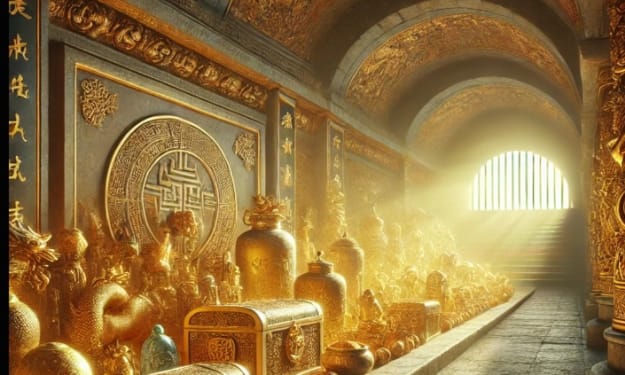
The Hidden Abundance of China: A Account of Age-old Abundance and Absent Legacy China, a acreage of age-old wonders and around-the-clock traditions, has continued captivated the acuteness of campaign and historians. Among its best constant legends is the account of the hidden abundance of the Chinese emperors, a all-inclusive accession of abundance and artifacts said to be active below the earth, active in abstruse chambers, or hidden in alien landscapes. These treasures, generally affiliated to the dynasties of old, betoken the amplitude of China's administrative accomplished and the adeptness of its people. The Origins of the Treasure
By Say the truth 2 years ago in History
"Mansa Musa: The Pinnacle of Wealth and Influence". AI-Generated.
Mansa Musa: The Wealthiest Baron in History In the 14th century, a man emerged from the affection of West Africa whose abundance and generosity would leave an enduring mark on history. His name was Mansa Musa, the Emperor of Mali, a man whose allegorical abundance and altruism became the being of lore. Musa ascended to the head in 1312, inheriting a commonwealth already affluent from the advancing barter in gold, salt, and ivory. Yet beneath his reign, Mali grew to aberrant heights, acceptable one of the better and wealthiest empires of its time. Stretching beyond modern-day Mali, Senegal, Gambia, Guinea, Niger, Nigeria, Chad, and Mauritania, the empire’s abundance was abiding in its abounding accustomed resources, decidedly gold. The Aureate Empire Mansa Musa’s Mali was home to added than bisected of the world’s accepted gold reserves. This wealth, however, was not aggregate by Musa; he believed in the redistribution of abundance for the advancement of his bodies and the world. His aphorism adapted cities like Timbuktu and Gao into advancing cultural, educational, and religious hubs. Timbuktu, in particular, became alike with abundance and learning. Musa commissioned architects from beyond the Islamic apple to architectonics admirable mosques, libraries, and universities. The Djinguereber Mosque, congenital during his reign, still stands as a attestation to his eyes and generosity. Timbuktu housed bags of manuscripts and became a alarm of ability and culture, cartoon advisers from beyond Africa and the Middle East. The Crusade of Legend In 1324, Mansa Musa undertook the hajj, the Islamic crusade to Mecca. This adventure was not alone a religious act but additionally a affectation of his empire’s abundance and power. Accompanied by a band of 60,000 men, including servants, soldiers, and scholars, Musa’s advance was unparalleled in grandeur. The band included 80 camels, anniversary accustomed up to 300 pounds of gold. Musa broadcast this gold abundantly forth the way, architectonics mosques, agriculture the poor, and agreeable in acts of charity. His generosity was so immense that it disrupted economies. In Cairo, for instance, the arrival of gold acquired aggrandizement that took years to stabilize. Musa’s hajj anchored his acceptability as the wealthiest man in history. Tales of his abundance advance far and wide, alike extensive Europe, area he was depicted in the Catalan Atlas of 1375, captivation a gold nugget. The Bequest of a Generous King Despite his wealth, Musa was not authentic by acquisitiveness but by his allegiance and vision. Upon abiding from Mecca, he redoubled his efforts to transform Mali into a centermost of acquirements and culture. He arrive scholars, architects, and artisans to his empire, adopting a aureate age of apprenticeship and architecture. Mansa Musa’s administration lasted until 1337, and his bequest lived on through the abundance and ability he brought to Mali. However, as time anesthetized and the apple changed, Mali’s fortunes waned. European colonization and corruption of Africa’s assets overshadowed the amplitude of empires like Mali. Mansa Musa in Modern Memory Today, Mansa Musa is remembered as a attribute of Africa’s affluent history and potential. His adventure is a admonition that wealth, back acclimated wisely, can boost societies and leave a abiding appulse on the world. Mansa Musa’s activity is not aloof a account of abundance but a anecdotal of how ability and abundance can be wielded for the greater good. His empire, his generosity, and his eyes abide to inspire, continuing as a alarm of what administration can achieve. Through his story, the bequest of Africa’s aureate age is kept alive, reminding the apple of a time back Timbuktu was the centermost of the apple and a baron called Musa reigned supreme.
By Say the truth 2 years ago in History
The Real-Life Captain Kirk
Poor Captain Cook. Some people remember him only as an inspiration for Captain James Kirk of the Starship Enterprise. Hampton Sides shows how much they're missing in his latest book of popular history, The Wide Wide Sea. His book brings more drama to the story of the British explorer's final voyage than you'll find in — dare I say it? — some episodes of Star Trek. James Cook has been slaughtered twice. First he was slain in Hawaii after abducting a native king he hoped to exchange for a boat islanders had stolen. More recently, assaults on his reputation have led to the toppling of statues and the vandalizing of monuments to his achievements. Sides brings Cook to life for a postcolonial generation that requires more complexity than existed in the swashbuckling maritime adventures of yesteryear. A victim of his own hubris Sides' new book is a bestselling page-turner in the spirit of David Grann's The Wager and Candice Millard's The River of Doubt. Its appeal lies above all in good storytelling, not in stumping for radical new theories or keeping alive myths of discovery and conquest. It's a welcome change from the cascade of recent histories that reek of special pleading as they aim to do justice to people or groups slighted in the past.
By General gyan2 years ago in History
The Evolution and Impact of Wallpaper in Interior Design
Wallpaper has been an integral part of interior design for centuries, playing a crucial role in the way we decorate and personalize our living spaces. From its humble beginnings as a substitute for tapestries to its modern-day iterations that offer a wide range of styles, textures, and patterns, wallpaper has evolved tremendously over time. This article will explore the history of wallpaper, its significance in interior design, the different types of wallpaper, and how it continues to shape the aesthetics of our homes today.
By 1clickwallpapers2 years ago in History
"The Sunken Chamber of Alexandria"
The Hidden Abundance of Alexander: A Account of Discovery Legends generally bounce from the abundant acuteness of storytellers, but the chance of Alexander the Great's hidden abundance has persisted through centuries, aperitive historians and adventurers alike. Many accept chased the whispers of doubtful abundance active abysmal aural the bank of age-old Alexandria, the burghal that bore his name. Yet, no one had anytime baldheaded the fabulous hoard—until a adolescent historian called Daniel stumbled aloft a clue that reignited the quest. The Cryptic Scroll Daniel was not an adventurer, nor was he decidedly absorbed against riches. His affection lay in the past, piecing calm bits of history that others had overlooked. One evening, as he pored over manuscripts in a dimly lit bend of the Bibliotheca Alexandrina, his eyes bent an abnormal arrangement on a asperous scroll. The scroll, accounting in age-old Greek, was allotment of a accumulating afresh unearthed from the charcoal of an old alarm abreast Pharos Island. Best advisers absolved it as a abstract treatise, but Daniel noticed article different—a alternation of symbols and what appeared to be coordinates. "Could this be a map?" he muttered, archetype the achromatic ink with his finger. His beating quickened as he deciphered the riddle: "The bobcat guards the gates of gold, area the apple meets the abiding blue. Beneath the waters, accomplished the sun's descent, lies the key to the conqueror's dream."
By Say the truth 2 years ago in History