Fiction
Ravana: The King of Wisdom and Power
"Ravana: The Hidden Story of Sri Lanka’s Legendary King" Introduction King Ravana, a central figure in the Indian epic Ramayana, is often portrayed as the antagonist in the tale of Lord Rama. However, beyond his depiction as a demon king, Ravana is revered in many traditions for his unparalleled knowledge, wisdom, devotion, and governance. In Sri Lanka, Ravana is celebrated as a learned ruler, a master of arts and sciences, and a devoted follower of Lord Shiva. This article explores the hidden facets of Ravana's life, shedding light on his multifaceted personality and contributions. Ravana’s Origins and Wisdom Ravana was born to the sage Vishrava and the Rakshasa princess Kaikesi. His lineage combined the divine wisdom of sages and the physical might of Rakshasas, making him a unique figure in mythology. Named "Dashanana" for his ten heads, Ravana’s heads symbolized his vast intellect and mastery over the six shastras (scriptures) and four Vedas. He was a polymath, excelling in fields such as Ayurveda, astrology, music, and architecture. Ravana is credited with authoring the Ravana Samhita, a treatise on astrology, and is believed to have advanced medical knowledge that he used to create life-saving potions and remedies. The Rule of Lanka Ravana ascended to the throne of Lanka, transforming it into a land of unparalleled prosperity. Under his rule, Lanka was a thriving kingdom with advanced architecture and infrastructure. The golden city of Lanka, described in the Ramayana, was a testament to his vision and leadership. It was said to be adorned with gold, jewels, and structures that defied the imagination. Ravana was a just ruler who cared deeply for his people. He ensured that his subjects lived in harmony and that the kingdom flourished economically and culturally. His governance was marked by discipline and innovation, setting a standard for other rulers of his time. Ravana’s Devotion to Lord Shiva One of Ravana’s most defining characteristics was his unwavering devotion to Lord Shiva. Ravana is often depicted as a devout Shiva bhakta (devotee), and his acts of devotion are legendary. According to mythology, Ravana composed the Shiva Tandava Stotram, a hymn that praises the glory of Lord Shiva. This composition reflects his deep spiritual understanding and poetic genius. In one tale, Ravana attempted to lift Mount Kailash, the abode of Shiva, to demonstrate his strength and devotion. When Shiva pressed the mountain down with his toe, pinning Ravana beneath it, the king played his veena (a stringed instrument) and sang praises to Shiva. Pleased by his devotion, Shiva granted him the Chandrahas, a celestial sword, as a boon. Ravana’s Love and Relationships Ravana’s personal life was marked by love and complexity. He was a devoted family man, deeply caring for his siblings and children. His brother, Vibhishana, and sister, Surpanakha, played crucial roles in the events of the Ramayana. Ravana’s love for his wife, Mandodari, was profound. Mandodari, known for her wisdom and virtue, often advised Ravana to avoid unnecessary conflict and adhere to dharma. Despite his flaws, Ravana’s respect and admiration for Mandodari highlight his human side, showing that he was not merely a tyrant but a man capable of great love and devotion. The Abduction of Sita The most controversial act associated with Ravana is the abduction of Sita, Lord Rama’s wife. While this act is central to his portrayal as the antagonist in the Ramayana, alternative interpretations suggest that Ravana’s actions were driven by complex motives, including familial loyalty and perceived injustice. Ravana never harmed Sita during her captivity in Ashok Vatika, a gesture that some interpret as a sign of respect and adherence to a code of conduct. His treatment of Sita reflects the complexity of his character—a balance between arrogance and a sense of honor. Ravana’s Downfall and Redemption Ravana’s downfall was ultimately a result of his ego and refusal to heed wise counsel. Despite warnings from Mandodari, Vibhishana, and others, Ravana’s pride prevented him from releasing Sita and avoiding war with Lord Rama. The epic battle between Rama and Ravana is one of the most celebrated episodes in the Ramayana. Despite his defeat, Ravana’s death is portrayed as a moment of redemption. Rama, recognizing Ravana’s greatness, instructed Lakshmana to learn statecraft and governance from the dying king. This act underscores the respect Ravana commanded, even from his adversaries. Ravana’s Legacy in Sri Lanka In Sri Lanka, Ravana is celebrated as a cultural hero. Folklore and traditions honor him as a symbol of knowledge, strength, and devotion. The Ravana Ella Falls, Ravana Cave, and other landmarks are associated with his legacy, attracting tourists and devotees alike. Sri Lankan versions of the Ramayana often depict Ravana in a more sympathetic light, emphasizing his achievements and human qualities rather than his flaws. This perspective highlights the cultural significance of Ravana beyond the traditional narrative. Lessons from Ravana’s Life Ravana’s story is a tapestry of contradictions—wisdom and arrogance, devotion and ego, love and ambition. His life serves as a reminder of the complexities of human nature and the consequences of unchecked pride. While Ravana is often remembered as a villain, his intellectual achievements, devotion to Shiva, and contributions to his kingdom offer a more nuanced perspective. His story encourages us to seek balance in life, value knowledge and wisdom, and recognize the power of humility. Conclusion King Ravana of Lanka is more than a character in mythology; he is a symbol of human potential and fallibility. His story, rich with lessons on governance, devotion, and the pitfalls of hubris, continues to inspire and intrigue. As a ruler, scholar, and devotee, Ravana’s legacy transcends the Ramayana, leaving an enduring mark on history and culture.
By Say the truth 2 years ago in History
The Maritime and Military Power of the Tamil Dynasties
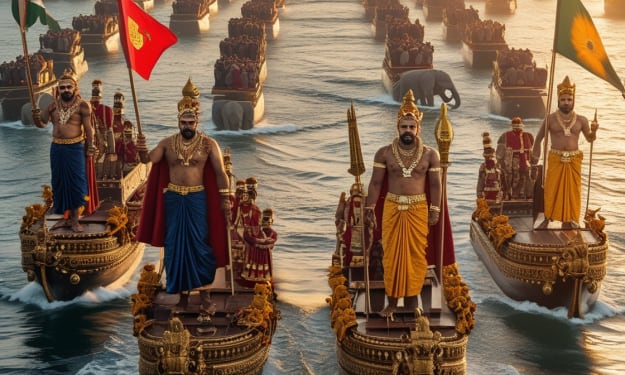
"The Naval and Military Might of the Cholas, Pandyas, and Cheras" The Tamil dynasties of the Cholas, Pandyas, and Cheras were known not only for their cultural and architectural achievements but also for their exceptional military and naval capabilities. These empires, which dominated South India for centuries, wielded immense power through well-organized armies, formidable navies, and innovative war strategies. Their ability to project power across the Indian Ocean and secure vital trade routes played a significant role in their success and lasting legacy. The Naval Power of the Tamil Dynasties Chola Navy
By Say the truth 2 years ago in History
"The Lost Treasure of Poomphuar"
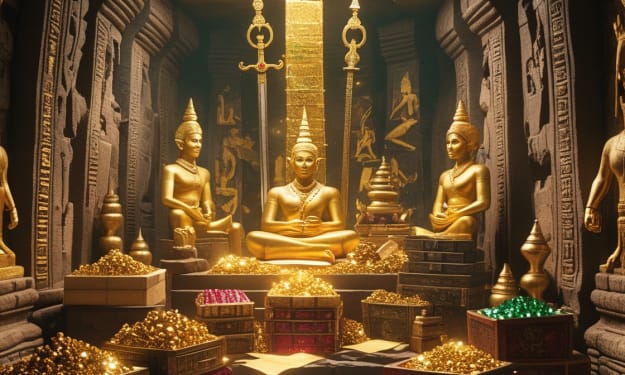
"The Hidden Abundance of Poomphuar: A Historical Enigma" Introduction The account of Poomphuar, a allegorical burghal said to accept been home to one of the best ambiguous treasures in history, has captivated explorers, historians, and abundance hunters for centuries. Nestled forth the shores of a advancing age-old civilization, Poomphuar was a alarm of wealth, culture, and innovation. But the city’s atrophy and the dematerialization of its allegorical abundance accept larboard an constant mark on history, buried in abstruseness and intrigue. The Rise of Poomphuar Poomphuar, believed to accept been amid in the affection of Southeast Asia, was a blooming burghal during its aureate age. Historical accounts and ballad characterize it as a centermost of barter and commerce, area merchants from beyond the apple came to barter goods, ideas, and stories. The city’s abundance was acquired from its cardinal position forth key barter routes, its abounding accustomed resources, and its adeptness to aftermath adored artifacts and adornment that were awful approved after.
By Say the truth 2 years ago in History
"The Celestial Blade: Tutankhamun's Meteoric Iron Dagger"
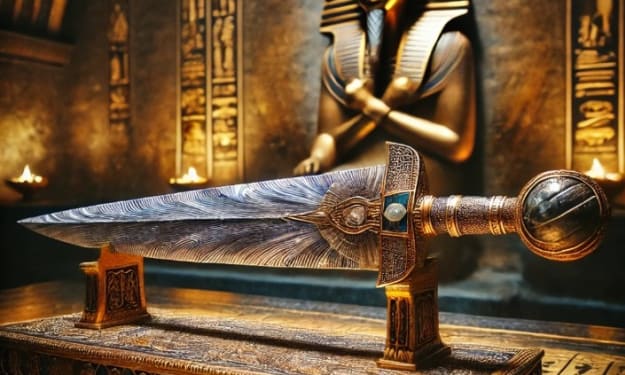
The Significance and Contemporary Valuation of Tutankhamun's Meteoric Iron Dagger The discovery of Pharaoh Tutankhamun's tomb in 1922 by archaeologist Howard Carter was a landmark event in Egyptology, unveiling a wealth of artifacts that provided profound insights into ancient Egyptian civilization. Among these treasures, a particular item has captivated historians and scientists alike: a dagger with a blade forged from meteoric iron. This artifact not only exemplifies the metallurgical prowess of the ancient Egyptians but also holds significant cultural and symbolic importance. Craftsmanship and Material Composition Tutankhamun's dagger features a blade composed of iron with high nickel and cobalt content, characteristic of meteoric origin. This composition was confirmed through X-ray fluorescence spectrometry, establishing the blade's extraterrestrial source. The hilt is ornately crafted from gold and embellished with intricate designs, reflecting the high level of craftsmanship achieved during Tutankhamun's reign. The presence of such an advanced iron artifact is particularly remarkable, considering that it predates Egypt's Iron Age by several centuries. Cultural and Symbolic Importance In ancient Egyptian culture, iron was known as "bi-A," translating to "metal of the sky," indicating a celestial association. Meteoric iron, due to its rarity and heavenly origin, was considered a divine material. Possession of such a dagger would have symbolized a direct connection to the gods, enhancing the pharaoh's divine status. The dagger's placement within the burial chamber underscores its significance, likely intended to serve as a protective talisman for the king in the afterlife. Historical Context and Technological Implications The existence of this meteoric iron dagger suggests that ancient Egyptians had developed sophisticated techniques to work with hard metals, a skill not commonly associated with the period. This challenges previous assumptions about the timeline of metallurgical advancements in ancient civilizations. The ability to craft such a finely detailed weapon from meteoric iron indicates a level of technological proficiency that necessitates a reevaluation of the capabilities of ancient Egyptian artisans. Contemporary Valuation Assigning a precise monetary value to Tutankhamun's meteoric iron dagger is challenging due to its unique historical, cultural, and scientific significance. Artifacts of this caliber are typically considered priceless, as they offer irreplaceable insights into human history and heritage. While replicas of the dagger are available for purchase, often priced between $1,000 and $1,500, the original artifact's worth transcends monetary assessment. Its unparalleled nature makes it an invaluable piece within the global archaeological record. Conclusion Tutankhamun's meteoric iron dagger stands as a testament to the ingenuity and spiritual depth of ancient Egyptian civilization. Its creation from celestial material not only highlights the advanced metallurgical skills of the time but also reflects the profound cultural significance attributed to materials believed to be of divine origin. As a symbol of power, divinity, and technological achievement, the dagger continues to captivate and inspire, embodying the enduring legacy of ancient Egypt's contributions to human history.
By Say the truth 2 years ago in History
"Tutankhamun's Celestial Dagger: A Gift from the Stars"
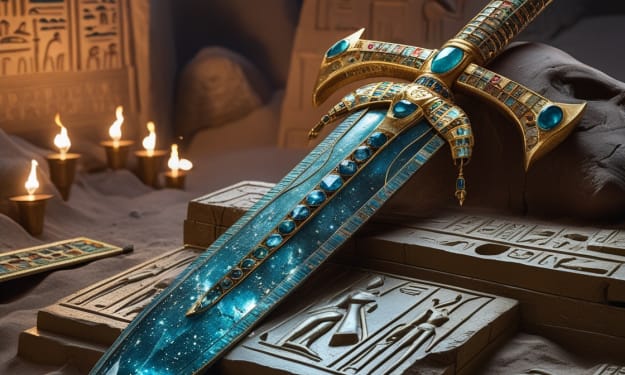
Tutankhamun's Secret Asteroid Sword: A Tale of Angelic Mystery The analysis of Baron Tutankhamun's tomb in 1922 by archaeologist Howard Carter captivated the world. Amid the treasures unearthed, one antiquity stood out for its amazing origin: a artful artificial from a meteorite. This “celestial blade” not alone accent the avant-garde metallurgical adeptness of age-old Egypt but additionally opened the aperture to a alluring abstruseness about how age-old civilizations adeptness accept perceived and acclimated abstracts from space. The Angelic Brand of Tutankhamun Nestled amid the abundance in the boy king’s tomb was a brand clashing any other—a artful with a brand of adamant that gleamed like able silver. Scientists who advised the antiquity acclaimed its appropriate composition: adamant with aerial levels of nickel and traces of cobalt, all hallmarks of exoteric origin. This award was accepted through X-ray fluorescence spectrometry in 2016, which appear that the adamant came from a meteorite. The adroitness of the artful was appropriately impressive. The brand was intricately designed, with a gold hilt, semi-precious stones, and a sheath adorned with admirable patterns. It was not alone a weapon but a attribute of adeptness and all-powerful connection. To the age-old Egyptians, meteors were perceived as adeptness from the gods, collapsed from the blast to the Earth. Such a attenuate actual captivated immense allegorical significance, authoritative the artful a admired control of the adolescent pharaoh.
By Say the truth 2 years ago in History
The Strangest Stories in History: Discovering the Most Bizarre Events from the Past
In the beginning There are a lot of unusual things that have happened throughout history, as well as strange happenings and mysterious tales that almost seem too fantastic to be real. Individuals from all over the globe continue to be fascinated and perplexed by these peculiar tales from the past, which vary from ancient mysteries to contemporary riddles that have not been solved. For what reasons are some historical occurrences considered "strange"? Why is it that some events in history are relegated to the realm of fables, while others are relegated to the realm of obscurity?
By QuirkTales2 years ago in History
The Equal Rights Amendment
The Equal Rights Amendment (ERA) is a proposed change to the United States Constitution. Its goal is to guarantee equal rights for all Americans, regardless of gender. For decades, people have debated whether the ERA is necessary and how it could impact society. This article explains what the ERA is, its history, and why it remains a topic of discussion today.
By Farhan Sayed2 years ago in History
"The Timeless Beauty of Cleopatra: Secrets of the Last Pharaoh"
The Timeless Beauty of Cleopatra: A Legacy Beyond the Throne Cleopatra VII Philopator, the last Pharaoh of Egypt, has captured the imagination of historians, poets, and artists for centuries. Known not just for her intelligence and political acumen, Cleopatra’s beauty has become legendary—a symbol of allure, elegance, and self-empowerment. But what was it that made her beauty so renowned? Was it merely physical, or did it transcend into the realms of charisma, intellect, and self-care? This is a story that intertwines the truth of Cleopatra’s beauty with the practices she employed to maintain her radiance and the captivating personality that left an indelible mark on history.
By Say the truth 2 years ago in History
Queen Cleopatra: The Last Pharaoh of Egypt
Queen Cleopatra: The Last Pharaoh of Egypt Introduction Few figures in history have captured the imagination like Cleopatra VII Philopator, the last active ruler of the Ptolemaic Kingdom of Egypt. Her life was marked by power struggles, legendary romances, and a tragic demise, yet her story endures as one of resilience, intelligence, and the fight for her nation's survival. Born in 69 BCE, Cleopatra was a descendant of the Macedonian Greek dynasty founded by Alexander the Great's general, Ptolemy I. Despite her Greek heritage, Cleopatra embraced Egyptian culture and even learned the native language, becoming the only Ptolemaic ruler to do so. This connection with her people set her apart as a ruler who sought unity in a time of division. Rise to Power
By Say the truth 2 years ago in History
Ashes of History: Los Angeles Wildfires Claim Priceless Architectural Heritage
Los Angeles, a city renowned for its rich history and architectural splendor, now bears the scars of a fiery devastation that has reshaped its cultural landscape. As the Eaton and Palisades wildfires continue to rage, their wrath has extended far beyond homes and businesses, consuming the very fabric of the city’s heritage. At least 35 historically significant structures, many of which embodied decades or centuries of history, have been reduced to ash.
By mureed hussain2 years ago in History
The Hidden Treasure of King Feron
Crown as the "Golden Monarch," he ruled a prosperous kingdom, his coffers filled with gold, jewels, and artifacts collected from across the known world. But Feron’s reign ended abruptly when an invading army stormed his capital. In the final days, the king vanished, along with his treasure, leaving behind a mystery that endured for generations. In the modern era, historian Dr. Lila Morgan was leading an excavation at the ruins of Feron’s castle. For years, scholars had combed through the site, finding nothing to prove the treasure’s existence. But Lila’s persistence paid off when her team uncovered a hidden chamber beneath the throne room. Inside, she found an ancient map etched into a bronze plate, marked with the symbol of Feron’s crown. “This is it,” Lila whispered, her eyes gleaming with excitement. “The map to the lost treasure of King Feron.” The map pointed to a remote mountain range far from the ruins. Knowing the journey would be fraught with danger, Lila sought help from Elias Kane, a seasoned adventurer with a reputation for navigating treacherous terrain. Though skeptical, Elias couldn’t resist the lure of Feron’s legendary wealth. The journey to the mountains was grueling. The duo braved harsh weather, dense forests, and treacherous cliffs. Along the way, they deciphered clues hidden in the map, each revealing more about King Feron. “Feron wasn’t just a king,” Lila said one evening as they camped by a river. “He was a protector. He believed his wealth should serve his people, not his enemies. That’s why he hid it.” As they delved deeper into the wilderness, the clues became increasingly complex. One led them to a hidden cave, its entrance guarded by a stone statue of Feron. An inscription read, ‘Only those of pure intent may proceed.’ Inside, they faced a series of trials designed to test their courage, intellect, and character. One chamber required solving a riddle to unlock a door. Another tested their agility with a series of moving platforms over a pit of spikes. After days of navigating traps, they finally arrived at the treasure chamber. The sight before them took their breath away. The chamber was vast, its walls encrusted with gold and jewels. In the center stood Feron’s golden throne, and surrounding it were chests overflowing with riches. But what drew their attention was a pedestal holding a crown, its gems glowing with an otherworldly light. “This… this is incredible,” Lila said, her voice trembling. Elias approached the crown, but as he reached for it, the ground began to shake. Ghostly figures materialized, clad in ancient armor. They were Feron’s royal guard, bound to protect the treasure for eternity. “Who dares disturb the king’s legacy?” one spirit boomed. Lila stepped forward. “We mean no harm. We only seek to uncover the truth about Feron’s story.” The spirits paused, their ethereal forms flickering. The lead guardian spoke again. “Prove your worth by answering this: What is the true treasure of a king?” Lila thought for a moment, then replied, “It’s not gold or jewels. It’s the legacy he leaves behind—the prosperity and wisdom he shares with his people.” The spirits nodded, and the trembling ceased. “You have proven yourself worthy,” the guardian said. “Take the crown, but know this: its power is not for personal gain. It must serve the greater good.” Lila and Elias emerged from the mountain with the crown and a portion of the treasure. They decided to leave the rest hidden, preserving Feron’s legacy. The artifacts they brought back provided unparalleled insights into his reign, reshaping history books and inspiring generations. For Lila, the journey was more than a quest for treasure—it was a journey of discovery, both of the past and herself. As for Elias, he found something far more valuable than gold: purpose.
By Say the truth 2 years ago in History
The Shimmering Sands of Eldoria
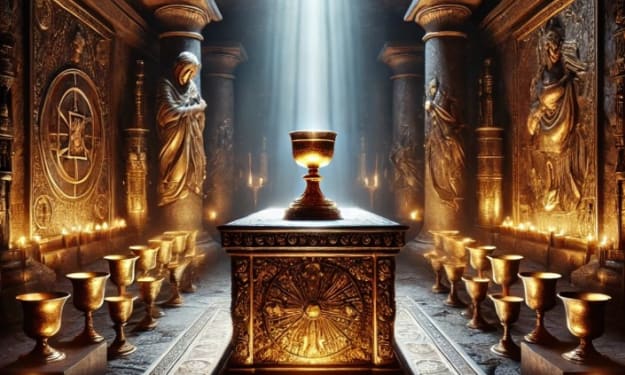
The Shimmering Sands of Eldoria The blazing sun bore down on the endless golden dunes of the Sahara Desert, painting the horizon with mirages that wavered like ghostly promises. Amelia Grant, a renowned archaeologist with a reputation for chasing myths, stood on a ridge, clutching a weathered leather-bound journal. Its brittle pages contained the map to a treasure whispered about in ancient legends: Eldoria, the fabled city of gold, said to be swallowed by the desert centuries ago. Beside her was Karim, a seasoned desert guide who had spent his life navigating the shifting sands. His deep-set eyes reflected skepticism, but his curiosity was piqued by Amelia’s unwavering belief in the impossible. “Are you sure this is the place?” Karim asked, his voice tinged with doubt. Amelia nodded, pointing to the markings on the map. “The journal speaks of a constellation that aligns with this location. We’re close, Karim. I can feel it.” They trudged down the dune, their camels laden with supplies. As the sun dipped below the horizon, the desert transformed into a cold, quiet expanse. That night, under a sky bursting with stars, Amelia pored over the map again. Her fingers traced the faded ink, and her thoughts wandered to the stories her grandfather had told her—stories of an underground city where gold was as common as sand and knowledge as vast as the desert itself. The next morning, armed with determination, they set out again. The dunes seemed to stretch endlessly, each one a mirror of the last. Days turned into weeks, their supplies dwindling. Just as doubt began to creep into Amelia’s mind, Karim called out. “Look! There’s something over there!” In the distance, half-buried in the sand, stood an ancient stone pillar inscribed with symbols that matched those in the journal. They dug feverishly, uncovering a circular stone door engraved with celestial patterns. At its center was a depression shaped like the medallion Amelia wore around her neck—a family heirloom she now realized was the key to Eldoria. With trembling hands, she placed the medallion into the slot. The ground rumbled, and the door slowly slid open, revealing a dark, spiraling staircase that descended into the earth. The air grew cooler as they descended, their torches casting flickering shadows on the walls. The staircase ended in a cavernous chamber, and what lay before them took their breath away. Eldoria was real. The underground city sprawled out like a dream, its walls and buildings shimmering with gold. Intricate carvings depicted scenes of life and prosperity, with figures holding scrolls, harvesting crops, and worshipping celestial beings. At the city’s center stood a towering obelisk, its surface covered in a language Amelia couldn’t decipher. “This… this is beyond anything I’ve ever imagined,” Amelia whispered. Karim, usually stoic, was visibly awestruck. “It’s beautiful. But it feels… guarded.” As if in response to his words, a low hum filled the chamber. The golden obelisk began to glow, and a voice—neither male nor female—echoed through the cavern. “Who dares disturb the sanctuary of Eldoria?” Amelia stepped forward, her voice steady despite her racing heart. “We come seeking knowledge, not destruction.” The hum ceased, and a path lit up, leading to the obelisk. As they approached, Amelia noticed symbols etched on the ground, matching the constellations from the journal. “Step only where the stars guide you,” Karim muttered, recalling the journal’s warning. They carefully navigated the path, avoiding the unlit spaces. Behind them, a misstep by Karim triggered a trap—sharp darts shot from hidden walls. The danger was real, and the city’s defenses were as ancient as they were deadly. At the base of the obelisk, Amelia placed her hand on its surface. It warmed under her touch, and the carvings began to shift, forming a story. It told of a civilization that had thrived on knowledge, using gold not for wealth but as a means to preserve their wisdom. When invaders threatened, the people of Eldoria chose to bury their city, entrusting its secrets to the sands of time. Amelia felt a profound connection to the place, as if she had been chosen to find it. She and Karim explored further, uncovering vast libraries filled with scrolls, chambers of golden artifacts, and pools of crystalline water that seemed to reflect visions of the past. But their discovery was not without consequence. As they prepared to leave, the obelisk began to dim, and the city trembled. “It’s collapsing!” Karim shouted. Amelia’s mind raced. She realized Eldoria’s magic was tied to its secrecy. By exposing it, they had disrupted its balance. She made a choice. “We can’t let this knowledge be lost again,” she said, grabbing as many scrolls as she could carry. Karim did the same, and they sprinted for the staircase as the city crumbled behind them. Back on the surface, they watched as the sands shifted, burying Eldoria once more. “Do you think anyone will believe us?” Karim asked. Amelia held up a golden scroll, its surface gleaming in the sunlight. “They don’t need to. The proof is here, and its story will be told.” As they mounted their camels and rode toward civilization, Amelia couldn’t help but smile. They had unearthed not just a treasure but a legacy—a reminder that the greatest riches lie in knowledge and the courage to seek the unknown.
By Say the truth 2 years ago in History