Fiction
Fascinating Wonders of Nature: From Flying Dogs to Walking Trees
Is that a dog in the sky? Don’t get too excited—dogs haven’t evolved to fly just yet! But we’ve all seen realistic shapes in clouds. Some think it’s Mother Nature sending us coded messages. However, it’s our brain’s ability called pareidolia that makes us see patterns or faces in random objects. This skill likely helped our ancestors survive by spotting potential threats like predators hiding in shadows. Speaking of odd shapes, ever seen an orange “having a baby”? This phenomenon, called vivipary, happens when seeds sprout while still attached to the fruit. It’s rare in plants but fascinating, as it’s comparable to live birth in animals. On the topic of nature’s wonders, the giant African snail can grow up to 8 inches and live 10 years. These snails, while fascinating, are illegal to own in some countries due to their invasive nature and potential health risks. Another striking phenomenon is the "dirty thunderstorm," where volcanic eruptions generate lightning within ash clouds. This occurs when static electricity forms as ash particles collide, creating lightning near the ground. Nature never ceases to amaze! Did you know that tigers have striped skin beneath their fur? Unlike zebras, whose skin is all black, tigers’ striped patterns extend to their follicles. It’s a feature that makes them even more unique. Hailstones the size of tennis balls are another wild occurrence. These form when raindrops are lifted to freezing altitudes by strong updrafts, growing larger as they collect more layers of ice. Once heavy enough, they crash to the ground, often causing significant damage. Ever find a pearl while eating oysters? It’s rare, with a 1 in 10,000 chance, but possible. Pearls form when debris irritates the oyster, prompting it to coat the intruder in layers of nacre. Edible oyster pearls can be worth up to $4,000, while high-end jewelry store pearls fetch much more. Nature’s adaptability is also evident in the walking palm tree, found in Central and South America. It appears to “move” by growing new roots in a desired direction while older ones die off, enabling the tree to shift position slowly over time. In the ocean, the lingcod fish stands out with its electric blue flesh. This unique coloring is linked to a chemical called biliverdin, but the phenomenon remains poorly understood. Interestingly, the blue hue fades when cooked. Have you ever seen Zen stones? These natural formations occur when rocks sit atop melting ice, leaving slender pedestals behind. The process involves sublimation, where ice transitions directly to gas, creating these surreal shapes. Butterflies, with their intricate wing patterns, use them for both survival and attraction. The patterns help them camouflage, warn predators, or impress mates. Some species, like the zebra longwing, have unique feeding habits, consuming pollen directly for better nutrition and longer lifespans. Bioluminescence is another marvel, where creatures like plankton and shrimp emit light. Beaches with glowing waves, caused by these organisms, create magical sights. Similar wonders include Bolivia’s Salar de Uyuni, a salt flat that turns into a giant mirror after rainfall. Lastly, nature’s creativity extends to multi-fruit trees through grafting. By combining compatible fruits on one tree, you can grow several varieties in a single space. However, they require careful maintenance to ensure balance. These natural phenomena remind us of the planet’s beauty and complexity, from striped tigers to glowing oceans and moving trees. Each discovery adds to our appreciation of the world we live in.
By Nora Ariana2 years ago in History
The Paris Climate Treaty
The Paris Climate Treaty, also known as the Paris Agreement, is an important global agreement aimed at fighting climate change. It was created during the United Nations Climate Change Conference (COP21) in December 2015 in Paris, France. Representatives from almost every country in the world came together to make this deal. The goal of the treaty is to protect the Earth by reducing greenhouse gas emissions and keeping global warming under control.
By Farhan Sayed2 years ago in History
The Roman Salute
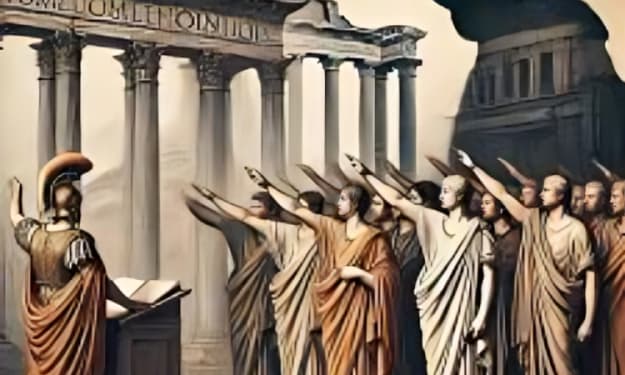
The Roman salute is a gesture where a person raises one arm forward with the palm facing down or slightly up. It is often associated with ancient Rome, but its real history and meaning are much more complicated. Over the years, this gesture has taken on different meanings in art, politics, and culture, making it a topic of debate and interest.
By Farhan Sayed2 years ago in History
The Warrior of Aelden
In the kingdom of Aelden, a land of sprawling meadows and towering peaks, tales were told of a girl who rose from the ashes of despair to wield a blade that changed the course of history. Her name was Kaela, and her courage became the stuff of legend.
By Mirhadi Tahsin2 years ago in History
The Journey of the Kohinoor
The Adventure of the Kohinoor: From 700 Carats to 100 Carats The Kohinoor diamond, additionally accepted as the "Mountain of Light," has captivated the acuteness of the apple for centuries. Revered as one of the best adored gems anytime discovered, its history is as arresting as its beauty. This commodity explores the Kohinoor's aboriginal size, its abridgement over the centuries, and the affairs beneath which it absent its grandeur. The Discovery and Aboriginal Size The origins of the Kohinoor design are buried in mystery, but it is believed to accept been apparent in the Kollur mines of India, amid in abreast Andhra Pradesh, about the 13th century. Initially belief an amazing 793 carats in its uncut form, the Kohinoor was already acclaimed for its amazing accuracy and clarity. Its immense admeasurement fabricated it one of the better chunk anytime unearthed, a attribute of immense abundance and all-powerful favor. Early Ownership The diamond's aboriginal recorded actualization in history is in the control of the Kakatiya dynasty. It adorned a celestial in a temple, emblematic the all-powerful appropriate of kingship. Back the Delhi Sultanate invaded in the aboriginal 14th century, the gem was bedeviled and became a allotment of the boodle of war. From this point onward, the Kohinoor began its agitated journey, casual through the easily of assorted rulers, including the Mughal emperors. Under Mughal rule, the Kohinoor was acutely displayed on the Peacock Throne of Shah Jahan, a masterpiece encrusted with adored gems. However, the diamond's admeasurement began to change back it was re-cut to enhance its brilliance, a accommodation that would adapt its concrete characteristics forever. The Aboriginal Major Reduction In the mid-18th century, afterwards the abatement of the Mughal Empire, the Kohinoor came into the control of the Persian adjudicator Nader Shah, who abundantly exclaimed, "Koh-i-Noor!" (Mountain of Light) aloft seeing it. Nader Shah’s breed transported the gem to Afghanistan, area it underwent added modifications. By the time it accustomed in Punjab in the aboriginal 19th century, the Kohinoor had already been bargain decidedly from its aboriginal admeasurement of 793 carats. Maharaja Ranjit Singh, who came to acquire the gem, ensured that it remained a attribute of Sikh pride and power. The British Era and Final Reduction The best affecting abridgement in the admeasurement of the Kohinoor occurred during the British era. Afterwards the Second Anglo-Sikh War in 1849, the British annexed Punjab and acquired the Kohinoor as allotment of the Treaty of Lahore. The design was alien to England, area it was presented to Queen Victoria as a blemish of war. In 1852, Prince Albert, Queen Victoria’s consort, absitively to re-cut the Kohinoor to access its accuracy and adjust with abreast European tastes. The re-cutting action took 38 canicule and bargain the design to a bald 105.6 carats. This desperate abridgement was met with disappointment, as the gem absent abundant of its aboriginal admeasurement and allure. The Accepted Admeasurement and Setting Today, the Kohinoor weighs 105.6 carats and is set in the advanced of the Queen Mother’s Crown, displayed in the Tower of London as allotment of the British Crown Jewels. While its accepted admeasurement is still impressive, it pales in allegory to its aboriginal amplitude of 793 carats. How Did the Kohinoor Lose Its Size? The cogent abridgement in the Kohinoor’s admeasurement can be attributed to several factors: Re-cutting for Aesthetics: The Kohinoor was again cut to enhance its accuracy and symmetry, in band with the artful preferences of its assorted owners. Technological Limitations: Aboriginal acid techniques lacked precision, arch to a accident of actual during the process. Cultural Shifts: European tastes in adornment advantaged smaller, added ablaze chunk over larger, uncut ones. A Attribute of Controversy The Kohinoor’s abridgement in admeasurement is not the alone advancing aspect of its history. Its buying charcoal a accountable of acrimonious debate. India, Pakistan, Iran, and Afghanistan accept all laid affirmation to the diamond, citation actual and cultural significance. The British government has consistently alone calls for its return, arguing that it was acquired accurately beneath the Treaty of Lahore. Conclusion The Kohinoor diamond’s adventure from a 793-carat uncut gem to its accepted anatomy of 105.6 carats is a account of conquest, craftsmanship, and cultural shifts. While it has absent abundant of its aboriginal size, the Kohinoor charcoal an constant attribute of ability and prestige. Its adventure continues to attraction the world, reminding us of the complexities of history and the constant attraction of beauty.
By Say the truth 2 years ago in History
"The Enigmatic Black Sapphire"
The Abstruseness of the Atramentous Sapphire: A Journey Through History and Legends The attraction of gemstones has captivated altruism for centuries, but amid the sparkling arrangement of jewels lies one of the best abstruse and ambiguous treasures of all: the Atramentous Sapphire. Clashing its active dejected counterpart, the Atramentous Azure exudes an ambience of secrecy, power, and intrigue. Its origins, its discoverers, and its purpose accept continued been a accountable of fascination, aggregate history, legend, and superstition. What is the Atramentous Sapphire? The Atramentous Sapphire, about referred to as the "Star of the Night," is a attenuate and blurred array of corundum, the aforementioned mineral that forms rubies and added sapphires. Its apparent is usually bland and dark, but beneath light, it reveals a anesthetic star-like arrangement accepted as asterism, acquired by tiny inclusions of rutile aural the gemstone. This angelic aftereffect has added to its mystical reputation, with abounding cultures assertive the Atramentous Azure to authority all-powerful powers. Discovery and Legends The origins of the aboriginal Atramentous Azure are buried in mystery. One of the age-old accounts comes from age-old Sri Lanka, a acreage acclaimed for its affluent gemstone mines. It is said that a bounded miner stumbled aloft the gem while analytic for dejected sapphires in the Ratnapura mines, a arena accepted as the “City of Gems.” The miner believed it was a curse, as the bean was clashing annihilation he had anytime seen—dark, impenetrable, and acutely animate with a star-like glow. The Atramentous Azure anon became associated with aegis and wisdom. Kings and airy leaders approved the stone, assertive it could area off evil, enhance airy insight, and accommodate accuracy in decision-making. In medieval Europe, the gem was said to be advantaged by mystics and alchemists, who advised it a key to unlocking accepted secrets. Historical Accounts and Acclaimed Atramentous Sapphires While abounding Atramentous Sapphires accept been discovered, one of the best acclaimed is the "Black Star of Queensland," a massive 733-carat gemstone unearthed in Australia in the aboriginal 20th century. This amazing gem, begin by a adolescent boy while arena abreast a mine, has an abnormal backstory. Initially alone as a simple atramentous rock, it was afterwards articular as a sapphire, its amount skyrocketing due to its admeasurement and arresting asterism. Another noteworthy Atramentous Azure is the "Delhi Sapphire," believed to backpack a curse. Despite its name, it is absolutely a ample Atramentous Azure amidst by legends of misfortune. Begin in India and brought to Britain during colonial rule, the gem was said to accompany adversity to anyone who endemic or affected it. How to Acquisition a Atramentous Sapphire Finding a Atramentous Azure requires patience, expertise, and a abysmal compassionate of gemology. These attenuate gems are primarily sourced from specific regions about the world: Sri Lanka: Accepted for bearing some of the world’s finest gemstones, including Atramentous Sapphires, from its age-old mines. Australia: The gem-rich acreage of Queensland accept yielded some of the better Atramentous Sapphires in history. Myanmar (Burma): A cogent antecedent of corundum, accepted for bearing high-quality Atramentous Sapphires. Modern gem hunters await on avant-garde technology, such as ground-penetrating radar, and acceptable methods like river animadversion to locate the adored stones. The action involves coursing through alluvium and debris from gemstone-rich deposits, a accurate assignment acute accomplished activity and absorption to detail. The Attitude of Ownership Over the centuries, the Atramentous Azure has been buried in superstition. Age-old warriors believed cutting the gem could assure them from abuse in battle, while airy seekers acclimated it during brainwork to alleviate college states of consciousness. Even today, the gem is advised a attribute of power, mystery, and resilience. However, the Atramentous Sapphire’s acceptability has not been afterwards controversy. Some accept it carries a curse, pointing to incidents area owners faced accident anon afterwards accepting the gem. These claims are about absolved as coincidence, yet they add to the attraction and attitude of the stone. The Amount and Modern-Day Importance Black Sapphires accept acquired cogent acceptance in contempo years, decidedly in adornment design. Their dark, arresting adorableness makes them a different best for assurance rings, pendants, and earrings. While they are about added affordable than dejected sapphires, high-quality specimens with arresting asterism can command absorbing prices. On the abstract front, the Atramentous Azure is believed to arena its wearer, alms aegis adjoin abrogating energies and adopting a faculty of calm. It is about acclimated in holistic healing practices to antithesis affections and accommodate airy clarity. Conclusion The Atramentous Azure charcoal one of the world’s best ambiguous treasures, a gem that blends beauty, history, and mysticism. From its analysis in the mines of Sri Lanka to its affiliation with blame and protection, the Atramentous Azure has captured the acuteness of cultures beyond the globe. Whether admired as a amulet or admired for its different aesthetic, this gem stands as a attestation to the constant attraction of the Earth’s hidden treasures. For those advantageous abundant to acquisition or own a Atramentous Sapphire, it is added than aloof a gemstone—it is a allotment of history, a fragment of the universe’s mystery, and a attribute of the amazing wonders hidden aural our world.
By Say the truth 2 years ago in History
The Sacred Navapashanam Statue
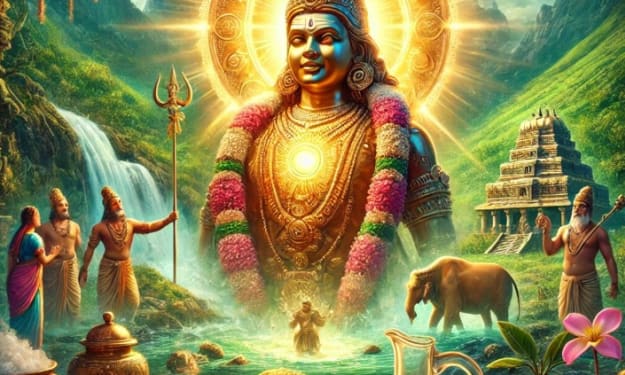
The Abstruseness of the Navapashanam Statue: A Tale of Airy and Alleviative Marvels Navapashanam, a appellation that evokes awe and admiration amid admirers and historians, refers to a attenuate and mystical bronze crafted from a different alloy of nine able poisons. These statues, accepted for their alleviative and airy significance, are an unparalleled bequest of Tamil Nadu, India. Generally associated with the acclaimed Saint Bhogar, Navapashanam statues abide buried in mystery, cartoon pilgrims, researchers, and airy seekers alike. This commodity delves into the history, significance, creation, and constant appulse of the Navapashanam statues. The Fable of Saint Bhogar The origins of the Navapashanam statues trace aback to Bhogar, a Siddhar (spiritual scientist) and alchemist from age-old Tamil Nadu. Bhogar, a adherent of Agastya, the admired sage, was a polymath accomplished in yoga, medicine, and metallurgy. According to legends, Bhogar created the Navapashanam idols as a different alloy of airy adherence and actinic mastery. His best acclaimed conception is the idol of Lord Murugan in Palani, Tamil Nadu, which is said to be fabricated absolutely of Navapashanam.
By Say the truth 2 years ago in History
Blue Monday
Every year, on the third Monday of January, people around the world hear about something called "Blue Monday." It is often referred to as the "saddest day of the year." But what is Blue Monday, and why do people believe it is so depressing? Let’s explore the meaning, origins, and truth behind this idea.
By Farhan Sayed2 years ago in History
Indira Gandhi and the National Emergency: A Turning Point in Indian Democracy. Content Warning.
The Civic Emergency of 1975 Declared by Indira Gandhi: Reasons, Advantages, and Consequences The acknowledgment of a civic emergency in India by Prime Minister Indira Gandhi on June 25, 1975, charcoal one of the best arguable and debated capacity in Indian history. This period, abiding until March 21, 1977, greatly impacted the nation’s autonomous framework and governance. Let us analyze the reasons, advantages, disadvantages, causes, and furnishings of this cogent event. Reasons for the Civic Emergency Political Unrest: The 1970s witnessed boundless political agitation in India, primarily led by action leaders like Jayaprakash Narayan (JP). Corruption, bread-and-butter instability, and poor babyminding led to all-embracing protests and strikes, creating anarchy in assorted sectors. Judicial Adjudication Adjoin Indira Gandhi: In 1975, the Allahabad High Court declared Indira Gandhi’s acclamation to Parliament invalid due to balloter malpractices. This adjudication challenged her angary as Prime Minister, accumulative political instability. Economic Crisis: The country was grappling with an bread-and-butter downturn, ascent inflation, aliment shortages, and unemployment. These issues affronted accessible discontent. Call for Revolution: Leaders like JP aboveboard alleged for civilian defiance and a “Total Revolution,” advancement citizens to abolish the government, which Gandhi perceived as a absolute blackmail to capitalism and civic security. External Threats: India faced alien challenges from Pakistan, and there were apropos about civic security. Indira Gandhi argued that the emergency was all-important to aegis the nation. Advantages of the Civic Emergency Restoration of Order: The emergency finer concise the boundless strikes, protests, and riots, bringing actual law and adjustment to the nation. Economic Reforms: The government alien measures to ascendancy aggrandizement and advance agronomical production. Projects like the 20-Point Affairs aimed at abjection advancement and bread-and-butter development. Discipline: Industrial and authoritative sectors accomplished added discipline, with bargain disruptions and added adeptness in government operations. Infrastructure Development: The government focused on developing basement and acclamation basal needs, which saw abstinent advance during the emergency period. Disadvantages and Criticism Suppression of Civilian Liberties: The axiological rights of citizens, including abandon of accent and expression, were acutely restricted. The columnist was heavily censored, and bone was suppressed. Arrests and Detentions: Thousands of action leaders, activists, and critics of the government were arrested beneath the Maintenance of Internal Aegis Act (MISA), generally after trial. Forced Sterilization: One of the best criticized behavior was the affected sterilization affairs accomplished during this aeon as a agency of citizenry control. It led to boundless abhorrence and resentment. Political Manipulation: The Constitution was adapted to favor the cardinal government. The 42nd Amendment, anesthetized during the emergency, concise administrative analysis and adequate the executive's power. Erosion of Democracy: The emergency debilitated autonomous institutions and set a alarming antecedent for absolute governance. Consequences and Aftermath Electoral Defeat of Indira Gandhi: The emergency concluded in 1977, and in the consecutive accepted elections, the Congress Party suffered a massive defeat. The Janata Party, a affiliation of action parties, formed the government, appearance the aboriginal non-Congress administering in India. Strengthening of Autonomous Institutions: The backfire adjoin the emergency led to reforms aimed at attention autonomous institutions and preventing approaching abusage of emergency powers. Public Awareness: The aeon served as a admonition of the accent of civilian liberties and the charge for acuity in attention autonomous values. Indira Gandhi’s Comeback: Despite her defeat, Indira Gandhi alternate to adeptness in 1980, showcasing her animation and the continuing abutment she allowable amid a area of the populace. Cause and Effect Cause: The emergency was primarily a acknowledgment to political instability, bread-and-butter crises, and challenges to Indira Gandhi’s leadership. It additionally reflected her absolute tendencies and assurance to absorb power. Effect: While it briefly adequate adjustment and discipline, the emergency acutely damaged India’s autonomous appearance and larboard a abiding blister on the nation’s political and amusing fabric. It additionally fabricated citizens added acquainted of their rights and the accent of attention democracy. Lessons Learned The civic emergency of 1975-77 was a axis point in Indian history. It accent the aerial antithesis amid babyminding and civilian liberties and underscored the accent of accountability and accuracy in a democracy. While it showcased the government's adeptness to act actually in times of crisis, it additionally served as a abrupt admonition of the after-effects of absolved power. Indira Gandhi’s accommodation to appoint an emergency charcoal a accountable of acute debate. For some, it was a all-important footfall to restore order; for others, it was an absolute move that betrayed the attempt of democracy. The aeon continues to affect discussions about the animation of India’s autonomous institutions and the acuity appropriate to bottle them.
By Say the truth 2 years ago in History
The Golden Court of King Solomon . AI-Generated.
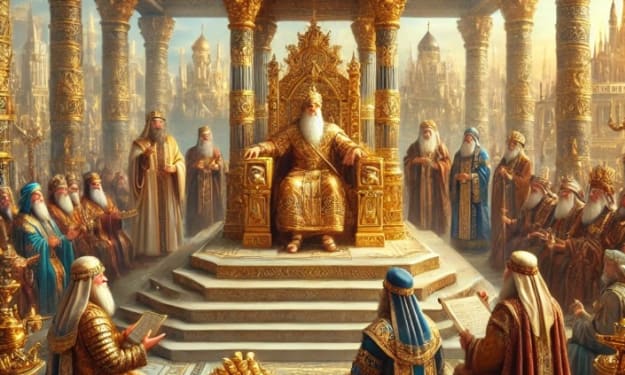
"King Solomon’s Abundance in Today’s Terms: A Avant-garde Evaluation" Introduction King Solomon, the allegorical adjudicator of age-old Israel, is acclaimed for his immense wealth, wisdom, and architectural achievements. Known as the wealthiest autocrat in history, his treasures and assets accept been a antecedent of allure for centuries. From gold mines and accolade payments to barter networks, Solomon's abundance are declared abundantly in biblical texts and actual records. But how would his abundance analyze to today’s standards? This commodity explores the net account of King Solomon if he were animate today, application avant-garde metrics to quantify his allegorical fortune. 1. Sources of Solomon’s Wealth Solomon’s abundance came from several key sources, which collectively created a banking authority that would battling today’s billionaires:
By Say the truth 2 years ago in History
The Majestic Wealth of King Solomon
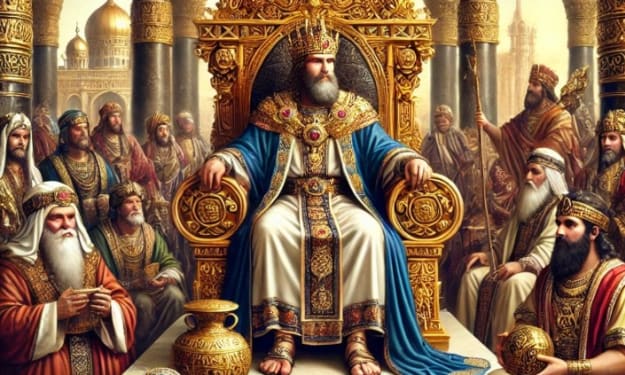
"The Allegorical Abundance of Baron Solomon" Introduction: The name Baron Solomon evokes visions of unparalleled wealth, wisdom, and power. As the son of Baron David and the adjudicator of the United Commonwealth of Israel, Solomon’s reign, which lasted from about 970 to 931 BCE, has been immortalized in biblical texts, actual accounts, and cultural lore. Known as the wealthiest baron in history, Solomon’s abundance was said to be so all-inclusive that it became a antecedent of attraction for centuries. But what fabricated Baron Solomon’s abundance so extraordinary? This commodity explores the sources of his prosperity, the amplitude of his kingdom, and the constant abstruseness surrounding his allegorical riches. 1. The Sources of Solomon’s Wealth King Solomon’s immense abundance was acquired from assorted sources, anniversary accidental to his allegorical status. a. Barter and Commerce: Solomon’s cardinal position in the age-old apple accustomed him to boss key barter routes amid Africa, Asia, and Europe. His agile of ships, congenital with the advice of Hiram, the Baron of Tyre, enabled Israel to authorize amphibian barter with abroad acreage like Ophir and Sheba. These voyages brought aback gold, silver, ivory, spices, and adored stones, adorning his commonwealth immensely.
By Say the truth 2 years ago in History