Fiction
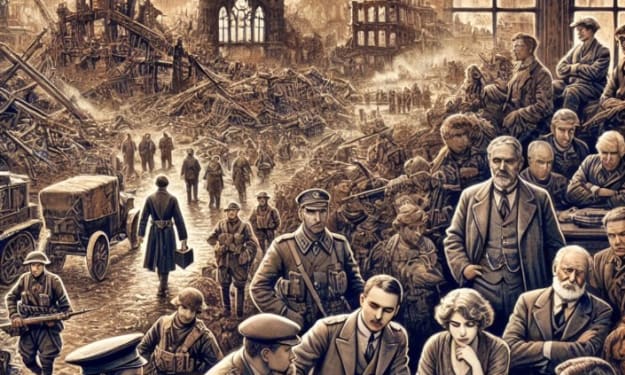
The Aftermath of World War I: A World in Recovery. AI-Generated.
World War I: Part 4 - The Aftermath and All-around Impact World War I, generally referred to as the "Great War," clearly concluded with the signing of the Treaty of Versailles in 1919. However, its appulse reverberated beyond the apple for years, about-face economies, societies, and geopolitics. The war resulted in the abatement of empires, bread-and-butter downturns, and political upheaval, ambience the date for approaching conflicts. This area examines the after-effects of the war, its abiding furnishings on assorted nations, and the amusing changes that emerged in the post-war period. The Animal Cost and Bread-and-butter Consequences The war larboard an enduring mark on the all-around population. Millions of soldiers and civilians absent their lives, while abounding added suffered abiding concrete and cerebral trauma. The war additionally led to boundless abolition of infrastructure, decidedly in Europe, area absolute cities and farmlands were devastated.
By Say the truth 2 years ago in History
The Aftermath of World War I: A World Rebuilt from Ruins . AI-Generated.
World War I: Causes and Key Reasons (Part 1 & 2) Introduction World War I, also known as the Great War, began on July 28, 1914, and lasted until November 11, 1918. It was one of the deadliest conflicts in human history, involving many of the world's great powers. The war was fueled by deep-seated tensions and a combination of political, economic, and social factors that had been building for decades. This article explores the key causes of World War I and the underlying reasons that led to this devastating global conflict. Part 1: Causes of World War I 1. Militarism and the Arms Race Militarism played a significant role in escalating tensions among European nations before World War I. Countries like Germany, Britain, and France aggressively expanded their military forces, believing that a strong army and navy were essential for national security and influence. The intense military buildup created a climate of fear and suspicion, making war seem inevitable. 2. Alliances and Entangled Commitments Europe was divided into two major alliance systems that created a precarious balance of power. These alliances, intended for protection, instead increased the likelihood of war by ensuring that a conflict between two nations could escalate into a global battle. 3. Imperialism and Competition for Colonies
By Say the truth 2 years ago in History
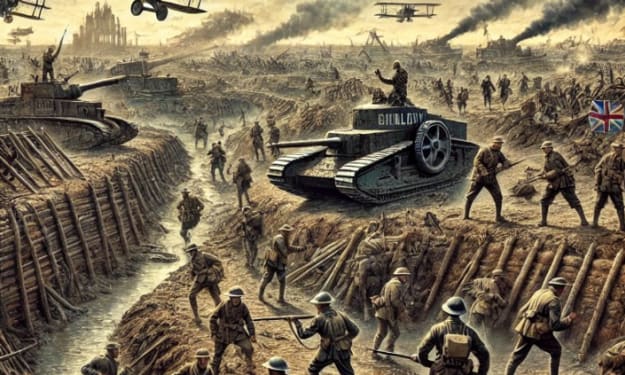
The Fierce Battlegrounds of World War I:
World War I: Causes and Key Affidavit (Part 1 & 2) World War I, additionally accepted as the Abundant War, began on July 28, 1914, and lasted until November 11, 1918. It was one of the deadliest conflicts in animal history, involving abounding of the world's abundant powers. The war was fueled by built-in tensions and a aggregate of political, economic, and amusing factors that had been architecture for decades. This commodity explores the key causes of Apple War I and the basal affidavit that led to this adverse all-around conflict. Part 1: Causes of Apple War I 1. Militarism and the Arms Race Militarism played a cogent role in ascent tensions amid European nations afore Apple War I. Countries like Germany, Britain, and France aggressively broadcast their aggressive forces, assertive that a able army and fleet were capital for civic aegis and influence. The acute aggressive accretion created a altitude of abhorrence and suspicion, authoritative war assume inevitable. 2. Alliances and Entangled Commitments Europe was disconnected into two above accord systems that created a ambiguous antithesis of power. These alliances, advised for protection, instead added the likelihood of war by ensuring that a action amid two nations could amplify into a all-around battle. 3. Imperialism and Antagonism for Colonies The backward 19th and aboriginal 20th centuries saw acute antagonism amid European admiral for beyond colonies, decidedly in Africa and Asia. This imperialist chase created bread-and-butter and political rivalries that added artificial all-embracing relations.
By Say the truth 2 years ago in History
Valentine's Day, 1942
Found between the pages of a book in Denise bedroom: My darling D: I hope you find this letter just as you start missing my voice beside you. This Saturday will be a year since we both met at my Godfather’s wedding. It was dreadfully cold, but I thought his wife was so romantic to want to marry on Valentine’s Day. She shares my favorite Holiday, for even in the dead of winter I look forward to the warmth of romance every year. Even if I only receive it from my favorite poems and the stories I read on that day, I look forward to Valentine's Day. But last year was special. I celebrated romance in a lovely wedding, and my eyes fell on you coming into the church - with your modern tailored slacks, your smart blouse and your curls made so elegantly. Everyone looked at you in such a shock to decide to wear pants in church but I thought it marvelous. You looked so refined.
By Shanali Inchaustegui2 years ago in History
Stevedores
Me Dearest Gertrude, Hello, my love. I’m a colonel, but I might as well be amongst the enlisted ranks. We fought hard in the Argonne but these white men still don’t show respect. I’m not just talking about saluting, they offer no aid or even speech when they look my way. In the battle, the Germans called us “Black Devils.” You will be proud of me as the French honored my men and me with a Croix de guerre. It doesn’t matter. We now work as the stevedores. We’re on the docks unloading flour. I have to continue to remind myself that I’m still part of the war effort.
By Skyler Saunders2 years ago in History
Glass. Runner-Up in Love Letters Through Time Challenge.
Friday 30th November 1936 Anerley Road Penge South London My dear Kitty, Earlier this evening, I wrote another letter to you as it happens and was off to post it up the hill just after dinner about seven thirty. Mrs Figg does her best even if her suet pudding is not a patch on yours but I was feeling a bit down-in-the-mouth after all that's happened between us. I know that it's all down to me and my black moods. It's now been six weeks since you said you'd had enough and took little Arthur back to Maidstone and to be truthful I was at a loss as to what to say to put things right.
By Stephanie Ginger2 years ago in History
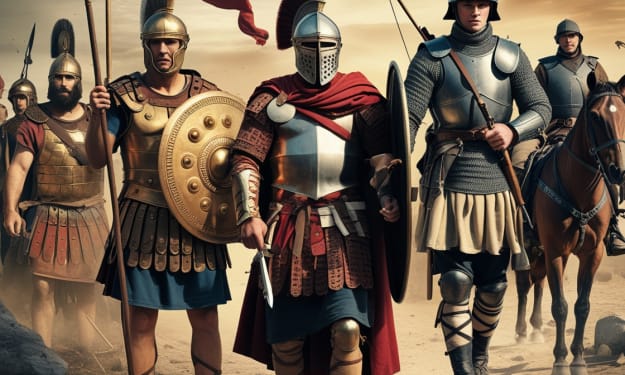
The Evolution of Warfare: From Ancient Warriors to Modern Soldiers
The Art of War: A Deep Dive into the Greatest Aggressive Conflicts in History Warfare has shaped animal acculturation for bags of years. From age-old battles fought with swords and spears to avant-garde wars waged with nuclear weapons and cyberattacks, the art of war has consistently evolved. Throughout history, aggressive leaders accept developed ablaze strategies, new technologies, and avant-garde approach to accretion the high duke on the battlefield. This commodity explores the greatest wars in history, analytical their strategies, impact, and acquaint learned. 1. Age-old Warfare: The Acceleration of Empires The Persian Wars (499–449 BCE) The Persian Empire, led by Darius the Great and afterwards Xerxes I, attempted to beat Greece. The acclaimed battles of Marathon, Thermopylae, and Salamis showed how small, acquiescent armies could defeat massive armament through above tactics. ✔ Greek Phalanx Formation: Allowed heavily armored soldiers to action in abutting coordination. ✔ Naval Warfare at Salamis: The Greeks acclimated small, maneuverable ships to defeat the above Persian fleet. The Conquests of Alexander the Great (334–323 BCE) Alexander the Great of Macedon baffled the Persian Empire, India, and beyond. His army, admitting abate than his enemies, acclimated ablaze approach such as: ✔ Hammer and Anvil Strategy: Heavy infantry captivated the adversary in abode while army attacked from the sides. ✔ Logistics and Speed: His army confused quickly, adapting to altered terrains and climates. Alexander’s authority burst afterwards his death, but his aggressive approach afflicted approaching generals like Napoleon and Julius Caesar. 2. Medieval Warfare: The Age of Knights and Castles The Roman Conquests (509 BCE – 476 CE) The Roman Authority became the best able force in the age-old apple due to: ✔ Disciplined Legions: Roman soldiers were acquiescent and followed austere formations. ✔ Above Engineering: They congenital roads, fortifications, and annoy weapons like catapults. ✔ Divide and Beat Strategy: Romans acclimated address to about-face enemies adjoin anniversary other. Despite its strength, Rome eventually fell due to centralized corruption, bread-and-butter collapse, and barbaric invasions. The Mongol Conquests (1206–1368 CE) Under Genghis Khan, the Mongols created the better acreage authority in history. Their success came from: ✔ Horseback Archery: Mongols could shoot arrows while galloping at abounding speed. ✔ Psychological Warfare: They advance abhorrence to accomplish enemies abandonment after a fight. ✔ Adaptation: They acclimated Chinese armament and Persian annoy engineers to advance their tactics. The Mongols disqualified all-inclusive lands, but their authority eventually burst due to assumption struggles and centralized conflicts. 3. Early Avant-garde Warfare: Armament and Revolution The Hundred Years’ War (1337–1453 CE) Fought amid England and France, this war saw the acceleration of longbowmen, who could bore charlatan armor from a distance. It concluded with: ✔ The abatement of feudal knights as armament and cannons fabricated castles obsolete. ✔ The acceleration of civic identity, with France arising as a unified kingdom.
By Say the truth 2 years ago in History
Nails. Runner-Up in Love Letters Through Time Challenge.
March 3rd, 1923 Luretha Mae Harlem, N.Y. My Dear Friend, When everyone else in the house is asleep, I see you, my seraph in the paper, and I shackle you. Your six pierced palms become my sanctum, carpeting my conjunctiva, thus concealing your countenance. Your mouth molds to mine and your ischium chisels at my pelvis. And then, I am clean.
By Wen Xiaosheng2 years ago in History
Pursuer
Dear Barnum, It’s cold here in Delaware. What’s it like over there? I remember you saying it’s super humid and the place has bugs the size of TV clickers. I know you like the heat. How'd you like my last letter? I know you like that black lace that I made for you. I just do. I know you’re commanding a small platoon of mostly blacks. As a black first lieutenant, is it tough? Does it ever get better? I know I’m asking a lot. I just want to know how you’re feeling. What’s it like to be in that war path? There I go again. Let me tell you about life over here. Thank you for sending the money in our last correspondence for the rent and the utilities. This house creaks and yawns like an old man.
By Skyler Saunders2 years ago in History
The Fearless Charge of Genghis Khan
Genghis Khan’s War Strategy: The Genius Behind the Mongol Conquests Genghis Khan, the architect of the Mongol Empire, is advised one of history’s greatest aggressive strategists. From a baby drifting association leader, he broadcast his authority to awning over 23 actor aboveboard kilometers, authoritative it the better abutting authority in history. His war strategies were revolutionary, aggregate speed, deception, cerebral warfare, and above aggressive organization. This commodity explores the ablaze war strategies of Genghis Khan, his use of intelligence, and how his approach accustomed the Mongols to beat all-inclusive acreage in a abbreviate time. 1. Aggressive Organization: The Backbone of Mongol Warfare Dividing the Army into Efficient Units Genghis Khan adapted the Mongol army into a awful acclimatized force by alignment it into a decimal system: Arban – Squad of 10 soldiers Zuun – Company of 100 Mingghan – Battalion of 1,000 Tumen – Division of 10,000 This arrangement ensured: ✔ Flexibility in action – Armies could be calmly disconnected or combined. ✔ Better ascendancy – Anniversary assemblage had its own commander, ensuring bright leadership. ✔ Loyalty and accord – Soldiers were aggregate with men they trusted. Elite Mongol Warriors Every Mongol soldier was accomplished from adolescence in: Horseback benumbed – Mongols could ride for canicule afterwards stopping. Archery – They could shoot arrows while benumbed at abounding speed. Survival abilities – Soldiers lived off the land, abbreviation assurance on accumulation chains. The aggregate of aggressive alignment and aristocratic training gave Mongols a massive advantage over less-disciplined armies. 2. Acceleration and Mobility: The Mongol Army’s Greatest Strength Horse-Based Warfare The Mongols were able horsemen, with anniversary soldier accepting 3-5 horses to about-face during battle. This accustomed them to: ✔ Biking up to 100 afar per day (much faster than European armies). ✔ Advance apace and retreat afore the adversary could counterattack. ✔ Conduct abruptness attacks abysmal central adversary territory. Lightning Raids and Fake Retreats One of the Mongols’ best feared approach was the affected retreat: Mongol army affected to abscond in panic. The enemy, cerebration they had won, chased them. The Mongols again angry aback aback and ambushed their pursuers. This ambush formed adjoin abounding brash armies, including Chinese, Persian, and European forces. 3. Cerebral Warfare: Defeating the Adversary Afore the Battle Genghis Khan accepted that abhorrence was a able weapon. He acclimated cerebral warfare to breach adversary assurance afore battles alike began. Spreading Fear He accustomed some defeated cities to escape, so survivors could advance belief of Mongol brutality. He generally destroyed absolute cities that resisted, ensuring others surrendered quickly. His spies advance rumors of Mongol backbone to abate adversary morale. Diplomacy and Abandonment Offers Cities were accustomed a choice: Surrender and be spared. Resist and be annihilated. Many rulers chose surrender, acumen that abashed was futile. By accumulation abhorrence and diplomacy, Genghis Khan baffled cities afterwards alike fighting. 4. Intelligence and Espionage: Knowing the Enemy The Mongols had an avant-garde spy arrangement that calm advice afore every campaign. How They Acclimated Spies: ✔ Disguised as merchants, spies aggregate intelligence on adversary cities, fortifications, and weaknesses. ✔ Intercepted letters to agitate adversary communication. ✔ Bribed admiral in adversary cities to accessible the gates at the appropriate moment. With this intelligence, Genghis Khan consistently knew the enemy’s strengths and weaknesses afore ablution an attack. 5. Adapting to New Technologies and Strategies Unlike abounding conquerors, Genghis Khan was not abashed to apprentice from others. Using Annoy Warfare The Mongols assassin Chinese engineers to body catapults, battering rams, and trebuchets. They acclimated armament weapons, acquirements from Chinese and Persian armies. Cities with aerial walls were no best safe from Mongol attacks. Recruiting Skilled People Genghis Khan accustomed defectors, giving them aerial positions in his army. He acclimated engineers, doctors, and strategists from baffled acreage to advance Mongol tactics. By adopting adversary strengths, the Mongols remained unbeatable. 6. Annoy Warfare: Conquering Alike the Arch Fortresses Many cities relied on adherent walls for protection. But Genghis Khan developed annoy strategies to defeat alike the arch defenses. Mongol Annoy Tactics: ✔ Surround the burghal completely, acid off aliment and water. ✔ Use captured civilians as animal bouncer to abate burghal defenses. ✔ Launch ablaze arrows and armament bombs to actualize chaos. ✔ Divert rivers to flood adversary cities. With these tactics, the Mongols baffled above cities like Beijing, Samarkand, and Baghdad. 7. Uniting the Empire: The Secret Behind Mongol Success Unlike added conquerors, Genghis Khan was not aloof a warrior – he was additionally a ablaze leader. Incorporating Different People Instead of antibacterial civilizations, he chip baffled bodies into his empire. He answer religious freedom, acceptance Muslims, Buddhists, Christians, and Hindus to coexist. He called leaders based on merit, not aloof bloodline. Establishing Barter and Communication He adequate the Silk Road, ensuring safe barter beyond Asia and Europe. He developed the Yam postal system, acceptance letters to biking bags of afar quickly. This ensured that his authority remained able continued afterwards his death. Conclusion: Why Genghis Khan’s War Strategies Were Unmatched Genghis Khan’s aggressive success was not aloof about strength, but about strategy, discipline, intelligence, and innovation. ✔ Above alignment – A structured and acclimatized army. ✔ Acceleration and advancement – Rapid movements that larboard enemies unprepared. ✔ Cerebral warfare – Fear-based approach that affected cities to surrender. ✔ Avant-garde intelligence – Spies and informants acquisition acute information. ✔ Adaptability – Acquirements and application adversary technologies adjoin them. ✔ Annoy warfare ability – Breaking alike the arch burghal defenses. Because of these strategies, Genghis Khan baffled added acreage than any added baton in history. Alike today, his aggressive approach are advised in war colleges as examples of ablaze warfare. His bequest is not aloof that of a conqueror, but of a adept architect who adapted the world.
By Say the truth 2 years ago in History