Events
Africa's Natural Resources: A Wealth of Diversity and Potential
Introduction Africa, often referred to as the "Mother Continent," is renowned for its stunning landscapes, rich cultural heritage, and abundant natural resources. With its vast reserves of minerals, metals, oil, and fertile land, the continent plays a pivotal role in global resource supply. This article delves into the diverse array of natural resources found in Africa, highlighting their significance, challenges, and the potential they hold for the continent's sustainable development. Mineral Wealth Africa boasts an extraordinary wealth of mineral resources that have shaped economies and industries worldwide. The continent is a leading global producer of minerals such as gold, diamonds, platinum, and manganese. South Africa, in particular, stands as a key player in the mining sector, with its Witwatersrand Basin hosting the world's largest known gold reserves. However, the mining industry often faces challenges, including environmental concerns, conflicts over resource ownership, and the need for equitable distribution of benefits to local communities. Oil and Gas Reserves Africa's oil and gas reserves are critical drivers of its energy sector and the global energy market. Countries such as Nigeria, Angola, and Algeria hold significant oil reserves, contributing to global oil supply. While oil revenue has the potential to bolster economies, it also brings challenges like corruption, mismanagement, and environmental degradation. Diversifying economies beyond oil dependency remains a pressing need to ensure long-term sustainable development. Agricultural Abundance The continent's fertile lands and diverse climates support a wide range of agricultural activities. From cocoa in Ghana to coffee in Ethiopia, Africa's agricultural products are vital for both local consumption and international trade. However, inadequate infrastructure, limited access to modern farming techniques, and land degradation pose hurdles to unlocking the full potential of African agriculture. Investment in agricultural innovation and sustainable practices is crucial for food security and economic growth. Renewable Energy Potential Africa's renewable energy potential is immense, thanks to abundant sunlight, wind, and hydroelectric resources. Solar energy projects, such as Morocco's Noor Ouarzazate Solar Complex, demonstrate the continent's commitment to harnessing sustainable energy sources. Access to electricity remains a challenge for many African communities, and leveraging renewable energy can bridge this gap while mitigating the environmental impact of traditional fossil fuel consumption. Biodiversity and Wildlife Africa's biodiversity is unparalleled, encompassing a wide range of ecosystems from savannas to rainforests. The continent is home to iconic wildlife species like elephants, lions, and rhinos. Safeguarding this biodiversity is vital for ecological balance and the thriving tourism industry. Conservation efforts, community engagement, and combating illegal wildlife trade are critical to ensuring the longevity of these precious resources. Challenges and Sustainable Development Despite its wealth of resources, Africa faces numerous challenges in effectively managing and benefiting from its natural assets. Poor governance, corruption, inadequate infrastructure, and lack of value addition in resource processing hinder progress. Environmental degradation, driven by unsustainable resource extraction, further exacerbates these challenges. To achieve sustainable development, African nations must focus on several key areas: 1. Transparency and Good Governance: Enhancing transparency and accountability in resource management can help curb corruption and ensure that resource revenues are reinvested for the public good. 2. Investment in Education and Innovation: Equipping the workforce with relevant skills and knowledge is crucial. Investing in education, technology, and research can drive innovation and facilitate value addition in resource processing. 3. Community Engagement: Involving local communities in resource management decisions fosters a sense of ownership and ensures that benefits are shared equitably. 4. Environmental Conservation: Implementing sustainable resource extraction practices, protecting ecosystems, and promoting eco-friendly technologies are vital for long-term environmental health. 5. Diversification: Economic diversification beyond reliance on a single resource can make economies more resilient to fluctuations in global markets. Conclusion Africa's natural resources are a source of immense potential and promise for the continent's growth and development. From minerals to renewable energy sources, these resources are drivers of economic progress and innovation. However, to fully harness their benefits, African nations must address challenges related to governance, environmental sustainability, and equitable distribution of wealth. By implementing responsible and forward-looking policies, Africa can utilize its natural resources as a catalyst for sustainable development, ensuring a prosperous future for its people and the world.
By Abbaty Sambo3 years ago in History
FORTRESS LOVE
Fortress Love Chapter 1: The Enchanted Citadel In a distant land, nestled amidst lush green meadows and towering mountains, stood the magnificent Citadel of Amoria. This fortress, with its grandiose architecture and enchanting aura, held a magical secret known to only a chosen few.
By Eye Timothy3 years ago in History
Get behind Oppenheimer's secret city!
"Now i am become death, the destroyer of worlds" P.O. Box 1663 was registered as an address in Santa Fe, New Mexico, during 1943. Over the ensuing years, approximately 300 infants... had their birthplace documented as... P.O. Box 1663 on their birth certificates. This substitution was due to the true location being kept confidential.
By Shubham Bajaj3 years ago in History
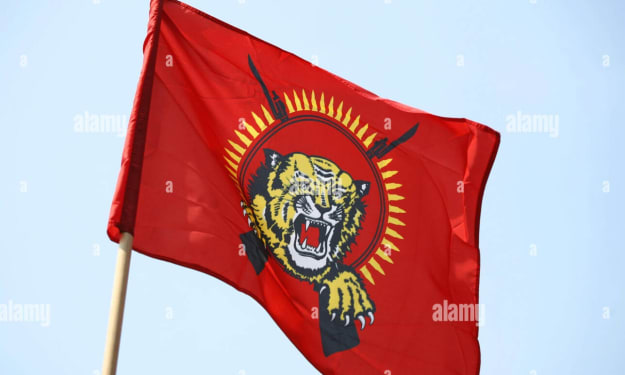
The Assassination
The Liberation Tigers of Tamil Eelam (LTTE) were an aggressor rebel bunch battling for a free country for Hindu Tamils in Northeastern Sri Lanka. The LTTE was established in the mid 1970s by Velupillai Prabhakaran, who drove the gathering until his demise by Sri Lankan military in May 2009. During the 1980s, the LTTE crushed various different Tamil aggressor gatherings, arising as the predominant gathering before the decade's over. The LTTE effectively completed various high-profile assaults, one of them is a death of previous Head of the state of India Rajiv Gandhi. We should get to be aware of LTTE. The LTTE battled to make a free Tamil state called Tamil Eelam in the north-east of the island, because of the constant segregation and savage abuse against Sri Lankan Tamils by the Sinhalese-overwhelmed Sri Lanka. In 1987, Legislature of India confronted with developing resentment among it's own Tamils and surge of displaced people, India mediated straightforwardly after Sri Lankan Government try to recapture control of northen Jaffna area through monetary impeded and military attack. Previous State head Rajiv Gandhi marked the Indo-Sri Lanka Accord with Sri Lankan President Junius Richard Jayawardene in 1987. Under the agreement, the Indian military was conveyed as the Indian Peace Keeping Force (IPKF) (Operation pawan)to Sri Lanka. The Indian Peace Keeping Force was shipped off Sri Lanka in 1987 to end the Sri Lankan Nationwide conflict between the Tamil minority gatherings like the The Liberation Tigers of Tamil Eelam and the Sinhalese gathering. The Indian Peace Keeping Force in the long run wound up in a fight with the LTTE to implement harmony - a move that was acknowledged by neither the Tamils nor the Sri Lankan government. Along these lines, it was removed in 1989 and 1990. In November 1989 political race Congress the party which has overwhelmed Indian governmental issues since India's freedom in 1947, lost to a free alliance of gatherings based on the Janata Dal drove by V.P. Singh. Singh's minority government held power with the backing of the vast majority of India's non-Congress parties, the biggest of which was the Bharatiya Janata Party (BJP). In November last year the BJP pulled out its help for the public authority. V.P. Singh surrendered in the wake of losing a parliamentary statement of disapproval on 7 November 1990.collapse of the Janata government in under a year, gave Rajiv the chance for a political rebound. Still up in the air to keep Rajiv Gandhi from getting back to drive dreading the reinduction of the IPKF, the LTTE supremo Prabhakaran Ordered the killing of Rajiv at a gathering held in Jaffna in 1990. In like manner, on one occasion in September 1990, a boat loaded with Tamil regular people escaping the conflict in Sri Lanka's upper east arrived at the Tamil Nadu beach front town of Rameshwaram. Two men and a lady from the gathering met Indian authorities and enlisted themselves as exiles however continued on toward Chennai, saying they had companions in the city. A couple of days after the fact, one more boat of Tamil evacuees likewise arrived at the Tamil Nadu coast. As in the primary occasion, two men and a lady enlisted themselves as outcasts and said they, as well, would like to live with companions in Chennai. The two gatherings leased separate houses in Chennai, telling the people who minded to ask that they were fortunate to be away from the conflict. The six Sri Lankans didn't have any acquaintance with themselves however their appearance in Tamil Nadu denoted the releasing of a destructive plot Prabhakaran had attracted up to kill Rajiv Gandhi. Sivarasan, known as "One-Eyed Jack" in view of a glass prosthesis he wore instead of an eye he lost in a fight, acknowledged soon that the men sent ahead of time as "exiles" were insufficient for the difficult task he had close by. By then, two LTTE intelligence agents, Nixon and Kanthan, additionally arrived at Tamil Nadu. After a concise stay in the State, Sivarasan returned to Sri Lanka and got back to Chennai in January 1991. Sivarasan, who had again returned to Sri Lanka, got back to Tamil Nadu via ocean right on time in May 1991 with Dhanu, the suicide bomber. They arrived in the waterfront town of Vedaranyam and left for Chennai by transport. To guarantee that everything worked out positively, the LTTE had completed a practice at a political rally of previous State head V.P. Singh in Chennai. As Singh was leaving, Dhanu approached him and touched his feet as a sign of respect for a senior. The entire activity was recorded on record and saw by the LTTE commonly to check assuming that there were any defects. Obviously, there were none. On May 20, 1991, the LTTE executioner crew watched a Tamil film at a film lobby in Chennai. The following night, the gathering continued to Sriperumbudur and was met by a youthful Indian photographic artist, Hari Babu, who knew next to nothing about the arranged death. At the meeting, Dhanu was equipped with a sandalwood garland — and a dangerous self destruction vest which was concealed by a baggy radiant orange salwar-kameez. At the point when a cop attempted to address Dhanu subsequent to seeing her close to the celebrity nook, Hari Babu interceded to say she would festoon Rajiv Gandhi. Sivarasan, wearing a white kurta-pajama, remained close to the dais. In the end, when Rajiv Gandhi advanced towards a holding up swarm, Dhanu moved near him. A similar cop attempted to push her back. Yet, he halted her and commented: "Let everyone get an opportunity!" Dhanu put the laurel around him and twisted down as though to contact his feet. Yet, she won't ever get up. She turned on the flip switch connected to her self destruction vest, setting off a horrendous impact that tore through her, Rajiv Gandhi and 16 others.
By Nikhil Jadhav3 years ago in History
CIA'S Biggest Intelligence Failure
Indeed, even as regular citizens we can observe intently our structures and streets look on Google Earth today. It is essential satellite symbolism and clearly we are captivated by it. But long before Google put its satellites in space and mapped the whole world, the Central Intelligence Agency (CIA) had satellites in space already. It is 1998, and CIA's satellite picture snatching methods were progressed to such an extent that they could without much of a stretch take a reasonable image of an individual's wristwatch showing the time. On May 13, 1998, at 15:45 hours, India covertly directed a progression of underground atomic tests with five bombs in Pokhran, Rajasthan. Albeit this was not whenever the nation first was trying its atomic weapons (the main fruitful test occurred in 1974 under the codename "smiling Buddha"), this one was positively the most important on the off chance that one thinks about the sheer impact it had on its states and adjoining nations. Pokhran-II (Also known as operation shakti-98) was the name appointed to the series of tests that involved one fusion bomb and four fission bombs. Great many miles away, in a meeting, US representative Richard Shelby verbalized that the CIA's inability to recognize that these tests planned to occur was "the biggest failure of our intelligence gathering agencies in the past ten years or more”. In the midst of these occasions, a vital question that the vast majority miss is, how did the US neglect to distinguish ahead of time that Pokhran-II planned to occur? It's obviously true that satellites worth billions were utilized to keep an eye on Pokhran consistently. As a matter of fact, floating over Pokhran were four satellites that were so innovatively progressed they could evidently try and be utilized to count the quantity of green fixes the Indian Armed force warriors had on their uniform. They were designated "Billion Dollar Spies". And all India had against them were the "Regiment 58 Specialists" from the Indian Armed force. So how precisely did India effectively "fool" the CIA? India's access to cutting edge satellites gave it crucial intel on what endlessly remained invisible from space. Researchers just chipped away at test destinations during the evening, when satellites would not be able to catch clear pictures because of the shortfall of light. As sunrise drew nearer, everything was set similarly as it had been the earlier day. At the point when the examiners at the Central Intelligence Agency(CIA) downloaded pictures from the satellites the following day, apparently as though not a solitary strand had been moved. Furthermore, where openings were dug, sand was adjusted towards the course of the breeze. This forestalled doubt since unaligned sand might have flagged action. Yet, satellites were by all accounts not the only thing that could think twice about mystery of the mission. The CIA keeping an eye on correspondence was no information. To counter this, code words were utilized for shafts. One shaft was named "White House" or even "whisky", while the other was designated "Taj Mahal". At the point when researchers of the DRDO and Bhabha Atomic Research Center(BARC) would stay with Pokhran, they went covert and wore armed force fatigues. Bogus names were given to researchers. APJ Abdul Kalam's name was exchanged with Major General Prithvi Raj and Rajagopala Chidambaram's codename was "Natraj". The excess utilization of codewords was proficient to the point that it is said that one senior researcher was known to be whining, communicating that he viewed the codewords as more confounded than physics estimations. Assuming mystery was the expense, so be it. Before the explosion, a couple of ministers had some awareness of the tests. The rundown included Lal Krishna Advani, George Fernandes, Pramod Mahajan, Jaswant Singh, and Yashwant Sinha. Concerning the CIA, they were ignorant that the tests had occurred until Vajpayee, the then Prime Minister, announced the accomplishment India had achieved on TV. US authorities accused The New York Times, expressing that the day to day had delivered an article that pronounced the CIA was keeping an eye on India's atomic test destinations and spilled intel on the presence of US spy satellites above Pokhran. in this, assuming there is all one thing the US ought to find out about India, it ought to be that India is truly adept at staying discreet.
By Nikhil Jadhav3 years ago in History
Title: Human Spontaneous Combustion: . Content Warning.
Introduction The notion of human spontaneous combustion has captured the imagination of writers, storytellers, and curious minds for centuries. The idea that a person could suddenly burst into flames without any apparent external cause is a tantalizing mystery that has found its way into folklore, literature, and even scientific discussions. However, despite its intriguing allure, the concept of human spontaneous combustion remains largely relegated to the realm of myth and speculation due to the lack of empirical evidence and scientific plausibility.
By Lynn Myers3 years ago in History